
Team Leadership Culture
  • Team
  • Leadership
  • Culture
  • Myers-Briggs
  • Trust Me
  • Short Book Reviews
Top Posts
Obituary
REPOST: Four Functions, Three Rules
ROUNDUP: The Rise of AI
REPOST: Facing Adversity Series
ROUNDUP: Curiousity
ROUNDUP: Deep Work
REPOST: Character vs. Competence
REPOST: Opposite of Victim
REPOST: Listening With the Intent to Understand
REPOST: Performance vs Trust
  • About
  • Services
  • Resources
    • Trust Me
    • Short Book Reviews
  • Contact

Team Leadership Culture

  • Team
  • Leadership
  • Culture
  • Myers-Briggs
  • Trust Me
  • Short Book Reviews
Category:

Blog

BlogCulture

Anyway Love

by Ron Potter April 13, 2017

People are illogical, unreasonable, and self-centered. Love them anyway.

Aristotle uses the word Love as one of the key elements of the highest level of happiness. The Greeks had several words that get transcribed into the English word Love. This one has no emotional connotation to it. It’s more about how you treat people. Treating people with respect, kindness and patience meant you were exhibiting this kind of love.

People are messy. They are illogical, unreasonable and self-centered. At least from our point of view. But we are also illogical, unreasonable and self-centered from their point of view. Guess what, we’re illogical, unreasonable and self-centered. Get over it and get over others being that way. Love them anyway. The more we treat each other with respect, kindness, and patience, especially when it appears we don’t deserve it, the more love we’ll experience.

Love them anyway!

Headlines from a wonderful little book titled Anyway by Kent Keith

0 comments
0 FacebookTwitterEmail
Absurd!BlogIn-Depth Book Reviews

Absurd!: Leaders Cannot Be Trained, but They Can Be Educated

by Ron Potter April 10, 2017

“Training leads to development of skills and techniques…Education on the other hand, leads not to technique but to information and knowledge, which in the right hands can lead to understanding, even to wisdom. And wisdom leads to humility, compassion, and respect—qualities that are fundamental to effective leadership.”

I like the word develop rather than education but I believe the principle is the same. Early in my consulting career, I wanted to teach leaders everything I had learned. I figured out very quickly that I couldn’t teach anyone anything, all I could do was to help them learn. The only thing they would learn was what they were ready to learn and what they wanted to learn. Beyond that, I couldn’t teach them anything.

New or prospective clients wanted me to provide an outline of my “training program.” I often had a hard time explaining that I didn’t have a program, we would figure out what the leader or team needed at that moment and would learn it together. Farson says is well: “Training makes people more alike. Education, because it involves an examination of one’s personal experience in the light of an encounter with great ideas, tends to make people different from each other. So, the first benefit of education is that the manager becomes unique, independent, the genuine article.” They develop integrity. They lead from who they are. Farson further says: “Managers can gain better self-understanding, learn about their own interpersonal selves, their reactions to and the impact on others, prejudices and blind spots, strengths and weaknesses. A better understanding of themselves and of their feelings gives all managers added trust in their perceptions, reactions, impulses, and instincts.

The following are words that appear in this blog. Go back and read them again with thought and reflection. There’s a lot of buried treasure in these words.

Wisdom leads to:

  • Humility
  • Compassion, and
  • Respect

Examines:

  • Personal experience
  • Great ideas, and
  • People who are different from each other

Managers [Leaders] become:

  • Unique
  • Independent
  • The genuine article
  • They develop integrity

Leaders are not alike. They are unique and whole.

I’m continuing my series on an in-depth look at a wonderful little book that’s twenty years old this year. The title is Management of the Absurd by Richard Farson. You may want to consider dropping back and reading the previous blog posts about ABSURD! I think it will put each new one in great context.

0 comments
0 FacebookTwitterEmail
BlogCulture

What’s the point of your point of view?

by Ron Potter April 6, 2017

The world doesn’t change but your point of view changes the world.

Leadership Step-by-Step by Joshua Spodek is one of my recent book reviews. Josh and I were able to get acquainted over the internet and phone and decided to work on a podcast together. Josh had been doing podcasts and I was anxious to learn from experiencing the process.

We corresponded over a couple of weeks leading up to the interview for the podcast. And even though we exchanged a few emails about topics, the start of the process turned very awkward.

Being cordial, Josh asked me a few questions and then hesitated.  He was waiting for me to kick off the interview process.

I was enjoying the early exchange but then seemed to run out of things to say.  I was waiting for him to kick off the interview process.

It dawned on each of us that we were expecting the other person to lead and record the interview. We approached a very simple and enjoyable situation from different points of view.  It became awkward for both of us.

We persevered and had a wonderful exchange of ideas and thoughts.

Josh must have been thinking “This is awkward and this guy doesn’t know what he’s doing. Am I about to waste an hour of my valuable time?” What if Josh had turned those questions into a point-of-view?

  • This guy is a loser.
  • I’m not going to get anything out of this exchange.

The interview would have ended ugly with no real value to either of us.

But Josh came into the interview with a good point-of-view. He believed there was

  • Value in learning from other people (maybe questioning this particular person)
  • It was always worthwhile to listen and learn.

With that point-of-view, Josh lives in a much more positive world that many of us.

I could list dozens of different point-of-views that Josh may bring  to the interview.  8 out of 10 of them would have led to a negative result.

But that didn’t happen. Josh starts each day with a point-of-view that the world is an amazing place full of amazing people. He believes that we can learn so much from each other if we

  • understand and lead ourselves before we
  • understand and lead others (check out his book for lessons on this concept).

We had an enjoyable interview (that ran overtime) and I look forward learning more from Josh in the future.

What point of view do you bring to the table?

0 comments
0 FacebookTwitterEmail
BlogDecision Making with Myers-BriggsMyers-Briggs

Decision Making with Myers-Briggs – Part I

by Ron Potter April 3, 2017

This will begin a Myer-Briggs series on Decision Making. Over three blog posts we’ll look at the Perceiving Function (how people take in information), the Judging Function (how people make sense of what they perceive) and finally the Decision-Making Process.

Background

Carl Jung was the famous psychiatrist who broke with Sigmund Freud. While Freud seemed to study what was wrong with us as human beings, Jung thought it better to study what was right and natural about us humans and what we could learn about ourselves with the proper framework. His work on Psychological Types led Myers and Briggs to put together their framework for understanding how we work.

Of the four functions pairs (making up the 16 possible archetypes) Jung and Myers-Briggs believed that the middle two were used in our decision-making process. It’s important to understand how these two functions work and in which order to under our and others decision-making process.

The simple concept is that we spend our days cycling between perceiving (observing what’s going on around us) and making judgments (decisions) based on that observation. A simple example is that when we’re leaving the house in the morning we look out the window and notice (perceive) that it’s raining. We then judge the situation to require (decide) to take an umbrella.

Perceiving

In this post, we’ll look at the Perceiving function followed by a Judging blog and finally a Decision Process blog.

How do we perceive the world around us? For many years, Myers-Briggs called this your Attending function, what do you pay attention to? The two descriptors associated with our Perceiving function are Sensing and iNtuition. S vs N. That’s not a type in the word intuition. Myers-Briggs had already used the capital I to indicate Introversion (other blogs) so they used the capital N to signify intuition.

Sensing

The sensing function is focused on things we can notice with our five senses. Because of this, “Sensors” are focused on facts, details, the present and the practical. Things that we can see and know now.

iNtuition

Those who are intuition based seem to think and notice things like concepts, patterns, future, imaginative. Things that we can deduct or speculate about the future.

Balance

Both perceiving functions are valid, useful and necessary. I’m always emphasizing balance when I conduct Myers-Briggs sessions. Balance, balance, balance. It’s best when we can depend on and blend both functions. We’ll get into trouble relying too much on one or the other. Therefore I like to use Myers-Briggs with teams. It’ easier for a team to balance functions when we have a mixture of both types on the team.

I first experienced this function even before I knew of the Myers-Briggs framework. I have a preference for iNtuition and years ago I was working for a boss who had a clear preference for Sensing. He asked me a question that had great consequences for our business and I quickly answered him from my conceptual view of the world. He said to me, “You shouldn’t make important decisions like that so flippantly!” I didn’t feel it was flippant but he insisted that I spend time creating a business plan to support my flippant answer. Three weeks later I was back with my completed spreadsheet business plan and the answer was still the same. At that point I was curious. Didn’t he know the answer three weeks ago? Didn’t he at least have a hunch? He said, Yes, he figured the answer was likely to go that way but he was not willing to make the decision until he could see the numbers. This was an important revelation to me (later confirmed by Myers-Briggs). Sensing types are no less intuitive than iNtuitive types. He figured the answer would likely go that way. But, they won’t make decisions without the details and facts. iNtuitive types pay no less attention to the details (I’m very good at spreadsheet development and analysis) but they’re willing to make decisions based on that intuition without confirming the details.

The best answer is a balanced one. Weigh and compare the sensing attention to detail with the intuitive attention to the concept. It often takes a partnership or team to do this well.

1 comment
0 FacebookTwitterEmail
BlogCulture

Anyway Help

by Ron Potter March 30, 2017

People really need help but may attack you if you do help them. Help people anyway.

Sometimes people want to remain victims. It doesn’t require any accountability.

Sometimes people feel inadequate and if you help them it just proves the point.

Sometimes people don’t want your help, they just want your friendship and support.

First, make sure you understand your own motives before you try to help. A welfare society appears to want to help but it’s about keeping power and control. Are your helping motives pure?

Sometimes we try to help because we feel superior and the other person is incapable of helping themselves. Helping supports our superior feelings. Are your helping motives pure?

Sometimes we’re just being helpful. No power, no reward, no motives, just lending a helping hand. But people may still attack. Help anyway.

Headlines from a wonderful little book titled Anyway by Kent Keith

0 comments
0 FacebookTwitterEmail
Absurd!BlogIn-Depth Book Reviews

Absurd!: There are No Leaders, There is Only Leadership

by Ron Potter March 27, 2017

As we approach the end of Farson’s book, it really gets meaty as he begins to speak very directly about leadership. He starts this section by saying “One of the great enemies of organizational effectiveness is our stereotypical image of a leader. We imagine a commanding figure perhaps standing in front of an audience, talking, not listening, with an entourage of assistants standing by. The real strength of a leader is the ability to elicit the strength of the group. Leadership is less the property of a person than the property of a group.”

Organization effectiveness depends on trusting and well function teams. True leaders build great teams. The name of my company is Team Leadership Culture. The order is important. Companies with the stereotypical commanding figure leader don’t often sustain their results. Companies with leaders who build great teams have much greater sustained results. Teams first. But, it takes great team-building leadership to create the teams. Farson reinforces this concept by saying “True leaders are defined by the groups they are serving, and they understand the job as being interdependent with the group. They define their task as evoking the knowledge, skills, and creativity of those who are already with the organization.”

There is so much richness in this section that I can’t possibly cover it in this short blog. I started this series about Management of the Absurd because I thought it was a wonderful little book that was worth the attention. I’ll encourage you to go beyond my blogs and pick up a copy for yourself. It’s worth making the effort.

Farson closes this section with some statements that are near and dear to my heart. “The best leaders are servants of their people. Studies show that those people who are most successful in achieving power did not dominate the group; rather they served it. Humility comes naturally to the best leaders. They seldom take credit themselves but instead give credit to the group with which they have worked. They characteristically make life easier for their employees. They are constantly arranging situations, engineering jobs, smoothing out the processes, removing the barriers. They think about who needs what. They define their job as finding ways of releasing the creative potential that exists within each individual employee and in each group with which they work.”

If you’ve read my book on Leadership Trust Me you’ll know that the first attribute is humility. Farson says that humility comes naturally to the best leaders. I’ll say that the best leaders learn how to keep their ego in check and rely on that natural humility that is sometimes buried deep inside. The world tells us to promote our ego, build your brand, take charge. Humility trumps all those approaches if your desire is to be a great leader.

There are no leaders, only leadership.

I’m continuing my series on an in-depth look at a wonderful little book that’s twenty years old this year. The title is  Management of the Absurd by Richard Farson. You may want to consider dropping back and reading the previous blogs about ABSURD! I think it will put each new one in great context.

1 comment
0 FacebookTwitterEmail
BlogCulture

Anyway Good

by Ron Potter March 23, 2017

If you do good, people will accuse you of selfish ulterior motives. Do good anyway.

A client said to me the other day “No matter what my motives are, everyone else believes I’m making some sort of land grab with my suggestions. How do I get them to see I’m not trying to control things, I’m just trying to come up with some good answers to our problems?”

My answer was to do good anyway. Not a very satisfactory answer in their mind. We want people to see us as being honorable and pure in our motives. They won’t. Our minds are very good at both projecting and remembering. People tend to project their own motives and intentions on others. If they would act in a less than honorable way in this situation they assume you will also.

We also have an interesting memory system that continually revises our memories. If we’ve had experiences in the past with people who didn’t have very good motives or intent, we’ll assume that may be the case here as well.

Do good anyway. It’s our only viable approach to life. We can’t worry about what other people believe our motive to be. We can only do good or not. Do good anyway.

Headlines from a wonderful little book titled Anyway by Kent Keith
0 comments
0 FacebookTwitterEmail
BlogTrust Me

Who is Controlling This Thing?

by Ron Potter March 20, 2017

Here’s a challenge: On a scale of 1 to 5, rate your need for control in various situations.

Overcontrol diminishes trust. Control-freak leaders have a hard time building truly great teams. Their lack of trust in subordinates hamstrings creativity and superior performance. Conversely, a humble leader, who is not too full of self, has the capacity and good sense to allow others to sparkle and make a difference.

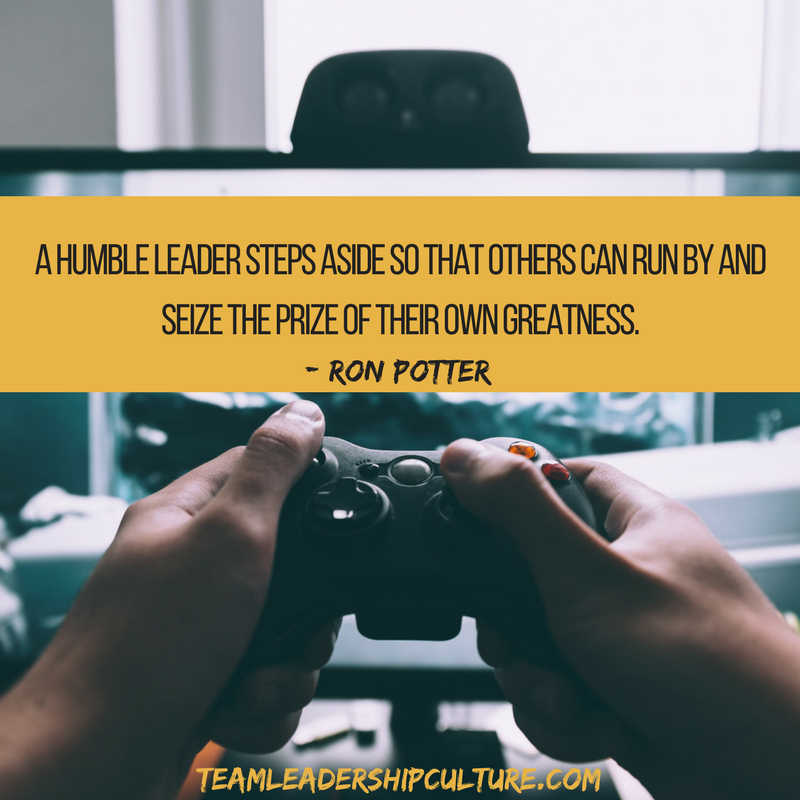
A humble leader steps aside so that others can run by and seize the prize of their own greatness. But just how is this done? Here’s an overview:

Assume the best of others

Leaders who expect the best of others exert a powerful influence. Many times leaders get caught in the trap of judging others. They measure, categorize, and classify people and the jobs they perform. Ken Blanchard likes to talk about “catching people doing things right.” This idea puts the emphasis on solid behavior and good intentions. It forces managers to assume and reward the best. It helps leaders not make rigid rules that hold down employees who want to soar.

Learn to listen

Being quick to listen implies the leader is not distracted but is actively hearing what the other person is saying. A humble leader listens with the intent of understanding rather than responding. Listening with the intent to understand triggers curious questions that help both the listener and speaker grow in their thinking and improve their conclusions.

Reward honest communication

How do you react when someone tells you bad news? Does the messenger become a target for your arrows? We know a man who confronted his boss over a matter that had the potential to really upset the company’s applecart. Instead of shooting the messenger, the supervisor commended the truth-bearer for his straightforward approach and creativity. He was able to look past the message to the employee’s intentions. The boss agreed with his employee in significant ways and changed his perspective. He rewarded open communication, and the company was better off because of it.

Admit your mistakes

Humble, open leaders show vulnerability. And nothing demonstrates vulnerability quite like admitting mistakes. “I was wrong” is difficult to say, but it is one of the most freeing and powerful statements a leader can make. Admitting your mistakes allows others on the team to relax and admit their mistakes. It allows the team to breathe and grow. Admission of wrong, seeking and granting forgiveness, and moving on are powerful tools of a humble leader.

0 comments
0 FacebookTwitterEmail
BlogLeadership

Anyway Build

by Ron Potter March 16, 2017

What you spend years building may be destroyed overnight. Build anyway.

Including your reputation. I was once fired by a client because he believed I was dishonest and had lied. I was devastated. I spent several weeks wondering if I had been a fraud. Had all the building of a consulting business and reputation been a fraud? The title of the book I had written was Trust Me. Had I been fooling myself along with others?

After several weeks of soul searching my actions and memory, I just couldn’t come up with anything I had done to deserve the label so I decided to keep moving toward the future but I knew I was doing so feeling much more vulnerable that I had in the past. It took a while but I began to get my footing back and I continued to move forward. However, this client was a member of a very large global company and my reputation had certainly been dented.

A few years later, this client reached out to me and let me know that he had been misinformed and even deceived in believing that I had done something dishonorable. He has continued to hire me as a trusted consultant for many years since. I feel very fortunate for how this story turned out in my life but it could have easily been left unresolved and unfortunately, there are often lasting consequences.

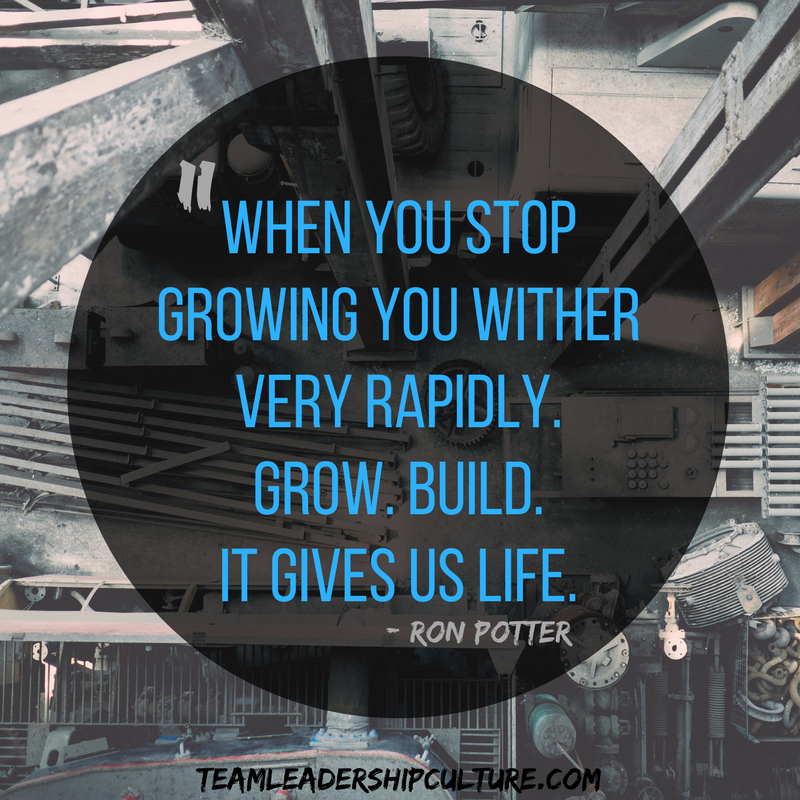
It’s critically important that we are self-aware and self-reflective, constantly judging our actions. But sometimes our reputations and future are damaged through unrelated or untrue events. Don’t stop building. When you stop growing you wither very rapidly. Grow. Build. It gives us life.

Headline from a wonderful little book titled Anyway by Kent Keith

0 comments
0 FacebookTwitterEmail
Absurd!BlogIn-Depth Book Reviews

Absurd!: People We Think Need Changing are Pretty Good the Way They Are

by Ron Potter March 13, 2017

I love this statement by Farson: “Business and industry spend billions of dollars each year to train, encourage, and reward their employees – and to install security systems.”

I remember a statement by Steven Covey (author of 7 Habits of Highly Effective People) that he could always tell the level of trust in an organization by how many rules and systems they had in place. The more the rules, the less the trust. I have also found this to be true. To me, the apex of this is when every member of the top leadership team is expected to know every detail about their operation. It’s stated as an indication of competency but in reality, it’s an indication of lack of trust.

Farson further elaborates by saying, “Situations, more than individuals, are what produce the difficulties, even though it almost always looks as if it is individuals who are fouling up. The better managers try to fix situations, not people, by making structural changes in their organizations.”

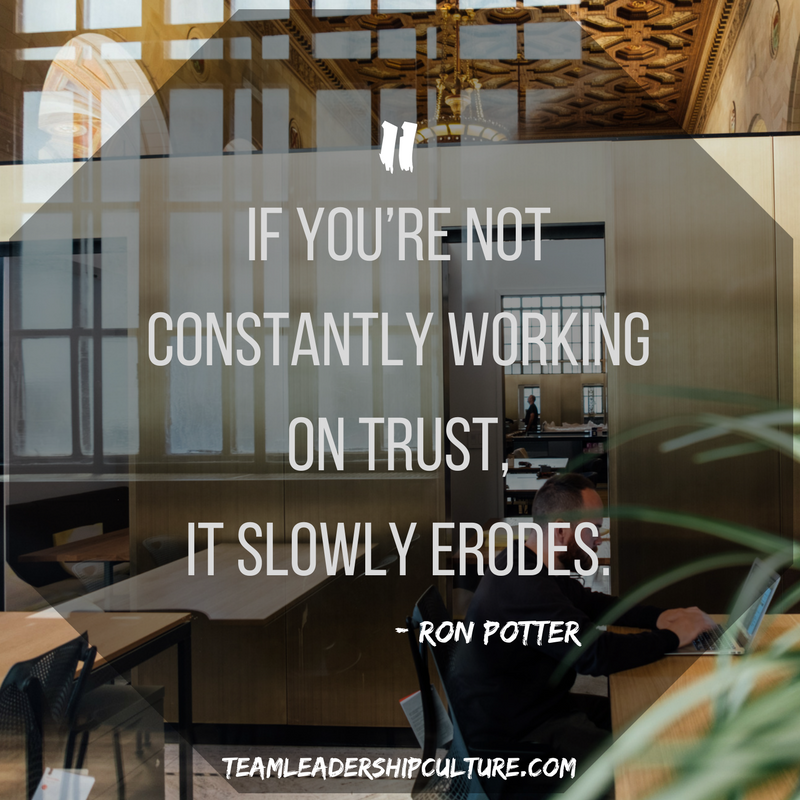
In addition to the structural changes, my experience is that building trust must be a regular focus of leadership teams. Like any conditioning, if you’re not constantly working on trust, it slowly erodes. And like any erosion, at some point, the dam breaks and it’s completely washed away.

Farson makes the point that most employees are trying to do the best they can. I agree. People really want to be productive, successful, valued, encouraged, and encouraging. It’s usually the system, structure, leadership, and lack of trust that discourages them from doing their best.

One of his closing statements in this section is, “When we build a team of people, we may, at the outset, wish that its members were different from what they are—we think this one might be too shy, that one too boisterous, another too cerebral, and so on. But once the team is built and begins working together, something pleasantly surprising happens. Instead of continuing to want to change these people, all those characteristics that may have concerned us at the outset become qualities we come to appreciate as simply being part of the way these people are. Absurdly, we find that we really wouldn’t want it any other way.”

Diversity is the key to great teams. But not diversity alone. It’s when the diversity is honored, trusted and appreciated that makes great teams. How much are you working at honoring, trusting and appreciating your teammates?

I’m continuing my series on an in-depth look at a wonderful little book that’s twenty years old this year. The title is Management of the Absurd by Richard Farson. You may want to consider dropping back and reading the previous blog posts about ABSURD! I think it will put each new one in great context.

0 comments
0 FacebookTwitterEmail
BlogCultureThree Steps to Become the Best Learner

Three Steps to Become the Best Learner – Part III

by Ron Potter March 9, 2017

In previous blog posts, I wrote about the 1st and 2nd  steps of becoming the best learner. The concept comes from Richard Feynman, the Nobel-winning Physicist. His description of the first step was to teach it to a child. Something I called teaching a 5th grader. The second was to review.

Feynman says that Step 3 is Simplify. I unpacked Review a few weeks ago, but let me expound a bit on it before we get in to Simplify.

Step 2: Review

In this step, he speaks of finding gaps in our knowledge, looking for the connections, understanding the concepts.

I believe he’s uncovering two important principles in this step. One is that if we don’t get something it’s not because we’re stupid, it’s because we’re ignorant. Ignorant simply means that we’re not aware or are uninformed about something. Stupid means that we’re unwise or senseless. We just need a bit more information or understanding.

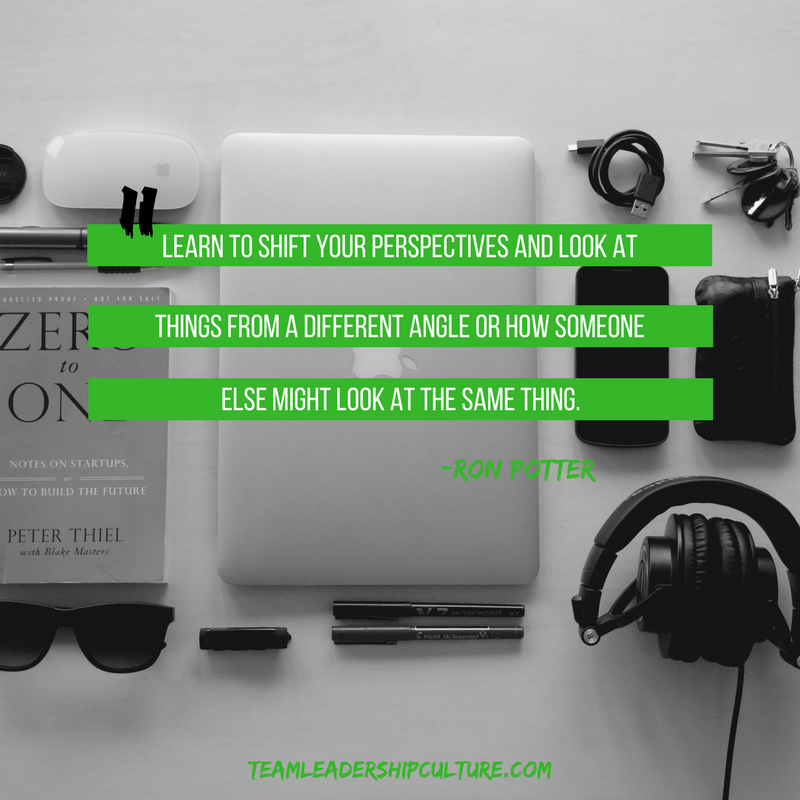
The second principle is probably the most important one to learn. We’re simply looking at it from a different perspective. Another Nobel Prize winner, Max Planck said: “When you change the way you look at things, the things you look at change.” Learn to shift your perspectives and look at things from a different angle or how someone else might look at the same thing.

Step 3: Organize and Simplify

Organization is important but I believe the key principle here is Simplify. That doesn’t mean to dumb it down, it means to think of it in a simple, elegant way. Good presenters get their presentation slides down to one word, image or icon. That’s elegant and that’s what people remember.

Step 4 (optional): Transmit

If you can’t teach it to a fifth grader, you either haven’t understood it yourself or you haven’t put it into an elegant enough form to transmit it or teach it well. Keep trying.

0 comments
0 FacebookTwitterEmail
BlogTrust Me

Seeking Humility

by Ron Potter March 6, 2017

What in your life do you need to let go of so you can become more humble?

Being humble and teachable means learning to trust others and their opinions and instincts. It means listening with the intent of learning instead of simply responding. It means seeking personal development from every situation, experience (both good and bad), and transaction.

Humility is the first pillar of a leader whom others will trust.

I know it may not make much sense, but humility is a prominent characteristic of truly great leaders. A humble person sticks to the basics and is not prone to exaggeration. How much better off would we be today if the leaders of some of our fallen corporate behemoths had kept their heads out of the ozone and their feet on the ground?

Perhaps the most significant quality of humble leaders is their steady, clear-eyed perception of truth. A proud leader is prone to spreading and believing exaggerations—from little white lies to whopping falsehoods. Which high-powered modern leaders, intent on vanquishing foes and surmounting tall challenges, ever want to be known as humble? Not many—until, of course, they find out, as we intend to demonstrate, that humility is a critical first step on the path that leads to leadership success.

Humble leaders take a different approach. They are not so self-absorbed as to think that they don’t need to listen and be open. Their spirits are not critical because they are always open and scanning their employees, customers, and systems for new and better ideas.

Humble leaders know that they cannot control people or circumstances. The irony is that the more they loosen their grip, the more they gain. The more flexibility—rather than control—that they can build into themselves, the more they succeed.

A humble leader welcomes change. Change often equals growth. But not change for the sake of change. A humble leader needs to discern the right change, a skill that is developed by being open and teachable.

Being humble and teachable means learning to trust others and their opinions and instincts. It means listening with the intent of learning instead of simply responding. It means seeking personal development from every situation, experience (both good and bad), and transaction.

So I pose my question once again: What in your life do you need to let go of so you can become more humble?

0 comments
0 FacebookTwitterEmail
Newer Posts
Older Posts
  • Facebook
  • Twitter
  • Linkedin
  • Rss
  • About This Site
  • About
    • Clients
  • Services
  • Resources
    • Trust Me
    • Short Book Reviews
  • Contact

About this Site | © 2024 Team Leadership Culture | platform by Apricot Services


Back To Top
Team Leadership Culture
  • Team
  • Leadership
  • Culture
  • Myers-Briggs
  • Trust Me
  • Short Book Reviews