
Team Leadership Culture
  • Team
  • Leadership
  • Culture
  • Myers-Briggs
  • Trust Me
  • Short Book Reviews
Top Posts
Obituary
REPOST: Four Functions, Three Rules
ROUNDUP: The Rise of AI
REPOST: Facing Adversity Series
ROUNDUP: Curiousity
ROUNDUP: Deep Work
REPOST: Character vs. Competence
REPOST: Opposite of Victim
REPOST: Listening With the Intent to Understand
REPOST: Performance vs Trust
  • About
  • Services
  • Resources
    • Trust Me
    • Short Book Reviews
  • Contact

Team Leadership Culture

  • Team
  • Leadership
  • Culture
  • Myers-Briggs
  • Trust Me
  • Short Book Reviews
Tag:

Trust

BlogLeadership

Feedback, Truth, and Trust: The Need for Speed

by Ron Potter November 5, 2015
Source: Alan Levine, Creative Commons

Source: Alan Levine, Creative Commons

And what does Feedback, Truth and Trust have to do with speed?

In an interview with Daniel Roth, Executive Editor at LinkedIn, Jack Welch said

You always want your people to know where they stand. See, one of the things about appraisals for people, appraisals shouldn’t be every year. The world changed in a year, they’ve changed in a year. You’ve got to let them know, ‘Here’s what you’re doing right, here’s what you can do to improve’. And you’ve got to be on them all the time.”

Leadership today is all about two words: It’s all about truth and trust.

When they trust you, you’ll get truth. And if you get truth, you get speed. If you get speed, you’re going to act. That’s how it works.

Feedback

In earlier posts, I’ve talked about the origins of the word ‘feedback’ forming in the early days of rocket development when the pioneers built rockets with enough thrust but couldn’t hit a target.  They had to spend more effort developing what they termed “feedback” so they could adjust the thrusters of the rockets and actually hit their target.  Now think about that a minute.  If they had waited until the rocket finished its flight, determined how far it had missed the target and then built corrections into the next flight, in the end, the process wouldn’t be very efficient.

But, that’s exactly what happens in many corporations today.  Annual targets are set then checked at the dreaded annual review.  Did the employee hit the target or not?  No help along the way, no feedback mechanism adjusting the thrusters.  No chance to make any mid-course adjustments or even agree that the target moved or changed.

Throw out the annual appraisals.  Regular and frequent feedback sessions are the only way to get meaningful results and generate speed from your team.

Truth

Getting to the “truth” of the matter is difficult if you assume you know the truth and everyone else has their perspective (implying perspective is different from the truth).  We all have different perspectives and part of building a great team is understanding that these perspectives are strong and powerful and formed by our experiences, beliefs, values, and goals.  A humble leader understands that outstanding and highly effective people will often have different perspectives and it’s our jobs as leaders to get all those perspectives on the table, listen, learn, be curious and in the long run align our perspectives so we’re all pulling in the same direction.

Trust

Trust is the key element to all of this.  Annual appraisals don’t build trust, regular feedback builds trust.  Demanding that your perspective is the only true way of looking at an issue doesn’t build trust.  Trust is built through humility, development, focus, commitment, compassion, integrity, peacemaking and endurance.

Speed

If you want your team to act effectively with speed, build trust.  It’s the only fuel with enough energy to win the race.
0 comments
0 FacebookTwitterEmail
BlogTeam

Nothing better than fall in Ann Arbor

by Ron Potter October 29, 2015
Source: Jeremy Bronson, Creative Commons

Source: Jeremy Bronson, Creative Commons

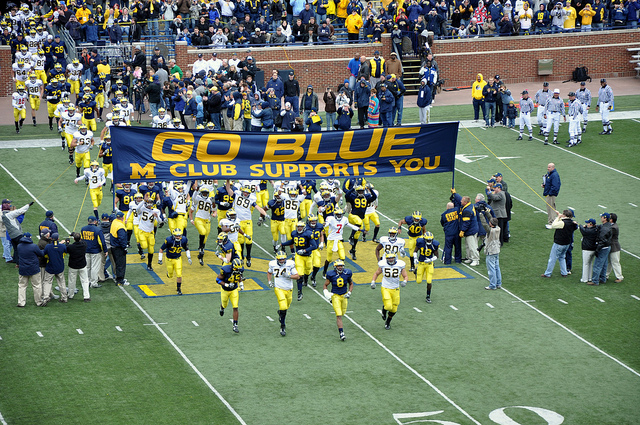
It’s fall in Ann Arbor.  Fall in Ann Arbor means great color, great cool weather with long afternoon shadows and great football.  At least it should mean that.  Fall football in Ann Arbor has not been fun for the last couple of years but with our new coach, Jim Harbaugh, fall football is fun again.  And with this level of excitement, the sports press is getting quotes and interviews everywhere and anywhere they can.  One quote the other day really caught my eye.

Tim Drevno is the new offensive coordinator and offensive line coach at the University of Michigan.  In discussing his offensive line, the guys who do the heavy work in the “trenches” of blocking and in many ways are truly responsible for the success of the offense, Coach Drevno gave the following quote:

As you go through game to game, you get used to everybody and how you communicate and how they handle adversity and get to know one another. That’s part of the process of trusting one another. The quicker you can trust, the quicker you can have success. That’s been a real big part of where we are today. It’s gradual. They get used to your coaching techniques and how you prepare, what you demand from them.

Let’s go to the chalk board and break down that statement:

The quicker you can trust – trusting one another – quicker to success

Yes, you have to know your blocking assignments, the plays you’ll run, you have to be big and strong and quick on your feet…  but to succeed quickly you must build TRUST!

As you go through game to game – it’s gradual.

It happens over time, game to game, day in, day out.  Building trust takes experience.  You have to work on it every day through every assignment.  I have experienced in the corporate world that if trust is lost, it takes at least six months of flawless, trust-worthy behavior before people will even give you the benefit of the doubt, let alone fully trust.

Handle adversity and get to know one another

Trust builds during times of adversity.  Building trust means working through failure together.  It also takes knowing one another.  Not knowing what you do but knowing who you are.  What are your values?  How much heart and stamina do you have?  How will you handle adversity?

Without trust there can be no leadership

Build the trust, prepare the individuals and the team, then and only then can you make great demands of their performance and only then will they respond!

Have you taken the time to build trust, grant trust and earn trust?  If your goal is to be a great leader then you will need to expect and demand great results.  But that only happens when there is great trust!

Take a look at our book “Trust Me” to learn more about becoming a trusted leader.

0 comments
0 FacebookTwitterEmail
BlogFavoredTrust Me

Favored Are the Caring

by Ron Potter October 26, 2015
Source: Paulo Philippidis, Creative Commons

Source: Paulo Philippidis, Creative Commons

Compassion brings us to a stop, and for a moment we rise above ourselves.
—Mason Cooley, City Aphorisms, Twelfth Selection

Dr. Albert Schweitzer was already an old man when Andrew C. Davison paid a visit to Schweitzer’s jungle hospital in Lambaréné, on the banks of the Ogowe River in Gabon, Africa. The three-day visit had a deep and profound effect on Davison, who later wrote of one event during the trip that impressed him in a special way:

It was about eleven in the morning. The equatorial sun was beating down mercilessly, and we were walking up a hill with Dr. Schweitzer. Suddenly he left us and strode across the slope of the hill to a place where an African woman was struggling upward with a huge armload of wood for the cookfires. I watched with both admiration and concern as the eighty-five-year-old man took the entire load of wood and carried it on up the hill for the relieved woman. When we all reached the top of the hill, one of the members of our group asked Dr. Schweitzer why he did things like that, implying that in that heat and at his age he should not.
Albert Schweitzer, looking right at all of us and pointing to the woman, said simply, “No one should ever have to carry a burden like that alone.”

Schweitzer obviously understood compassion. As a leader he decided to care for someone else, to fully understand the woman’s burden and seek to relieve it. In doing this he was supporting ideas taught by a compassionate Jesus who urged his followers to care for those who were hungry, sick, unclothed, in prison, and burdened with other problems—“Whatever you did for one of the least of these…you did for me.”
Compassion, as we define it here, involves two primary ideas: First is the ability to see people from their perspective, their level of interest, and their need. Coupled with that other-focused vision, though, is the deep internal craving to help them gain their full potential.
J. Oswald Sanders wrote,

The true leader regards the welfare of others rather than his own comfort and prestige as of primary concern. He manifests sympathy and concern for those under him in their problems, difficulties, and cares, but it is a sympathy that fortifies and stimulates, not that softens and weakens.

Compassion is a strong character quality that seeks to both understand people and motivate them to great personal and professional achievement. Compassion should not be confused with weak sentimentality. Instead, compassion involves caring strength, a selfless desire, and energy that elevates others to first place in all human affairs.

0 comments
0 FacebookTwitterEmail
BlogTeam

Pressure Testing Teams

by Ron Potter October 1, 2015

13026944463_e7141bd353_zAs a young engineer I learned how to test the integrity of concrete by pressure testing.  On large concrete pours (sometimes several feet thick) we needed to know if the concrete was strong, healthy and had integrity before we could erect the large heavy structures it was meant to support.

After the concrete had cured for the proper amount of time we would take a large cutting machine and extract a “core” of concrete.  This was a cylinder about 4 inches in diameter and about one foot long.  We would then take this core of concrete and place it in a large hydraulic press and slowly begin to build the pressure over time.

The pressures would build to enormous values before the concrete would “fail”.  But the way concrete failed was always fascinating to me.  It didn’t just break in half or fracture along a few fault lines, it would disintegrate.  It almost exploded into thousands of small fragments.  Each piece flying in its own direction so there was nothing left of this strong concrete core.

Teams Under Pressure

I have found teams to function in much the same way.  The pressure can come from any number of sources but as you watch the pressure build the team holds together for a while but finally fails. And when the failure happens, it looks just like that solid core of concrete, it disintegrates.  Each member seems to head for cover in their own direction.

Reinforcing Concrete

In the concrete world, to counter this tendency to disintegrate when the pressure became too great we had a simple solution: reinforcing bar (sometimes called rebar).  Those long rods of steel that we placed in a cage form within the walls of the concrete pour.  Concrete is at its best under pressure from compression.  What it lacks is tensile strength.  Take your two hands and put together in front of you and start pushing one hand against the other.  That’s compression.  Now, have one hand clasp the other hand in a “hand shake” and start pulling them apart.  That’s tensile strength.  Concrete needs both to function well.  So do teams.

Reinforcing Teams

Teams need a lot of tensile strength to withstand the pressures of today’s fast changing world and the fact that many of our teams are global and/or virtual.  We need team rebar!

Increasing the tensile strength of a team requires the “rebar” of trust!  If you’re not taking the time to build trust on your team, you’re not putting in the proper tensile strength to withstand today’s pressures.

  • Who are these other people?
  • Can I trust them when the pressure builds?
  • Have I stood next to them, looked them in the eye and exchanged a hearty and caring hand shake?
  • What are their values? Do we share values?
  • How do I know what is motivating them? How will that play out when we’re experiencing pressure?
  • And a ton of other reinforcing questions to be answered together.

Your team is faced with tasks that must be accomplished under tight deadlines and seemingly impossible pressure to perform.  If you haven’t built in the tensile strength of trust, you’ll likely fail the task in the long run.

0 comments
0 FacebookTwitterEmail
BlogTeam

Step Back from Knowing

by Ron Potter August 13, 2015
Image source: Jin Choi, Creative Commons

Image source: Jin Choi, Creative Commons

We’ve talked about stepping back from doing. It takes a pause, a break, getting away from the dialing routine of doing in order to give yourself a chance of even writing the right questions. But how about stepping back from knowing? This actually takes courage and trust. (This concept is also discussed Warren Berger’s book, A More Beautiful Question.)

Expect All the Answers?

I’ve worked with one fortune 200 company through four CEOs. While each one has been very different from the previous one, they all have had super qualities of their own that served the company well during their tenure. However, through all of their differences, there have also been a consistent pattern in their culture that each of them has upheld. They expect their subordinates to know all the answers. The COO is expected to know the production rate on any line anywhere in the system. The CFO is expected to know the financial numbers from every level of the organization from around the globe based on last night’s results. And on and on and on.

Step Back from Knowing in Order to Compete

Over the years, this operational excellence has served the company well. But things are changing rapidly with customers, consumers, competitors, etc. And I’m afraid this inability to step back from what they know may keep them from competing well in the future. Their investors are starting to think so.

It Takes Courage

So where do we find the courage to step back from knowing. In the culture described above, it can be fatal to admit you don’t know an answer. It’s even crippling to say “I’ll find out and get back to you.” And because of that, peers tend not to question each other. This inability to question each other leaves a very low level of trust.

An Attitude of Quick Learning

I’ve covered in previous blogs the concept of a quick decision mentality vs a quick learning mentality. Quick deciding suppresses questions or any discussion that would seem to slow down or delay a decision. Quick learning, however, encourages questions. Naïve ones at that. It encourages people from different functions to question each other and to question basic assumptions. It opens our minds to new perspective, It requires us to be vulnerable, open, and genuine about what we know and don’t know. And more importantly, even when we do know, realizing that an outside naïve perspective can reveal things about our business in a way we never thought about before.

Requires a Trusting Team

The only way to be able to step back from knowing is to build trusting teams and then get away from the business a couple times of the year to step back from doing and step back from knowing.

0 comments
0 FacebookTwitterEmail
BlogTeam

Don’t Listen to Anyone

by Ron Potter July 30, 2015
Image source: hobvias sudoneighm, Creative Commons

Image source: hobvias sudoneighm, Creative Commons

Someone the other day said the best advice he ever received was from his uncle who said, “Don’t listen to anyone!” Everyone chuckled and nodded in seeming agreement.

But if we don’t listen to anyone, then the only person we have left to listen to is ourselves…and we can’t be trusted!

Some revealing current brain research is helping us understand that our memories are

  • Not only wrong (often) but
  • They’re very powerful at convincing us that we think we’re more right than not.

One great survey has a college professor requiring his students to write down precisely everything they remember about the space shuttle explosion that had occurred the day before. Details such as

  • Where they were
  • Who they were with
  • What they felt
  • How people were reacting
  • Plus many other aspects and details of the previous twenty-four hours.

Ten years later, that professor tracked down many of those students and asked them to recall their memory of that day. Almost all of the memories were different from what the students had themselves written down.

But what was more amazing was that when the professor produced their written reports that disagreed with their memory, the students chose to reject the written reports and stick with their memory of “the truth.” And the farther the memory was from the written report, the stronger the rejection.

This is just one more reason why building a trusting team is so important. We can’t trust our own memory. All we can do is share our memory with the team and learn from their memories as well.

Build a trusting team. It’s our only hope to save us from ourselves.


0 comments
0 FacebookTwitterEmail
BlogTeam

The Subversive-ness of Trust

by Ron Potter July 23, 2015
Image source: Lauren Manning, Creative Commons

Image source: Lauren Manning, Creative Commons

Subversion: An attempt to transform the established social order and its structures of power, authority, and hierarchy.

Need for Trust

Every team I work with talks about the need for trust. Every leader I work with thinks about, understands and works at building trust. The foundation of every great corporate culture is founded on trust. The title of my book on a great leadership style is titled Trust Me. Not much good happens in teams, leadership, or cultures without trust. So why is it so difficult to build trust?

Trust is Subversive

Because trust is subversive! It wants to overthrow power, authority, and hierarchy. Our heart and mind want to say “No, I’ve spent years climbing that hierarchy by being right, knowing the truth, understanding the market, and getting things done just to reach this position of power and authority.” But trust wants to overthrow that. Trust wants you to admit:

  • I may not be right
  • My version of the truth may be flawed
  • That person may have a better idea
  • They may see a broader scope than me
  • We may need to give up many of our beliefs in order to make this work
  • Someone else may be a better lead for this project

Trust is subversive!

  • It breaks down barriers;
  • it levels the playing field;
  • it makes us open to naïve, inexperienced ideas;
  • it builds total respect for other people and forces us to be completely open to their ideas, experiences, and belief systems.

Trust is subversive! And it’s hard!

But it the Only Thing!

But it’s the only thing that really works if you want to build a great team or company in a fast-changing, innovative world. It’s the only think that will work in the future.

Try it. But plan on working hard if you want to get good at it.

1 comment
0 FacebookTwitterEmail
BlogTrust Me

Thick-and-Thin Togetherness

by Ron Potter June 15, 2015
Image source: Insomnia Cured Here, Creative Commons

Image source: Insomnia Cured Here, Creative Commons

On cable television, almost twenty-four hours a day it seems, you can catch sight of a sheriff and his deputy demonstrating core principles of how to develop another person. Yes, Sheriff Andy and his deputy Barney on The Andy Griffith Show have this mentoring thing going on.

In many episodes Andy tried to patiently teach Barney about work, love, and life. Then, invariably, Barney struck out to tackle the problem at the core of Andy’s teaching, and messed up royally. In spite of Barney’s bungling, however, Andy always stood by his friend and coworker, exhibiting a bemused yet persistent patience. Andy was always there for Barney. (But we don’t think Barney ever reached the place where he was ready to receive more than one bullet for his gun!)

Although developing your own strengths is important, an equally important task in leadership is maximizing the strengths and potential of the members of your team. If you don’t do this well, you may experience a measure of success, but you will also end up very tired and frustrated that so little is getting done. There’s just too much to do these days. We all need help.

The old African proverb says:

If you want to go fast, go alone.  If you want to go far, go together.

Everything is going fast today and you must be nimble.   The trick is to go far in a rapidly changing environment.  That requires building great teams that go together.

What does Mentoring Look Like?

What image comes to mind when you think of the term mentor? You might picture two people sitting at a table in a restaurant, the older person, his or her head topped with waves of shimmering, gray hair, waxing eloquent while the younger listener is furiously scribbling notes on a legal pad. Although this scene may warm our hearts, it seems just a bit out of sync with the real world.

We would like to offer an alternative image of mentoring: Picture two people sitting across from each other in an office. Obviously, an important project is under discussion. The interaction is animated, intense, and often humorous. These people obviously know each other well. Speech is direct and honest. Mutual respect is readily apparent. Some coaching is occurring, but the protégé is not restrained in sharing some insights on the performance of the mentor as well. This relationship is built on trust.

With this picture in mind, we like to define mentoring as a long-term, mutually supportive and enhancing relationship rather than as a relationship in which a highly advanced human being tutors another who stands a step or two below him or her on the developmental ladder.

What is Mentoring?

Another way to envision the mentoring process is to compare it to parenting. In corporate settings we frequently witness nonexistent or very poor “parenting” skills. Executives and managers often fail to recognize that even the most highly qualified person may have significant blind spots or personal or professional characteristics that are awry or underdeveloped.

Rather than understanding the need to mentor appropriately and taking the time to discipline, train, coach, or partner with their employees, weak leaders simply hire people and turn them loose to do their jobs.

The basic definition of mentoring implies that the leader and the protégé want to build something that will last a long time, that will go far. It suggests sticking together and being patient as the learner and the mentor navigate the learning process.

1 comment
0 FacebookTwitterEmail
BlogCulture

High Tech, High Touch

by Ron Potter June 11, 2015
Image source: Mathew Bedworth, Creative Commons

Image source: Mathew Bedworth, Creative Commons

I’ve referred to that line, “High tech, high touch,” from Alvin Tofflers book Future Shock often. Toffler defined “Future Shock” as “A personal perception of too much change in too short of time.” He also coined the term “Information overload.”


His term “high tech, high touch” lead into his discussion of one of the antidotes to dealing with future shock and information overload. His point was that as we deal more and more with this intrusion of the globally connected, instant on, information overload, we must also make sure we increase the “high touch” right along with it. This high tech world will not work without high touch, trusting, and personal relationships.

Now another influential voice from the past is adding to the chorus. Ray Ozzie is the inventor of Lotus Notes. Lotus Notes was the first successful and commercially viable email system that Ray and Mitch Kapor brought to the marketplace in the mid to late 1980’s. Ray is the grandfather of email.

One of Ray’s latest ventures is “Talko” that is described as an app that combines text messaging, phone calls, voicemails, videos, and picture messaging.

Why does Ray want to combine all of this text, sound, and pictures? The stated goal is richer communication whether the team is around the world or next door. But one statement of Ray’s really strikes me:

“one of the things I’ve learned over the years about collaboration is that one of the most important elements is empathy.” (Emphasis added.)

Now I’m not going to discount Mr. Ozzie’s ability to come up with a technical solution to empathy. And quite honestly, I hope he makes a good run at it. But my guess is that it will take years of refinements (if at all) to be able to “understand and share the feelings of another” as one definition puts it.

I agree with Ray that empathy is one of the most important elements of collaboration and team building. I just don’t believe you can develop empathy while you’re working remotely on a project regardless of the technical capabilities. Even if “remotely” means you’re in the same building but conduct all of your communication electronically.  I believe you have to spend time face-to-face being human beings, not human doings. Establish trust and understanding, then you can function remotely and or electronically and collaborate well. But like any muscle, trust and empathy atrophy over time and must be renewed on a regular basis.

Build trust—then collaborate well.

1 comment
0 FacebookTwitterEmail
BlogLeadership

Three Things Born in 1948

by Ron Potter March 26, 2015
Image Source: April, Creative Commons

Image Source: April, Creative Commons

Three things were born in 1948.

Two of them have dramatically changed the world. The third has been a very interested observer.

One—the transistor. It came out of bell labs and Wikipedia describes it as, “The fundamental building block of modern electronic devices.”

Two—the bit. Short for binary digit is the basic unit of information in computer and digital communication.

Three—Ron Potter. Substantially less impactful than the first two.

For whatever reason, I have long felt to be a part of and intertwined with this growing digital world. The programmable microprocessor (which made the PC possible) was born the year I graduated from engineering school.

But in spite of this fascination and enjoyment of this gadget world, I have been more interested by the human mind, spirit and soul. Who we are and how all things human work together is much more fascinating and complex than anything man made.

Alvin Toffler wrote the book Future Shock at about the time I graduated from engineering school. One sentence, made up of four words, struck me very deeply and I still see its impact every day. That sentence was, “High tech, high touch.” Toffler, in his amazing vision of this coming technological revolution, seemed to understand that it wouldn’t work if we lose touch as human beings.

The advantage provided by the instantaneous, world-wide communication that these technologies have brought won’t work if we don’t build trust and stay connected as human beings.

In fact, without building the human connected trust required, these high-tech solutions can actually turn destructive. We’ve all seen reputations and relationships damaged or even destroyed through electronic communication.
Be careful. Get to know and understand people. Build trust. We’ve been identified as human “beings,” not human “doings.”

If you’ll build the relationships, trust, understanding, and respect needed for a great team to work, the high technology can greatly enhance everything. Without trust it can quickly become destructive.

Build trust!

0 comments
0 FacebookTwitterEmail
BlogTrust Me

Four Qualities of a Humble Leader

by Ron Potter February 9, 2015

In the last post, we talked about rigid, proud leadership and how that affects a company. But what about a humble leader? How do they meet their responsibilities and yet be open to the guidance of their direct reports?

They take a much different approach.

Humble leaders are not so self-absorbed as to think that they don’t need to listen and be open. Their spirits are not critical because they are always open and scanning their employees, customers, and systems for new and better ideas. Following are some qualities of humble leaders.

A humble leader:

  1. is teachable
  2. never shuts the door on educating themselves
  3. remains open themselves to the ideas and concepts of others—including their followers
  4. enriches an organization and helps it stay ahead of the competition.
Image Source: Rob Bashar, Creative Commons

Image Source: Rob Bashar, Creative Commons

A teachable leader is open to personal and organizational change. This kind of leader is quick to understand that old routes are not always the best or the fastest. Conditions change.

Research from the Center for Creative Leadership (CCL) shows that people can optimize their personal abilities as well as turbocharge their organization’s adaptability and response to competitive challenges when they are committed to learning. According to researcher Ellen Van Velsor:

If things are going to continue to change, the one thing companies need above all else is people who have the ability to learn.

(See also “Learn or Die” by Edward Hess in my Reading List.)

To be teachable, one must devote a significant amount of time to learning.

A humble leader is flexible. An old proverb reminds us that “We cannot direct the wind, but we can adjust the sails.” Many of us have spent our time trying to be in control, but a humble leader learns how to be effective without being in control. Humble leaders know that they cannot control people or circumstances. The irony is that the more they loosen their grip, the more they gain. The more flexibility—rather than control—that they can build into themselves, the more they succeed.

A humble leader welcomes change. Change often equals growth. But not change for the sake of change. A humble leader needs to discern the right change, a skill that is developed by being open and teachable.

Humility leads to personal openness, teachability, and flexibility. Humility casts fears aside and frees leaders to energize and build their organizations toward common goals and vision. Humility is the fertile ground where the seeds of trust sprout.

Being humble and teachable means learning to trust others and their opinions and instincts. It means listening with the intent of learning instead of simply responding. It means seeking personal development from every situation, experience (both good and bad), and transaction.

What in your life do you need to let go of so you can become more humble?

Have you shared your vision with your colleagues? Have you asked them to participate? If not, why haven’t you?

Whom in your organization can you mentor—develop to his or her full potential?

What can you do to improve your listening skills?           

0 comments
0 FacebookTwitterEmail
Short Book Reviews

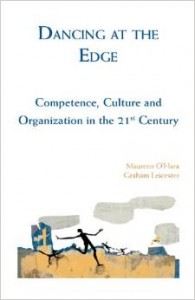
Dancing at the Edge

by Ron Potter February 7, 2015

Dancing at the EdgeRon’s Short Review: Pretty good book on identifying the competencies and organizations in the future but ends up identifying the classical competencies of humility, patience, courage, and faith.

Amazon-Buy-Buttonkindle-buy button


0 comments
0 FacebookTwitterEmail
Newer Posts
Older Posts
  • Facebook
  • Twitter
  • Linkedin
  • Rss
  • About This Site
  • About
    • Clients
  • Services
  • Resources
    • Trust Me
    • Short Book Reviews
  • Contact

About this Site | © 2024 Team Leadership Culture | platform by Apricot Services


Back To Top
Team Leadership Culture
  • Team
  • Leadership
  • Culture
  • Myers-Briggs
  • Trust Me
  • Short Book Reviews