
Team Leadership Culture
  • Team
  • Leadership
  • Culture
  • Myers-Briggs
  • Trust Me
  • Short Book Reviews
Top Posts
Obituary
REPOST: Four Functions, Three Rules
ROUNDUP: The Rise of AI
REPOST: Facing Adversity Series
ROUNDUP: Curiousity
ROUNDUP: Deep Work
REPOST: Character vs. Competence
REPOST: Opposite of Victim
REPOST: Listening With the Intent to Understand
REPOST: Performance vs Trust
  • About
  • Services
  • Resources
    • Trust Me
    • Short Book Reviews
  • Contact

Team Leadership Culture

  • Team
  • Leadership
  • Culture
  • Myers-Briggs
  • Trust Me
  • Short Book Reviews
Tag:

Trust

BlogTrust Me

No Soup for You! & Rigid Leadership

by Ron Potter January 26, 2015

One of the more popular episodes of the Seinfeld television series was the Soup Nazi. The story line centered on an aggressive man who owned a small restaurant where the locals stood outside in long lines to enjoy takeout orders of his delicious soup concoctions. However, these same customers were forced to tolerate this man’s rigid rules:
“Only one customer in the restaurant at a time.”
“Place your order immediately.”
“Do not point.”
“Do not ask questions.”
“Pay and leave immediately.”

Customers were forced to do what this man said, or they were told, “No soup for you! Come back in three months!”
Image Credit: Seinfeld, Season 7, Episode 6, Shapiro/West Productions, Castle Rock Entertainment

Image Credit: Seinfeld, Season 7, Episode 6, Shapiro/West Productions, Castle Rock Entertainment

Leaders with a Soup-Nazi style have one way of doing things—their way. Their focus is totally on themselves. They do not want (nor do they take) any suggestions. They “know” what is best for the organization and everyone in it. They “allow” people to “help,” but only under their carefully prepared set of rigid rules. They are a proud leader.

An “unhumble” leader is notoriously self-focused. Writer and scholar Henri Nouwen once said,

“It seems easier to be God than to love God, easier to control people than to love people.”

Isn’t that the perception most people have? It is far easier (and seemingly satisfying) to be focused entirely on ourselves and not on the needs of others or the opportunities presented by others.

A proud leader seems to “know” the truth and are usually its source. They take every measure to protect their point of view; they deny any effort to clarify the thought process; they do not encourage debate; they resist building a community of advisers.

A proud leader is critical. Such leaders develop self-centered standards and then tend to criticize anyone who does not follow their rules or who shows creativity and independence.

Yet, in today’s fast changing environment we need creativity and independent thinking and ideas more than ever.

Why are so many leaders resistant to change and innovation?

  1. They only want self-initiated change. Leaders who lack humility seek to develop only their own ideas. They have no interest in others’ opinions.
  2. They fear failure. We have seen so many potential leaders paralyzed by fear of failure. They fail to reach out for new territory because they are so afraid of losing. They do not understand the positive or learning side of failure.
    Baseball stars strike out more often than they hit home runs. However, they keep swinging for the fences. The best golfers in the world hit the green in regulation (two strokes under par) only about 75 percent of the time. One-fourth of the time they miss the mark. These golfers accept their failures, however, and give it their best to get back on track.
  3. They are too comfortable. Many times present realities give us hope that we do not need to change. We sit in our current situations, do the same thing every day, and hold on for dear life to past achievements.

A leader willing to change brings about change in the organization. Embracing change fosters an attitude of success and can deliver us from the quagmire of sameness.

Have you demonstrated willingness to:
Change?
Be open and seek new, maybe novel ideas?
Help your teams understand and experience experimentation?

Check your need for control or your fear of failure. It’s a great barometer of future success.
1 comment
0 FacebookTwitterEmail
Short Book Reviews

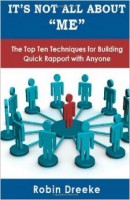
It’s Not All About “Me”

by Ron Potter January 4, 2015

It's Not All About MeRon’s Short Review: Written by an FBI agent who’s goal is to develop a relationship and gather information from people who may not be interested.  Given that, the 10 principles seem to be sound and actionable.

Amazon-Buy-Buttonkindle-buy button

0 comments
0 FacebookTwitterEmail
BlogTrust Me

Being Humble is Being Down to Earth

by Ron Potter December 29, 2014


It doesn’t seem to make much sense, but truly great leaders are humble.

The problem comes with how the word is normally used: Humble is thought to mean shy, retiring, unobtrusive, quiet, unassuming. Being humble can seem weak or, horrors, even borrrrrrrriiiiiiinnnnngggggg.

What does it really mean to embrace humility?

Humility is derived from the Latin word humus, meaning “ground.” One way to describe truly humble leaders is that they have their feet on the ground.

Image Source: Fungirlslim, Creative Commons

Image Source: Fungirlslim, Creative Commons

Imagine for a moment a farmer in his field, sitting tall on his tractor, a wake of freshly turned earth foaming off the blade of his plow. He is sunburned. His arms are as sturdy as fence posts. He’s a man of the humus—the earth. You could call him humble. Does this image suggest a lack of competence or strength? Do you sense it would be easy to take advantage of him? No, this image is one of strength and resilience. Think velvet-covered steel.

Humility is the first pillar of a leader whom others will trust.

A humble person sticks to the basics and is not prone to exaggeration. How much better off would we be today if the leaders of some of our fallen corporate behemoths had kept their heads out of the ozone and their feet on the ground?

Perhaps the most significant quality of humble leaders is their steady, clear-eyed perception of truth. A proud leader is prone to spreading and believing exaggerations—from little white lies to whopping falsehoods. Which high-powered modern leaders, intent on vanquishing foes and surmounting tall challenges, ever want to be known as humble? Not many—until, of course, they find out that humility is a critical first step on the path that leads to leadership success.

How have you defined humility in the past? Has an incorrect definition caused you to avoid humility in your leadership style?

0 comments
0 FacebookTwitterEmail
BlogFavoredTrust Me

Favored Are Those Not Full of Themselves

by Ron Potter December 15, 2014

In a humble state, you learn better. I can’t find anything else very exciting about humility, but at least there’s that.
—John Dooner, Chairman and CEO of Interpublic, as quoted in Fast Company magazine, November 2001

The pathway to greatness as a leader begins, ironically, with a step down. We have seen this over and over. It’s not the loud, take-control, arrogant, hotshot “world beaters” who excel as leaders over the long term. No, the really great ones don’t draw that much attention to themselves. They are, well, humble.

Image Credit: S@Z, Creative Commons

Image Credit: S@Z, Creative Commons

To many people, humility seems like a vice, weakness, or disease to avoid at all costs. Isn’t a humble person a wimp or, worse, a cringing and despicable coward? Won’t a humble leader be the object of contempt and abuse, the kind of person who gets trampled by all the aggressive ladder climbers in an organization?

This perception may have seemed accurate in the past, but not any longer. Jim Collins, author of the business book megaseller Good to Great: Why Some Companies Make the Leap…And Others Don’t, has this to say:

Level 5 leaders [individuals who blend extreme personal humility with intense professional will] channel their ego needs away from themselves and into the larger goal of building a great company. It’s not that Level 5 leaders have no ego or self-interest. Indeed, they are incredibly ambitious—but their ambition is first and foremost for the institution, not themselves.

Sounds a lot like humility, doesn’t it?

Humility requires leaders to shed all their prejudices and biases. Humility requires you as a leader to examine who you are and what you have become. Humility requires a completely new way to evaluate people (and yourself). Just because individuals have made it to a higher position on the corporate ladder does not make them any smarter, any more correct in their decisions, or any more valuable than others within an organization. True humility leads to openness, teachability, and flexibility.

Much of the business world still believes that the take-charge, proud hero-leader is the answer to every company’s prayers for a robust bottom line. This thinking may have made sense at one time, but no longer, as some of the world’s largest companies have stumbled in shame under leadership styles that will never be described as humble.

So, can’t an aggressive leader be effective? Of course. However, studies show when an aggressive leader (one lacking in humility) tries to force his or her own ideas on others, the rate of success is not as high as when the leader is open to new ideas and willing to listen, bend, change, and seek commitment from his or her people.

Pride focuses the attention of leaders onto themselves; humility focuses the attention of leaders onto others. The proud leader wants success that brings him perks. The humble leader wants success that brings enduring health to others and the organization. Which leader would you want to work for? Which one would you trust?

Humble leaders may not lead cheers for themselves, but neither are they retiring and shy people. These men and women stand firmly for their core beliefs and values. When you watch them work, their performance is graceful and smooth. They are a joy to talk to because they give no indication that they are an ounce more important than you are. Oh, and one more critical detail: These humble leaders produce incredible results.

Of course, there is more to being a trusted leader than having a humble attitude. There’s a bad-news/good-news aspect to the quality of humility. The bad news is that, to be honest, I have encountered only a few truly humble leaders. If they were an animal species, they would definitely be on the endangered list. The good news is that, if you will learn how to humble yourself, the upside for you and your organization will be substantial. There isn’t that much competition.

The path to greatness begins with a step down to humility.

I’m sure you have worked for both type of leaders. Tell us how you react to each in terms of your trust and your productivity/engagement.

0 comments
0 FacebookTwitterEmail
BlogTrust Me

What’s Trust Got to Do With It?

by Ron Potter December 1, 2014

Snoopy, Charlie Brown’s irrepressible dog, once lamented,

“It’s not easy being head beagle.”

And in the wake of recent moral meltdowns at both high and low levels of corporate America, Snoopy’s insight may be more on target now than ever before.

For those who still aspire to lead others well, however, the current leadership climate presents a great opportunity—especially for those who earnestly want to lead right. As never before—in all segments of society—we earnestly want to associate with people who are genuinely trustworthy.

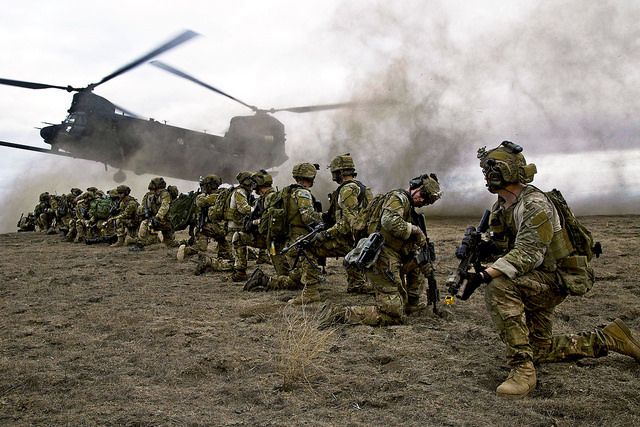
Steve seemed to have it all. He was tough, smart, disciplined, quick on his feet, and an effective strategist. He worked hard and could match anybody’s résumé with an impressive list of business and personal skills. With all that Steve had going for him, why was he failing in his latest and greatest work assignment? Was there a way for him to pull out of his tailspin?

Image Source: The US Army, Creative Commons

Image Source: The US Army, Creative Commons

Before his success in business, Steve had been an Army Ranger. Listening to Steve was like listening to a Tom Clancy audio book, only this was the actual participant reminiscing in real time. Steve’s Ranger training had prepared him to withstand almost anything, including extreme pain, in order to execute a mission. This was one sharp, strong man—Rambo in a business suit. Part of Steve’s extensive Ranger training had included instruction in being a leader at any level of organizational structure. Steve understood both giving and taking orders. He knew how to take charge, size up the situation, and go after the objective.

As part of my consulting approach, I had tested the team Steve was a part of to assess leadership performance. I’ll never forget the afternoon I met with this man who was so discouraged that his whole demeanor drooped. Steve was desperately looking for understanding and some help to regain his footing. What had pierced the strength of this highly trained, combat-proven Ranger?

Steve’s discouragement resulted from feedback he had just received from his peers on his leadership style and how it was affecting his ability to lead, to be trusted, and to be a good team member. He thought his leadership practices were sound, but his peers and those who reported to him directly saw them as oppositional, competitive, and detrimental to the team’s ability to function successfully.

Steve saw himself as a good, competent leader. Before I showed up, Steve assumed he had made all the right moves, had all the right skills, and was doing just great, thank you! Now this devastating feedback from his team told him other-wise. He knew in his heart he had the right stuff, so what was wrong?

What Steve didn’t understand is that skill is only part of the equation. He did have many solid leadership attributes: He was committed and focused, had great integrity, and could endure difficulties. What Steve didn’t understand was that some of his behavior and attitudes were offensive to coworkers. It didn’t matter to them that he was an ex-Army Ranger and had great leadership qualities and a list of achievements to show for it. To them he seemed proud. Steve didn’t understand the difference between being proud of your accomplishments and being perceived as kind of a cocky know-it-all. His air of superiority kept others from feeling they could trust him. Once Steve began to exhibit a more humble attitude in response to his teammates’ feedback and became more attentive to their accomplishments and strengths, trust began to build.

Trust is at the heart of any honest relationship.
Quality leadership is vitally important today, and many people work hard to improve their leadership skills. But all the training and technical skills, as important as they are, will not create an enduring, trusted leader.
Regardless of where you have been and what you have done—or even if you have no experience at all—you can become a leader worthy of trust.

Share with us the leadership behaviors that have prevented you from trusting.

0 comments
0 FacebookTwitterEmail
Short Book Reviews

Integrity: The Courage to Face the Demands of Reality

by Ron Potter October 26, 2014

integrityRon’s Short Review: Dr. Cloud says great leaders have 3 great qualities:  competency, team builders and the character not to screw it up.  Nice definition of Integrity.
Amazon-Buy-Buttonkindle-buy button

0 comments
0 FacebookTwitterEmail
Short Book Reviews

Soft Edge

by Ron Potter October 20, 2014

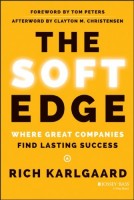
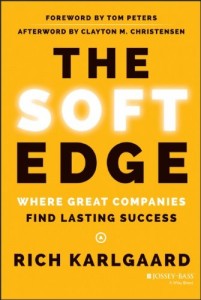
soft edgeRon’s Short Review: Hard skills?  Soft skills? I agree with Karlgaard that the soft skills are both the toughest to conquer and the most powerful in creating great companies.
Amazon-Buy-Buttonkindle-buy button

0 comments
0 FacebookTwitterEmail
Short Book Reviews

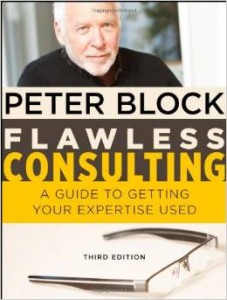
Flawless Consulting

by Ron Potter May 12, 2014

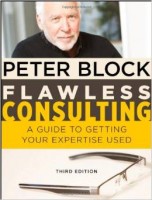
Flawless ConsultingRon’s Short Review:This was the first book I read when I made the decision to go into the consulting business and it set a foundation of integrity that has been invaluable.

Amazon-Buy-Buttonkindle-buy button


0 comments
0 FacebookTwitterEmail
BlogLeadership

Story Telling & Trust

by Ron Potter September 18, 2009
Image Source: Sarah Browning, Creative Commons

Image Source: Sarah Browning, Creative Commons

Building trust is an essential part of leadership, but people aren’t likely to trust you if they feel they don’t know you at all. That was the problem with a manager I was asked to help.

Her biggest issue is that she didn’t let people in. She was a leader – people reported to her – but her people didn’t feel like they understood who she was. She seemed very distant and aloof.

And it was intentional. When I spoke with her about it, she said:

“I don’t want to have people from work in my personal life. I don’t want them knowing what I do, or what sort of person I am.”

Her problem wasn’t arrogance or disdain. She felt vulnerable. She was trying to protect herself.

My challenge was to show her there was a way to connect with her people that didn’t involve the sort of intimacy she feared. I spent our first-day session together modeling how to do this. When we got to the end of the session, I asked, “How well do you think you know me now?”

She replied, “I know a phenomenal amount about you.”

“Really?” I said. “How is that?”

“Every time I asked you a question, you told me a story that related to that topic.”

I told her I did that deliberately because people remember stories, and they also connect with the person telling the story. She was feeling like she knew me almost intimately after just one day, and all because I told her six to eight stories as we were talking.

“You can do the same thing,” I said. “You don’t have to bare your soul with people. You just need to start telling stories about the things you’ve done and how you’ve learned what you know.”

It was a very powerful lesson for her. She walked out of the session thinking, “I can do that. I can tell stories.” I think it made a huge difference in her leadership ability.

0 comments
0 FacebookTwitterEmail
Short Book Reviews

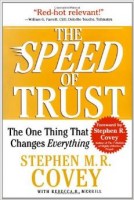
The SPEED of Trust

by Ron Potter October 9, 2006

The SPEED of TrustRon’s Short Review: Lack of Trust adds a stiff tax to the operation of an organization.


Amazon-Buy-Buttonkindle-buy button

0 comments
0 FacebookTwitterEmail
Short Book Reviews

Four Cardinal Virtues

by Ron Potter September 9, 2005

Four Cardinal VirtuesRon’s Short Review: Amazing how much these principles are at the heart of great corporations and leadership.


Amazon-Buy-Button

0 comments
0 FacebookTwitterEmail
Short Book Reviews

Faith, Hope, Love

by Ron Potter August 9, 2005

Faith, Hope, LoveRon’s Short Summary: Amazing how much these principles are at the heart of great corporations and leadership.

Amazon-Buy-Buttonkindle-buy button

0 comments
0 FacebookTwitterEmail
Newer Posts
Older Posts
  • Facebook
  • Twitter
  • Linkedin
  • Rss
  • About This Site
  • About
    • Clients
  • Services
  • Resources
    • Trust Me
    • Short Book Reviews
  • Contact

About this Site | © 2024 Team Leadership Culture | platform by Apricot Services


Back To Top
Team Leadership Culture
  • Team
  • Leadership
  • Culture
  • Myers-Briggs
  • Trust Me
  • Short Book Reviews