

Team Leadership Culture
  • Team
  • Leadership
  • Culture
  • Myers-Briggs
  • Trust Me
  • Short Book Reviews
Top Posts
Obituary
REPOST: Four Functions, Three Rules
ROUNDUP: The Rise of AI
REPOST: Facing Adversity Series
ROUNDUP: Curiousity
ROUNDUP: Deep Work
REPOST: Character vs. Competence
REPOST: Opposite of Victim
REPOST: Listening With the Intent to Understand
REPOST: Performance vs Trust
  • About
  • Services
  • Resources
    • Trust Me
    • Short Book Reviews
  • Contact

Team Leadership Culture

  • Team
  • Leadership
  • Culture
  • Myers-Briggs
  • Trust Me
  • Short Book Reviews
Tag:

Leadership

BlogLeadership

You’re About to Get Fired

by Ron Potter May 25, 2017

Clients have asked me to deliver that message. I’m often seen as the last chance to correct a leadership issue that has derailed a leader. On one hand, they see me as an investment in trying to save the leader. On the other hand, they’re hiring me to deliver the message that wasn’t heard: “Either change or lose your job.”

A few times I’ve had the opportunity to look back over several performance reviews. I’ve found it fascinating that the issue is always there, in writing, in past reviews. Why wasn’t the message heard?

“Why hasn’t anyone told me this before?” This is the response that I always hear. They just heard from me that they may lose their job and they’re shocked. “Nobody ever told them before!” When I point out that I see the issue in their performance reviews they still seemed shocked. “Yes, it’s there, but I didn’t know it was that bad.”

Bill Benjamin with IHHP speaks to this issue in a course called “Difficult Conversations” as part of “the Performing Under Pressure series”.

Here is a distinct pattern we see over and over again in the leadership development training programs we run: when leaders face a difficult conversation, a feedback conversation or a performance review, most cover 85, 90 or 92% of the content of what they want to say in the conversation, but a funny thing happens when they get to the more difficult part of the conversation, what we call the Last 8%. When they hit this part of the conversation—where there are consequences to what they are saying—they start to notice that the other person is becoming more anxious and (because emotions are infectious) they themselves become more anxious.

It is at this stage when many, out of anxiety, avoid the last 8% of the conversation and never tell the other person the entire feedback they have for them. The conversation ends and both individuals leave thinking they had the full conversation. Of course, they never did.

Yet neither fully comprehends it. First, the person on the receiving end can’t read the leaders mind and so walks away thinking they had the full conversation. The leader thinks they talked about most of what they wanted to talk about and deludes themselves into thinking they had the full conversation.

That description of the missing 8% explained a lot. The leader would always say to me, “Of course I talked to them about the issue. I made it very clear they needed to correct this.” The receiver would always say to me, “Why didn’t anyone tell me this before? Why didn’t they make it clear to me?”

The last 8%. Are you finishing your conversations? Are you pushing through to the end? Does the other person understand? Just because you said it doesn’t mean you communicated it. Did the other person hear you? Do they understand the gravity of the situation?

By not finishing the feedback you may be avoiding pain and suffering at the moment. But the future pain and suffering far outweigh avoidance. Avoidance of pain and suffering leads to mental illness. That’s what Dr. Scott Peck taught us in his book The Road Less Traveled.

Don’t avoid. Persevere.
0 comments
1 FacebookTwitterEmail
BlogTrust Me

Seeking Greatness in Others

by Ron Potter May 15, 2017

A humble leader—one not caught up constantly in personal needs—is able to explore, develop, and encourage the strengths in others. A humble leader wants to create a company of giants, to help people become “bigger” than they ever dreamed possible.

It can be positively exhilarating to learn what qualities the creator has “hard-wired” into others. Many times a humble leader discovers strengths in his or her coworkers that even they have failed to detect. Sometimes you just don’t know what precious gems are buried beneath the surface of another human being.

Finding Diamonds in the Rough

Many leaders focus on people’s weaknesses. They are always trying to “fix” someone. They fail to recognize potential and help people develop a path for personal success and reward.

Each person with whom a leader works has hidden gifts and talents. We need to help them uncover, develop, and use those talents. Humble leaders relish the idea of helping people find their unique niche. They enjoy moving people along to bigger and better things. They celebrate the victories and provide encouragement when their people are discouraged or fearful of moving ahead.

Simple, but powerful ways to do this include:

Assume the best of others

Leaders who expect the best of others exert a powerful influence. Many times leaders get caught in the trap of judging others. They measure, categorize, and classify people and the jobs they perform. assume and reward the best. It helps leaders not make rigid rules that hold down employees who want to soar.

Learn to listen

Being quick to listen implies that a leader is paying attention, that he or she is not distracted but is actively hearing what the other person is saying. A humble leader listens with the intent of understanding rather than responding.

Admit your mistakes

Humble, open leaders show vulnerability. And nothing demonstrates vulnerability quite like admitting mistakes. “I was wrong” is difficult to say, but it is one of the most freeing and powerful statements a leader can make. Admitting your mistakes allows others on the team to relax and admit their mistakes.

0 comments
0 FacebookTwitterEmail
Absurd!BlogIn-Depth Book Reviews

Absurd!: To Be a Professional One Must be an Amateur

by Ron Potter April 24, 2017

Amateur stems from the Latin word amator, which means “lover,” Amateurs do what they do out of love. Love is fundamental to good leadership because leadership is all about caring.

Aristotle spoke of Love as being one of the key elements to the highest level of happiness. His other words included at that level are Trust, Beauty, and Unity. All traits of great teams. Great leaders care for their people. Farson says “Indeed, caring is the basis for community, and the first job of the leader is to build community, a deep feeling of unity, a fellowship. Community is one of the most powerful yet most fragile concepts in the building of organizations.”

I’m afraid the lovers of the arts would never understand or agree that leadership would fall into the same category as a great symphony or painting, but I’ve experienced that kind of joy when great teams really get on a roll. “Management and leadership are high arts. When they are working well, they compare favorably to the other great aesthetic moments of our lives, to symphonies and sunsets.”

Leaders like to think of themselves as professional and indeed they are. “But the amateur performs work out of love, out of sensuous pleasure in the act of accomplishment, in the creation of community, in the bonds of compassion that unite.”

Great teams are built with great leaders based on the highest level of happiness: Truth, Love, Beauty and Unity. Aristotle may not have been thinking about our corporate leadership teams of today when he explained the four levels of happiness. But our nation’s founding fathers knew it was relevant when they declared in our Declaration of Independence that we find life, liberty and the “pursuit of happiness” to be our unalienable Rights.

What will you do to be an amateur today?

I’m continuing my series on an in-depth look at a wonderful little book that’s twenty years old this year. The title is Management of the Absurd by Richard Farson. You may want to consider dropping back and reading the previous blog posts about ABSURD! I think it will put each new one in great context.

0 comments
0 FacebookTwitterEmail
BlogCulture

Anyway Love

by Ron Potter April 13, 2017

People are illogical, unreasonable, and self-centered. Love them anyway.

Aristotle uses the word Love as one of the key elements of the highest level of happiness. The Greeks had several words that get transcribed into the English word Love. This one has no emotional connotation to it. It’s more about how you treat people. Treating people with respect, kindness and patience meant you were exhibiting this kind of love.

People are messy. They are illogical, unreasonable and self-centered. At least from our point of view. But we are also illogical, unreasonable and self-centered from their point of view. Guess what, we’re illogical, unreasonable and self-centered. Get over it and get over others being that way. Love them anyway. The more we treat each other with respect, kindness, and patience, especially when it appears we don’t deserve it, the more love we’ll experience.

Love them anyway!

Headlines from a wonderful little book titled Anyway by Kent Keith

0 comments
0 FacebookTwitterEmail
Absurd!BlogIn-Depth Book Reviews

Absurd!: Leaders Cannot Be Trained, but They Can Be Educated

by Ron Potter April 10, 2017

“Training leads to development of skills and techniques…Education on the other hand, leads not to technique but to information and knowledge, which in the right hands can lead to understanding, even to wisdom. And wisdom leads to humility, compassion, and respect—qualities that are fundamental to effective leadership.”

I like the word develop rather than education but I believe the principle is the same. Early in my consulting career, I wanted to teach leaders everything I had learned. I figured out very quickly that I couldn’t teach anyone anything, all I could do was to help them learn. The only thing they would learn was what they were ready to learn and what they wanted to learn. Beyond that, I couldn’t teach them anything.

New or prospective clients wanted me to provide an outline of my “training program.” I often had a hard time explaining that I didn’t have a program, we would figure out what the leader or team needed at that moment and would learn it together. Farson says is well: “Training makes people more alike. Education, because it involves an examination of one’s personal experience in the light of an encounter with great ideas, tends to make people different from each other. So, the first benefit of education is that the manager becomes unique, independent, the genuine article.” They develop integrity. They lead from who they are. Farson further says: “Managers can gain better self-understanding, learn about their own interpersonal selves, their reactions to and the impact on others, prejudices and blind spots, strengths and weaknesses. A better understanding of themselves and of their feelings gives all managers added trust in their perceptions, reactions, impulses, and instincts.

The following are words that appear in this blog. Go back and read them again with thought and reflection. There’s a lot of buried treasure in these words.

Wisdom leads to:

  • Humility
  • Compassion, and
  • Respect

Examines:

  • Personal experience
  • Great ideas, and
  • People who are different from each other

Managers [Leaders] become:

  • Unique
  • Independent
  • The genuine article
  • They develop integrity

Leaders are not alike. They are unique and whole.

I’m continuing my series on an in-depth look at a wonderful little book that’s twenty years old this year. The title is Management of the Absurd by Richard Farson. You may want to consider dropping back and reading the previous blog posts about ABSURD! I think it will put each new one in great context.

0 comments
0 FacebookTwitterEmail
Short Book Reviews

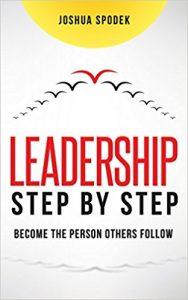
Leadership Step by Step

by Ron Potter April 1, 2017

Ron’s Short Review: Can you develop leadership? Josh sheds some light on the age-old question of “Are leaders made or born”. In a very practical way he identifies exercises that will work you through the process of Understanding Yourself, Leading Yourself, Understanding Others, Leading Others.


0 comments
0 FacebookTwitterEmail
Absurd!BlogIn-Depth Book Reviews

Absurd!: There are No Leaders, There is Only Leadership

by Ron Potter March 27, 2017

As we approach the end of Farson’s book, it really gets meaty as he begins to speak very directly about leadership. He starts this section by saying “One of the great enemies of organizational effectiveness is our stereotypical image of a leader. We imagine a commanding figure perhaps standing in front of an audience, talking, not listening, with an entourage of assistants standing by. The real strength of a leader is the ability to elicit the strength of the group. Leadership is less the property of a person than the property of a group.”

Organization effectiveness depends on trusting and well function teams. True leaders build great teams. The name of my company is Team Leadership Culture. The order is important. Companies with the stereotypical commanding figure leader don’t often sustain their results. Companies with leaders who build great teams have much greater sustained results. Teams first. But, it takes great team-building leadership to create the teams. Farson reinforces this concept by saying “True leaders are defined by the groups they are serving, and they understand the job as being interdependent with the group. They define their task as evoking the knowledge, skills, and creativity of those who are already with the organization.”

There is so much richness in this section that I can’t possibly cover it in this short blog. I started this series about Management of the Absurd because I thought it was a wonderful little book that was worth the attention. I’ll encourage you to go beyond my blogs and pick up a copy for yourself. It’s worth making the effort.

Farson closes this section with some statements that are near and dear to my heart. “The best leaders are servants of their people. Studies show that those people who are most successful in achieving power did not dominate the group; rather they served it. Humility comes naturally to the best leaders. They seldom take credit themselves but instead give credit to the group with which they have worked. They characteristically make life easier for their employees. They are constantly arranging situations, engineering jobs, smoothing out the processes, removing the barriers. They think about who needs what. They define their job as finding ways of releasing the creative potential that exists within each individual employee and in each group with which they work.”

If you’ve read my book on Leadership Trust Me you’ll know that the first attribute is humility. Farson says that humility comes naturally to the best leaders. I’ll say that the best leaders learn how to keep their ego in check and rely on that natural humility that is sometimes buried deep inside. The world tells us to promote our ego, build your brand, take charge. Humility trumps all those approaches if your desire is to be a great leader.

There are no leaders, only leadership.

I’m continuing my series on an in-depth look at a wonderful little book that’s twenty years old this year. The title is  Management of the Absurd by Richard Farson. You may want to consider dropping back and reading the previous blogs about ABSURD! I think it will put each new one in great context.

1 comment
0 FacebookTwitterEmail
BlogTrust Me

Who is Controlling This Thing?

by Ron Potter March 20, 2017

Here’s a challenge: On a scale of 1 to 5, rate your need for control in various situations.

Overcontrol diminishes trust. Control-freak leaders have a hard time building truly great teams. Their lack of trust in subordinates hamstrings creativity and superior performance. Conversely, a humble leader, who is not too full of self, has the capacity and good sense to allow others to sparkle and make a difference.

A humble leader steps aside so that others can run by and seize the prize of their own greatness. But just how is this done? Here’s an overview:

Assume the best of others

Leaders who expect the best of others exert a powerful influence. Many times leaders get caught in the trap of judging others. They measure, categorize, and classify people and the jobs they perform. Ken Blanchard likes to talk about “catching people doing things right.” This idea puts the emphasis on solid behavior and good intentions. It forces managers to assume and reward the best. It helps leaders not make rigid rules that hold down employees who want to soar.

Learn to listen

Being quick to listen implies the leader is not distracted but is actively hearing what the other person is saying. A humble leader listens with the intent of understanding rather than responding. Listening with the intent to understand triggers curious questions that help both the listener and speaker grow in their thinking and improve their conclusions.

Reward honest communication

How do you react when someone tells you bad news? Does the messenger become a target for your arrows? We know a man who confronted his boss over a matter that had the potential to really upset the company’s applecart. Instead of shooting the messenger, the supervisor commended the truth-bearer for his straightforward approach and creativity. He was able to look past the message to the employee’s intentions. The boss agreed with his employee in significant ways and changed his perspective. He rewarded open communication, and the company was better off because of it.

Admit your mistakes

Humble, open leaders show vulnerability. And nothing demonstrates vulnerability quite like admitting mistakes. “I was wrong” is difficult to say, but it is one of the most freeing and powerful statements a leader can make. Admitting your mistakes allows others on the team to relax and admit their mistakes. It allows the team to breathe and grow. Admission of wrong, seeking and granting forgiveness, and moving on are powerful tools of a humble leader.

0 comments
0 FacebookTwitterEmail
BlogTrust Me

Seeking Humility

by Ron Potter March 6, 2017

What in your life do you need to let go of so you can become more humble?

Being humble and teachable means learning to trust others and their opinions and instincts. It means listening with the intent of learning instead of simply responding. It means seeking personal development from every situation, experience (both good and bad), and transaction.

Humility is the first pillar of a leader whom others will trust.

I know it may not make much sense, but humility is a prominent characteristic of truly great leaders. A humble person sticks to the basics and is not prone to exaggeration. How much better off would we be today if the leaders of some of our fallen corporate behemoths had kept their heads out of the ozone and their feet on the ground?

Perhaps the most significant quality of humble leaders is their steady, clear-eyed perception of truth. A proud leader is prone to spreading and believing exaggerations—from little white lies to whopping falsehoods. Which high-powered modern leaders, intent on vanquishing foes and surmounting tall challenges, ever want to be known as humble? Not many—until, of course, they find out, as we intend to demonstrate, that humility is a critical first step on the path that leads to leadership success.

Humble leaders take a different approach. They are not so self-absorbed as to think that they don’t need to listen and be open. Their spirits are not critical because they are always open and scanning their employees, customers, and systems for new and better ideas.

Humble leaders know that they cannot control people or circumstances. The irony is that the more they loosen their grip, the more they gain. The more flexibility—rather than control—that they can build into themselves, the more they succeed.

A humble leader welcomes change. Change often equals growth. But not change for the sake of change. A humble leader needs to discern the right change, a skill that is developed by being open and teachable.

Being humble and teachable means learning to trust others and their opinions and instincts. It means listening with the intent of learning instead of simply responding. It means seeking personal development from every situation, experience (both good and bad), and transaction.

So I pose my question once again: What in your life do you need to let go of so you can become more humble?

0 comments
0 FacebookTwitterEmail
BlogLeadership

One Key Element to Success

by Ron Potter February 16, 2017

Everyone needs a good coachYour Real Value

We had just finished a global conference. The forty plus leaders from three continents had left and were headed back to their different parts of the world. The CEO and I were relaxing in his office recounting the lessons learned from the session. His words to me went something like this:

  • We’ve developed a leadership team that is doing some astounding things. I have never experienced a team working at this level.
  • I’ve learned so much about leadership over the last couple of years. It’s amazing how differently I now think about leadership compared to what I thought I should be doing earlier in my career.
  • This global culture that we’ve built is going to help us weather almost any foreseeable storm. We could be in better shape.

At this point, I have to admit that I was feeling pretty good about myself and the work we had done together. He had just hit the three main function of my company: Team, Leadership, Culture. I must be doing something right. But then he said something that really shook me. He said, “But your real value is…” I had no ideas what he was about to say. What else was there beyond Team, Leadership and Culture? He continued, your real value is when we just sit and talk like this. At that moment I understood the value of executive coaching.

When You’re Already the Best

Years ago, I had an opportunity to visit the Colonial Golf Tournament in Fort Worth, Texas. I had chosen to walk the course with a few of the players rather than stay in one location.

Tom Watson was at the top of his game during those years. He may have been the best player at the time. Certainly nobody knew more about the game of golf or his personal golf game than Tom Watson. He is a real student of the game. Toward the end of his round I noticed that he began to lose his drives to the left.

On the 18th tee his hook was so pronounced that he almost hit it in the water down the left side. He finished his round very calmly, but as he was exiting the 18th green I noticed that he looked very directly at one person and seemed to nod his head as if saying, “Come with me!” It turned out to be his swing coach and they headed off to the practice tee.

As I observed from a distance (I could not hear their words) Tom had lost that calm demeanor and was franticly motioning to his coach that something had gone dramatically wrong with his golf swing. As his coach calmed him back down and suggested he try a couple of minor corrections, his practice drives began to sail long and true. With a smile of contentment, he hit drive after drive right down the middle. Even though he may have been the best in the world at that point, he still needed a coach to help him correct minor flaws that had creeped into his game.

Are You Selling Drugs?

Those words were asked of me a little too seriously by and Executive Admin that I had come to know. My slightly shocked response was, “Of course not!”, why would she ask? She told me that her CEO never gave more than an hour of his schedule to anyone. Yet, when I showed up once a month he would clear his calendar for an entire afternoon and she would hear us in his office talking and laughing for many hours.

Was I selling drugs? Not the pharmaceutical kind but yes, I was providing the CEO with something that helped him deal with his stressful and complex business life. Time to think, talk, and ask questions with a trusted coach.

Reboot Your Heart and Mind

Rich Karlgaard is one of the authors that I like to read. Last year he wrote one of his regular contribution articles to Forbes magazine with the above title. He was speaking of Bill Campbell, one of the Silicon Valley legends that had recently passed away. Bill was a successful leader in his own right but Rich was explaining that he would be remembered most as a great coach to several of the valleys biggest names. This role of being a sounding board, a safe listener, a wise counsel is present in the lives of many successful leaders.

Have you found this person(s) in your life? Are you even looking? Are you serving that role for other people? Listening, sharing and asking meaningful questions. We all need coaches.

0 comments
0 FacebookTwitterEmail
BlogTrust Me

A Legacy of Trust

by Ron Potter December 5, 2016

evclndfydbs-adrian

Pressure and mounting fear can drive you away from the two pillars of great leadership—humility and endurance—in order to succeed in the short run, but it will not last or create trust. It will only drive a wedge between you and the true success you can have as a leader who focuses on the two pillars and the other attributes.

Once again we want to remind you of the power contained in these qualities—and how the opposite qualities can destroy the great person you want to become and the great organization you want to lead.

We all have the ability to adapt these attributes to our particular leadership styles. You have the ability to start today. Why wait any longer?

Grasping leadership greatness starts by letting go.

Letting go is not a one-time deal. You must do it again and again and again.

Many of the most enduring ideas and values in our lives today have been shaped and molded by modern-day “blacksmiths.” Ancient or modern, the principles are the same: The blacksmith heats the iron at the forge, shapes it on his anvil, and cools it in the water.

The blacksmith heats the metal to prepare it for change. The trusted leader warms people to change through humility and compassion. The blacksmith hammers the metal to form a new shape. The trusted leader shapes an organization through commitment and focus. The blacksmith cools the metal to “settle” its strength. The trusted leader uses peacemaking to give the changed organization meaning and understanding. The forged metal, once cooled,  becomes the powerful sword, the productive plow, or the beautiful wrought-iron gate.

By understanding the elements that build and destroy trust, effective leaders shape strong and productive organizations:

At the end of the same session when Jesus shared his Beatitudes with his followers—the ideas on which the eight attributes are based—he told an interesting story. He said that if his team members would put what he had taught them into practice, their lives would be like a man who built his house on a solid rock foundation. No matter what kind of storm hit, he promised that the house would stand. But if these men did not pay attention to the truth he shared, their lives would be like the man who built his house on a foundation of shifting sand. When the storm hit that house, it would crumble and wash away.

We believe the eight attributes will have that kind of effect on you. Allow them to permeate you from the inside out, and you will have a career—and a life—built on solid rock. You will be known as a person who can say with clear-eyed conviction, “Trust me.”

And others will follow.

tlc-meme-12%2f5

0 comments
0 FacebookTwitterEmail
BlogCultureThree Steps to Become the Best Learner

Three Steps to Become the Best Learner – Part I

by Ron Potter December 1, 2016

ietuye-b28a-daniel-watson

Knowing something is different than knowing the name of something.

Shane Parrish of Farnam Street Blog spoke of this concept from Richard Feyman, the Nobel winning Physicist.

Faynman said that his technique would ensure that he understood something better than everyone else.  It helped him learn everything deeper and faster.

Shane says it’s incredibly simple to implement.  The catch: It’s ridiculously humbling.

Well, if you’ve read many of my blogs you’ll know that ridiculously humbling is a good place to be.  Let’s take a look at the Technique.

Step 1: Teach it to a child

Faynman says “Write out what you know about the subject as if you were teaching it to a child. Not your smart adult friend but rather an 8-year-old who has just enough vocabulary and attention span to understand basic concepts and relationships.”

My daughters may not even remember these moments of learning or certainly may not remember them the same way but that’s OK because we know that everyone’s memory is unique.  So, here’s my memory.

When my daughters each hit about fifth grade they came to me with a school topic where they were struggling.  By the time my daughters were this age I had finished my engineering degree from Michigan and had already been in the work place about 15 years.  I knew a lot of stuff (or thought I did).  So, I would begin to explain the subject from my point of view and experience level.  After a few minutes of me pontificating I could see their eyes glaze over and they soon would say “You’re no better than everyone else.  I still don’t get it.”  After being humbled I asked to see their text book and would quickly scan ahead a chapter or two.  I than would think about what they needed to learn to be ready for the challenge in the next chapter.  When I focused on where they were and what they needed to learn at that moment, I discovered that their learning quickly accelerated as they moved from chapter to chapter.

I was recently consulting with one of our best known high tech firms.  The team I was working with was trying to sell their technology into one of the oldest, most successful heavy industrial manufacturing firms.  Upon returning from a meeting that didn’t go well, the team leader said to me “They are so un-savvy”!  I told him my “Teaching a fifth grader story.”  As he listened quietly his eyes began to grow wider and he finally proclaimed, “We haven’t been trying to teach them the next chapter, we’ve been trying to teach them from a book that’s being written as we go!”  He quickly pulled his team back together and focused on what “chapter” their client was on and how could they quickly teach them what they needed to know for the next chapter.  They began to have great accelerated success with that client and built a great bond of trust.

We’ve all become experts in our field.  (I remember seeing a porta potty with the proclamation on the side “Outstanding in the Field”)  Don’t use the language and concepts you’ve come to know.  Figure out how to teach them to a fifth grader.  If you can do that, your own learning will go deeper and deeper as well.

We’ll save the other two topics of Review and Organize and Simplify for future posts.

tlc-meme-12%2f1-1


0 comments
0 FacebookTwitterEmail
Newer Posts
Older Posts
  • Facebook
  • Twitter
  • Linkedin
  • Rss
  • About This Site
  • About
    • Clients
  • Services
  • Resources
    • Trust Me
    • Short Book Reviews
  • Contact

About this Site | © 2024 Team Leadership Culture | platform by Apricot Services


Back To Top
Team Leadership Culture
  • Team
  • Leadership
  • Culture
  • Myers-Briggs
  • Trust Me
  • Short Book Reviews