
Team Leadership Culture
  • Team
  • Leadership
  • Culture
  • Myers-Briggs
  • Trust Me
  • Short Book Reviews
Top Posts
Obituary
REPOST: Four Functions, Three Rules
ROUNDUP: The Rise of AI
REPOST: Facing Adversity Series
ROUNDUP: Curiousity
ROUNDUP: Deep Work
REPOST: Character vs. Competence
REPOST: Opposite of Victim
REPOST: Listening With the Intent to Understand
REPOST: Performance vs Trust
  • About
  • Services
  • Resources
    • Trust Me
    • Short Book Reviews
  • Contact

Team Leadership Culture

  • Team
  • Leadership
  • Culture
  • Myers-Briggs
  • Trust Me
  • Short Book Reviews
Tag:

Growth

Being GenuineBlogCulture

Being Genuine – Part IV

by Ron Potter December 6, 2018

This series of blog posts is based on an article written by Travis Bradberry in Forbes titled “12 Habits of Genuine People.” You can read the previous post here.

Here is his list of 12:

  1. They don’t try to make people like them.
  2. They don’t pass judgment.
  3. They forge their own paths.
  4. They are generous.
  5. They treat everyone with respect.
  6. They aren’t motivated by material things.
  7. They are Trustworthy.
  8. They are thick-skinned.
  9. They put away their phones.
  10. They aren’t driven by ego.
  11. They aren’t hypocrites.
  12. They don’t brag.

In this blog, I would like to consolidate points 4 and 6.

Generous and not motivated by material things.

For several years I have been using Aristotle’s framework of the pursuit of happiness to talk about leadership and team building.

Aristotle concluded that what makes us uniquely human is our pursuit of happiness. No other animal gets up in the morning trying to figure out what will make them happy. Our forefathers thought this concept was so important that they included it in the opening paragraph of our Declaration of Independence.

We hold these truths to be sacred and undeniable; that all men are created equal and independent, that from that equal creation they derive rights inherent and inalienable, among which are the preservation of life, & liberty, and the pursuit of happiness.

Psychology Today says that Aristotle was discovering “the best way to lead our lives and give it meaning.”

Aristotle defines four levels in our pursuit of happiness. While there is a progression from levels 1 to 4 in our pursuit of a meaningful life, it is also obvious that we’re constantly cycling through the levels, never leaving any one of them entirely behind. But, Aristotle does tell us that at any point in time, one of the four levels will identify our dominant pursuit of happiness at the moment.

Level One: Sensual, maximum pleasure, minimum pain. Searching for happiness through our senses; sight, smell, hearing, taste, and touch.

Level Two: Ego and pride. Winning, achieving, producing, being the top dog.

Level Three: Beatitudes. Blessing others

Level four: Sublime Beatitudes. Accomplishing great things together.

Level Two, our ego and pride are the toughest one to overcome and move on to the Blessings. We’re hard-wired to function at the first two levels. It takes discipline, understanding and need for personal growth to move towards “the best way to lead our lives and give it meaning.”

Being generous and not being motivated by material things is the result of moving from level two to level three happiness.

Genuine people live predominately in pursuit of happiness at level 3.

0 comments
0 FacebookTwitterEmail
Being GenuineBlogCulture

Being Genuine – Part III

by Ron Potter November 29, 2018

This blog series is based on an article written by Travis Bradberry in Forbes titled “12 Habits of Genuine People.” You can read the previous installments here and here.

Here is his list of 12:

  1. They don’t try to make people like them.
  2. They don’t pass judgment.
  3. They forge their own paths.
  4. They are generous.
  5. They treat everyone with respect.
  6. They aren’t motivated by material things.
  7. They are Trustworthy.
  8. They are thick-skinned.
  9. They put away their phones.
  10. They aren’t driven by ego.
  11. They aren’t hypocrites.
  12. They don’t brag.

In this post I would like to consolidate points 5 and 9.

Phones and Respect

The real focus here is point number 9, “They put away their phones.” But I believe it relates directly to point 5, “They treat everyone with respect.”

When Bradberry writes about point number five, he emphasizes everyone. I don’t want to lose that emphasis. Genuine people treat all people with respect. You can watch their interactions with people who are farther up the organizational structure and people who are on the bottom rungs. It doesn’t make any difference. By observing their actions, you could not tell where the person “ranked” based on the interchange. One of my best indicators is how people treat wait staff when they encounter them. I have a high regard for people who treat the people who are serving them with great respect.

Phones

There is so much research on the bad impact of having our phones front and center all the time it would take an entire book to go into the impact. All negative impact.

I run a lot of team meetings in my work. To me, good teaming is at the heart of great organizations. The name of my company starts with the word Team. I’ve been facilitating meetings as a consultant for nearly 30 years and was either running them or a part of them in the corporate world for 20 years prior to that. Nothing! Nothing disrupts and minimizes the productivity of team meetings more than phones.

I’ve seen CEO’s keep their phone just under the lip of the table assuming that no one will notice their constant peeks or their occasional responses to email or messages. Do they really think everyone else in the room is that stupid? Apparently.

I’ve watched the MD get a text and immediately get up with a show of how important they are and explain that they need to answer this right away. A young working mom told me once that she received so many calls from her children over this argument or that disagreement that she finally resorted to one question. “Is there blood involved?” If not, she’ll handle it later. That young mom had apparently learned more than an MD. If there’s no blood involved, don’t exhibit the disrespect by leaving the room for an “important” call.

Seek to Understand First

Steven Covey wrote the book 7 Habits of Highly Effective People. Rule number 5 is “Seek First to Understand, Then to be Understood.” Mr. Covey had discovered that as human beings, we’re much more interested in listening to your point of view once you’ve shown the respect to fully listen to and understand my point of view. Having a phone in hand during the conversations sends the message that you’re really not fully interested in understanding. There are far more important things to respond to on my phone than stand here and listen to your point of view.

Put the Phone Away

Putting the phone away not only makes you a more genuine person, a person that people want to follow. It also makes you much more effective. If leadership and effectiveness are two things you believe will benefit you in the long run, PUT THE PHONE AWAY!

0 comments
0 FacebookTwitterEmail
BlogTrust Me

What Difference Does Trust Make

by Ron Potter November 5, 2018

In a research study several groups of business executives were asked to be involved in a role-playing exercise. The groups were given identical factual information about a difficult policy decision, and then they were asked to solve a problem related to that decision. Half of the groups were briefed to expect trustworthy behavior from the members of their group; the other half were told to expect untrusting behavior (“You cannot openly express feelings or differences with members of your group”).

After thirty minutes of discussion, each group member as well as those who had observed the role playing completed a questionnaire. The responses were in harmony with each other: The discussions among members in the high-trust group were significantly more positive than the discussions among members of the low-trust group. In fact, people in the low-trust group who tried to be open and honest were virtually ignored. Hostility was caused by a mere suggestion, and it quickly spread throughout the group. The people in the low-trust groups realized that the lack of trust kept them from high achievement. They did not feel free to be vulnerable due to the actions and rejection of other group members—they were not among the trustworthy.

Here are some findings on the high-trust group:

  • Members were more open about their feelings.
  • Members experienced greater clarity of thinking.
  • Members searched for more alternative courses of action.
  • Members reported greater levels of mutual influence on outcomes.

The high-trust group opened the gate of personal vulnerability, and the result was a better team and a model of integrity-based leadership.

When people do not trust one another, it is difficult for the organization to succeed and for the people within the organization to feel completely fulfilled. People who feel trusted and who find their leaders trustworthy are more satisfied, and their work environment is less stressful. There exists a feeling of openness and confidence and a greater ability for people to believe they can take risks.


0 comments
0 FacebookTwitterEmail
BlogTrust Me

How Big is the Pie: Rewards of You-First Leadership

by Ron Potter October 8, 2018

The past couple weeks, we have discussed you-first leadership and the characteristics that make up that kind of leader.
Becoming a “you-first” leader may sound a bit like career suicide. Isn’t this just another way to get trampled while climbing the corporate ladder?

I would say that depends on your view of the pie.

Are you the kind of person who believes in the “fixed pie” view of the world? “There is only so much pie to go around, so if I don’t get mine first, there won’t be any left after everyone takes theirs.”

Or do you believe in an expanding pie? “If we all do a great job, there will be more than enough to go around for all of us.” “You first.”

The Sweet Rewards of You-First Leadership

There are actually great personal and professional rewards awaiting the person intent on taking care of the needs of others first. In the long run compassion, like humility, will be an asset that will propel you into being an admired leader, one whom others will follow. It will also provide you with a great deal of personal satisfaction and delight.

Having a “you-first” attitude will result in a new and better personal leadership paradigm. Instead of viewing employees and others as those in need of control and reshaping, you will move toward becoming a coach who provides people with honest feedback. You will create a safe environment in which people are free to share honestly about your programs, ideas, vision, and initiatives.

Another way to look at yourself and develop good habits is to examine whether you act as an old-style boss, or whether your actions (not intentions, but real actions) are directed toward empowering others.

Zig Ziglar has built a whole career based on the concept that to get everything you want you need to help other people get what they want. “You first.”

A you-first leadership style goes beyond humility. Humility says, “I’m no better than you; we are equally important.” A “you-first” attitude puts the other person out front.

Let’s Discuss

  • How much are your decisions driven by your own selfishness?
  • What are you trying to protect by not seeking a “you-first” style when you work with others?
  • Have you ever experienced personal satisfaction by putting another person first, placing their needs ahead of your own? Explain.

0 comments
0 FacebookTwitterEmail
BlogCaring in ActionTrust Me

Caring in Action: Challenge

by Ron Potter August 13, 2018

Caring becomes real to another person only when some action occurs. I believe that communication, confrontation, and challenge are three of the best ways a leader puts “feet” to true caring.

Over the past few weeks, we’ve unpacked each of these aspects of caring and will conclude this week with challenge.

Challenge

An often overlooked aspect of compassion is the desire to help a person grow. Compassion includes challenging others to attain high-quality results on projects that stretch them. People need challenge in their lives, and leaders need to help their employees see the value of it not only for their own well-being but for the well-being of the organization as well.

This concept often reminds me of a story my co-writer Wayne would tell. Some years ago, he was asked to tackle an impossible task. He assumed leadership for a company division that had underperformed for several years. He inherited a group of salespeople whose only motivation was retirement. In addition, the division was overstocked with wrong inventory, and customer complaints were stacked high.

He rolled up my sleeves and began working to pull the department together. The first goal was the sales team. Together they worked out some new incentive programs and some additional benefits if sales quotas were met. Then they turned our attention to the customers, and, one by one, they solved their problems, creating a renewed commitment to service within the division. Next came sales and marketing strategies. With the team’s help, they launched a new marketing campaign that began to increase sales. They aggressively sold off the old inventory and partnered with a supplier to provide them with fresh stock from his facility. They were on a roll!

In three months sales and profits were up, and the crew (all but one stayed with the program) was happy and productive.

One day Wayne’s boss put his arm around his shoulders and asked him if he was aware that he had accomplished what many thought was impossible. His boss asked him what he had learned from the experience and told Wayne, “I’m sorry for all the extra work the last few months. I hope you understand—I did this to help you grow into a better manager.”

This man challenged Wayne to be better. His desire was to help him grow by throwing him into the middle of an almost impossible situation. Sure, the company prospered, but his goal also included Wayne’s personal growth and development.

How have you been challenged to grow? How might you challenge those who report to you to grow?

0 comments
0 FacebookTwitterEmail
BlogCulture

ABC or DEF. Which Grade do you receive?

by Ron Potter June 7, 2018

Based on our grades from school most of us are going to think that ABC is probably the place we want to be. However, that does not apply to this set of circumstances. In this case, I define ABC as Always Blaming and Complaining.

ABC.

What do you hear from the ABC crowd? Blaming.

  • blaming others
  • blaming circumstances
  • blaming family situations
  • blaming traffic situations.

Plenty of blame to go around. They never seem to hold themselves unaccountable.

Along with blaming, complaining is a very close relative. Complaining about the circumstances that they seem to have no control over.

One of my favorite adages through the years is something called The Serenity Prayer.

“God grant me the serenity to accept the things I cannot change, the courage to change the things I can, and the wisdom to know the difference.”

With the complainers, everything seems to fall into the “I cannot change” category but there is no serenity. There is a lack of courage to identify and change the things that are possible to change.

In many cases, they seem to want to accomplish great things or tackle some new entrepreneurial endeavor. But the first thing out of their mouth is complaining about why that’s not going to happen.

  • Government regulations are going to keep them from succeeding
  • Nobody will listen to them
  • Investors won’t invest in them

Always blaming and complaining is not where you want to be.

DEF.

DEF stands for Dependable, Effective, and Friendly.

Being dependable means doing the things that you have committed to do. It has as much to do with integrity as it does anything else.

  • When you commit to something
  • When you agree to something
  • When you say you will do something

Do it!

Can people depend on you? People figure that out quickly. If they can’t depend on you:

  • They’ll stop turning to you
  • You’ll do less and less work over the time (becoming expendable)
  • Those who are dependable get more and more assigned to them because they can be counted on.
  • Over time, this causes great disruption within organizations.

Are you effective? We all tackle our work, both individually and in teams, but how effective are you?

All kinds of issues can come into play here. One is perfectionism.

Do you have to have everything absolutely perfect? Does everything have to be perfect before you release it? Perfectionism usually gets to a self-esteem issue and really doesn’t do the organization any good. Do the work that you need to do. Figure out what’s important. Stay focused on those key important issues and be effective at what you accomplish.

Friendly. This may sound a little out of place here, but one interesting experiment I run with teams is titled The Perception Exercise.

I share one list of characteristics with half the team and another list with the other half. Once they’ve each observed their list, and understood it, I start asking them about the characteristics of this individual.

  • Are they dependable?
  • Are they effective?
  • Are they honest?
  • Are they trustworthy?
  • Will they be successful in life?
  • Do you want them on your team?

And one half of the team typically scores that individual much lower than the other half. The interesting difference is that the lists are identical in terms of characteristics, except for one word.

One list contains the word warm. “This tends to be a warm individual.”

The other list contains the word cold. “This tends to be a cold individual.”

Those two words, whether we perceive the person to be warm or cold, friendly or not, shapes our whole view of their performance, contribution and future success. We even decide if we want them as part of our team or not. Psychologists tell us that we will make a warm or cold judgment in the first 15 seconds of meeting a person.

Sometimes it’s very difficult to figure out where we are ourselves, and we need to get some feedback on this. But quite honestly, I believe that if you are very thoughtful, intentful and honest with yourself, you can decide whether you fall more on the ABC side or the DEF side. Keep in mind that if you fall on the ABC, always blaming and complaining, you may be attempting to avoid some immediate pain, but in the long term, none of that will lead to success or happiness in your life. However, if you’re one of those people who fall on the DEF side of the scale, dependable, effective, friendly, we can predict with good accuracy much more long-term happiness and success and productivity in your life.

Give yourself a grade, see where you come out on this one.

0 comments
0 FacebookTwitterEmail
BlogTrust Me

Passionately-Focused Leaders

by Ron Potter June 4, 2018

Staying focused is virtually impossible without passion. Passion is a craving deep within us, that yearning for something we feel we just must have. It surfaces in a multitude of ways. For example, consider the story of Patrick (Pádraic) Henry Pearse.

Headmaster at St. Edna’s, a small private college south of Dublin, Pearse’s passion was Ireland’s heritage, something he feared was being destroyed by the domination of the English.

Pearse was by nature a gentle man who could never harm even the smallest creature. He had spent his life helping his students understand and pursue their own big dreams. Pearse certainly was not considered a militant or a revolutionary. Yet he was driven by his passion for Ireland.

No longer able to watch the nation’s language, culture, and history eroding, he felt it was time “to pursue his own great goals that, in his words, ‘were dreamed in the heart and that only the heart could hold.’ ”4

He embraced the cause to reclaim Ireland and within a year was a leader of the Easter Rising, the Irish rebellion of 1916. After days of intense fighting, the British army defeated the revolutionaries, and on May 3, 1916, Pearse and others were executed in a jail in Dublin. The British leaders mistakenly thought this would put an end to the rebellion. But they did not understand the power of a person’s passion, as people across Ireland embraced Pearse’s ideas for saving Ireland and dreaming big dreams.

In 1921, Ireland declared freedom from England, and Pearse’s passion and dreams for the Irish culture came to fruition. Pádraic Henry Pearse’s passion ultimately forced a nation to find itself.

Finding our passion includes dreaming big. Ask yourself some questions:

  • What is my burning passion?
  • What work do I find absorbing, involving, engrossing?
  • What mission in life absolutely absorbs me?
  • What is my distinctive skill?

Answers to questions like these will point you to your passion.

A friend of mine, the late Leonard Shatzkin, had a passion for mathematics that helped him become a pioneer in understanding the technicalities of inventory management. He developed a model of inventory control using linear regression that proved to be revolutionary for two companies he headed. But his passion didn’t just stop with benefits for his own organizations. Leonard then devoted the rest of his professional career to telling anyone who would listen about maximizing return on investment and minimizing overstocks.

That’s what passion is like; one way or another it demands expression. Even after his death, the effects of Leonard’s passion live on. His ideas and systems serve many individuals and organizations well.

Too often we allow old habits, the rigors of everyday life, and our ongoing fears or frustrations to impede our passion. We are cautioned by friends: “Don’t be so idealistic.” “Don’t be so daring.” “What if you fail?” These kinds of comments can shrink our passion so that we settle for working in fields away from our passion. We abandon it, we make do, and we play it safe.

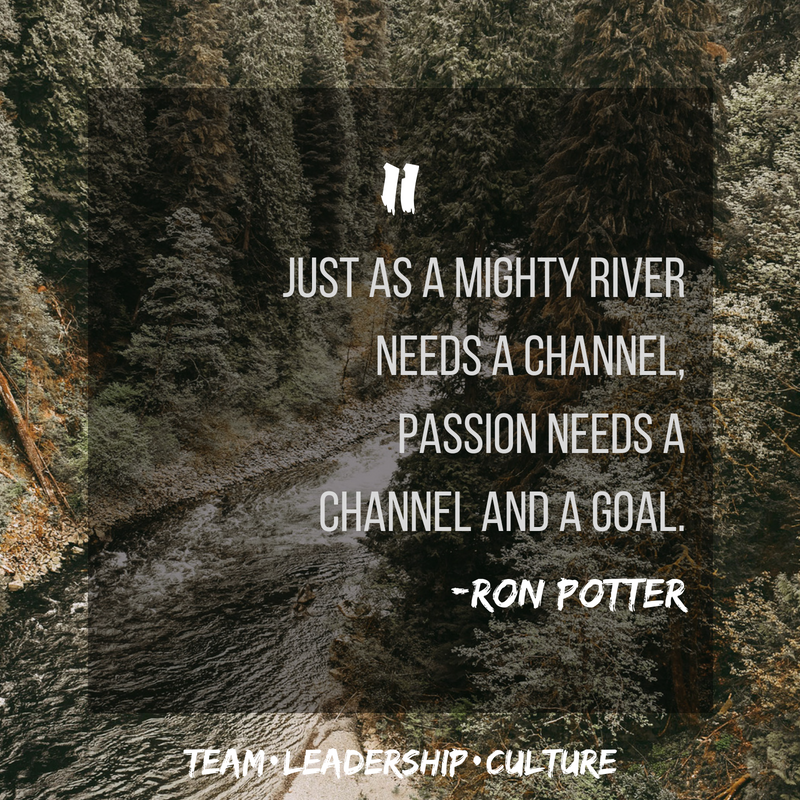
Just as a mighty river needs a channel, passion needs a channel and a goal. Without such restraint, the result is a flood, a natural disaster. You need to make certain that you control your passion, not the other way around.

0 comments
0 FacebookTwitterEmail
BlogCulture

The Machines won’t stand a chance!

by Ron Potter May 31, 2018

Earlier this year I reviewed the book Only Humans Nee Apply. The question raised by the book is:

How do we as humans survive in this incredible technology, robotic age that we’re now entering?

One way to look at history is through the “ages” that have been identified.

  • The Agricultural Age
  • The Industrial Age
  • The Information Age
  • The Technology Age

The Agriculture Age and Industrial Age are well documented and understood. One important thing to remember is the workers at the center of those ages were essentially the upper-middle class of the day.

The landowner or industry owners were the wealthy of that era, but the agricultural and industrial workers were the upper middle class of the day.

The steam engine brought an end to the industrial age when factory workers began making more money. The industrial age ended in September 2007 when the United Auto Workers wages dropped from $60/hour to $20/hour. Industrial workers could no longer make upper-middle class wages.

But when did the information age end? By some measures, it ended 50 years ago. We just haven’t noticed yet.

The Next Age

The next age has gone by different identifies. The Conceptional Age. The Creative Age.

What we know for sure is that we’re entering a new phase where the technology is finally hitting its stride and doing many things that the information or knowledge workers used to do. Several of our major colleges today employ sports writing “robots”. Plug in the stats from the game and the computer writes the sports story.

In his book, Only Humans Need to Apply, Tom Davenport talks about the different ways humans will survive and thrive in this machine age.

  • You can become a machine maintenance person, a technician. Machines will always need maintenance and repair.
  • You can use the machine to augment what you do. My first example of this was using spreadsheets. Spreadsheets began to augment what I did as an engineer. The problem with allowing machines to augment what you do is they quickly get smart enough to take over what you do.

Davenport says our best chance is to augment what the machines can do. How do we begin to use that technology and apply our creativeness? The one aspect that machines haven’t mastered is being creative (so far). How do we begin to apply creativity in ways that machines would never think doing? This is how humans will survive in the technology age.

Augmenting Teams

But, I believe our greatest augmentation opportunities lie in teams, not technology. We need to think about our teams in a similar way. How do we augment each other? If we don’t, we’re not gaining the incredible power of teams. We’re just a group of individuals working together. But in the same way, we think about augmenting machines, we can augment what each other do. By doing so we’re creating a team that can go far beyond even what the best individual on the team can do.

This idea of augmenting each other means we’re required to know each other not as human doings, not as what we do or how we do it but as human beings.

  • Who are we?
  • How do we think?
  • What are our beliefs and assumptions?
  • What are the values that we hold?
  • How are we going to face difficulties together?

This is where growth happens when we’re faced with difficult situations. Teams that learn to augment each other, that function better as a team than as a group of individuals. These are the teams that will be extremely successful in the future. In fact, my belief is that if teams fully augment each other as human beings, the machines won’t have a chance.

1 comment
0 FacebookTwitterEmail
BlogLeadership

Innovation: hovering for takeoff or collapsed?

by Ron Potter May 24, 2018

Current Excitement

Three months ago, she had been excited. This was the opportunity she had been working toward since she joined the company three years ago. Meaningful work is one of the more joyous things you can experience. She didn’t want this job because of its prestige or high pay. She wanted this job because it was meaningful to her, her colleagues and clients.

How it Started

When I talked with her three months ago she was riding high. She explained that when she joined the company she had been hired for her skill set and outstanding success in her last assignment. But before she even joined the company she explained to the CEO that this was not her dream job. She would certainly do the job and do it well but in the end, she wanted a different assignment that was more meaningful to her.

Over the three years, she did indeed do the job well. She built a great team and was recognized beyond her company as an outstanding contributor to the industry. And while she enjoyed the work and found great satisfaction in building and growing a great team, she continued to remind the CEO on an annual basis that she was still interested in the job that was more meaningful to her. And now she had it.

Takeoff

She was filled with new energy and new excitement and explained all the things she wanted to accomplish in the new role. Many of them had never even been tried by the company. The breadth and depth of her vision were overwhelming when she explained all the things she wanted to build. I was wondering how any superhuman could possibly accomplish that much.

Collapsed

But now! Have you ever seen a large hot air balloon being deflated? The beautiful, magnificent structure stories high into the sky with a buoyancy that leaves it hovering just above the earth defying gravity. But an instant later the entire structure has gone cold, collapsed to the ground with a heavy thud and lies there motionless and useless on the ground. That was what today’s phone call felt like.

She had just come out of a budget meeting where it was clear the company was not going to meet next year’s goals and drastic cuts needed to be made. In an instant, her carefully crafted team and the multiple goals that had been hovering above the ground, ready for takeoff were now lying on the ground with no visible means of support. Deflated!

Lean Times Require Focus and Innovation

Times of plenty can destroy one of the greatest assets of leadership teams: good decision making. We’ve discussed this in other blog posts, but the concept is always worth reinforcing. The word decide (de-cide) means figure out what to kill or stop doing. In times of plenty, leaders seldom have the spirit or inclination to say “no”. Good deciding means to be clear about what you’re saying “no” to.

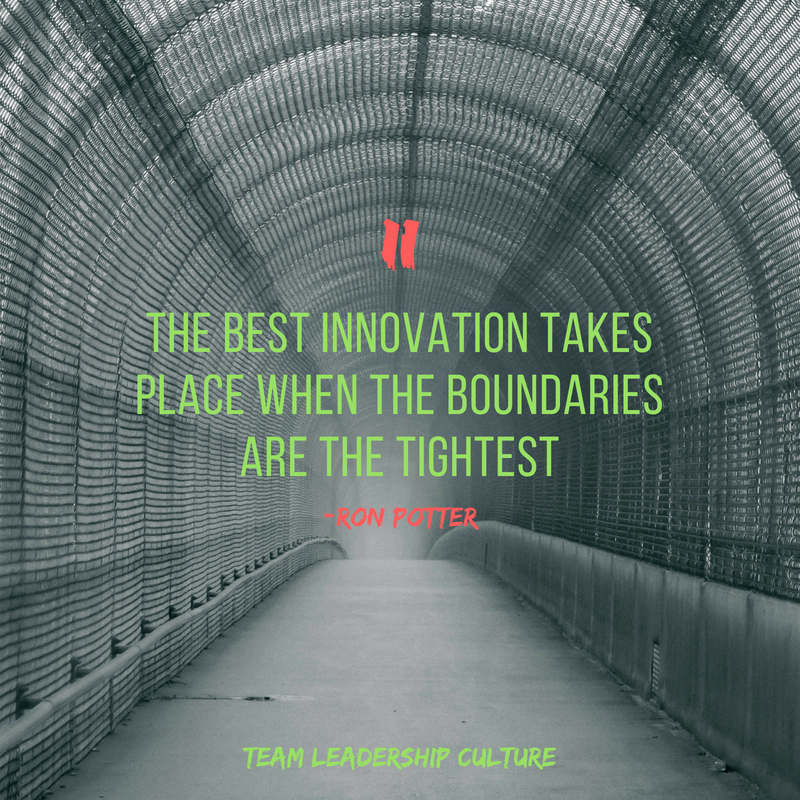
The other concept we began to talk about in her time of deflation was innovation and creativity. It has been well documented that the best innovation takes place when the boundaries are the tightest. Again, in times of plenty, it’s much easier to throw some ideas up on the board, try them all and see if any of them produce fruit. Not innovative! Innovation is about simplicity. Doing the most with the least. It’s those times when budget, time or resources are in extremely short supply when the best innovation happens. This was her time of opportunity. The budget was not just going to be tight, it was going to be slashed. She was going to be forced to say no to save that part that absolutely required a yes. And even the items that received the yes would need to be accomplished in the highest quality and the most elegantly simple way possible. Now was the time for true innovation.

Have you figured out how to say no? Have you absolutely insisted that things get accomplish in the most elegant, simple form possible? At some point, you will likely be forced to accomplish those tasks. You might as well get started now. Learn to say no. Do everything as elegantly as possible.

0 comments
0 FacebookTwitterEmail
BlogCulture

TV or Reading

by Ron Potter May 10, 2018

A few years ago, I became hooked on a TV series. Over time I judged it to be the best written and acted series I had ever seen. Because of the magic of Netflix, Amazon, and others, it’s now easy to go back to previous shows and watch them again as I have been doing lately. I’m not going to say which one it was because everyone has different taste in entertainment and I’m not trying to promote mine. I’m just saying that well-written TV can and does capture my attention.

However, I stopped watching TV news years ago and feel much happier avoiding it. And nothing really changes if I watch it or not.

I’m also a reader. I wasn’t always a reader but have become an avid reader. I read non-fiction material in the morning (related to my work or interests) and fiction at night (for the fun of it).

I’m often asked how I’m able to read so many books in a year. The short answer is less TV, more books.

My favorite blogger is Shane Parrish at Farnam Street Blog. I credit Shane with increasing my interest in reading because I was fascinated by how much he reads and how much he is constantly learning. Shane writes: “Newspapers are focused on things that change. You can’t run fast enough to keep up with this world and yet while you may think it’s valuable, the information you receive is full of noise. Farnam Street focuses on helping you learn things that don’t change over time — It’s an investment. What you learn today becomes the scaffolding to solving tomorrow’s problem.” While his quote is focused on newspapers and not TV, I believe it applies to TV news as well.

My interest has also been sparked by what we’re learning in the field of brain science about the impact of TV versus reading. In general, we’ve come to think of TV as bad and Reading as good. However, sometimes I watch TV in the form of movies or documentaries about the books I’ve also read. One such example is a book titled “Boys in the Boat” about the rowing crew from Washington that competed in the 1936 Olympics. PBS also did a documentary called “The Boys of ‘36”. I enjoyed both but is one form better for me than the other?

Brain research tells us that the more hours of TV watched:

  • Increases aggression levels
  • Decreases verbal reasoning
  • Lowers communication levels with others
  • Increases risk of Alzheimer’s

The more reading we do:

  • Increases brain connectivity related to language
  • Increases alertness
  • Delays cognitive decline
  • Decreases risk of Alzheimer’s
  • Increases communication levels
  • Reduces stress levels

Why?

TV is passive, fast-paced and shallow (not enough time for details).

Reading allows for more depth and at the same time forces the use of imaginations!

Read more. Watch less. It’s healthier.

1 comment
0 FacebookTwitterEmail
BlogCulture

The Truth about Fear

by Ron Potter April 26, 2018

This post may have fit well with the recent Balancing Act series. There is an interesting point between fear and excitement. Staying balanced can be healthy. Too much fear is detrimental to your health. Too much excitement with little regard for fear can be fatal. The Darwin Awards are built on this last premise. The Darwin Awards give the highest honor (tong-in-cheek) to those who remove themselves from the gene pool by doing really stupid things.

Fear and excitement produce the same physiological effect. The body can’t distinguish between the two so the brain has to make a judgment. Should I be fearful at this moment or simply excited?

If you haven’t seen anything by Jordon Peterson lately you should look him up. He’s saying things that create a lot of reaction mainly because they are simply the truth that people don’t want to hear. In his book 12 Rules for Life: An Antidote to Chaos, rule number 8 is “Tell the Truth – or, at least, don’t lie”.

The truth about fear is that lies are intended to avoid fear while actually creating it. Jordon says

Taking the easy way out or telling the truth – those are not merely two different choices. They are different pathways through life. They are utterly different ways of existing.

Existing in a world of lies leads to fear.

Someone living a life-lie is attempting to manipulate reality with perception, thought and actions so that only some narrowly desired and pre-defined outcome is allowed to exist.

When you don’t open up to the truth by listening to others (His Rule 9 is: Assume that the person you are listening to might know something you don’t), you begin creating a world as only you see it.

Peterson goes on to say:

If you betray yourself, if you say untrue things, if you act out a lie, you weaken your character. If you have a weak character, that adversity will mow you down when it appears, as it will, inevitably. You will hide, but there will be no place left to hide. And then you will find yourself doing terrible things. Willful blindness is the worst sort of lie.

You can pick up Peterson’s book if you want to see his other 10 rules for avoiding chaos. They are all good and some are surprising.

In my work I’m always trying to help leadership teams behave calmly in the chaos or at least make sense out of is so that fear doesn’t take over. One of the better mental models that I turn to is Aristotle’s Levels of Happiness. The highest level, Level IV, I believe creates great teams. The first element of Level IV is Truth. Speaking it. Discovering it. Acting on it. Teams that seek the truth by listening (with the intent to understand) to each other avoid the fear and chaos of dealing with lies.

One last quote from Peterson’s book:

You can use words to manipulate the world into delivering what you want. This is what it means to “act politically.”

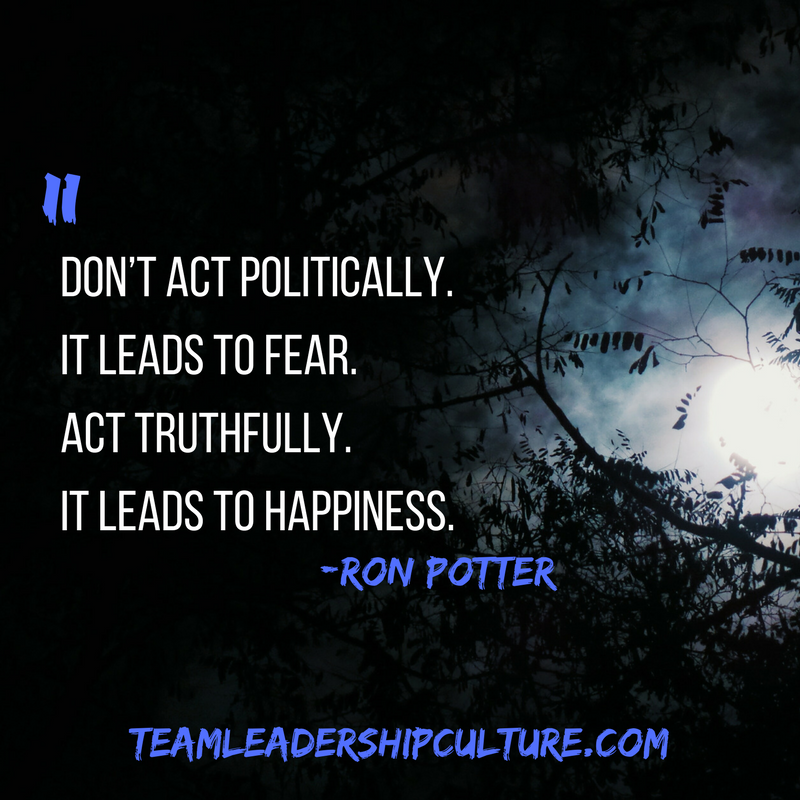
Don’t act politically. It leads to fear. Act truthfully. It leads to happiness.

0 comments
0 FacebookTwitterEmail
BlogCulture

Renovation Project

by Ron Potter March 22, 2018

My wife and I are in the middle of a renovation project. Not large but it still requires framing, drywall, plumbing, electrical, tile work, finish carpentry and painting. At one point or another, we’ve had the heat, gas, and electrical all shut-off.

I overheard my wife talking to a friend who had asked her how the project was going. “Hard, messy and very disruptive” was the response given. But then she said, “But we know it will turn out nice, so we can put up with the disruption for a while.

While it didn’t make things less hard, messy or disruptive, knowing that the end product was going to be pleasing and meet our needs helped.

That made me think about Team Renovation Projects. I’ve seldom worked with a stable team for a great length of time. There have been a couple and I can tell you that it’s been very helpful in building team strength and cohesion. But most teams are going through nearly constant renovation. Teams are under constant change. The company is growing or shrinking which changes team size. People are coming and going to and from new jobs. Corporate restructuring is happening on a regular basis. Teams are under constant renovation.

But, team renovations are not as clear and obvious as room renovations. Instead of knowing that things will turn out nice, we wonder:

  • What else will happen along the way to change things again?
  • What will happen when we lose the experience and history of one of the members leaving?
  • Will the new person fit in?
  • Will the leadership development provided to one or more members bear fruit?

Not knowing the answer to these and other questions and doubts lowers our ability to deal with the disruption. Or in some cases, I’ve had leaders who don’t believe there should be any disruptions and therefore have little tolerance for it.

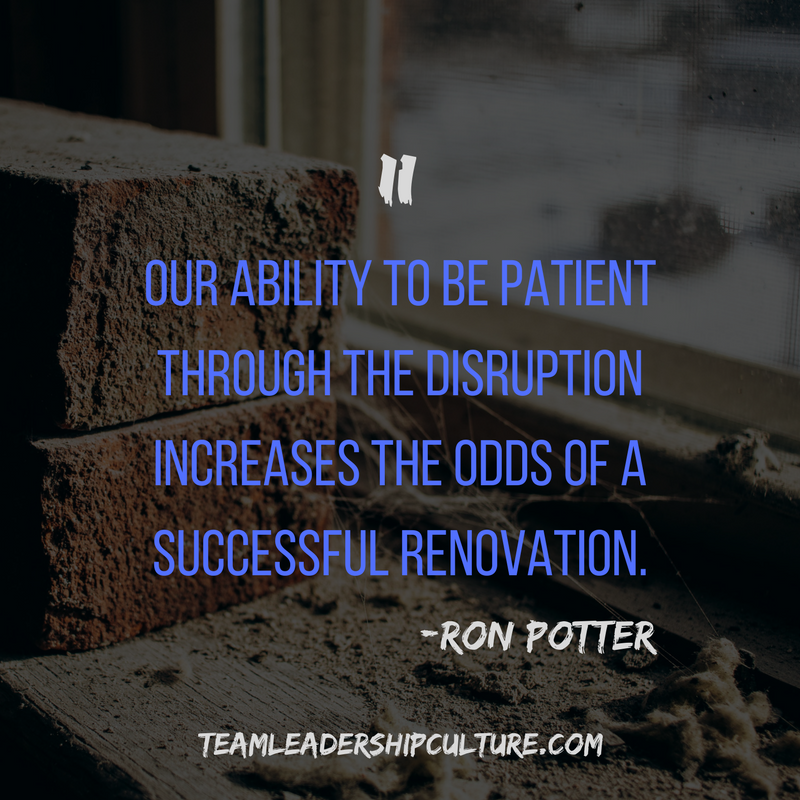
Team renovations are disruptive. But, just like the home project, if we’ve designed well, selected the right people that fit well, and have a clear picture of how things will look and work with this new team, our ability to cope with the disruptions increases. Our ability to be patient through the disruption increases the odds of a successful renovation.

0 comments
0 FacebookTwitterEmail
Newer Posts
Older Posts
  • Facebook
  • Twitter
  • Linkedin
  • Rss
  • About This Site
  • About
    • Clients
  • Services
  • Resources
    • Trust Me
    • Short Book Reviews
  • Contact

About this Site | © 2024 Team Leadership Culture | platform by Apricot Services


Back To Top
Team Leadership Culture
  • Team
  • Leadership
  • Culture
  • Myers-Briggs
  • Trust Me
  • Short Book Reviews
 

Loading Comments...