
Team Leadership Culture
  • Team
  • Leadership
  • Culture
  • Myers-Briggs
  • Trust Me
  • Short Book Reviews
Top Posts
Obituary
REPOST: Four Functions, Three Rules
ROUNDUP: The Rise of AI
REPOST: Facing Adversity Series
ROUNDUP: Curiousity
ROUNDUP: Deep Work
REPOST: Character vs. Competence
REPOST: Opposite of Victim
REPOST: Listening With the Intent to Understand
REPOST: Performance vs Trust
  • About
  • Services
  • Resources
    • Trust Me
    • Short Book Reviews
  • Contact

Team Leadership Culture

  • Team
  • Leadership
  • Culture
  • Myers-Briggs
  • Trust Me
  • Short Book Reviews
Author

Ron Potter

Ron Potter

Absurd!BlogIn-Depth Book Reviews

Absurd!: Big Changes are Easier to Make Than Small Ones

by Ron Potter January 16, 2017

I’m continuing my series on an in-depth look at a wonderful little book that’s twenty years old this year. The title is Management of the Absurd by Richard Farson. You may want to consider dropping back and reading the previous blog posts about ABSURD! I think it will put each new one in great context.

Farson starts this section by identifying C. Northcote Parkinson, author of the famed Parkinson’s law, as the godfather to the idea of management of the absurd! I guess if you were going to be the godfather of something, this would be a fun one. A couple of Parkinson’s famous quotes include:

  • Work expands to fill the time available.
  • The time a committee takes to discuss an item on the agenda is inversely proportional to the amount of money involved.

Good humor works because it contains a grain or foundation of truth.

He also includes one of my favorite quotes from Henry Kissinger, “The reason university faculty discussions and disputes are so time-consuming and acrimonious is that the stakes are so low.”

Big changes are easier to make than small ones. I’ve seen this at play a few times in my career. Farson is careful to point out that making a big change doesn’t necessarily make it appropriate to the strategy. It’s not just big but it’s big in the right direction. But, given a prudent decision process, it’s often easier to jump right into the big change than move forward with incremental changes.

A couple of places where I’ve observed this working well included the move of a corporate headquarters. There was a reasonable argument for moving to one of the corporations existing facilities and expanding as a cost saving argument. But, part of the reason (a big part) for moving the headquarters was to kick-start a new corporate culture. This had a better chance of happening with a move for everyone to an entirely new environment. Big cost but big impact.

People changes is another place where big changes can create change better than smaller changes. Sometimes it’s a complete reorganization. Sometimes it’s promoting someone who has consistently shown great promise or leadership but may be down the ladder on the org chart or in a completely different role. Probable the best HR professional I have worked with had been the Chief Operations Officer but was called on to fill the void of the HR role when health issues required a change. Bold and unexpected move.

Another people change is dealing with what Robert Quinn in his book Deep Change calls the Tyranny of Competence. This is when an individual is seen to have such a high level of competence in a certain role that no changes are made even when there seem to be numerous character or leadership deficiencies. In the few cases where I’ve worked with managers who made changes (usually asking the person to leave the company) it’s amazing how much competence and creativity came out of the organization that was no longer suppressed by the tyranny.

If a change is needed and has been well deliberated, consider making a bold move rather than incremental. Bold moves often have a better chance of success.

0 comments
0 FacebookTwitterEmail
BlogCulture

Calm Down People, It’s Just Stress

by Ron Potter January 12, 2017

A lot of my consulting time last year was spent helping teams handle the stress of our fast paced, ever changing, globally connected lives.

One of the resources I often turn to is a book titled Performing Under Pressure by Hendrie Weisinger and J. P. Pawliw-Fry.

You may not have noticed the difference but the first paragraph talks about stress, the second one speaks to pressure. As explained in the book, therein lies one of the keys, distinguishing between pressure and stress.

Here are the quick definitions:

  • Pressure: You perceive that something at stake is dependent on the outcome of your performance and there are good and bad consequences.
  • Stress: Stress refers to the situation of too many demands and not enough resources to meet them.

Pressure vs Stress

I learned the difference between these early in my career. My first real job out of engineering school included walking steel 200 feet in the air. This was prior to modern day safety devices. No safety straps, no nets, just 20 stories up with the wind in your face and utter fear and panic in your head.

If you can imagine standing with your back tightly against a vertical steel column, perched on a steel “I” beam with a top flange that was either 6 or 8 inches wide. That is your sidewalk. As you gaze out horizontally your mind can create the illusion of a floor using the grid of horizontal beams spaced 20 to 40 feet apart. But it’s a true illusion. If you lower your eyes even a few degrees below horizontal, you see nothing but vast openings all the way down to the concrete slab 20 floors below.

But I couldn’t just stand there and contemplate my fate, I had to move about the building to do my job. The only way I could move around the building was to put that illusion of a floor to work for me. So I would stand with my back securely pressed against the vertical column, start to slow my heart rate, breathing and thoughts while I visually searched for a distinguishing mark on the destination column 40 feet away. Once I locked on that mark, the illusion of a floor remained while I kept my gaze totally horizontal. Then with one last deep breath, I took the first step and didn’t stop until I reached the other side. All well and good except for my “friends” the ironworkers who thought of me as amusement.

The veteran Ironworkers who seemed to scramble around the structural steel like it was a gym set on a playground were always watching me with amusement.

I’m on my way. First step. The wind is a bit stronger than I anticipated. Stay focused, keep walking. About a third of the across my beam my focus is completely interrupted by an Ironworker, sliding down the column I was concentrating on and walking toward me. I stop and concentrate completely on maintaining my balance.

As we are taught, the Ironworker walks up to me and stands toe-to-toe. He grasps my wrists as I grasp his, encourages me to lean back until our arms are completely extended and our weight becomes balanced, suspending each other at about 30 degrees from vertical. Once we are balanced we begin a tiptoe dance on the beam, keeping all four sets of toes as much on the beam as possible as we swivel 180 degrees together. We regain our vertical positions and the Ironworker walks off casually chuckling.

I, on the other hand am left using every fiber of my being trying to maintain balance, calm my heart rate and slow my breathing while I search for a new focal point on the column in front of me while facing the WRONG DIRECTION!

Stress? That’s easy. Too much demand with too few resources. Stress is easy and meaningless when put into perspective with real pressure.

Will Stress Kill You?

A 10-year study including tens of thousands of subjects was completed a couple of years ago.

At the beginning of the study subjects were asked if they had been exposed to any of the major stressors (death, divorce, job loss, etc) in the year prior to the study. At the conclusion of the study, those who had experienced the major stressors had a much higher fatality rate. But, all subjects had been asked another question, “Do you believe stress is harmful to your health?” Those who said “No” to that question had no greater fatality rate than the norm even though they had experienced one or more of the major stressors. But for those with major stress experiences who also believed stress was harmful to their health, their fatality rate was the highest.

Stress won’t harm you. Believing stress will harm you can be fatal. Relax, it’s only stress.

0 comments
0 FacebookTwitterEmail
Absurd!BlogIn-Depth Book Reviews

Absurd!: The Better Things Are, the Worse They Feel

by Ron Potter January 9, 2017


I’m continuing my series on an in-depth look at a wonderful little book that’s twenty years old this year. The title is Management of the Absurd by Richard Farson. You may want to consider dropping back and reading the previous posts about ABSURD! I think it will put each new one in great context.

Most of us know Abraham Maslow from his Hierarchy of Needs. However, I’ve enjoyed his work called Eupsychian Management: The attitude of self-actualizing people to duty, work, mission, etc. This was written when he was working as a management consultant.

Farson has also picked up on this work as he devotes much of this chapter to Maslow’s concepts around the meaning of complaining. Here’s what Farson learned from Maslow:

Abraham Maslow advised managers to listen not for the presence or absence of complaints, but rather to what people were complaining about. Here he unpacks a hierarchy of needs, of sorts, in an organization:

Least healthy organizations

You can expect to hear low-order grumbles – complaints about working conditions, about what he called “deficiency needs.” (“It’s too hot in here.”, “I don’t get paid enough.”, etc.)

Healthier organizations

Healthier organizations would have high-order grumbles – complaints that extend beyond the self to more altruistic concerns: “Did you hear what happened to the people over in Plant Two? They really got cheated.” Or “We need better safety standard around here.”

Very healthy organization

A healthy organization would have “metagrumples” – complaints having to do with needs for self-actualization: “I don’t feel that my talents are being utilized.” Or, “I don’t feel that I’m in on things enough around here.”


There is the absurdity. Only in an organization where people are in on things and where their talents are being utilized would it occur to someone to complain about those issues.

Absurd as it seems, the way to judge your effectiveness is to assess the quality of the discontent you engender, the ability to produce movement from low-order to high-order discontent.

The paradox is that improvement in human affairs leads not to satisfaction but to discontent, albeit a higher-order discontent than might have existed before. Why is this phenomenon important to understand? Because the motivation for continuing change and growth comes from the development of higher-quality discontent, then moving on to the solution of more important issues.

This observation by Maslow and Farson has served me well many times in my consulting career. Many times, the leaders I work with just don’t seem to understand why people are still complaining after periods of great success for both the individuals and the company. When I ask them the question “What are they complaining about?” We begin to see tremendous growth taking place because people are now complaining about much higher-level needs.

People will always find something to complain about. They’re on a journey and they haven’t arrived yet. It starts at a very young age when you kids start asking “Are we there yet?” twenty minutes after your journey began.

I like Farson’s closing remark, “Pity the poor manager who can’t imagine how a well-intended action led to such grousing.” What are they grousing about? That’s the question that will clue you in on your leadership journey’s progress.

0 comments
0 FacebookTwitterEmail
BlogCulture

Read Your Way to Success

by Ron Potter January 5, 2017

Elle Kaplan, the CEO & Founder of LexION Capital recently published an article titled “How To Use The Reading Habits of Billionaires To Radically Improve Your Intelligence and Success”

I’ll let Elle explain the science and research behind the correlation with intelligence and success but the two quotes that captured my interest were from Warren Buffett and Elon Musk. Old school, new school if you will.

“Read 500 pages every day. That’s how knowledge works. It builds up, like compound interest. All of you can do it, but I guarantee not many of you will do it.” —Warren Buffett

When asked how he learned how to build rockets, Elon Musk simply said “I read books.”

I can’t guarantee that reading books will turn you into a rocket scientist, but I do know it radically increases your knowledge and gives you great new frameworks and perspectives, helping you understand the world around you better. As far as the success part, I’m not sure but it does make you happier and science does show that if you’re happier, you are more successful (but that’s another blog post coming soon).

If you’ve been a reader of my blog, you know that I have a reading section with quick summaries of the books I’ve been reading. But like many things, it’s good to look back over the year and reflect on what you’ve covered and enjoy the accomplishment.

Besides the 20 novels, and other non-business non-fiction books that I’ve read this year, here is a recap of the business-related books read in 2016:

  • Risk Savvy: How to Make Good Decisions
  • Think to Win: Unleashing the Power of Strategic Thinking
  • The Rise and Fall of Strategic Planning
  • How Adam Smith Can Change your Life: An Unexpected Guide to Human Nature and Happiness
  • The Future Arrived Yesterday: the Rise of the Protean Corporation and What it Means for you
  • The Coaching Habit: Say Less, Ask More and Change the Way you Lead Forever
  • Helping: How to Offer, Give, and Receive Help
  • Teaming: How organizations learn, innovate and compete in the knowledge economy
  • A Failure of Nerve: Leadership in the age of Quick Fix
  • The Drama Triangle and Break Free of the Drama Triangle
  • Bo’s Lasting Lessons
  • Presence, Bringing your boldest self to your biggest challenges
  • Idiot Brain: What your head is really up to
  • Life in half a second: How to achieve success before it’s too late
  • The Management Myth: Debunking the modern business philosophy
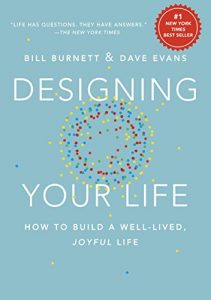
  • Designing Your Life: How to build a well-lived joyful life

One of the questions I’m often asked is “How do you think up such good questions?” (Another book you’ll find in previous years is A More Beautiful Question: The Power of Inquiry to Spark Breakthrough Ideas) People find power in the ability to ask good questions that spark new perspectives.

Actually, I don’t think up good questions. Good questions are a result of reading, thinking, contemplating and wondering, not spur of the moment ideas. Curiosity is a very powerful leadership technique. I find the more I read the more curiosity I seem to have.

Read more! It will likely increase your intelligence, it may increase your success and it will most assuredly increase your happiness (which we know scientifically will increase your intelligence and success!)

0 comments
0 FacebookTwitterEmail
Short Book Reviews

The Law

by Ron Potter January 3, 2017

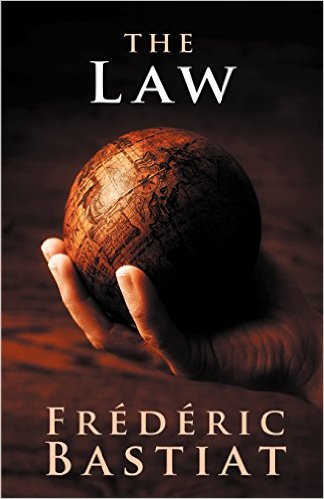
Ron’s Short Review: The Law was originally published in French in 1850 by Frederic Bastiat. It was written two years after the third French Revolution of 1848. Great study in what Bastia calls “Plunder” both illegal and legal. I believe his words can be applied to any form of artificial structure, be it government or corporations. Lots of lessons to be learned.

0 comments
0 FacebookTwitterEmail
Short Book Reviews

Designing Your Life

by Ron Potter December 30, 2016

Ron’s Short Review: My generation had “What color is your parachute?” This is a great book for today’s creative, entrepreneurial environment. Figuring out where you want to head along the way and designing your life to enhance your possibilities. I can easily recommend this book.

0 comments
0 FacebookTwitterEmail
BlogCulture

The Hidden Dangers of Projectors

by Ron Potter December 22, 2016

I love movies. And based on annual ticket sales in movie theaters of about ten billion dollars it appears I’m not alone.

I like big screen movies. I like small short movies. Live action, animated, professionally produced, little family vignettes created from my phone. Even non-moving images like the old slides on our shelf that require the carousel slide projector (my apologies to those of you born since the 80’s. You may have to ask an older person about carousel projectors).

But, to be enjoyed, they all need projectors. Even if that projector is the screen on my smartphone, the digital file is not very enjoyable until it is projected. Projectors have a unique property, they can only project an image is has already been produced by someone. Maybe it was the camera on my phone. Maybe it was the old Kodachrome film in my camera. Maybe it was a professional production with big name producers, directors and actors. Everything that gets projected is an image that someone created or imagined.

And therein lies the dangers of projectors.

When you project intent on another person, you’re only projecting images that you’ve created in your own mind. It really has nothing to do with their intention or belief system, it has all to do with what you believe their intention to be.

When someone attributes behavior to certain reasons:

  • They said that because they always lie.
  • They really don’t like that person.
  • They never take accountability for their own behavior.

my assumptions are those attributes are projections. It reflects how they would behave in that situation, not necessary why the other person is behaving that way.

Be careful how you may be projecting your beliefs and intentions on other people. Someone may see it as the projection of the movie playing in your own head.

0 comments
0 FacebookTwitterEmail
BlogCulture

The Enduring Organization

by Ron Potter December 19, 2016

Some organizations do not stick with something long enough to actually make it happen. They create a company full of orphaned projects, ideas, goals, and mandates.

This is particularly a symptom of the quick-deciding company we discussed in an earlier post. The quick-deciding company or team moves rapidly from decision to decision. Rather than taking time to learn from others, seek input, or teach in order to find quality, long-term solutions, the goal is deciding in a hurry. An organization’s goal needs to be quick learning so that good decisions can be made as soon as possible.

Building an Enduring Organization

It is important for leaders to ensure that their direct-reports become great leaders too. Many leaders enjoy serving under leaders whose style is balanced by humility and endurance, but when leading their own teams, they adopt an autocratic leadership style. In most cases they do this because they do not think the people under them are as good as they are in their respective jobs (prideful thinking). They say to themselves, “I can handle the style of my leader, but my people can’t function to the level we need them to under that style, so I’ll be more controlling and autocratic.” These leaders lack the perseverance to build leadership depth within the organization.

Do you remember Newton’s Cradle? That finely built desk toy sat on many desks in many offices around the country. It was usually made of some beautiful cherry wood with polished steel balls hung from nylon strings, all hanging in a nice row between the ends of the cradle. Each steel ball was tightly secured to the top, but if a person pulled one or two of them and let them go, they would bang continuously against the other balls.

My consulting partner and I have been working with two CEOs over the last few years whose leadership styles have so many similarities that we decided to give the style a name: the Newton’s Cradle approach to leadership. These two leaders developed a very tight and trusting relationship with each member of their teams. Everyone talked of them as “great” leaders and the kind of bosses for whom employees would do anything. However, these two leaders would send one or more of their direct-reports off on a mission that was bound to conflict with a similar mission of another direct-report. The leaders, however, would never make any effort to help the direct-reports reconcile the conflicts. They would just let them bang against one another until one was victorious—Newton’s Cradle.

For example, they would tell their CFO or COO that they must do whatever it took to control costs for the next quarter or two while, at the same time, encouraging the CIO to move ahead and implement the great, new, and costly computer system. This creates tremendous tension and turmoil throughout an organization as each person, feeling empowered by his or her boss, either joins the battle with the other direct-report or completely ignores him or her in dogged pursuit of individual goals.

Unfortunately, the Newton’s Cradle leader does not see the value of bringing every part of the organization together into a highly functional, persevering team.

In their book The Leadership Engine, Noel Tichy and Eli Cohen write that the best companies have “good leaders who nurture the development of other leaders at all levels of the organization.” Instead of defining reality for their workers, these leaders urge their workers to see reality themselves and mobilize the appropriate responses. Tichy and Cohen go on to discuss how much time many chief executives spend “formally and informally” on teaching. They conclude that the success of those firms is a direct result of everyone’s pulling in the same direction. “All of the winning leaders I’ve studied share a passion for people. They draw their energy from helping others get excited about improving their business. And they energize their people at every opportunity with stimulating ideas and values.”

The kind of leadership Tichy and Cohen write about is one that encourages leaders to develop other leaders. It is a primary focus for the leader who wants to build an enduring organization.

1 comment
0 FacebookTwitterEmail
BlogLeadership

Being Wrong or Sorry: Which is most dangerous?

by Ron Potter December 8, 2016

One of my clients recently made the statement that it was harder to say “I’m wrong” than it was to say “I’m sorry.”  Therefore, he was always quick to admit when he was wrong (Thanks Simon). Isn’t that interesting?  He had learned that it was easier to take the hard route than it was to take the easy route.

I didn’t have much time to think about that statement the rest of that day but then I had a long plane ride home and that thought kept bouncing around in my head.  I knew there was more to that simple statement than what was being said on the surface but I learned a long time ago that if there was something nagging at my brain, my best approach was to alternate between consciously thinking about it and then let it settle into the subconscious while I distracted myself with other thoughts, reading or quiet time.  Being on an airplane (sometimes) offers the perfect environment for that process.

Soon a very old book began to emerge in my thoughts.  The Road Less Traveled written in 1978 by M. Scott Peck.  The opening sentence of that book is three simple words: “Life is Difficult.”  Think about all the complaining, whining, protesting, etc. that you hear today and if you look behind those actions you’ll find a belief that life is supposed to be easy.  It isn’t.  Life is difficult.

What I remember about that book is that after that opening sentence, Dr. Peck, a psychiatrist, spends the rest of the book describing how the avoidance of pain and suffering leads to mental illness.  I have seen this principle played out in corporate leadership teams over many years.  Leaders and teams who subtly but consistently avoid the pain and suffering associated with hard decisions began to create an environment and culture that could easily be labeled as mentally ill.  These leaders and teams begin avoiding almost all decisions because they’ve built up the habit of not dealing with the difficult decisions.  Life is difficult.  Don’t assume that if you make all of the right decisions, personal and professional, that you’ll cruise through life and just won’t have to deal with the hard stuff.

As my client says, he always takes the hard route of admitting he was wrong.  It actually makes the difficulties of life, leading and teaming easier to deal with.

Remember, it’s harder to say you’re wrong than say you’re sorry.  Do the hard thing.  It’s always easier in the long run.

0 comments
0 FacebookTwitterEmail
BlogTrust Me

A Legacy of Trust

by Ron Potter December 5, 2016

evclndfydbs-adrian

Pressure and mounting fear can drive you away from the two pillars of great leadership—humility and endurance—in order to succeed in the short run, but it will not last or create trust. It will only drive a wedge between you and the true success you can have as a leader who focuses on the two pillars and the other attributes.

Once again we want to remind you of the power contained in these qualities—and how the opposite qualities can destroy the great person you want to become and the great organization you want to lead.

We all have the ability to adapt these attributes to our particular leadership styles. You have the ability to start today. Why wait any longer?

Grasping leadership greatness starts by letting go.

Letting go is not a one-time deal. You must do it again and again and again.

Many of the most enduring ideas and values in our lives today have been shaped and molded by modern-day “blacksmiths.” Ancient or modern, the principles are the same: The blacksmith heats the iron at the forge, shapes it on his anvil, and cools it in the water.

The blacksmith heats the metal to prepare it for change. The trusted leader warms people to change through humility and compassion. The blacksmith hammers the metal to form a new shape. The trusted leader shapes an organization through commitment and focus. The blacksmith cools the metal to “settle” its strength. The trusted leader uses peacemaking to give the changed organization meaning and understanding. The forged metal, once cooled,  becomes the powerful sword, the productive plow, or the beautiful wrought-iron gate.

By understanding the elements that build and destroy trust, effective leaders shape strong and productive organizations:

At the end of the same session when Jesus shared his Beatitudes with his followers—the ideas on which the eight attributes are based—he told an interesting story. He said that if his team members would put what he had taught them into practice, their lives would be like a man who built his house on a solid rock foundation. No matter what kind of storm hit, he promised that the house would stand. But if these men did not pay attention to the truth he shared, their lives would be like the man who built his house on a foundation of shifting sand. When the storm hit that house, it would crumble and wash away.

We believe the eight attributes will have that kind of effect on you. Allow them to permeate you from the inside out, and you will have a career—and a life—built on solid rock. You will be known as a person who can say with clear-eyed conviction, “Trust me.”

And others will follow.

tlc-meme-12%2f5

0 comments
0 FacebookTwitterEmail
BlogCultureThree Steps to Become the Best Learner

Three Steps to Become the Best Learner – Part I

by Ron Potter December 1, 2016

ietuye-b28a-daniel-watson

Knowing something is different than knowing the name of something.

Shane Parrish of Farnam Street Blog spoke of this concept from Richard Feyman, the Nobel winning Physicist.

Faynman said that his technique would ensure that he understood something better than everyone else.  It helped him learn everything deeper and faster.

Shane says it’s incredibly simple to implement.  The catch: It’s ridiculously humbling.

Well, if you’ve read many of my blogs you’ll know that ridiculously humbling is a good place to be.  Let’s take a look at the Technique.

Step 1: Teach it to a child

Faynman says “Write out what you know about the subject as if you were teaching it to a child. Not your smart adult friend but rather an 8-year-old who has just enough vocabulary and attention span to understand basic concepts and relationships.”

My daughters may not even remember these moments of learning or certainly may not remember them the same way but that’s OK because we know that everyone’s memory is unique.  So, here’s my memory.

When my daughters each hit about fifth grade they came to me with a school topic where they were struggling.  By the time my daughters were this age I had finished my engineering degree from Michigan and had already been in the work place about 15 years.  I knew a lot of stuff (or thought I did).  So, I would begin to explain the subject from my point of view and experience level.  After a few minutes of me pontificating I could see their eyes glaze over and they soon would say “You’re no better than everyone else.  I still don’t get it.”  After being humbled I asked to see their text book and would quickly scan ahead a chapter or two.  I than would think about what they needed to learn to be ready for the challenge in the next chapter.  When I focused on where they were and what they needed to learn at that moment, I discovered that their learning quickly accelerated as they moved from chapter to chapter.

I was recently consulting with one of our best known high tech firms.  The team I was working with was trying to sell their technology into one of the oldest, most successful heavy industrial manufacturing firms.  Upon returning from a meeting that didn’t go well, the team leader said to me “They are so un-savvy”!  I told him my “Teaching a fifth grader story.”  As he listened quietly his eyes began to grow wider and he finally proclaimed, “We haven’t been trying to teach them the next chapter, we’ve been trying to teach them from a book that’s being written as we go!”  He quickly pulled his team back together and focused on what “chapter” their client was on and how could they quickly teach them what they needed to know for the next chapter.  They began to have great accelerated success with that client and built a great bond of trust.

We’ve all become experts in our field.  (I remember seeing a porta potty with the proclamation on the side “Outstanding in the Field”)  Don’t use the language and concepts you’ve come to know.  Figure out how to teach them to a fifth grader.  If you can do that, your own learning will go deeper and deeper as well.

We’ll save the other two topics of Review and Organize and Simplify for future posts.

tlc-meme-12%2f1-1


0 comments
0 FacebookTwitterEmail
BlogLeadership

The two pillars of great leadership

by Ron Potter November 28, 2016

gwrxqchff1y-phil-goodwin

The temptation in leadership will always be to head toward the dominant preferences inside us and on every side in our environment.
Over the last several years, investors suddenly began looking for CEOs who could shake things up and put an end to what was perceived as a business-as-usual approach. A new breed of corporate leader emerged: the charismatic CEO. A fervent and often irrational faith in the power of dynamic leaders became part of our culture.
Rakesh Khurana writes,

Faith is an invaluable, even indispensable gift in human affairs.… In the sphere of business, the faith of entrepreneurs, leaders, and ordinary employees in a company, a product, or an idea can unleash tremendous amounts of innovation and productivity. Yet today’s extraordinary trust in the power of the charismatic CEO resembles less a mature faith than it does a belief in magic. If, however, we are willing to begin rethinking our ideas about leadership, the age of faith can be followed by an era of faith and reason.

The adventure of looking for the charismatic leader sometimes asked us to turn our backs on attributes such as honesty, integrity, sensitivity, commitment, achievement, nurturing, trustworthiness, peacemaking, and courage.
But as Jim Collins explained so convincingly in his best-selling book Good to Great, it is the non-charismatic leader who seems to endure and shine in the long run. Collins writes:

Compared to high-profile leaders with big personalities who make headlines and become celebrities, the good-to-great leaders [leaders who have taken companies to unprecedented long-term growth] seem to have come from Mars. Self-effacing, quiet, reserved, even shy—these leaders are a paradoxical blend of personal humility and professional will. They are more like Lincoln and Socrates than Patton or Caesar.

There are two pillars that support the attributes of a great leader: humility and endurance. Focusing on these two pillars is like so many things (golf included)  that are both simple and complex. However, our experience tells us that great leaders allow these two attributes, whether natural or not, to strongly influence their leadership style. They learn how to overcome or “position” their natural tendencies. They let the two pillars “pull them through” their swing of everyday leadership and team building.
Great leaders seek to be humble people who lift up others and keep the spotlight on their companies, not themselves. They have a burning ambition to see tasks completed, and they balance that desire with a deep concern for the growth and development of people. They want to nurture relationships, help others flourish, and shove the fuss away from themselves.

tlc-meme-11%2f28

0 comments
0 FacebookTwitterEmail
Newer Posts
Older Posts
  • Facebook
  • Twitter
  • Linkedin
  • Rss
  • About This Site
  • About
    • Clients
  • Services
  • Resources
    • Trust Me
    • Short Book Reviews
  • Contact

About this Site | © 2024 Team Leadership Culture | platform by Apricot Services


Back To Top
Team Leadership Culture
  • Team
  • Leadership
  • Culture
  • Myers-Briggs
  • Trust Me
  • Short Book Reviews