

Team Leadership Culture
  • Team
  • Leadership
  • Culture
  • Myers-Briggs
  • Trust Me
  • Short Book Reviews
Top Posts
Obituary
REPOST: Four Functions, Three Rules
ROUNDUP: The Rise of AI
REPOST: Facing Adversity Series
ROUNDUP: Curiousity
ROUNDUP: Deep Work
REPOST: Character vs. Competence
REPOST: Opposite of Victim
REPOST: Listening With the Intent to Understand
REPOST: Performance vs Trust
  • About
  • Services
  • Resources
    • Trust Me
    • Short Book Reviews
  • Contact

Team Leadership Culture

  • Team
  • Leadership
  • Culture
  • Myers-Briggs
  • Trust Me
  • Short Book Reviews
Tag:

Leadership

Absurd!BlogIn-Depth Book Reviews

Absurd!: Effective Managers are Not in Control

by Ron Potter March 17, 2016

photo-1456824399588-844440089f4b

I’m continuing my series on an in-depth look at a wonderful little book that’s twenty years old this year. The title is Management of the Absurd by Richard Farson. You may want to consider dropping back and reading the previous blogs about ABSURD! I think it will put each new one in great context.

Chapter 5 is titled: Effective Managers are Not in Control
Just because the organizational chart puts you in a box that is labeled a manager or leader it doesn’t automatically make you effective at the job. This point that Farson makes is that organizational charts may put you in “control” but that’s not what being a good manager or leader is all about.

Learners
A few of the points that he makes in this chapter include:

“Effective leaders and managers approach situations as learners, sometimes as teachers, sometimes as both.”

Being a learner and or teacher and knowing when to be each requires a level of humility that great leaders possess. They are seldom telling people what to do but are always learning and teaching themselves so that people grow and the situation is addressed in the best form possible, not just what they think needs to be done.

Make Meaning
Good leaders:

“turn confusion into understanding. They see a bigger picture. Their strength is rooted in the qualities-passion, sensitivity, tenacity, patience, courage, firmness, enthusiasm, wonder.”

This takes a level of maturity and understanding that comes from that attitude of learning and teaching described above.

Human Beings
Farson points out that:

“People often want a moment with us (leaders) when we are genuinely ourselves without façade or pretense or defensiveness, when we are revealed as human beings, when we are vulnerable.”

One session that I’ve conducted with many of the teams I work with is titled “Human Beings vs Human Doings.” While we spend the majority of our lives at work, we are usually relating to other people based on what they do (or are not doing) rather than who they are. Once we sit down and start learning about each other as Human Beings and what makes us tick, what experiences we’ve had that shape us and who are those individuals that have influenced us, everything that we do starts to make a lot more sense.

Leaders are not in control. Leaders help others learn, develop and grow into the people they want to be and are doing the same thing themselves. (click to Tweet)

Do you know who you want to be? Do you know who you are today. Or more importantly do you know who others assume you to be? If you’re in a position of leading people, they must know who you are and you must know who they are. Once you start building that foundation of trust, you’ll be able to get a lot of things done. Even though you’re not in control.

0 comments
0 FacebookTwitterEmail
BlogTrust Me

Characteristics of a “You-First” Leader

by Ron Potter March 14, 2016

photo-1417037129170-06a2750eaa47One way to find out whether a leader has a “you-first” perspective is to ask, “Do others grow as individuals under this person’s leadership?” While benefiting from this leader’s compassion, do others become healthier, wiser, freer, more autonomous, and more likely themselves to develop a “you-first” attitude?

The following qualities define a leader who is committed to being last rather than first:

1. Commitment to the growth of people

In their book The Leadership Challenge, James Kouzes and Barry Posner write, “Any leadership practice that increases another’s sense of self-confidence, self-determination, and personal effectiveness makes that person more powerful and greatly enhances the possibility of success.”

A commitment to growing people is not a temporary fix, a quick solution to a problem, or a short-term shot in the arm that helps them only today. Commitment to growth is a long-term investment in other people. It increases their opportunities to grow, learn, and use what they have learned to its greatest benefit. When their growth multiplies, the organization’s growth and maturity multiplies.

2. Listening

Good leaders are too often viewed as being great verbal communicators and decision makers. While these attributes are important, leaders need to expand their leadership style to include a deep commitment to listening to others. How can an effective leader understand the needs of his or her employees, customers, suppliers, or market without listening intently to them? Psychologist Dr. Joyce Brothers remarked, “Listening, not imitation, may be the sincerest form of flattery.”

What made a difference for me was when I finally grasped the concept of listening with the intent to understand. I had always listened with the intent to respond. The entire time I was listening, my mind was developing responses, recording counterpoints, cataloging quick points that I was sure the other person would find helpful when I responded. Listening with the intent to respond is not compassionate. It is not humble. It’s self-focused. Listening with the intent to understand is indeed focused on the other person.

As I work with leaders and spend time listening with the intent to understand, I’m amazed at how much they are willing to share with me when they know I fully intend not to just hear them but also to understand.

3. Awareness

Both self-awareness and general awareness direct leaders to better understand situations and people. Robert Greenleaf wrote, “Awareness is not a giver of solace—it is just the opposite. It is a disturber and an awakener. Able leaders are usually sharply aware and reasonably disturbed. They are not seekers after solace. They have their own inner serenity.”

Awareness helps leaders discern how to properly put others first.

4. Empathy

This is identifying with and understanding another’s situation, feelings, and motives. People need to know they are accepted and recognized for their special gifts and talents.

5. Healing

One of the greatest assets of a “you-first” leader is the ability to approach another person as a healer in a spirit of help and compassion.

6. Persuasion over power

Many times when a job is hard to do, poor leaders rely on sheer power rather than persuasion. The compassionate leader seeks to engage others rather than force compliance. There’s a desire to build consensus rather than use authoritarian power. Compelling stories, sometimes called parables help people see not only a different perspective but often how things can be better for them. Power trips and plays deflate people and do not allow them to think for themselves.

This list of six characteristics of a “you-first” leader is by no means exhaustive, but each quality is fundamental if you want compassion to be a key component of your leadership style.

0 comments
0 FacebookTwitterEmail
Short Book Reviews

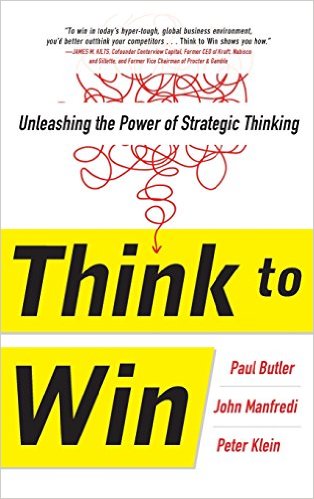
Think to Win

by Ron Potter February 3, 2016

Ron’s Short Review: Of the two books on Strategic thinking/planning I read this month (See The Rise and Fall of Strategic Planning) this one hit the nail on the head. Great guide for thinking through today’s ever-changing business climate.

0 comments
0 FacebookTwitterEmail
BlogQualities of a Caring LeaderTrust Me

Qualities of a Caring Leader: Spontaneous Compassion

by Ron Potter February 1, 2016

photo-1447619297994-b829cc1ab44aOver the next few weeks, our Trust Me posts will explore the qualities of a caring leader. We explored the first quality – Understanding here. Then we took a look at the second quality – Concern. Communication was the third quality. Then we discussed Confrontation. Today we look at Compassion.

I observed a wonderful incident of compassion once while preparing a webcast for a client. The man helping set up the equipment and handling the technical details received a telephone call from one of his employees who was troubleshooting at another location. My writing partner Wayne and I learned that this employee was working on a crisis situation of great importance to her company.

Hearing just half of his conversation, we picked up that she was reporting on her progress in solving the problem. Later, when our technical helper gave us the details of the conversation, we learned that almost in passing she mentioned, “I have to check on my father. I think he had a heart attack or stroke or something.”

Our man interrupted the conversation right then and said bluntly, “You need to go to your father.” He didn’t even ask, “Do you need to go to your father?” He just said, “You need to go to your father.”

The employee protested, “No, I’m not going to go until this is fixed.” Her boss just kept saying, “Get off the phone, get on a plane, and go to your father.”

We knew that this man might get into trouble for making that kind of decision; his employee was trying to solve a serious problem. But he insisted, and she went home.

We reach several conclusions from this leader’s act of spontaneous compassion: First, this woman will be one of his most loyal and productive employees from now on. Second, he did the right thing even though painful consequences might follow. A trusted leader acts like that. Finally, he showed a true heart of compassion. He decided to care for the person. In that moment when he had to make a choice, he understood and responded to the needs of the person, not just a valued cog in the company machine.

That’s what compassion is all about.

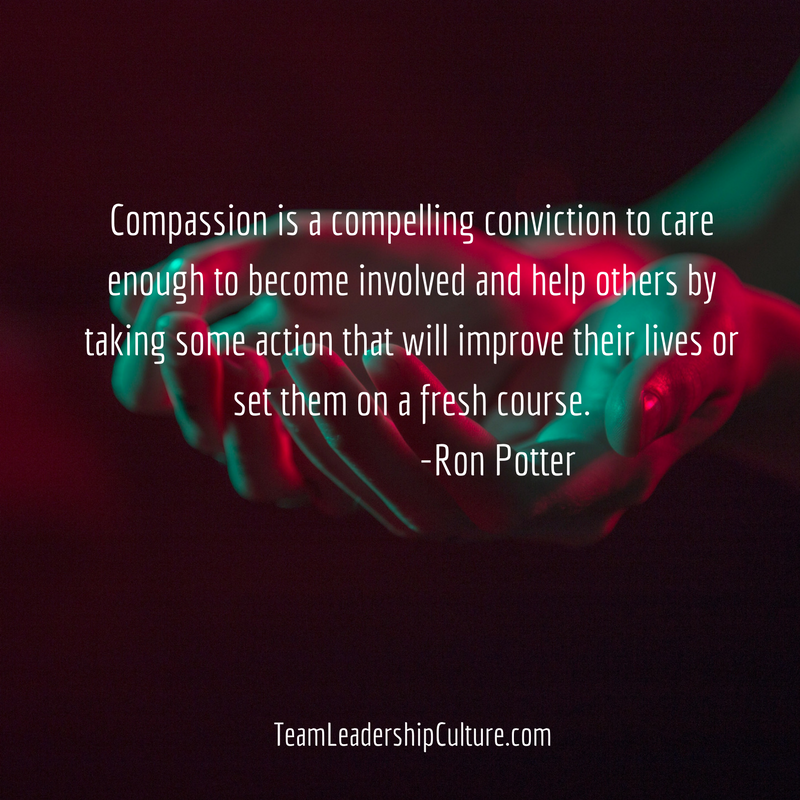
Compassion is a compelling conviction to care enough to become involved and help others by taking some action that will improve their lives or set them on a fresh course.

Team Leadership Culture Meme 6

2 comments
0 FacebookTwitterEmail
Short Book Reviews

The Rise and Fall of Strategic Planning

by Ron Potter February 1, 2016

Ron’s Short Review: I must admit that this was one of the few books that I couldn’t slog through. I don’t think it was the fault of the author it may be that it was written in 1994 and in today’s fast-paced, global business world I just didn’t find it relevant any more.

0 comments
0 FacebookTwitterEmail
Short Book Reviews

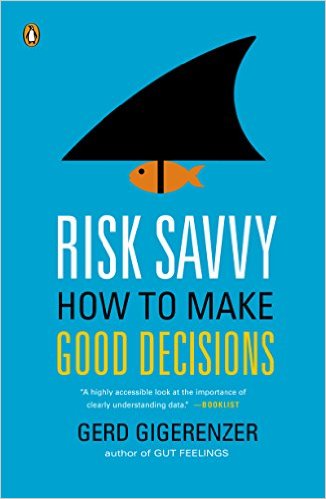
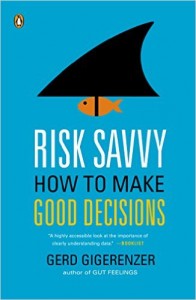
Risk Savvy

by Ron Potter February 1, 2016

risk savvyRon’s Short Review:

Does a great job of breaking out the types of risk, relative vs absolute, and the difference between risk and uncertainty. It will equip you to be much better and risk analysis and making better decisions.

Amazon-Buy-Buttonkindle-buy button

0 comments
0 FacebookTwitterEmail
BlogQualities of a Caring LeaderTrust Me

Qualities of a Caring Leader: Confrontation

by Ron Potter January 25, 2016

photo-1414058862086-136de6c98e99Over the next few weeks, our Trust Me posts will explore the qualities of a caring leader. We explored the first quality – Understanding here. Then we took a look at the second quality – Concern. Communication was the third quality. And today we discuss Confrontation.

Part of leading is confronting people and urging them toward better performance.
Confrontation does not involve giving a report on another person’s behavior. It means offering feedback on the other’s role or response. Its goal, in the business environment, is to bring the employee, boss, or peer face to face with issues (behavior, emotions, achievement) that are being avoided.
For us to be effective in confrontation, we need to focus on four things:

Balanced truth

You cannot confront someone on hearsay alone. Get the facts. Investigate the matter; check it out. There are always two sides to every story. What are they? Neither one is likely to be the “complete” truth. Look for the balanced story.

Right timing

We recently witnessed a near catastrophe. A client of ours was going to confront a customer. The customer had called the day before and verbally leveled several people on our friend’s staff. Our client was going to call the customer and confront him with some brutal truth: “Everyone in the office is afraid of you and doesn’t want to talk to you because of your aggressive style and attitude.” Just before our client was to make the call, someone in the office discovered that the customer’s wife had colon cancer and possibly multiple sclerosis. The customer was suffering right along with his wife, in addition to trying to be both Dad and Mom to the kids, coaching a sports team, and running a tough business. Instead of calling to confront the customer with the brutal facts, our client decided to confront him with care and sympathy.
Many situations will not be this clear-cut. The right timing may be harder to gauge. For sure, though, it is best to deal with a situation when the heat of the moment has passed. Having the courage and taking the time to come back to it after emotions have subsided is actually quite difficult. There never seems to be the same urgency later, but good leaders force themselves to pick up the issue at a better moment. When it is the right time to confront, the green lights will be flashing. Until then, hold on.

Wise wording

We suggest that you carefully plan what you will say when you confront someone. A proverb says, “Timely advice is as lovely as golden apples in a silver basket. Valid criticism is as treasured by the one who heeds it as jewelry made from finest gold.” Words have the power to destroy or heal. Choose them carefully when entering in to confrontation.

Fearless courage

Don’t fall back in fear when you need to confront someone. If you have assembled the truth, believe it is the right moment, and have carefully prepared what you will say, move forward and confront. As Roger Clemens did with Curt Schilling, press on: “How can I help this person be better, regardless of how I feel?” It may mean finding a more productive or satisfying place for the person—even if it’s with another company. In the end this option is better for the organization and, in most cases, for the other person. What is worse is allowing a person to continue in a harmful behavior or self-destructive attitude.

0 comments
0 FacebookTwitterEmail
BlogLeadership

Decoding Leadership: What Really Matters

by Ron Potter January 21, 2016

photo-1452573992436-6d508f200b30

That’s the title of a recent McKinsey Quarterly Report.  Great stuff.  What does really matter?

In typical McKinsey style they described their survey approach:

  • We started with our own list and relevant literature list of 20 traits.
  • We surveyed a large number of people
  • In a large number of organizations
  • Compared it to our healthy organization index
  • Boiled it down to 4 traits that explained 89% of the differences between strong and weak organizations in terms of leadership effectiveness.

Big organizations like McKinsey are really good at doing these large scale analysis projects and I really appreciate their ability to do it and their willingness to share it.

4 Traits explained nearly 90% of the difference between good and bad leadership effectiveness.  What were the four (you should be asking at this point)?

  • Being supportive
  • Operate with strong results orientation
  • Seek different perspectives
  • Solve problems effectively

The article doesn’t indicate that these are in any particular order so for our evaluation let’s separate out the 2nd one, Operate with strong results orientation.  People want to accomplish things.  People want to build, create, produce, provide goods and services that other people value.  Without both sides of that equation: people wanting valuable products and people wanted to produce value, there would be no commerce at all.  Yes, we all want results.  All too often leaders assume that people don’t want to produce and don’t realize that it’s the culture and structure that they’ve created that prevents them from doing so.

The other three require a humility and openness to accomplish.

Being supportive requires that I’m interested in who you are, how you think and what you want to create and accomplish.

Being open to your perspectives requires that I’m interested in who you are, how you think and what you want to create and accomplish.

Being good at solving problems effectively requires that I’m interested in who you are, how you think and what you want to create and accomplish.

Being supportive, open and a good problem solver requires humility!

Every piece of valid research on leadership effectiveness you find will somehow have its foundation based on humility.  Ego and hubris reflect the needs of the person in the leadership position.  Humility starts with the needs of the people being led.


0 comments
0 FacebookTwitterEmail
BlogQualities of a Caring LeaderTrust Me

Qualities of a Caring Leader: Communication

by Ron Potter January 18, 2016

photo-1429623077761-9635d93ddd02Over the next few weeks, our Trust Me posts will explore the qualities of a caring leader. We explored the first quality – Understanding here. Then we took a look at the second quality – Concern. Today, we discuss the third quality of a caring leader – Communication.


The groundbreaking book In Search of Excellence stressed the concept known as MBWA, “management by walking around.” The concept is taken further in the book A Passion for Excellence:

How good are you? No better than your people and their commitment and participation in the business as full partners, and as business people. The fact that you get them all together to share whatever—results, experiences, recent small successes and the like—at least once every couple of weeks seems to us to be a small price indeed to pay for that commitment and sense of teamwork and family. The “return on investment” is probably far and away the best of any program in the organization.

MBWA stresses getting out of our individual comfort zones and getting to know other people. Whether you attend company-wide meetings or individual private sessions, the lesson is clear: Get out of your office and communicate with your people.

We tend to assume that communication is merely the process of delivering information from one person to another. However, it is much more than just good delivery. Pat Williams writes:

“Communication is a process by which we build relationships and trust, share meaning and values and feelings, and transcend the aloneness and isolation of being distinct, individual souls. Communication is not just a data dump. Communication is connection.”

Communication means being connected with your people. It means getting out of your office into their offices and workspaces. Go.

1 comment
0 FacebookTwitterEmail
Happy Anniversary Team Leadership Culture
BlogCulture

Happy Anniversary

by Ron Potter December 31, 2015

Happy Anniversary Team Leadership Culture2015 is an anniversary year for me.  25 years in the consulting business, 15 of those years as Team Leadership Culture (TLC).

Someone suggested that I write the “25 things I’ve learned in 25 years!”  Sounds like a great idea.

#1 thing I’ve learned in 25 years of consulting:

Hit the Sweet Spot!

If you’re a golfer (or at least someone who enjoys the game regardless of skill level like I am), you know that when you hit the sweet spot of the club face, wonderful things happen.  The ball tends to sore long and straight and you’re usually rewarded by hitting at or near your target.  The other thing that golfers experience is that when you do hit the sweet spot, there is this wonderful feeling that it was almost effortless.  There was no clank of the club hitting the ball and no vibration sent up through the shaft upon impact.  Just a nice smooth striking of the ball in a pure form that feels wonderful.

Hitting the sweet spot in business is much the same.  It feels good, things seem to be working in harmony and we create a trajectory that tends to be long and straight.  Wonderful.

But the real question is “So, what is that sweet spot?”  To me it has become abundantly clear over the last 25 years.

That’s the sweet spot.

Again with the golf analogy: as I’ve observed my game through the years I began to realize that on my poor days I only have one (and sometimes none) aspect of my game working, driver, irons or putter.  On my good days I seem to have two of the three working.  But as I look back as my most successful rounds, all three aspects were working on that given day.  Business is much the same.

At every company I work with I can see patterns related to how many “cylinders” the company is hitting on.  As I’m writing this I can see very clearly in my mind one company in particular.  The individual leadership in many instances seems to be very solid and up to the challenge.  This company has a deep culture that has been in place for many years and drives their performance.  But as I look back over the years there seemed to be a particular turning point when team work began to fade.  Individual success, loyalty to a particular leader, unit and division success rather than whole company success began to be the measured standard.  Team work simply seemed to fade away over time.

In decades past it didn’t seem to make much difference.  Success always came.  Conditions in the market place could always be overcome or exploited.  They were the king of the hill and were reward for being on top.  But, in today’s fast paced, every changing world, companies are finding that they need to be quick and nimble.  Only team oriented companies can respond quickly with nimbleness.  Great leadership and deep cultures alone will not survive.  All three, Team, Leadership and Culture, are required to survive in today’s world.

Well, number one of the 25 things I’ve learned over 25 years seemed to come easily.  I’ll have to think about the next 24.  But as I do, I’ll share them with you.

2 comments
0 FacebookTwitterEmail
Short Book Reviews

Memoir of Col. Benjamin Tallmadge

by Ron Potter December 1, 2015

Memoir of Col. Benjamin TallmadgeRon’s Short Review: Benjamin Tallmadge was George Washington’s spy master during the revolutionary war.  He wrote this as a memoir to his children.  Short read (less than 100 pages).  Fascinating.
Amazon-Buy-Buttonkindle-buy button

0 comments
0 FacebookTwitterEmail
BlogCulture

Hope is Not a Strategy

by Ron Potter November 19, 2015
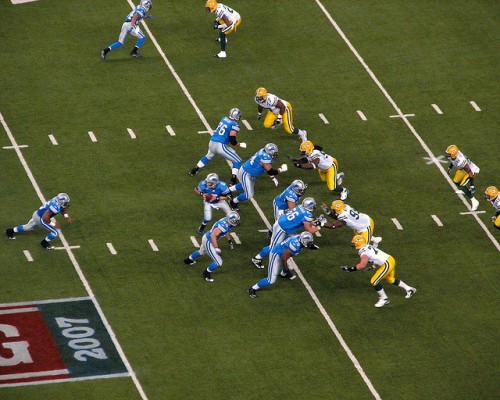
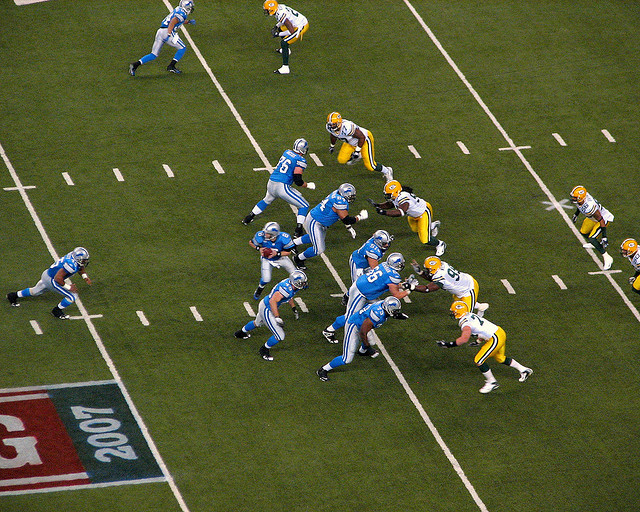
Source: Dave Hogg, Creative Commons

Source: Dave Hogg, Creative Commons

Forbes Leadership contributor John Baldoni recently published an article titled “Don’t Let Your Team Become Like The Detroit Lions”

I’m from Michigan and have lived most of my life here.  When I was a young lad of nine, the Lions won their last championship.  In the over 50 subsequent years, the Lions have not won a single playoff game.  For me, hope was lost a long time ago.

John Baldoni offers three lessons to avoid becoming the floundering dysfunctional organization that I’ve watched my whole life:

Evaluate Talent

“Seek to understand who they are as people and what they want to achieve now and in the future.”  You’re hiring human beings, not human doings!  Hire people for their character and values and their fit in the organization.  Knowledge and talent are always needed but if they’re not quality human beings there will be no value in the long run.

Develop Your People

“When you bring new people on board you need to groom them and provide them with opportunities to succeed.”  Part of that responsibility is integrating them into the team.  Leaders all too often under estimate the impact that a new member has on a team or how much effort it takes to develop the trust so that a new member can be successful. Build great teams!

Respect Your Customers

Peter Drucker wisely counseled, ‘The purpose of business is to create and keep a customer.  Spend time getting to know their needs as well as their desires.”  I watched one of my clients several years ago lose their most important customer even when they had the greatest “customer satisfaction” rating. The problem was that my client had developed this customer satisfaction rating internally based on what they thought the customer wanted.  But, they never set down with the customer and asked them what was most valuable about the relationship. Don’t assume you know the customer’s needs. Ask them.

Hope is not a strategy.

0 comments
0 FacebookTwitterEmail
Newer Posts
Older Posts
  • Facebook
  • Twitter
  • Linkedin
  • Rss
  • About This Site
  • About
    • Clients
  • Services
  • Resources
    • Trust Me
    • Short Book Reviews
  • Contact

About this Site | © 2024 Team Leadership Culture | platform by Apricot Services


Back To Top
Team Leadership Culture
  • Team
  • Leadership
  • Culture
  • Myers-Briggs
  • Trust Me
  • Short Book Reviews
 

Loading Comments...