
Team Leadership Culture
  • Team
  • Leadership
  • Culture
  • Myers-Briggs
  • Trust Me
  • Short Book Reviews
Top Posts
Obituary
REPOST: Four Functions, Three Rules
ROUNDUP: The Rise of AI
REPOST: Facing Adversity Series
ROUNDUP: Curiousity
ROUNDUP: Deep Work
REPOST: Character vs. Competence
REPOST: Opposite of Victim
REPOST: Listening With the Intent to Understand
REPOST: Performance vs Trust
  • About
  • Services
  • Resources
    • Trust Me
    • Short Book Reviews
  • Contact

Team Leadership Culture

  • Team
  • Leadership
  • Culture
  • Myers-Briggs
  • Trust Me
  • Short Book Reviews
Category:

Blog

BlogCulture

Forcing Trust too Quickly

by Ron Potter December 24, 2015

bag-and-handsI’ve seen the full spectrum through the years of those who trust until the trust is broken (the end of the spectrum that I sit on) and those who say no trust granted until it’s earned.

A recent Harvard Business Review, Management Tip of the Day listed “3 Mistakes to Avoid When Taking Over a Team.”  The third tip was “Attempting to force trust too quickly. Until team members have had time to see how you handle uncomfortable topics too much candor will do more harm than good. Let trust build over time.”  The word candor in the middle of that sentence caught my eye.

It’s not that you’re not trusting or offering trust, but don’t assume candor will be accepted with trust and appreciation until you’ve gained some trust.  While I know this is sound advice and I usually follow it myself, I do remember one major incident where I tripped over this one.

I had been working in couple of different functional areas for a Fortune 200 company.  An internal candidate had recently been promoted to VP of HR and with the recommendation of a few other corporate leaders, I was making an effort to get acquainted.  During one of my first conversations with her she asked if I had any feedback for her, knowing that I had been working in the company for a while and knew of her in her previous role.

I remembered distinctly that I had this little twinge of doubt before I answered.  Let me take the time and space right here to say “Always pay attention to that little twinge of doubt!”

When she made the initial request for feedback I came back with some general platitudes about working into the new position even though she was a known quantity in the corporation.  She pressed for more.

While my twinge was turning into more of a twitch, she pursued with what felt like genuine sincerity about wanting feedback.  So, in spite of that twitch now turning into a pit, I shared a couple of things that I had observed about her leadership skills.  In all honesty I didn’t really think they were that much of an unknown to her and I also didn’t believe they were particularly harsh and damaging.  But, you can see the rest of the story coming.  The look on her face sent a very firm message that she didn’t care for that feedback and the meeting quickly ended.

My entire worth when working with a client is being able to share feedback with clients and I’ve discussed much more damaging feedback than I actually shared at that moment.  But, I ALWAYS develop trust with my client first before sharing meaningful feedback.  Well, almost always.

Always build trust first.  No matter which end of the spectrum you’re on, always build the trust first before bringing in too much candor.
0 comments
0 FacebookTwitterEmail
BlogMyers-BriggsYou Might Be a Jerk If

You Might Be a Jerk If: Thinking

by Ron Potter December 21, 2015

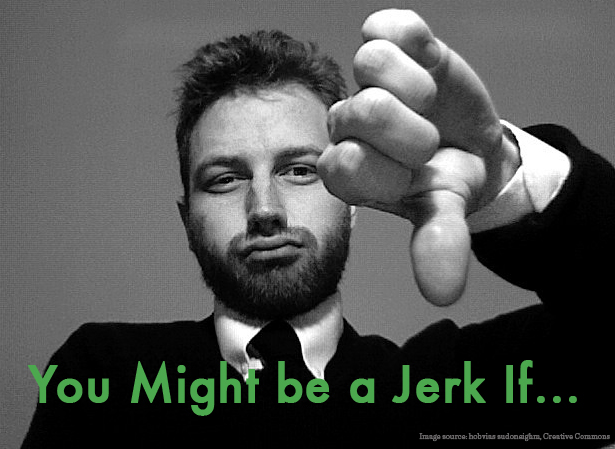
You Might be a Jerk If
(If you didn’t start with the introduction to this “You might be a jerk if…” series, I suggest you make a quick review because it will help you better understand these subsequent blogs.)

“I don’t care what you think and don’t confuse me with facts! This is our only way out! Besides, that’s just about the dumbest idea I’ve heard this century. Have you burned out all of your brain cells?
And don’t you dare challenge my intelligence or authority. I’ll make this decision and it will be the right decision.”

Bill is stuck! His dominant function is Thinking which helps him analyze situations and spot the pitfalls in advance. And normally, he’ll balance these great skills with either a good conceptual view of the world or a great grasp of the data, depending on his complete type.
There are four types that have this particular combination, the Introverted ISTP, INTP and the Extraverted ESTJ, ENTJ. As noted above the dominant in all four cases is Thinking and the inferior in all four cases is Feeling. These are what’s known as our Deciding functions, how do we decide what to do after we have taken in the data through our Perceiving functions of Sensing and iNtuition.
In a healthy state, these Deciding functions would then work in tandem with the “perceiving” functions of Sensing or iNtuition depending type. But, under pressure or stress, Bill begins to lose this natural balance, falling back to his dominant function which has a need for logic at all expense. Bill will either lash out in an unexpected (even out of character) emotional outburst or even if he keeps a calm exterior, be begins to take any comments or feedback as personal slights and criticism.

Balance, Balance, Balance

This is where team members and colleagues come into play. It’s difficult for any one of us to break out of these pressure packed situations. As colleagues, we want to help Bill back into a balanced state by asking and sometimes even forcing him to use his auxiliary function. Notice that Bill’s auxiliary function could be either Sensing or iNtuition depending on type. Let’s start with the Sensing balance.

“Bill, what information are you missing to make this decision?”
“I’m not missing any information, it’s just that the information we have doesn’t make sense!”
“Which piece of information doesn’t seem to make sense to you?”
“This one data set just doesn’t align with what we thought we knew. If it’s correct it will have a three week impact on the coding section.”
“OK, let’s think through that. What are the consequences of the three week impact on that portion of the schedule when we put it in context of the overall project?”
“Well, when I think about it that way it probably doesn’t make too much difference.”

As we begin to force Bill to try a little balancing act, he’ll begin to regain his footing. Note that we can’t tell Bill that his data problem doesn’t have much impact to the overall project. Bill has to come to grips with that through balancing his own natural Thinking and Sensing functions.
If we’re dealing with either the INTP or ENTJ than iNtuition is the auxiliary function, not Sensing. The approach is similar, but focused more on the conceptual or future view (iNtuition) rather than the data (Sensing).

“Bill, we’re not questioning your ability in this matter, but what information are you missing to make this decision?”
“I’m not missing any information, it’s just that the information we have doesn’t make sense!”
“Well, where do you think this information will lead?”
“I just don’t know. That’s the problem.”
“Let’s go back to your gut instincts. What is your experience telling you?”
“I’m pretty sure it has to lead us in this direction, I just can’t see it yet.”

As we begin to force Bill to try a little balancing act, he’ll begin to regain his footing. Note that we can’t tell Bill where the data should lead him. Bill has to come to grips with that through balancing his own natural Thinking and iNtuition functions.
Stay tuned. Next in our series titled “You might be a jerk if…” we’ll shift our focus from the dominant Thinking style to the dominant Feeling style. This one may have the most difficulty working in the corporate environment.

0 comments
0 FacebookTwitterEmail
BlogLeadership

Are you egocentric?

by Ron Potter December 17, 2015
Source: Kristoffer Trolle, Creative Commons

Source: Kristoffer Trolle, Creative Commons

Here’s a clue… YES!

Elizabeth Bernstien, a columnist for the Wall Street Journal wrote a piece titled “But you never said…”  In this column she quotes Dr. Michael Ross, professor emeritus in the psychology department at the University of Waterloo in Ontario, Canada:

People also remember their own actions better. So they can recall what they did, just not what [the other person] did. Researchers call this an egocentric bias, and study it by asking people to recall their contributions to events. Whether the event is positive or negative, people tend to believe that they had more responsibility.

Your mood—both when an event happens and when you recall it later—plays a big part in memory, experts say. If you are in a positive mood or feeling positive about the other person, you will more likely recall a positive experience or give a positive interpretation to a negative experience. Similarly, negative moods tend to reap negative memories.

Negative moods may also cause stronger memories. A person who lost an argument remembers it more clearly than the person who won it, says Dr. Ross.  And how often you recall an incident may affect your memory. It is quite possible to remember your most recent version of the story, not the way it actually happened.

Yes, we are egocentric.  It’s natural and essential in many cases.  But, if we tend to remember what we said or did more than what anyone else said or did, how do we build a great team solution rather than a narrow egocentric solution?  Dialogue!

Dialogue is a practiced technique that will help you build better solutions to difficult problems.  We each have our own memory and perspective.  It’s important to remember that your view is not “right” it’s just your view.  In dialogue we start by sharing our “beliefs and assumptions” about a situation.  Once we’ve really heard each other than we can start building some common ground rather than simply fighting over who’s view is right thereby making the other views wrong.  Many, many arguments are actually right vs right, not right vs wrong.  Start with that assumption and you’ll begin to build better teams.

0 comments
0 FacebookTwitterEmail
BlogQualities of a Caring LeaderTrust Me

Qualities of a Caring Leader: Understanding

by Ron Potter December 14, 2015
Source: Robert Couse-Baker, Creative Commons

Source: Robert Couse-Baker, Creative Commons

We need to be acutely aware of other people’s needs, focus, dreams, and abilities before we can help them achieve.

For years the late cartoonist Charles Schulz delighted us as his Peanuts characters Charlie Brown, Linus, and even Snoopy provided a window into the complex (and funny) realm of human relations.

Lucy, the extroverted big sister of Linus, was no exception. Her love affair with the Beethoven-loving Schroeder is legendary. Often we see Lucy stretched out by Schroeder’s piano, watching him with longing eyes. Or she is asking a question or demanding his attention in some other way. Schroeder is oblivious to Lucy, so she tries harder and harder to win his heart. In the end, nothing works. Lucy usually loses her temper and pouts, once again the frustrated lover.

What Lucy never gets is how a change in her approach might improve her chances at winning Schroeder’s attention. Lucy’s entire focus is on her needs, not Schroeder’s. Every attempt to secure the heart of the piano genius is from her perspective, not his. Her compassion is entirely self-focused and has little or nothing to do with him and his needs. No matter how bold or romantic she is, Lucy never gets close to Schroeder because she never learns to first understand him.

Increased understanding of others usually leads to better relationships. Our frame of reference becomes their needs, not our own. It becomes a habit to seek to understand our bosses, our direct-reports, and our peers. This understanding is not developed for manipulative purposes. It is an attempt to help people grow and develop by first seeking to understand them—their motives, needs, and styles. Once we understand others and their individual preferences, we can better communicate with them, train them, and lead them.

Abraham Lincoln was a master at this. In 1864 the New York Herald explained how Lincoln was able to overcome the difficulties of guiding the nation during the Civil War—“Plain common sense, a kindly disposition, a straight forward purpose, and a shrewd perception of the ins and outs of poor, weak human nature.”

Lincoln was a master at getting out to meet and know the people—from generals to office workers: “Lincoln gained commitment and respect from his people because he was willing to take time out from his busy schedule to hear what his people had to say.” From this information, Lincoln came to understand his people. From this understanding, he motivated them, challenged them, and moved them to achieve.

It is always interesting, upon entering an airplane, to look into the cockpit and see all those dials and gauges. Each one has a purpose. Many help properly guide the aircraft to its final destination. If the pilots don’t monitor the right instruments, they won’t have a clear picture of the flight, where they are going, how fast they are traveling, how high they are flying, or even if the craft is right side up.

Similarly, if we do not read all the “gauges” of other people, we will be forced to guess what their behavior and words really mean. Learning to read gauges gives you the ability to understand and respond to others based on their needs and frames of reference.

4 comments
0 FacebookTwitterEmail
BlogTeam

Winning Shelters Mistakes

by Ron Potter December 10, 2015
Source: BiblioArchives, Creative Commons

Source: BiblioArchives, Creative Commons

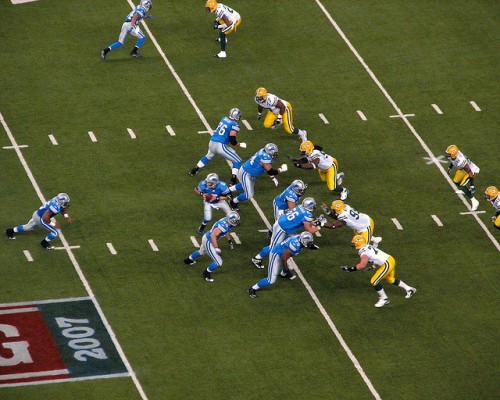
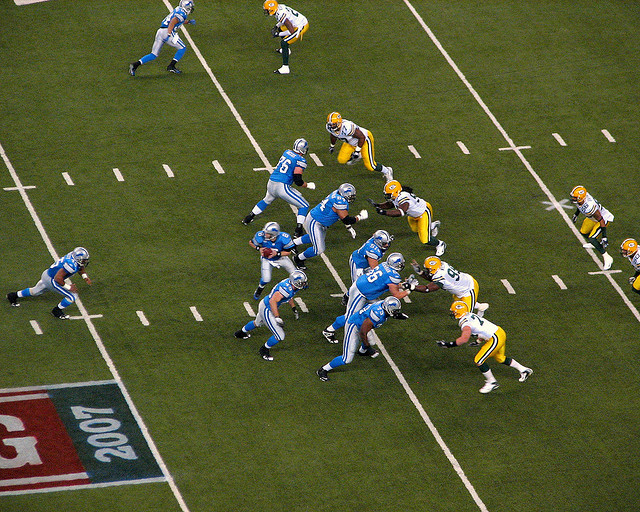
A top NFL quarterback said today (commenting on their perfect season so far)…

“Winning shelters a lot of things we’re doing wrong.”

That one really hit home for me.  I see this so often in the corporate world. When things are going even reasonably well there just doesn’t seem to be the will power to handle the tough issues.  All too often leaders simply agree to disagree which drives deep wedges down through the organization (for more on that thought – see Consensus: The Split at the Top).

That doesn’t seem so hard, just stop agreeing to disagree and solve you’re differences. But it sure is when things are going well.  Everyone feels entitled.  Their division or team is working well and hitting the numbers.  What they’re really saying is that… “Until I’m failing (or at least struggling) you can’t make me change the way I’m being successful just because it’s not working for someone else.”

Here’s where the game of football makes it easier to see.  In football you know whether you’re winning or losing after each series of plays.  It becomes more obvious after each quarter.  And in 60 minutes you get your final score card.  It’s obvious and it’s quick.  Not so much in the corporate world.  You may go years before you actually get that concrete score that says you’re winning or losing.  Or at least that’s the way it used to be.  Not anymore.  I’ve seen some of my corporate clients suffer great change in fortunes in a matter of few years and in some cases a matter of a few quarters.

  • Mergers and acquisitions that turn sour very quickly.
  • Putting off investing in new products or markets for too long.
  • Not building a culture of innovation or unwilling to cannibalize their own product or market because of the success of the existing product.

I don’t need to invent the list, you can read about it almost every day in business topics on the internet, magazines, newspapers or books.

What I do see consistently through it all is a lack of willingness to put in the time, energy and pain to actually build a team.

A team that trusts each other.

A team that listens and learns from each other.

A team that is willing to take chances and go out on a limb with each other.

A team that is willing to challenge each other in a trusting way.

This stuff is hard work.  It doesn’t happen easily or naturally.  Those leaders who are unwilling to tackle this issue, especially when things are going well, will surly see the painful consequences.

“This team is tremendously tough, we rely on each other. We’re a ‘Band of Brothers’ when we go on the road, and we know that if you give us one inch we are going to take it. We’re a ‘Band of Brothers,’ and I trust these boys to a ‘T,’ and we prove it every time we get out on the field.”

Sorry, another football quote.  This one by James Ross a linebacker for the Michigan Wolverines.  Many of these guys have played together for two or three years.  But under their new head coach, they’ve become a team.

Building teams makes a difference.  Building a team helps you survive when things aren’t going so well.  Building a team doesn’t allow you to agree to disagree when things are going well.

Success camouflages a lot of bad things. – Team Genius

0 comments
0 FacebookTwitterEmail
BlogTrust Me

“I Care”

by Ron Potter December 7, 2015
Source: Leticia Bertin, Creative Commons

Source: Leticia Bertin, Creative Commons

One day a student asked anthropologist Margaret Mead for the earliest sign of civilization in a given culture. He expected the answer to be a clay pot or perhaps a fishhook or grinding stone. Her answer was “a healed femur.” Mead explained that no healed femurs are found where the law of the jungle, the survival of the fittest, reigns. A healed femur shows that someone cared. Someone had to hunt and gather for the injured person until the leg healed. That caring evidence of compassion, according to Mead, is the first sign of civilization.

Great leaders demonstrate such caring. This expression is more than empathy or a heart for the needy. It is a compelling conviction to care enough to become involved and help others by taking some action that will improve their lives or set them on a fresh course.

Qualities That Demonstrate Caring

Over the next few “Trust Me” blog posts, we’ll be delving deeper into the qualities that are demonstrated by caring leaders. For today’s post, let’s get a birds eye view.

Understanding

Leaders need to be acutely aware of other people’s needs, focus, dreams, and abilities before they can help their people achieve.

Concern

The good Samaritan did not hesitate. He moved quickly, then took the time necessary to give the hurt man attention. This is sincere concern.

Caring in action

Communication, confrontation, and challenge are three of the best ways a leader puts “feet” to true caring.

  1. Communication—Get out of your office and communicate with your people. “Communication is connection.”
  2. Confrontation—This does not involve giving a report on another person’s behavior. Its goal, in the business environment, is to bring the employee, boss, or peer face to face with issues (behavior, emotions, achievement) that are being avoided.
Spontaneous Compassion

Effective leaders act spontaneously with a true heart of compassion, caring for the person regardless of the consequences.

0 comments
0 FacebookTwitterEmail
BlogCulture

Character Issues Usually Don’t End Well

by Ron Potter December 3, 2015
Source: John Tornow, Creative Commons

Source: John Tornow, Creative Commons

The title of the USA Today article said “50 things we’ve learned so far in the NFL”.  Sitting at number 10 was this one:

Greg Hardy and Jerry Jones: The Dallas Cowboys owner can gush all he wants. But this one will not end well. It usually doesn’t when there is a character issue.

Now, you don’t need to be a football fan or know who Greg Hardy or Jerry Jones are. And interestingly enough, you don’t even have to know about the situation that the article is referring to because we all know that “It usually doesn’t turn out well when there is a character issue.”

Two recent books have done a nice job of tackling this issues:

  • Return on Character by Fred Kiel
  • Road to Character by David Brooks

I appreciated each of these books for slightly different reasons but let’s admit it, we really don’t need books to tell us that things don’t turn out well when there are character issues.

Take a minute to think back to that kid from your school years that you knew was just going to be trouble all his life.  I’m not talking about the awkward kid or the one that just didn’t fit in or the one that was just too smart and knew it.  I’m talking about the one you really knew, even from an early age that had a character issue.

Or in college that kid that was already on the fringe of the law. Or even the popular frat member that you know would toss the honor code out the window if it served them to do so.

Or any number of a situations, both public and private where a leader in the corporate community or just one of your colleagues caused great disruption or failure because of character issues. It usually doesn’t turn out well when there is a character issue.

David Brooks says the reason he wrote the book Road to Character was to save his own life. It usually doesn’t turn out well when there is a character issue. In fact, it may even be fatal.

Pay attention to character. It will be the only thing you have to stand on (or stand for) in the end.

0 comments
0 FacebookTwitterEmail
BlogMyers-BriggsYou Might Be a Jerk If

You Might Be a Jerk If: Intuition

by Ron Potter November 30, 2015

You Might be a Jerk If(If you didn’t start with the introduction to this “You might be a jerk if…” series, I suggest you make a quick review because it will help you better understand these subsequent blogs.)


“I can’t possibly sort through all of these options. I’m already overwhelmed. We could work on this all weekend and we’d never get through everything we need to figure out. Stop! Don’t ask me again, I don’t know how were going to proceed through this morass! I need to get out of here, I’m starving and I need a drink.”

Teresa is stuck! She can’t seem to find her way out and she wants a clear path forward that cuts through all the information, data and options. Teresa’s dominant function is iNtuition (need for concepts, visions and future goals) and her inferior function is Sensing (need for detail and information).
There are four types that have this particular combination, the Introverted INTJ, INFJ and the Extraverted ENTP, ENFP. As noted above, the dominant function in all four cases is iNtuition and the inferior in all four cases is Sensing. These are what’s known as our Perceiving functions, how do we perceive the world around us? These are the functions that we use to take in the information that we’ll need to eventually make a decision.
In a healthy state, these Perceiving functions would then work in tandem with the “deciding” functions of Thinking or Feeling depending type. But, under pressure or stress, Teresa begins to lose this natural balance, falling back to her dominant function which has a need to know where all of this is going and becomes unable to combine it with her deciding function to keep things moving along. Teresa will retreat into her sensory pursuits of binge eating, drinking, TV watching, physical activities or whatever allows her to escape the fact that she’s stuck.

Balance, Balance, Balance

This is where team members and colleagues come into play. It’s difficult for any one of us to break out of these pressure packed situations. As colleagues, we want to help Teresa back into a balanced state by asking and sometimes even forcing her to use her auxiliary function. Notice that Teresa’s auxiliary function could be either Thinking or Feeling depending on type. Let’s start with the Thinking balance.
“Teresa, where do you think this will all lead?”
“I don’t know. None of it makes any sense to me yet.”
“I know, but tell me what you think will be the best answer in the end.”
“Well, it needs to provide us options once we get the product into the market place.”
“Great. Looking beyond the data for a moment, what step do we need to figure out next to give us options in the future?”
As we begin to force Teresa to try a little balancing act, she’ll begin to regain her footing. Note that we can’t tell Teresa what the final state should be. It has to be the act of balancing her own functions of iNtuition and Thinking that begins to restore her sense of balance and allows him to begin functioning on a more normal basis based on her own type.
If we’re dealing with either the INFJ or ENFP than Feeling is the auxiliary function, not Thinking. The approach is similar, just using Feeling questions rather than Thinking questions,
“Teresa, what are you worried about?”
“I don’t feel like I can figure out where this is all headed.”
“What values are you concerned that we’ll miss?”
“It could be any of them if we can’t figure out how this will end up.”
“Well, let’s talk through some scenarios and see how our values set with each of them?”
As Teresa begins to answer these very basic Feeling questions, she begins exercising her own balancing mechanisms and it begins to help her out of the rut. Teresa is regaining balance.
It doesn’t help to point out the values that we believe need to be protected. Our job is to help Teresa regain her own, natural balance.
Stay tuned. Next in our series titled “You might be a jerk if…” we’ll shift our focus from the dominant styles centered on our perceiving function (sensing and intuition) to dominant styles based on our deciding functions of Thinking or Feeling. It’s an interesting shift.

0 comments
0 FacebookTwitterEmail
BlogTrust Me

Team Feedback

by Ron Potter November 23, 2015
Source: Howard Lake, Creative Commons

Source: Howard Lake, Creative Commons

The term feedback has an interesting origin. In the early days of rocketry, scientists found that in order to hit a target they had to devote more attention to building accurate, reliable, and frequent feedback mechanisms than they did to controlling thrust. Thrust was the easy part. Hitting the target was the hard part. It took feedback to maintain the ongoing focus required to achieve the goal.

Achievement in an organization is similar. Thrust is the easy part. You and others are willing to work long and hard to accomplish goals. However, as we’ve seen from past blog posts, our efforts can become very scattered and focused on the “urgent.” We need to build accurate, open, reliable feedback systems.

A team leader needs to create a learning environment in which every team member is appreciated, listened to, and respected. In this kind of environment, the opinions of team members are fully explored and understood and are incorporated into the decision-making process. The team actively learns from all members who express their positions and opinions, and as a result, the team is stronger and more efficient.

The principles of building a great team have an interesting pattern starting with humility and moving to endurance. In the end it will be the ability to endure through the challenges, criticisms, and doubts that distinguishes the great leaders. But if you have staked your reputation on a wrong or unachievable goal, enduring through the challenges will only take your team or organization down the wrong path. What keeps you from that wrong path is good solid feedback. But good solid feedback is hard to come by, especially the higher you climb in an organization. People don’t like to give the boss bad news or news that doesn’t agree with the boss’s stated position. But without it comes only failure.

Feedback. It’s not just something you ask for. It’s a cherished gift. It’s a wonderful reward for building a trusting organization or team.

An effective feedback apparatus starts with humility. Humble leaders create an atmosphere where feedback from others is desired and honestly requested. Leaders who are focused on growing their people build that growth on feedback. When people know that a leader is committed and wants honest feedback to help reach stated goals, they are more likely to provide the open and honest feedback required. Compassion, integrity, peacemaking—upcoming chapters that will all lead to an atmosphere and culture that is open to and thrives on honest and timely feedback.

0 comments
0 FacebookTwitterEmail
BlogCulture

Hope is Not a Strategy

by Ron Potter November 19, 2015
Source: Dave Hogg, Creative Commons

Source: Dave Hogg, Creative Commons

Forbes Leadership contributor John Baldoni recently published an article titled “Don’t Let Your Team Become Like The Detroit Lions”

I’m from Michigan and have lived most of my life here.  When I was a young lad of nine, the Lions won their last championship.  In the over 50 subsequent years, the Lions have not won a single playoff game.  For me, hope was lost a long time ago.

John Baldoni offers three lessons to avoid becoming the floundering dysfunctional organization that I’ve watched my whole life:

Evaluate Talent

“Seek to understand who they are as people and what they want to achieve now and in the future.”  You’re hiring human beings, not human doings!  Hire people for their character and values and their fit in the organization.  Knowledge and talent are always needed but if they’re not quality human beings there will be no value in the long run.

Develop Your People

“When you bring new people on board you need to groom them and provide them with opportunities to succeed.”  Part of that responsibility is integrating them into the team.  Leaders all too often under estimate the impact that a new member has on a team or how much effort it takes to develop the trust so that a new member can be successful. Build great teams!

Respect Your Customers

Peter Drucker wisely counseled, ‘The purpose of business is to create and keep a customer.  Spend time getting to know their needs as well as their desires.”  I watched one of my clients several years ago lose their most important customer even when they had the greatest “customer satisfaction” rating. The problem was that my client had developed this customer satisfaction rating internally based on what they thought the customer wanted.  But, they never set down with the customer and asked them what was most valuable about the relationship. Don’t assume you know the customer’s needs. Ask them.

Hope is not a strategy.

0 comments
0 FacebookTwitterEmail
BlogMyers-BriggsYou Might Be a Jerk If

You Might Be a Jerk If: Sensing

by Ron Potter November 16, 2015

(If you didn’t start with the introduction to this “You might be a jerk if…” series, I suggest you make a quick review because it will help you better understand these subsequent blogs.)

You Might be a Jerk If

“I’m telling you it won’t work!!  We’ve tried this a hundred times and it just never gets us anywhere.  No, this is not a new approach and it won’t get us any closer than the last effort.  We’re missing something.  We just don’t have enough information to make the final decision.  Now leave me alone so I can get the information we need from marketing, demographics, customer surveys, the last time we tried this, the data base, the internet, etc, etc, etc.”

Norm is stuck!  He can’t seem to find his way out and he wants the security of more information and data.  Often that information and data doesn’t exist, especially when we’re trying to make decisions about new directions or innovative approaches.  Norm’s dominant function is Sensing (need for detail and information) and his inferior function is iNtuitive (conceptual and future focused).

What is ‘Sensing’?

There are four types that have this particular combination, the Introverted ISTJ, ISFJ and the Extraverted ESTP, ESFP.  As noted above the dominant in all four cases is Sensing and the inferior in all four cases is iNtuitive.  These are what’s known as our Perceiving functions, how do we perceive the world around us?  These are the functions that we use to take in the information that we’ll need to eventually make a decision.

In a healthy state, these Perceiving functions would work in tandem with the “deciding” functions of Thinking or Feeling depending on type.  But, under pressure or stress, Norm begins to lose this natural balance, falling back to his dominant function which has a need for more and more data and becomes unable to combine it with his deciding function to keep things moving along.  Norm becomes very pessimistic about the future.

Balance, Balance, Balance

This is where team members and colleagues come into play.  It’s difficult for any one of us to break out of these pressure-packed situations.  As colleagues, we want to help Norm back into a balanced state by asking and sometimes even forcing him to use his auxiliary function.  Notice that Norm’s auxiliary function could be either Thinking or Feeling depending on type.  Let’s start with the Thinking balance.

“Norm, what do you think the answer will turn out to be?”

“I told you I haven’t gathered enough information.”

“I know, but tell me what you’ve figured out so far.”

“Not much”

“That’s OK, just share the pieces that you’ve thought about.  Even if they’re still open questions in your mind.”

As we begin to force Norm to try a little balancing act, he’ll begin to regain his footing.  Note that we can’t tell Norm what we’re thinking.  It has to be the act of balancing his own functions of Sensing and Thinking that begins to restore his sense of balance and allows him to begin functioning on a more normal basis for his own type.

If we’re dealing with either the ISFJ or ESFP than Feeling is the auxiliary function, not Thinking.  The approach is similar, just using Feeling questions rather than Thinking questions,

“Norm, what’s bothering you about this decision?”

“I don’t know yet I just know something’s not right.”

“Let’s talk through the source of your concern.”

“I don’t even know what that is yet, I haven’t gathered enough data to even express what’s bothering me.

“Well, give me some clues.  Is it a concern about values?  Are you concerned about how people will react or be affected?  Is it more anger or fear?”

As Norm begins to answer these very basic Feeling questions, he begins exercising his own balancing mechanisms and it begins to help him out of the rut.  Norm is regaining balance.

It doesn’t help to point things out or share what we think or feel about the situation.  Our job is to help Norm regain his own, natural balance.

0 comments
0 FacebookTwitterEmail
BlogTeam

Patience – A Balancing Act

by Ron Potter November 12, 2015
Source: WorldIslandInfo.com, Creative Commons

Source: WorldIslandInfo.com, Creative Commons

I think building great teams is tough. If you’re in a sports related environment, it’s more obvious that you need to build teams of your five, nine, or eleven players (or some other number). And even in these environments where the value of building a team is so crucial, it’s still difficult. In a corporate environment where it’s not quite as obvious that building a great team is necessary, it’s even more difficult to put in the effort to create a great team.

But for anyone who has been part of a great corporate team, the value of making the effort is undeniable. Patience is a key element to team building. However patience is hard to define or understand and difficult to balance.

Patience: “The capacity to accept or tolerate delay, trouble, or suffering without getting angry or upset.”

One of the images that I really enjoy is the two magnificent lions protecting the entrance to the New York Public Library. Their names are Patience and Fortitude.

Patience and fortitude. The capacity to accept or tolerate delay, trouble, or suffering without getting angry or upset and at the same time fortitude: courage, bravery, endurance, resilience.

Patience with self vs. Patience with others.

I’ve seen one Vice President get very upset with a 2nd Vice President when he did not think his colleague was dealing with what he considered to be an incompetent employee. What was interesting to me is that I was working with both VPs and I knew that each of them was dealing with a direct report that needed to be moved to a new position where they had a greater chance of success. Both VPs did successfully deal with the situation and both worked hard at accomplishing it in the most successful way possible. But while VP#1 seemed to exhibit great patience in dealing with his direct report (because he respected him and believed he deserved patience) he didn’t exhibit the same patience for the other employee or the VP who was proceeding down a similar path. How much control you have over the situation affects your level of patience.

Gumption and Patience

“Successful investing requires this crazy combination of gumption and patience, and then being ready to pounce when the opportunity presents itself, because in this world, opportunities just don’t last very long,” says Charlie Munger of Berkshire Hathaway. “It’s waiting that helps you as an investor and a lot of people just can’t stand to wait. If you didn’t get the deferred gratification gene, you’ve got to work very hard to overcome that.”

Investors in People

Charlie Munger is an investor in companies.  But, as you watch and read more and more about how he and his partner, Warren Buffet, decide on what companies to invest in, they’re really looking at the leaders of those companies who have built great teams.

Leaders are Investors in People.

0 comments
0 FacebookTwitterEmail
Newer Posts
Older Posts
  • Facebook
  • Twitter
  • Linkedin
  • Rss
  • About This Site
  • About
    • Clients
  • Services
  • Resources
    • Trust Me
    • Short Book Reviews
  • Contact

About this Site | © 2024 Team Leadership Culture | platform by Apricot Services


Back To Top
Team Leadership Culture
  • Team
  • Leadership
  • Culture
  • Myers-Briggs
  • Trust Me
  • Short Book Reviews