
Team Leadership Culture
  • Team
  • Leadership
  • Culture
  • Myers-Briggs
  • Trust Me
  • Short Book Reviews
Top Posts
Obituary
REPOST: Four Functions, Three Rules
ROUNDUP: The Rise of AI
REPOST: Facing Adversity Series
ROUNDUP: Curiousity
ROUNDUP: Deep Work
REPOST: Character vs. Competence
REPOST: Opposite of Victim
REPOST: Listening With the Intent to Understand
REPOST: Performance vs Trust
  • About
  • Services
  • Resources
    • Trust Me
    • Short Book Reviews
  • Contact

Team Leadership Culture

  • Team
  • Leadership
  • Culture
  • Myers-Briggs
  • Trust Me
  • Short Book Reviews
Author

Ron Potter

Ron Potter

BlogLeadership

Darkest of Days

by Ron Potter April 2, 2015

I’m just finishing the book American Icon: Alan Mulally and the Fight to Save Ford Motor Company by Bryce Hoffman.  I found the book very well written and a good solid history (brief) of the Ford Motor Company but really focused on Alan Mulally and his nearly eight years leading Ford as their CEO.
Photo Source: Wikipedia, Ford World Headquarters

Photo Source: Wikipedia, Ford World Headquarters

Being around and occasionally consulting in the auto industry, I knew many of the stories that Hoffman shares in his book.  But when you start stringing the stories together and when they’re put into the context of the darkest days of the American auto industry it becomes a great story about leadership and teamwork.

Two Pillars of Leadership

Mulally displays several characteristics of great leadership but the two most powerful are humility and endurance.  If you look in my book Trust Me you’ll find these two characteristics as the book-ends of eight leadership styles of great leaders.  If you look in the Jim Collins book Good to Great (written many years before this story occurred) he also points out what he labeled the “Level 5” leader exhibiting humility and a very strong will (endurance).  Mulally seemed to possess and demonstrate these characteristics in spades.

Humility

Mulally always seemed to have a smile on his face, openly greeted any member of the Ford team regardless of their level in the organization and demonstrated a true desire to learn from their point of view.  This was so contrary to the general level of behavior from the auto industry leaders that it often took people a long time before they actually believed that Alan was genuine in his desire to learn from anyone.  I have seen this single characteristic move leaders into a higher class of leadership through the years.  Not only do they actually learn by being genuinely open to others, they develop a dedicated organization around them that strives to accomplish the vision just because they feel the leaders has listened to and understood them.

Endurance

There are many times in the story when the economy is falling away faster than the auto company can react even though they are cutting deeper and faster than the industry had ever seen.  These were terrifying and crushing days.  And yet Alan would constantly check his belief in the process and the goal by always accepting the reality of the situation and then, if he still believed they were on the right track, bear down and continue to pursue the expected results even with the entire industry collapsing around them.  This was not Pollyannaish and there were many times when failure was at their doorstep but they endured through unbelievable pressure.

I’ve had a few of my clients suffer through major changes in their industry and the struggle is real.  Especially if like Ford, they had been a successfully run businesses for decades and even centuries.  I believe there are two very critical conditions that can give companies their best chance of survival, great leadership and pressure-tested teamwork.  In my next blog I’ll talk about some of the team work I discovered in Hoffman’s book and I’ve seen in the market place.

What do you think?  Can great leadership save a company or are market conditions just too much for any leadership style?


1 comment
0 FacebookTwitterEmail
Short Book Reviews

How Children Succeed

by Ron Potter April 1, 2015

How Children SucceedRon’s Short Review: Written about child development but you can correlate child development learning to the corporate team environment pretty directly.  Note the subtitle: Grit, Curiosity and Character.

Amazon-Buy-Buttonkindle-buy button

0 comments
0 FacebookTwitterEmail
Short Book Reviews

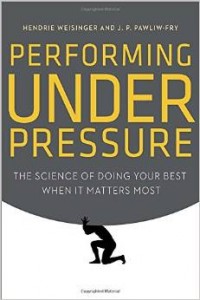
Performing Under Pressure

by Ron Potter April 1, 2015

Performing Under PressureRon’s Short Review: The subtitle says it all.  Dispels most of the myths about performing under pressure and why some do and some don’t.  Offers some great advice that anyone can follow to perform better under pressure.  Performing under pressure is what people remember about you.
Amazon-Buy-Buttonkindle-buy button

0 comments
0 FacebookTwitterEmail
BlogMyers-BriggsMyers-Briggs In-Depth

Myers-Briggs In-Depth: Attending and Perceiving: Sensing vs iNtuition – Part II

by Ron Potter March 30, 2015

Hidden Danger in the Perceiving Function

I mentioned in the previous post on Myers-Briggs that most successful business people have figured out that they need to balance this function.  This balancing act most often takes the form of a trusted partner, colleague or consultant.

Great appreciation on a peer basis

I find that my Sensing leaders love to get together with their more natural iNtuitive colleagues.  The say things to me like:

“I just love the way Margaret breaks me out of my “down in the weeds” focus.  She gets me thinking about big-picture, long-term implications of my decisions and how we need to think about making these decisions.”

Similarly, my more natural iNutiive clients will often praise their more Sensing colleagues.

“Steve really gets me out of the clouds and grounds me in what’s going on right now and pointing out the issues that if we don’t fix soon will prevent us from achieving our long-term vision.”

Danger in employee evaluations

However, that appreciation seems to be limited to the peer-to-peer relationships.  Often that same appreciation is not offered to subordinates.

I will always ask the iNtuitive types on a team which preference (sensing or iNtuition) they would prefer to have working for them.  Their answer is always an overwhelming “Sensing!”  Why? Because they know that while they would prefer to stay at the 40,000 foot level, watching what is going on around them and looking to the future, they need people working for them that are clearly paying attention to the day-to-day ups and downs of the business.

But what’s interesting is that when I ask the Sensing types which preference would they prefer to have working for them, their answer is also an overwhelming “Sensing!”  Why? Because if they’re preference is to pay attention to the details and you’re working for them, you had be at least as good if not better at paying attention to the detail.

Here’s the problem

Even though the iNtuitive types appreciate the skills and attention to detail that the Sensing types provide, they may also be thinking “That person is great but I’m not sure they could take over my job because they don’t think broad enough.”

And while a Sensing type may have a creative, innovative iNtuitive type working for them, iNtuitives are often known for making “error of fact”.  That “failure” really bothers the Sensing type and therefore are more likely to give poor performance reports.

We tend to fall back on our natural preference more when we’re evaluating people who work for us than the honor and appreciation of other types when we’re dealing them on a peer basis.

Honor and appreciate all types in all cases and people will begin viewing you as a very honorable and appreciative leader.


Myers-Briggs In-Depth is a blog series in which I dive into each MBTI function with more detail, providing some practical applications for creating better dynamics and better decision making. Click here to read the entire series.
Interested in an overview of each of the four Myers-Briggs functions? Click here to read the Using MBTI to Great Advantage series.

0 comments
0 FacebookTwitterEmail
BlogLeadership

Three Things Born in 1948

by Ron Potter March 26, 2015
Image Source: April, Creative Commons

Image Source: April, Creative Commons

Three things were born in 1948.

Two of them have dramatically changed the world. The third has been a very interested observer.

One—the transistor. It came out of bell labs and Wikipedia describes it as, “The fundamental building block of modern electronic devices.”

Two—the bit. Short for binary digit is the basic unit of information in computer and digital communication.

Three—Ron Potter. Substantially less impactful than the first two.

For whatever reason, I have long felt to be a part of and intertwined with this growing digital world. The programmable microprocessor (which made the PC possible) was born the year I graduated from engineering school.

But in spite of this fascination and enjoyment of this gadget world, I have been more interested by the human mind, spirit and soul. Who we are and how all things human work together is much more fascinating and complex than anything man made.

Alvin Toffler wrote the book Future Shock at about the time I graduated from engineering school. One sentence, made up of four words, struck me very deeply and I still see its impact every day. That sentence was, “High tech, high touch.” Toffler, in his amazing vision of this coming technological revolution, seemed to understand that it wouldn’t work if we lose touch as human beings.


The advantage provided by the instantaneous, world-wide communication that these technologies have brought won’t work if we don’t build trust and stay connected as human beings.

In fact, without building the human connected trust required, these high-tech solutions can actually turn destructive. We’ve all seen reputations and relationships damaged or even destroyed through electronic communication.
Be careful. Get to know and understand people. Build trust. We’ve been identified as human “beings,” not human “doings.”

If you’ll build the relationships, trust, understanding, and respect needed for a great team to work, the high technology can greatly enhance everything. Without trust it can quickly become destructive.

Build trust!

0 comments
0 FacebookTwitterEmail
BlogLeadership

10 Ways to Step Aside So Your Team Will Stand Out

by Ron Potter March 23, 2015
Photo credit: Jason Eppink, Creative Commons

Photo credit: Jason Eppink, Creative Commons


A humble leader steps aside so that others can run by and seize the prize of their own greatness. But just how is this done?  Let’s take a closer look:

  1. Expect the best of others

Leaders who expect the best of others exert a powerful influence. Many times leaders get caught in the trap of judging others. They measure, categorize, and classify people and the jobs they perform. Put the emphasis on solid behavior and good intentions. It forces managers to assume and reward the best. It helps leaders not make rigid rules that hold down employees who want to soar.

  1. Learn to listen

An ancient adage says “Be quick to listen, slow to speak, and slow anger.” Being quick to listen implies that a leader is paying attention, that he or she is not distracted but is actively hearing what the other person is saying. A humble leader listens with the intent of understanding rather than responding.

  1. Reward honest communication

How do you react when someone tells you bad news? Does the messenger become a target for your arrows? Our reaction to feedback will make all the difference in being able to move forward.

  1. Admit your mistakes

Humble, open leaders show vulnerability. And nothing demonstrates vulnerability quite like admitting mistakes. “I was wrong” is difficult to say, but it is one of the most freeing and powerful statements a leader can make. Admitting your mistakes allows others on the team to relax and admit their mistakes. It allows the team to breathe and grow.

  1. Commit to developing others

Developing others first takes personal commitment and desire. It means taking the time to know people—their preferences, skills, and goals. This is most often accomplished in personal relationships.

  1. Seek commitment

Once people understand your goals and you begin to understand their needs and potential, you can then seek their commitment. Good leaders understand the need to develop committed people.

  1. Share the dream

Leaders often make the mistake of not being open or sharing their vision and goals with their people. Your vision is not something to hide. Sharing it with others helps them understand what they need to contribute. You can then develop their potential around a shared vision.  A shared vision is the only way to create team unity.

  1. Set goals

Developing people’s potential (and then being open to their ideas) involves setting mutually agreed-upon goals. Individuals also need to know whether they are meeting the standard.

  1. Reward and recognize

In addition to setting goals, it is important to make people feel appreciated. Money simply levels the playing field. Employees believe you are simply providing fair compensation for their additional efforts; therefore, money pays only for what they have already given. A true rewards recognize peoples potential and goals and helps them develop the needed skills.

  1. Allow for midcourse corrections

Do not be rigid in your planning with people. Invariably, changes in market conditions, employee needs, and other factors will alter plans and goals. That’s life; that’s okay. Developing someone’s potential is not a fixed proposition but rather a fluid system that responds to his or her needs and skills as well as your needs and vision.

Humility is costly, but there are incredible and often surprising rewards for leaders who recognize their own personal strengths and limitations while seeing and encouraging the greatness in others. Sometimes the ramifications of this timeless insight bring a smile.

Please share a “smile” with us today!

0 comments
0 FacebookTwitterEmail
BlogLeadership

Wellness, Hope & Leadership

by Ron Potter March 19, 2015

IMG_2299

As I struggled with some major health issues last year, I noticed an interesting phenomenon.

The first question people often asked me was “How are you doing?” It amazed me that my answer back tended to be, “I’m well.”

That’s interesting. I dealt with health issues that affect less than one percent of the patients in my situation. I was not physically well. And yet, when I said, “I’m well.” I actually meant it. Why?

As I analyzed this it became clear to me that my wellness statement was related to my hope, not to my physical well being.

Did I have hope that my future would be better?
Did I have hope that the present pain and suffering would pay off in a healthier future?
If the hope of a better future was there, then I could honestly answer, “I am well” when people asked how I was doing.

Providing Hope

Our business environments seem to spend almost equal time being sick and being healthy. There are times when our strategy is working, the customers are responding, margins are good, life is good, but it never lasts. We also go through times of radical market shifts, take-over bids, collapsed market place and other disruptions that leave our workplaces very ill. People are stressed and overworked. Stress brings out the micro-manager in us. There are conflicts and blame games. It’s just not a healthy environment. But when asked, “How are you doing?” can you or your people honestly answer, “I’m well?”

The answer is “yes” if you and your people have hope for the future.

I’m not talking about blind faith. That is not hope. Hope has a confidence that we’re on the right track, we have a good strategy, and our hard work can turn this thing aground. It’s not blind faith and it’s not complete confidence. It’s believing we are doing the right things to get to a better future.

Leaders MUST Provide Hope

We must provide our people with this kind of hope, especially through difficult times. With this hope, people will say they are well in spite of the stress and hard work.

Leaders CAN Provide Hope

We can provide this kind of hope as leaders if we’re transparent and realistic. If we’re open about our views, our fears, and our need to work through this thing together. When team members feel engaged, when they believe they’re getting the total unvarnished story. When they can also express their creative ideas as well as their fears, they also feel more in control.
Giving people a clear hope for the future, will keep them “Well!”

1 comment
0 FacebookTwitterEmail
What are you feeling?
BlogCulture

What are you Feeling?

by Ron Potter March 19, 2015
What are you feeling?

Photo credit: Mindaugas Danys, Creative Commons

In an earlier post about the stages of grief, it was interesting that the question that triggered my reflection was posed by my daughter when she asked me “What are you feeling?”  Notice that she didn’t ask me how I was feeling.  When we are asked how are we feeling it triggers some of our natural inhibitors (or not) that can get in the way of dealing with the situation.

“How are you feeling?”  If you’re feeling angry you may be embarrassed about your feelings or believe that if you express your anger is won’t be constructive for the situation.  Or you may not want to express your anger toward an individual so you hold yourself back.  Or, if your natural inhibitors don’t kick in, you may burst into a rant or rage expressing your anger that you may also later regret or make it difficult to move on to the next stages of the grief process.

Maybe you’re feeling pride at the moment someone asks “How are you feeling.”  Again, if our natural inhibitors kick in we may not want to express our pride at the risk of sounding boastful which in the end can leave us feeling a bit under-appreciated or wishing we could have celebrated a great victory a bit more.  Or if the inhibitors don’t kick in, we may go on and on about what a great feat it was, how excited we are for being so smart or good and as we go into that funky victory dance and leave other people taking side glances between each other wondering when this guy is going to get over himself.  “How are you feeling?” can make it difficult for us to deal with some very natural emotions.

“What are you feeling?”  When my daughter asked me this question it actually forced me to stop and reflect about an emotion that was unexpressed at the moment.  When I was able to answer her question it simply came out as one word, “anger” that really didn’t carry any emotion with it.  It was an honest statement of a very valid emotion.

As a leader it’s important that you know and that your team is able to express the various stages of emotion that they’re experiencing.  When you ask the question “What are you feeling?” it allows people to get the issue on the table, legitimize the emotion, work through to the next stage and as efficiently as possible get to the action steps that will prove the most productive in the long run.

What are you feeling right now?  Share some reactions with us.

0 comments
0 FacebookTwitterEmail
BlogMyers-BriggsMyers-Briggs In-Depth

Myers-Briggs In-Depth: Attending and Perceiving: Sensing vs iNtuition – Part I

by Ron Potter March 16, 2015

How are Things Going Here?

Several years ago when I was working with an automotive supplier I experienced one of the clearest examples of this function in action when I was sent to work with the Plant Managers of two different manufacturing plants.


What do you Pay Attention to?

This function was for years identified as your Attending function. “What do you pay attention to?” In recent years Myers-Briggs have gone back to Carl Jung’s (who’s work the MBTI is based on) original title of Perceiving. “How do you perceive the world around you?”

A Simple Question

When I first met each plant manager I asked each of them a simple question “How are things going here at this plant?”

These two plants were almost identical in several ways:

  • They served the same customer base
  • They generally produced the same products
  • They had about the same number of employees
  • They were just in different geographic locations

The first plant manager gave me a very precise answer:

“Things are going great. By 10:30 this morning we had 1,370 units out the door. Currently we are about 5% ahead of schedule for the day which means we’ll have the time in the morning to sit down and discuss the waste problem that we’re experiencing that’s just killing us financially.”

After spending a couple of days at the first plant I arrived at the second plant and upon meeting the Plant Manager for the first time asked exactly the same question: “How are things going here at this plant?” And I once again received a very clear answer:

“Things are going great. I think the truck industry is headed in this new direction. I’ve ordered some equipment from Germany. We should be able to get it fabricated, shipped and installed in about nine months. With some reasonable time for training I believe we’ll be ready to go and will be totally aligned with this new direction.”

What did you notice about these two responses from successful plant managers at two almost identical successful plants?

After noting that they both started their response that “Things are going great”, notice the differences.

Plant Manager One:

  • 10:30
  • 1,372
  • 5%
  • Today – tomorrow

Plant Manager Two

  • New direction
  • 9 to 12 months
  • Aligned with industry direction

What do you think happened when I asked PM 2 how many units were produced today? He said “Fred, how many units did we get out today?”

Now, here’s the real question for you: Which approach is better?

Both! I believe that if you’ve chosen to be in the business world in particular, you must balance this function or you’ll lose the business!

In this real case example, a year from now PM1 would be producing the highest quality, lowest cost product that nobody wanted to buy. And in a year from now, PM2 would likely be in dire straits because the same scrap and waste impact that was at the top of PM1’s radar was not very high on PM2’s radar.

Make it Deliberate

My experience has been that most successful business people have figured this one out even if they didn’t know about the natural preferences. What enhances this function is not leaving it to rely on natural preferences (you may not have a naturally balanced team) but to turn it into a very formal process. During your team meetings, be deliberate by asking the Sensing questions (what are the facts, what actually has happened, where are we today?) but then be very deliberate about asking the iNtuitive questions (what’s the implication in the data, where are we headed, what changes on the horizon may impact us?)

Caution

While this one seems to naturally balance, there is a hidden danger that I’ve seen time after time. Check out the next blog on the MBTI Perceiving function.


Myers-Briggs In-Depth is a blog series in which I dive into each MBTI function with more detail, providing some practical applications for creating better dynamics and better decision making. Click here to read the entire series.
Interested in an overview of each of the four Myers-Briggs functions? Click here to read the Using MBTI to Great Advantage series.

1 comment
0 FacebookTwitterEmail
Quick deciding vs quick learning
BlogTeam

Quick Deciding vs Quick Learning

by Ron Potter March 12, 2015
Quick deciding vs quick learning

Photo credit: Anne-Lise Heinrich, Creative Commons

I have observed what I believe to be a very detrimental shift in thinking within our corporate cultures over the last 15 years.

We’ve been inundated with instant communication that is with us everywhere 24/7 (I had one of the first Blackberrys as soon as it hit the market in early 1999). To be clear, I’m not railing against this technology. I love it and I couldn’t imagine running my business or staying in touch with my family and the world without it. But it has interjected a sense of speed and quickness that is altering the way we think and decide as we try to conduct business in a globally connected world.
However, this belief that we must decide quickly changes the dynamics of decision making in a detrimental way. Good decision making (See my post on Prudence) requires good deliberation. However, if we’re in a quick deciding frame of mind we get defensive when:

  • someone raises an issue that feels like it is not in line with the current thinking or
  • will open that proverbial “can of worms” if we entertain the idea, or
  • they simply don’t agree with the current approach.

Teams have developed all kinds of behavior to suppress, shut down or discount the questioning view point. This eliminates good deliberation and will lead to an inferior (or even wrong) decision.
The shift we need to make is back to a quick learning attitude and then use a good process to make good decisions. What’s interesting to me is that teams who have mastered this quick learning leading to good decision approach, consistently make decisions quicker than those with the quick deciding attitude (not to mention better decisions).
Get better at

    • Quick learning with a…
    • Team of diverse points of view and…
    • Practicing good deliberation techniques to…
    • Reach great and lasting decisions.

You and your team will feel more productive, less stressed and will also begin to gain the reputation as high achievers.

1 comment
0 FacebookTwitterEmail
BlogTrust Me

Recognizing Potential

by Ron Potter March 9, 2015

One way to exhibit humility and move away from the trap of self-oriented leadership is to focus on what people can become. This requires shifting away from criticizing how staff members are doing to celebrating how far they have come in improving their performance. If this concept seems hard to grasp, just apply it to yourself and think about what motivates you to do better—a tongue lashing or a pat on the back?

Let this sink deeply into your grid as you consider how to relate to subordinates. Work very hard at praising progress instead of emphasizing error.

Photo credit: Phil Roeder, Creative Commons

Photo credit: Phil Roeder, Creative Commons

Every human being has greatness inside. There are no exceptions. Humble leaders look for and honor this greatness in people. They see people as able to grow and contribute. They see people for what they can become.
Every year the NFL draft illustrates this principle. Scouts compile detailed reports on college football players for teams and coaches. Film is run and rerun. Players are tested for physical, mental, and emotional strength. Then, on draft day choices are made. In the first round or two, the can’t miss stars are picked. What’s really interesting, though, are the picks made in later rounds.

Bart Starr, former quarterback of the Green Bay Packers, was a second-stringer in college. The Packers, seeing something in Starr that others had missed, picked him very late in the draft. Under legendary coach Vince Lombardi, Starr later led the Packers to five world championships. He was the starting quarterback in the first two Super Bowls. Long before anyone else believed in Starr’s ability, Lombardi saw his potential greatness.
The scouting report on another NFL player included the following:

  • Poor Build – Very skinny and narrow
  • Lacks physical stature and strength
  • Can’t drive the ball down the filed
  • Slow to react
  • Picked 199th in the NFL draft

The one good quality noted in the scouting report? Good decision making! That player is Tom Brady, destined for the Football Hall of Fame.

Humble leaders look for the potential in others and do everything they can to develop it. Have you ever tried to drive your car with the parking brake on? There the Porsche sits, engine revving, but it is not able to peel away at full speed. That is exactly what happens when leaders do not develop the potential of other people. They forget to release the brake.

Have you discovered that one quality that brings out the Hall of Fame quality in a person? Share some stories with us.

0 comments
0 FacebookTwitterEmail
BlogLeadership

Answers or Questions

by Ron Potter March 5, 2015

Do you provide answers or ask questions?

Think about it a minute. When someone walks into your office, when you take that phone call, how about when you open the email or text, or even when you join the meeting, do you find yourself providing more answers or asking more questions?

Photo credit: Ash Carter, Creative Commons

Photo credit: Ash Carter, Creative Commons

All of my corporate work is conducted with leaders: CEO’s, presidents, vice presidents, and directors. Seldom am I working at the management or lower levels. And to me this issue of providing answers or asking good questions is a clear indication of whether someone has successfully made that transition from manager to leader.

Throughout your early career, you are rewarded and promoted for providing answers. But as your success carries you into the leadership rank of director and above, you should be shifting to a more questioning style that gets others to think, explore, and maybe even learn from your experience. Managers provide answers. Leaders use powerful questioning.

Judge a man by his questions. Not by his answers—Voltaire

A couple of good books lately have made a very strong point of this. One is The Second Machine Age by Erik Brynjolfsson and Andrew McAfee and the second one is A More Beautiful Question by Warren Berger. Erik and Andrew in their book note that this ability to think of good questions, not just come up with the right answer, is what still distinguishes us from the most powerful computers. This is still the unique human element. Even with as many jobs as the computer has already taken over, their use in the workplace is about to accelerate even more. Your ability to avoid losing your job to a computer that is good at coming up with answers will only be avoided by honing your creativity and coming up with great questions.
And even if you’re in that stage of your career when you’re being paid to provide answers and complete tasks, hone your skills of asking “why.” You’ll begin to stand out from the crowd and may reach the leadership ranks sooner than you think.

Here’s a simple but powerful example of questions vs. answers.

Almost every leader will complain to me that they are overwhelmed with email. I’ll ask them if they would like to instantly cut their email volume by 40%. Although they’re always skeptical, they agree they would like to experience that kind of reduction.

I tell them to stop providing answers. Leaders tend to be good at problem solving. That’s what got them here. So the natural instinct when an email comes in is to give the answer or solve the problem. Stop doing that! Leaders are supposed to encourage and grow others to solve the problem. I guarantee that you will substantially reduce your email volume if you respond to the email with one simple question: “Why are you sending me this email?” Don’t be vindictive about it or belittling, simply be curious about why they felt the need to send you that email. Turn it into a learning opportunity. Ask them the bigger broader question that they haven’t thought of yet but you’ve had the experience to get beyond solving the task in front of them. Grow and develop them through your questions.

That simple questioning approach will lead to some great discussions about accountability and problem solving, as well as with teamwork and collaboration.

Managers provide answers. Leaders ask powerful questioning.

1 comment
0 FacebookTwitterEmail
Newer Posts
Older Posts
  • Facebook
  • Twitter
  • Linkedin
  • Rss
  • About This Site
  • About
    • Clients
  • Services
  • Resources
    • Trust Me
    • Short Book Reviews
  • Contact

About this Site | © 2024 Team Leadership Culture | platform by Apricot Services


Back To Top
Team Leadership Culture
  • Team
  • Leadership
  • Culture
  • Myers-Briggs
  • Trust Me
  • Short Book Reviews