Team Leadership Culture
  • Team
  • Leadership
  • Culture
  • Myers-Briggs
  • Trust Me
  • Short Book Reviews
Top Posts
Obituary
REPOST: Four Functions, Three Rules
ROUNDUP: The Rise of AI
REPOST: Facing Adversity Series
ROUNDUP: Curiousity
ROUNDUP: Deep Work
REPOST: Character vs. Competence
REPOST: Opposite of Victim
REPOST: Listening With the Intent to Understand
REPOST: Performance vs Trust
  • About
  • Services
  • Resources
    • Trust Me
    • Short Book Reviews
  • Contact

Team Leadership Culture

  • Team
  • Leadership
  • Culture
  • Myers-Briggs
  • Trust Me
  • Short Book Reviews
Author

Ron Potter

Ron Potter

BlogMyers-BriggsMyers-Briggs Under Pressure

Myers-Briggs Under Pressure: Feeling

by Ron Potter July 24, 2017

“Let’s change the topic, I don’t want to deal with this at the moment.”

“Look, it’s your fault that we’re in this mess anyway. If you had made arrangements for this while you were on vacation it wouldn’t have happened in the first place.”

“I just don’t want to hear it any more, this is the way it’s going to happen!”

(If you didn’t start with the introduction to this “Myers-Briggs Under Pressure” series, I suggest you make a quick review  because it will help you better understand these subsequent blogs.)

Brenda is stuck! Her dominant function is Feeling which helps her know what’s really important in most situations and appreciate input from just about anyone. And normally, she’ll balance these great skills with either a good conceptual view of the world or a great grasp of the data, depending on her complete type.

There are four types that have this particular combination, the Introverted ISFP, INFP and the Extraverted ESFJ, ENFJ. As noted above the dominant in all four cases is Feeling and the inferior in all four cases is Thinking. These are what’s known as our Deciding functions, how do we decide what to do after we have taken in the data through our Perceiving functions of Sensing and iNtuition.

In a healthy state, these Deciding functions would then work in tandem with the “perceiving” functions of Sensing or iNtuition depending type. But, under pressure or stress, Brenda begins to lose this natural balance, falling back to her dominant function which will expose her feelings, no matter how raw they may be. Brenda will either become hypercritical or hypersensitive or both under pressure.

Balance, Balance, Balance

This is where team members and colleagues come into play. It’s difficult for any one of us to break out of these pressure packed situations. As colleagues, we want to help Brenda back into a balanced state by asking and sometimes even forcing her to use his auxiliary function. Notice that Brenda’s auxiliary function could be either Sensing or iNtuition depending on type. Let’s start with the Sensing balance.

“Brenda, we can’t ignore the topic right now, we need to make a decision this week.”

“I’m sorry I just can’t deal with it right now, there are just too many things this could impact.”

“Can we take a look at the data and see where that might be leading us and then discuss how that might impact the values of the company, if at all?”

“Yes, if you guarantee that we’ll see how these figures will impact the way we’re going to work this out with the people.”

As we begin to force Brenda to try a little balancing act, she’ll begin to regain her footing. Note that we can’t tell Brenda that his data problem doesn’t impact our overall values. Brenda has to come to grips with that through balancing her own natural Feeling and Sensing functions.

If we’re dealing with either the INFP or ENFJ than iNtuition is the auxiliary function, not Sensing. The approach is similar, but focused more on the conceptual or future view (iNtuition) rather than the data (Sensing).

“Brenda, we really don’t think this new direction will impact our care and concern for the employees but let’s see if we can see a way through this.”

“I just don’t see how it’s going to happen. I’m concerned we’ll end up in a very bad place.”

“We’ll, let’s talk through that. Describe for me the outcome you see as most likely in this case.”

“It’s just not going to end well.”

“Well, let’s get a grip on the possible outcomes and then really talk through the good and bad of the situation and see how we could mitigate any negative outcomes.”

“OK, I guess we’re just talking anyway. We can make the decisions as we figure out the best path.”

As we begin to force Brenda to try a little balancing act, she’ll begin to regain her footing. Note that we can’t tell her where the scenarios will lead. Brenda has to come to grips with that through balancing her own natural Feeling and iNtuition functions.

Stay tuned. We’ll continue to explore other ways to conduct your own “balancing” act. The best leaders have learned to balance their natural temperament functions with those of the people and teams around them. It’s when the functions get out of balance or opposed to each other that we get stuck as individuals and teams.

When it comes to your temperament, balance, balance, balance is the key to success.

0 comments
0 FacebookTwitterEmail
BlogLeadership

Worn Out Leaders

by Ron Potter July 20, 2017

This was a high-powered team successfully leading a highly valued company. But you’d never know it by their faces. I could see the rings around the blood-shot eyes, hair turning prematurely gray, gray ashen color in their faces. Yet here I was, a smile on my face, full of energy, ready to help them become better leaders. When I looked at those faces I knew this day wasn’t going to turn out well but I didn’t know what else to do. So off I went, talking about leadership models.

Even though they were game to learn, it didn’t take long before one of them said, “Ron, we can’t focus on your leadership model until you can save our lives. We’re spending so many hours working we’re ruining our lives, our families, and our health. Help!

All those wonderful PowerPoint slides I had prepared for this retreat now looked useless and meaningless. This team needed help far beyond what I had prepared for. We needed to talk.

The projector was turned off, the laptop was closed, the phones shut down. What was going on? One person began to talk. He spoke of the excitement, motivation, and dedication he had for the company and its purpose. Others nodded in agreement. But…. he had missed several of his children’s events, hadn’t had an evening meal at home with his family in weeks, didn’t remember the last Saturday he took off or when he had taken his last vacation. He was dying.

I listened to several other stories that were each different but were all the same. They had to get off this treadmill. They were destroying the lives their work and accomplishments were meant to enhance. What could we do?

I remembered Steven Covey’s book Seven Habits of Highly Successful People. Habit three was “Put first things first.” Figure out where your time is going and plot it on the 2X2 grid of Urgent and Important. The four quadrants then become:

  1. Important and Urgent
  2. Important and not-Urgent
  3. Not Important but Urgent
  4. Not Important and Not Urgent

His observation was that all successful people did indeed work on Quadrant 1, Important and Urgent, but the highly successful people then worked on Quadrant 2 rather than being lured into Quadrant 3, Not Important but Urgent.

Over the next few weeks I had this team record where all their time was being spent (they were averaging over 70 hours per week). After helping each other identify which Quadrant their time had fallen into, the horrible truth was that only about 20% fell into Quadrant 1 and about 80% fell into Quadrant 3. One leader, nearly in tears, said: “Did I spend nearly 60 hours last week working on unimportant items?” Yes.

How do good people fall into this trap?

I recently saw the Covey Time Management Quadrants identified as the Eisenhower Box. Covey may have also credited Eisenhower but the Eisenhower Box added an important element. What should be done with each Quadrant?

  1. Important and Urgent – DO, Do it Now
  2. Important and not-Urgent – DECIDE, Schedule it
  3. Not Important but Urgent – DELEGATE, Pass it on
  4. Not Important and Not Urgent – DELETE, Eliminate it

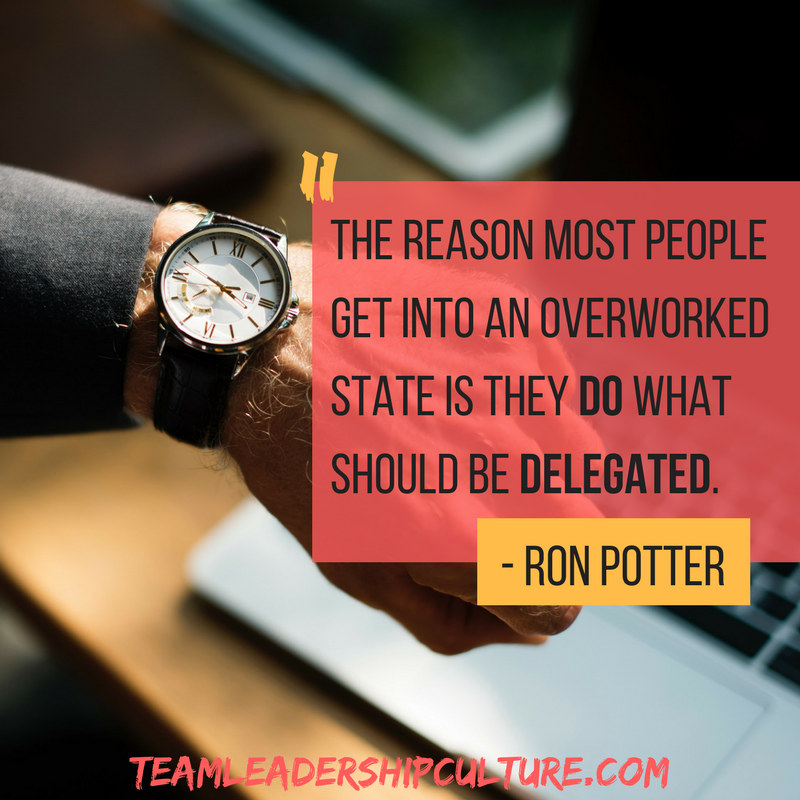
I think the reason most people get into this overworked state is they treat Quadrant 3 (Delegate) like it’s Quadrant 1 (Do it). Instead of delegating it, their ego gets in the way. It’s faster to do it themselves than teach someone else to do it (or some similar excuse). They don’t trust others to do it as well (usually called perfectionism). And the excuses go on and on.

Get out of Quadrant 3 (Urgent but Not Important). It’s killing you. It’s killing your family. It’s killing your relationships. It’s killing your company.


1 comment
1 FacebookTwitterEmail
BlogTrust Me

Remodeling Your Attitude

by Ron Potter July 17, 2017

Developing your own untapped and unrefined potential is a bit like remodeling an old house: First, you have to tear out some things—like pride or extreme self-sufficiency or bullheadedness or trying to over-control people or ___________ (fill in the blank with some attitude or behavior of yours that makes you say “ouch!”).

Letting go will often appear counterintuitive, but a bad attitude can make or break a team. To continue with the remodeling analogy, you have to tear out the old pipes that no longer work right and the sloping floors that haven’t been level in years in order to make room for straight floors and clean, up-to-code plumbing. Sometimes we need to tear out a bad attitude in order to grow the ability to respond in better ways.

We agree that many leaders would rather get and keep a grip than lose their grip. But if you want to build trust with others, you need to have the ability to let go. The discussion here is not about delegation. It concerns letting go of personal qualities that build walls not only between you and your team but also within yourself.

Here are a few attitudes you need to let go of in order to build a stronger team:

Pride

A proud leader’s mind is closed to new truths; he or she is unteachable. Pride causes inflexibility: “We will only pursue my ideas, thank you very much.” Pride resists change. Pride forces us to care more about status and prestige. Pride gets in the way of asking others for help.

A proud leader’s mind is closed to new truths; he or she is unteachable. Pride causes inflexibility: “We will only pursue my ideas, thank you very much.” Pride resists change. Pride forces us to care more about status and prestige. Pride gets in the way of asking others for help.

Pride is a wall; humility is a gate.

Uncontrolled Will

Leaders with uncontrolled wills avoid committing to common values or ideals beyond their own. Rather than a stubborn will, we need a focused will that centers on development, goals, and productivity.

Keeping our egos in check and our wills under control enables us to function much better as teammates and leaders.

Dishonesty

Dishonesty happens when a leader denies reality or seeks gain through deviousness. It is about game playing, manipulation, and pretense.

Integrity overcomes dishonesty. Leaders of integrity strive to avoid the deceitfulness of appearances. They are genuine, sincere, authentic, and trustworthy—qualities that build the confidence of coworkers and employees in their leaders.

0 comments
0 FacebookTwitterEmail
BlogCulture

Are you being Sub-Optimal today?

by Ron Potter July 13, 2017

Maybe you should be to acquire success

Bio science is one of the most complex areas of science. The systems are so complex and inter-related that few scientist attempt to go there. To many, it just seems too daunting.

But, as scientist begin to probe this tiny, complex world one of the key features become evident. In order for an entire system to function properly and efficiently, many of the subsystems need to function at a sub-optimal rate.

  • Could that sub-system operate faster? Yes, but that would screw up the timing crucial to the overall system.
  • Could that sub-system generate more heat? It could easily double its heat output but that would overheat the entire system.
  • Could that sub-system be reduced in size? Yes, but without a certain momentum, it couldn’t support the benefit it provides to the overall system.

Years ago, the book Fifth Discipline by Peter Senge introduced us to the idea that we must think systemically. The system as a whole needs to operate well and that should be our goal.

I’ve often run simulations during team building sessions. The title is self-explanatory. The exercise will “simulate” a system in a smaller size and shorter timeframe so that we can grasp what’s going on as a whole. Real systems are often too large and complex or take too much cycle time for us to fully understand what’s going on. Simulations attempt to simulate what’s going on in the time of a meeting (a couple of hours) and the space of a conference room so that the dozen or fewer participants can observe the system as it operates.

One of the simulations I’ve used is “Paper Planes” created by Discovery Learning Intl. Just as the title suggests the team will build Paper Planes to meet certain specifications and performance standards. Each person is assigned to a station, equipped with the proper tools and trained well before the simulation starts.

GO! The team has 30 minutes to produce as many planes as possible. The average number of planes produced in the first 30-minute run? 0.5! That’s right, half the teams never get a single plane across the finish line. After three runs with debriefing and re-engineering time between runs, teams will often produce 20, 30, 40 planes and more. Why the difference?

During the debrief and re-engineering times, teams begin to look as the system as a whole. It often makes sense to spend less effort and manpower at certain stations (sub-optimize them) so that the whole can be productive.

So, bioscience says that some systems should be sub-optimized to keep the entire system healthy and functioning optimally. A simple manufacturing simulation says that some systems should be sub-optimized in order to produce the maximum output.

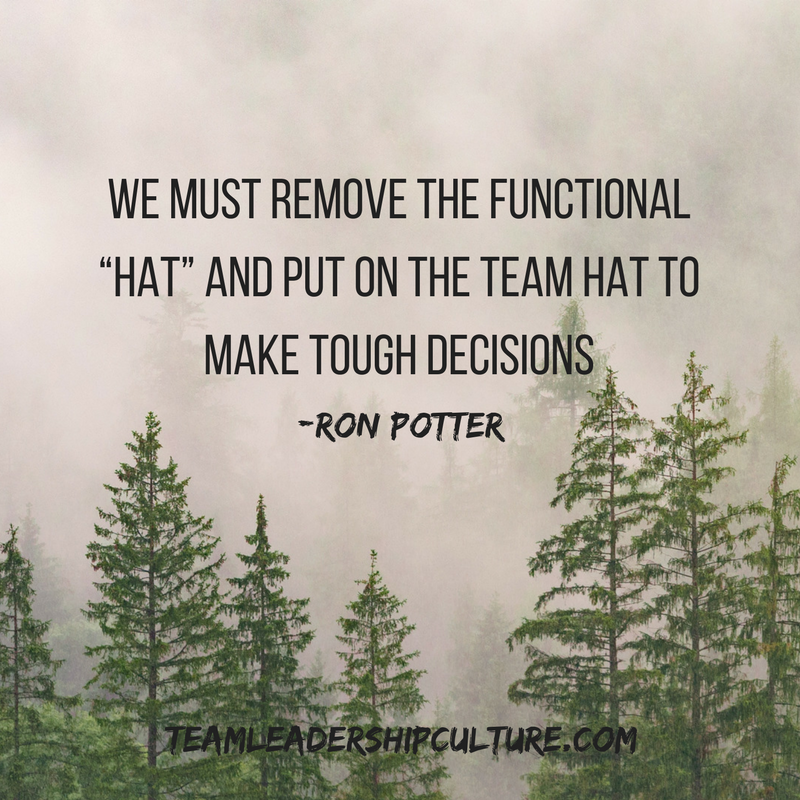
And yet when we look at corporations as a whole, we still see leaders incentivizing functions, departments and divisions to operate at optimal levels with little regard to what that does to the whole system. One thing it clearly does is establish points of friction and incentives that are odds with each other. Teams at the top never seem to gel as teams because they’re never encouraged to remove their functional “hat” and put on the team hat to make those tough decisions. The decisions that require one group to take a back seat to another group in order to optimize the whole.

Do you have a team of leaders or a group of functional heads all trying to optimize their piece? Answering this question could go a long way in discovering your maximum potential.

0 comments
0 FacebookTwitterEmail
BlogMyers-BriggsMyers-Briggs Under Pressure

Myers-Briggs Under Pressure: Thinking

by Ron Potter July 10, 2017

“I don’t care what you think and don’t confuse me with facts! This is our only way out! Besides, that’s just about the dumbest idea I’ve heard this century. Have you burned out all of your brain cells?

And don’t you dare challenge my intelligence or authority. I’ll make this decision and it will be the right decision.”

(If you didn’t start with the introduction to this “Myers-Briggs Under Pressure” series, I suggest you make a quick review because it will help you better understand these subsequent blogs.)

Bill is stuck! His dominant function is Thinking which helps him analyze situations and spot the pitfalls in advance. And normally, he’ll balance these great skills with either a good conceptual view of the world or a great grasp of the data, depending on his complete type.

There are four types that have this particular combination, the Introverted ISTP, INTP and the Extraverted ESTJ, ENTJ. As noted above the dominant in all four cases is Thinking and the inferior in all four cases is Feeling. These are what’s known as our Deciding functions, how do we decide what to do after we have taken in the data through our Perceiving functions of Sensing and iNtuition.

In a healthy state, these Deciding functions would then work in tandem with the “perceiving” functions of Sensing or iNtuition depending type. But, under pressure or stress, Bill begins to lose this natural balance, falling back to his dominant function which has a need for logic at all expense. Bill will either lash out in an unexpected (even out of character) emotional outburst or even if he keeps a calm exterior, be begins to take any comments or feedback as personal slights and criticism.

Balance, Balance, Balance

This is where team members and colleagues come into play. It’s difficult for any one of us to break out of these pressure packed situations. As colleagues, we want to help Bill back into a balanced state by asking and sometimes even forcing him to use his auxiliary function. Notice that Bill’s auxiliary function could be either Sensing or iNtuition depending on type. Let’s start with the Sensing balance.

“Bill, what information are you missing to make this decision?”

“I’m not missing any information, it’s just that the information we have doesn’t make sense!”

“Which piece of information doesn’t seem to make sense to you?”

“This one data set just doesn’t align with what we thought we knew. If it’s correct it will have a three week impact on the coding section.”

“OK, let’s think through that. What are the consequences of the three week impact on that portion of the schedule when we put it in context of the overall project?”

“Well, when I think about it that way it probably doesn’t make too much difference.”

As we begin to force Bill to try a little balancing act, he’ll begin to regain his footing. Note that we can’t tell Bill that his data problem doesn’t have much impact to the overall project. Bill has to come to grips with that through balancing his own natural Thinking and Sensing functions.

If we’re dealing with either the INTP or ENTJ than iNtuition is the auxiliary function, not Sensing. The approach is similar, but focused more on the conceptual or future view (iNtuition) rather than the data (Sensing).

“Bill, we’re not questioning your ability in this matter, but what information are you missing to make this decision?”

“I’m not missing any information, it’s just that the information we have doesn’t make sense!”

“Well, where do you think this information will lead?”

“I just don’t know. That’s the problem.”

“Let’s go back to your gut instincts. What is your experience telling you?”

“I’m pretty sure it has to lead us in this direction, I just can’t see it yet.”

As we begin to force Bill to try a little balancing act, he’ll begin to regain his footing. Note that we can’t tell Bill where the data should lead him. Bill has to come to grips with that through balancing his own natural Thinking and iNtuition functions.

Stay tuned. Next in our series titled “Myers-Briggs Under Pressure” we’ll shift our focus from the dominant Thinking style to the dominant Feeling style. This one may have the most difficulty working in the corporate environment.

0 comments
0 FacebookTwitterEmail
BlogCulture

The Motivation of Money

by Ron Potter July 6, 2017

Clotaire Rapaille. If the name alone doesn’t fascinate you, his life story and his life work should.

I don’t have time to tell his story here but read his book The Culture Code: An Ingenious Way to Understand Why People Around the World Live and Buy as they Do

I had the opportunity to work with Dr. Rapaille for a short period years ago. But what I learned during that time sticks with me. Dr. Rapaille was performing a series of “syndicated studies” for major corporations around the world on various topics. One topic was about Rewards and Recognition, what motivated people. It was very clear from the global study that people were not motivated by money. In fact, it turns out that every time money is involved, in the form of a bonus, pay raise, profit sharing or whatever the mechanism, the deep-down belief in people was that the company had simply leveled the playing field using the money. Put simply, money was granted when they had already given the company an extraordinary effort. The company was simply “leveling the playing field” by rewarding them with money. Money was not a motivator, it simply made things even.

I know a young entrepreneur who is creating and growing a successful company. In my conversation with her the other day, she spoke of how she sits down with each employee at the beginning of the quarter to talk about how the employee wants to grow personally and what they would like to learn. They always find an opportunity for growth and development for the employee that would also benefit the company. By funding the personal growth and development of the employee she keeps them motivated and benefits the company through increased skills and capabilities.

Dr. Rapaille’s study answered the question, if not money, what was motivating. The answer to this began to take on the idea of a GPS system. All employees are on a journey to somewhere. There may be long-term goals and there are always short-term goals. Short-term goals might be related to having a young family and needing more time to be with them. Or trying to finish an advanced degree and needing the resources, time and tutoring to accomplish the goal. Long-term goals might include living in a particular geographical region, reaching a certain level of corporate leadership or even retiring at a young age.

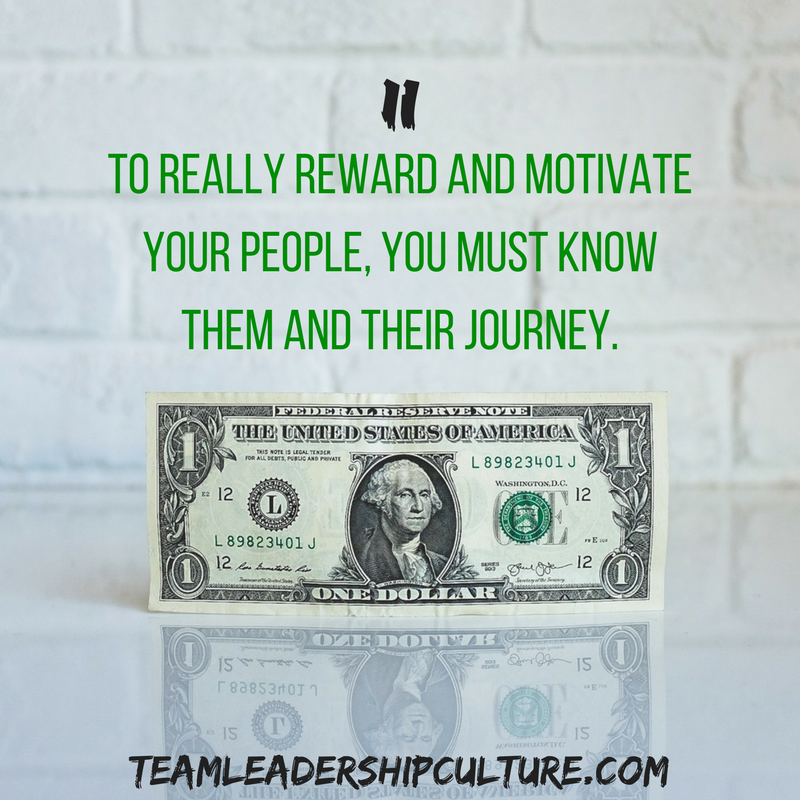
The conclusion of the study? To really reward and motivate your people, you must know them and their journey. You must understand their GPS system and where they’re located on that trajectory. Once you’ve made enough personal connection with them to understand their current location, reward them by helping them get to the next mile-marker on the journey.

  • After a period of heavy dedication, send them home for a few days with their family.
  • Give them some time off to study for that next exam. Offer the help of someone who knows the topic well.
  • Give them some great feedback and then training to help them with the next stage of professional growth, not a one-size-fits-all training and development.
  • Whatever reward personally benefits them, that’s rewarding!

Two decades ago it took a high priced, global study to help managers understand what’s motivating to their employees. My young entrepreneur understood it instinctively.

Every leader/manager I know is asking me about the millennials and what motivates them. It seems to be a mystery. I have one piece of solid advice. Don’t ask me. Ask them!

0 comments
0 FacebookTwitterEmail
BlogLeadership

The Sweet Rewards of Humility

by Ron Potter July 3, 2017

Humility is costly, but there are incredible and often surprising rewards for leaders who recognize their own personal strengths and limitations while seeing and encouraging the greatness in others. Sometimes the ramifications of this timeless insight bring a smile.

Imagine a traditional, buttoned-down, classy department store with the expected crew of nicely dressed, decorous department managers and floor workers. In the midst of this stable setting appears a freewheeling bohemian hippie throwback with an attitude!

While consulting with a large department store chain, we encountered such a situation with a particular store employee. The management team just did not respect this guy because he did not fit the mold of the “perfect” floor salesperson. He dressed way too casually (did he even own a tie?). He wore his hair very long. His humor was caustic. He talked too loudly and joked too much. The only thing standing between him and a pink slip was the small matter of performance. He was positively brilliant at what he did!

His specialty was the children’s clothing department where the kids (and moms) loved him. To them, he was a funny, warm, and highly entertaining friend, a trusted advisor in selecting the best things to wear. Because the customers understood this man’s intentions—he loved meeting kids on their level and serving them—his countercultural appearance and behavior didn’t matter much. As long as his creative approach and personality accomplished the mission, he deserved to be a hero of management, not a personnel headache.

This man definitely was a diamond in the rough.

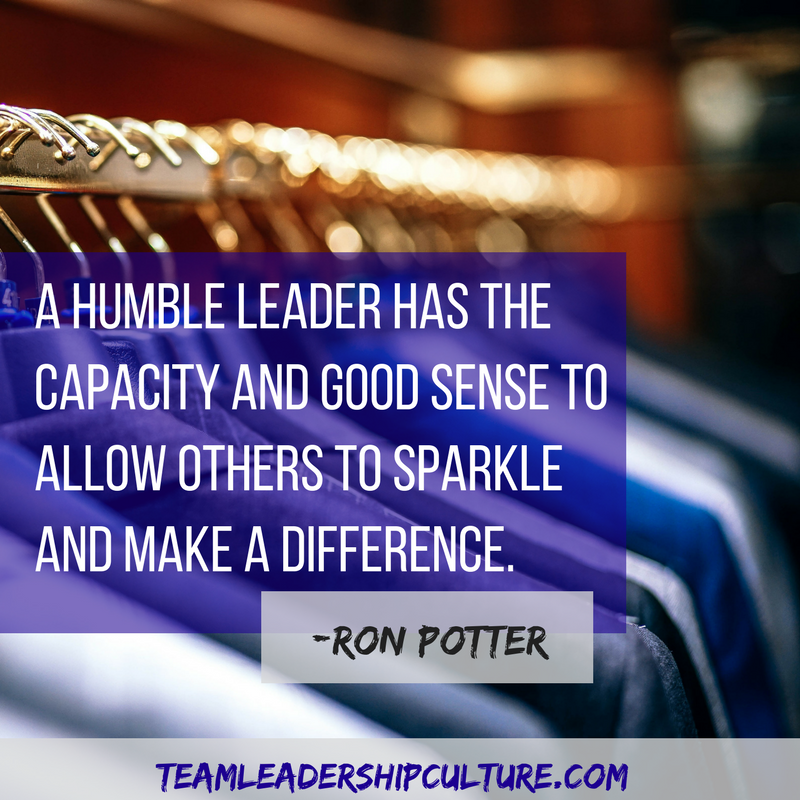
Sure, this example may be a bit extreme, but it illustrates the principle beautifully: A humble leader, who is not too full of self, has the capacity and good sense to allow others to sparkle and make a difference.

Many times a humble leader discovers strengths in his or her coworkers that even they have failed to detect.They relish the idea of helping people find their unique niche. They enjoy moving people along to bigger and better things. They celebrate the victories and provide encouragement when their people are discouraged or fearful of moving ahead.

0 comments
0 FacebookTwitterEmail
Short Book Reviews

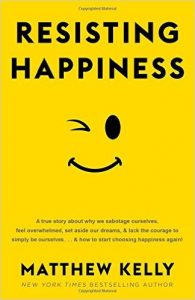
Resisting Happiness

by Ron Potter July 1, 2017

Ron’s Short Review: This is a solid Catholic-based book. I’m not Catholic but the principles are very sound and it helps explain why we resist the happiness that Shawn Achor (last month’s book) says leads to success.

1 comment
0 FacebookTwitterEmail
BlogCulture

Where are you in the Pecking Order?

by Ron Potter June 29, 2017

Maybe you’ve never been around chickens very much. This is where the term comes from. In the mid-1920’s a German author described the hierarchical structure of chickens. “Defense and aggression in the hen is accomplished with the beak.” The ones with higher authority peck the others with their beak. Fun to watch in chickens. Not so fun when you’re the one being pecked.

Egalitarian

Some companies have tried to eliminate the pecking order. One modern online retailer had attempted to get rid of the corporate hierarchy. However, some recent articles about the company have indicated that they’re experiencing an extremely high level of departures and turn over. I’m always hesitant to attribute a statistic like that to any one issue. But, one article I read indicated that the CEO wrote a very long memo offering employees three months’ severance if they felt that self-management and self-organization were not a fit for them. Ouch, that felt like a peck to me.

Hierarchy Can Work

I found two Stanford studies interesting. One concluded that egalitarian work structures were disorienting while hierarchical structures were more predictable and easier to understand which made them preferable. Another study said hierarchical structures had more staying power because they were practical and psychologically comforting. Now you could argue that predictable, practical and comforting are not the characteristics that will carry the corporation through the 21st century. You may be right. But, I believe there is a deeper issue than just structure.

Trust is the Deeper Issue

Many of my corporate clients have asked me at one point or another about their organization structure. The basic question is “Should we be centralized or de-centralized?” My unsatisfactory response is that it doesn’t really make any difference. Every corporate structure is an artificial attempt at organizing people. There are positives and negatives to each approach. The most important is Trust. If there is a lack of trust in the organization any structure will be used for protection, security, and enforcement. If there is a great deal of trust in the organization, the structure seldom gets in the way, people simply want to work better together regardless of what the structure calls for.

I’ve had a few people in my life that have pecked at me. Starting with my mother and including a few teachers and mentors. If I knew we had trust and they cared for me, I didn’t really mind the pecking. If the trust wasn’t there, I felt they were pecking me just because they had a big beak.

0 comments
0 FacebookTwitterEmail
BlogMyers-BriggsMyers-Briggs Under Pressure

Myers-Briggs Under Pressure: Intuition

by Ron Potter June 26, 2017

I can’t possibly sort through all of these options. I’m already overwhelmed. We could work on this all weekend and we’d never get through everything we need to figure out. Stop! Don’t ask me again, I don’t know how were going to proceed through this morass! I need to get out of here, I’m starving and I need a drink.”

(If you didn’t start with the introduction to this “Meyers-Briggs Under Pressure” series, I suggest you make a quick review because it will help you better understand these subsequent blog posts.)

Teresa is stuck! She can’t seem to find her way out and she wants a clear path forward that cuts through all the information, data and options. Teresa’s dominant function is iNtuition (need for concepts, visions and future goals) and her inferior function is Sensing (need for detail and information).

There are four types that have this particular combination, the Introverted INTJ, INFJ and the Extraverted ENTP, ENFP. As noted above, the dominant function in all four cases is iNtuition and the inferior in all four cases is Sensing. These are what’s known as our Perceiving functions, how do we perceive the world around us? These are the functions that we use to take in the information that we’ll need to eventually make a decision.

In a healthy state, these Perceiving functions would then work in tandem with the “deciding” functions of Thinking or Feeling depending type. But, under pressure or stress, Teresa begins to lose this natural balance, falling back to her dominant function which has a need to know where all of this is going and becomes unable to combine it with her deciding function to keep things moving along. Teresa will retreat into her sensory pursuits of binge eating, drinking, TV watching, physical activities or whatever allows her to escape the fact that she’s stuck.

Balance, Balance, Balance

This is where team members and colleagues come into play. It’s difficult for any one of us to break out of these pressure packed situations. As colleagues, we want to help Teresa back into a balanced state by asking and sometimes even forcing her to use her auxiliary function. Notice that Teresa’s auxiliary function could be either Thinking or Feeling depending on type. Let’s start with the Thinking balance.

“Teresa, where do you think this will all lead?”

“I don’t know. None of it makes any sense to me yet.”

“I know, but tell me what you think will be the best answer in the end.”

“Well, it needs to provide us options once we get the product into the market place.”

“Great. Looking beyond the data for a moment, what step do we need to figure out next to give us options in the future?”

As we begin to force Teresa to try a little balancing act, she’ll begin to regain her footing. Note that we can’t tell Teresa what the final state should be. It has to be the act of balancing her own functions of iNtuition and Thinking that begins to restore her sense of balance and allows him to begin functioning on a more normal basis based on her own type.

If we’re dealing with either the INFJ or ENFP than Feeling is the auxiliary function, not Thinking. The approach is similar, just using Feeling questions rather than Thinking questions,

“Teresa, what are you worried about?”

“I don’t feel like I can figure out where this is all headed.”

“What values are you concerned that we’ll miss?”

“It could be any of them if we can’t figure out how this will end up.”

“Well, let’s talk through some scenarios and see how our values set with each of them?”

As Teresa begins to answer these very basic Feeling questions, she begins exercising her own balancing mechanisms and it begins to help him out of the rut. Teresa is regaining balance.

It doesn’t help to point out the values that we believe need to be protected. Our job is to help Teresa regain her own, natural balance.

Stay tuned. Next in our series titled “Myers-Briggs Under Pressure” we’ll shift our focus from the dominant styles centered on our perceiving function (sensing and intuition) to dominant styles based on our deciding functions of Thinking or Feeling. It’s an interesting shift.

0 comments
0 FacebookTwitterEmail
BlogCulture

Are you in business or busy-ness?

by Ron Potter June 22, 2017

I recently went through some physical therapy for a rotator cuff issue. As the therapist was doing what he was trained to do (push your body beyond all physical limits) he asked: “Are you in pain?” He wasn’t doing his job well enough unless I was experiencing excruciating pain (or so I thought). But he surprised me when he said, “I don’t just want you experiencing pain. However, if you’re experiencing true stretching and the discomfort that comes with it, that is positive. But, the old saying of ‘no pain, no gain’ is not helpful.”

I immediately understood what he was talking about and I could easily distinguish the difference between the pain that was coming from a healthy stretch vs. something that just hurt like it was causing damage.

Unfortunately, I feel we’ve lost this ability to distinguish between pain the stretching in our daily business lives. There is a stretching pain from:

  • Being productive
  • Trying new things
  • Reaching for new heights and
  • Pushing ourselves out of our comfort zones.

But there is also pain from:

  • Never saying No,
  • Tackling so much that we could never expect closure or even high levels of productivity and
  • Pain associated with the constant distractions of daily interruptions.

This is the pain caused by being busy. This is pain for pain’s sake. This is not healthy, this is torture.

Many of the teams I work with are asking for help to cure their stress. They know they’re in pain. You can see it on their faces. Their feeling trapped in busy-ness.

Business requires deep work. We need to be making better decisions than the competition. The word decide means to figure out what you’re not going to do, not just do more.

  • Not saying No.
  • Wall-to-wall meetings.
  • Conference calls
  • Text messages
  • Emails
  • Endless process of poor decision making

These are all signs of busy-ness and they’re killing us. Let’s start by doing some simple but profound things:

  • De-cide: Choose which option you’re going to kill.
  • Decision Process: Good decisions start by identifying the true owner of the decision. Most meeting thrashing is not over the decision itself but who really owns the decision. Determine that ahead of time, the decision will go much better.
  • Protect some deep work time. Give people space and time to think deeply about the situation. Wonderful and profound things happen.

Take a good hard look. Are you in business or busy-ness? If you’re truthful about the answer it will put you on a much healthier path.

0 comments
0 FacebookTwitterEmail
BlogMyers-BriggsMyers-Briggs Under Pressure

Myers-Briggs Under Pressure: Sensing

by Ron Potter June 19, 2017

I’m telling you it won’t work!! We’ve tried this a hundred times and it just never gets us anywhere. No, this is not a new approach and it won’t get us any closer than the last effort. We’re missing something. We just don’t have enough information to make the final decision. Now leave me alone so I can get the information we need from marketing, demographics, customer surveys, the last time we tried this, the data base, the internet, etc, etc, etc.”

(If you didn’t start with the introduction to this “Myers-Briggs Under Pressure” series, I suggest you make a quick review because it will help you better understand these subsequent blogs.)

Norm is stuck! He can’t seem to find his way out and he wants the security of more information and data. Often that information and data doesn’t exist, especially when we’re trying to make decisions about new directions or innovative approaches. Norm’s dominant function is Sensing (need for detail and information) and his inferior function is iNtuitive (conceptual and future focused).

There are four types that have this particular combination, the Introverted ISTJ, ISFJ and the Extraverted ESTP, ESFP. As noted above the dominant in all four cases is Sensing and the inferior in all four cases is iNtuitive. These are what’s known as our Perceiving functions, how do we perceive the world around us? These are the functions that we use to take in the information that we’ll need to eventually make a decision.

In a healthy state, these Perceiving functions would work in tandem with the “deciding” functions of Thinking or Feeling depending on type. But, under pressure or stress, Norm begins to lose this natural balance, falling back to his dominant function which has a need for more and more data and becomes unable to combine it with his deciding function to keep things moving along. Norm becomes very pessimistic about the future.

Balance, Balance, Balance

This is where team members and colleagues come into play. It’s difficult for any one of us to break out of these pressure packed situations. As colleagues, we want to help Norm back into a balanced state by asking and sometimes even forcing him to use his auxiliary function. Notice that Norm’s auxiliary function could be either Thinking or Feeling depending on type. Let’s start with the Thinking balance.

“Norm, what do you think the answer will turn out to be?”

“I told you I haven’t gathered enough information.”

“I know, but tell me what you’ve figured out so far.”

“Not much”

“That’s OK, just share the pieces that you’ve thought about. Even if they’re still open questions in your mind.”

As we begin to force Norm to try a little balancing act, he’ll begin to regain his footing. Note that we can’t tell Norm what we’re thinking. It has to be the act of balancing his own functions of Sensing and Thinking that begins to restore his sense of balance and allows him to begin functioning on a more normal basis for his own type.

If we’re dealing with either the ISFJ or ESFP than Feeling is the auxiliary function, not Thinking. The approach is similar, just using Feeling questions rather than Thinking questions,

“Norm, what’s bothering you about this decision?”

“I don’t know yet I just know something’s not right.”

“Let’s talk through the source of your concern.”

“I don’t even know what that is yet, I haven’t gathered enough data to even express what’s bothering me.

“Well, give me some clues. Is it a concern about values? Are you concerned about how people will react or be affected? Is it more anger or fear?”

As Norm begins to answer these very basic Feeling questions, he begins exercising his own balancing mechanisms and it begins to help him out of the rut. Norm is regaining balance.

It doesn’t help to point things out or share what we think or feel about the situation. Our job is to help Norm regain his own, natural balance.

Stay tuned, this was just the first of four installments about working under stress titled “Myers-Briggs Under Pressure”. Come back and join us for future installments.

0 comments
0 FacebookTwitterEmail
Newer Posts
Older Posts
  • Facebook
  • Twitter
  • Linkedin
  • Rss
  • About This Site
  • About
    • Clients
  • Services
  • Resources
    • Trust Me
    • Short Book Reviews
  • Contact

About this Site | © 2024 Team Leadership Culture | platform by Apricot Services


Back To Top
Team Leadership Culture
  • Team
  • Leadership
  • Culture
  • Myers-Briggs
  • Trust Me
  • Short Book Reviews