
Team Leadership Culture
  • Team
  • Leadership
  • Culture
  • Myers-Briggs
  • Trust Me
  • Short Book Reviews
Top Posts
Obituary
REPOST: Four Functions, Three Rules
ROUNDUP: The Rise of AI
REPOST: Facing Adversity Series
ROUNDUP: Curiousity
ROUNDUP: Deep Work
REPOST: Character vs. Competence
REPOST: Opposite of Victim
REPOST: Listening With the Intent to Understand
REPOST: Performance vs Trust
  • About
  • Services
  • Resources
    • Trust Me
    • Short Book Reviews
  • Contact

Team Leadership Culture

  • Team
  • Leadership
  • Culture
  • Myers-Briggs
  • Trust Me
  • Short Book Reviews
Tag:

Success

BlogFavoredTrust Me

Favored Are Those Not Full of Themselves

by Ron Potter December 15, 2014

In a humble state, you learn better. I can’t find anything else very exciting about humility, but at least there’s that.
—John Dooner, Chairman and CEO of Interpublic, as quoted in Fast Company magazine, November 2001

The pathway to greatness as a leader begins, ironically, with a step down. We have seen this over and over. It’s not the loud, take-control, arrogant, hotshot “world beaters” who excel as leaders over the long term. No, the really great ones don’t draw that much attention to themselves. They are, well, humble.
Image Credit: S@Z, Creative Commons

Image Credit: S@Z, Creative Commons

To many people, humility seems like a vice, weakness, or disease to avoid at all costs. Isn’t a humble person a wimp or, worse, a cringing and despicable coward? Won’t a humble leader be the object of contempt and abuse, the kind of person who gets trampled by all the aggressive ladder climbers in an organization?

This perception may have seemed accurate in the past, but not any longer. Jim Collins, author of the business book megaseller Good to Great: Why Some Companies Make the Leap…And Others Don’t, has this to say:

Level 5 leaders [individuals who blend extreme personal humility with intense professional will] channel their ego needs away from themselves and into the larger goal of building a great company. It’s not that Level 5 leaders have no ego or self-interest. Indeed, they are incredibly ambitious—but their ambition is first and foremost for the institution, not themselves.

Sounds a lot like humility, doesn’t it?

Humility requires leaders to shed all their prejudices and biases. Humility requires you as a leader to examine who you are and what you have become. Humility requires a completely new way to evaluate people (and yourself). Just because individuals have made it to a higher position on the corporate ladder does not make them any smarter, any more correct in their decisions, or any more valuable than others within an organization. True humility leads to openness, teachability, and flexibility.

Much of the business world still believes that the take-charge, proud hero-leader is the answer to every company’s prayers for a robust bottom line. This thinking may have made sense at one time, but no longer, as some of the world’s largest companies have stumbled in shame under leadership styles that will never be described as humble.

So, can’t an aggressive leader be effective? Of course. However, studies show when an aggressive leader (one lacking in humility) tries to force his or her own ideas on others, the rate of success is not as high as when the leader is open to new ideas and willing to listen, bend, change, and seek commitment from his or her people.

Pride focuses the attention of leaders onto themselves; humility focuses the attention of leaders onto others. The proud leader wants success that brings him perks. The humble leader wants success that brings enduring health to others and the organization. Which leader would you want to work for? Which one would you trust?

Humble leaders may not lead cheers for themselves, but neither are they retiring and shy people. These men and women stand firmly for their core beliefs and values. When you watch them work, their performance is graceful and smooth. They are a joy to talk to because they give no indication that they are an ounce more important than you are. Oh, and one more critical detail: These humble leaders produce incredible results.

Of course, there is more to being a trusted leader than having a humble attitude. There’s a bad-news/good-news aspect to the quality of humility. The bad news is that, to be honest, I have encountered only a few truly humble leaders. If they were an animal species, they would definitely be on the endangered list. The good news is that, if you will learn how to humble yourself, the upside for you and your organization will be substantial. There isn’t that much competition.

The path to greatness begins with a step down to humility.

I’m sure you have worked for both type of leaders. Tell us how you react to each in terms of your trust and your productivity/engagement.


0 comments
0 FacebookTwitterEmail
Short Book Reviews

Do the Work

by Ron Potter December 1, 2014

do the workRon’s Short Review: Great little motivational book for dealing with the fears of resistance and just doing the work that you were meant to do.

Amazon-Buy-Buttonkindle-buy button

0 comments
0 FacebookTwitterEmail
Short Book Reviews

Tribes

by Ron Potter November 5, 2013

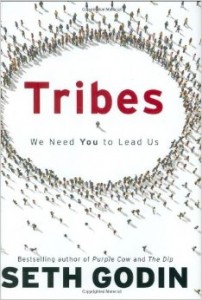
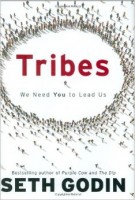
tribesRon’s Short Review: “There are tribes everywhere. Every one of these tribes is yearning for leadership.” A real appeal to be a leader and influencer.  Powerfully written.

Amazon-Buy-Buttonkindle-buy button

0 comments
0 FacebookTwitterEmail
Short Book Reviews

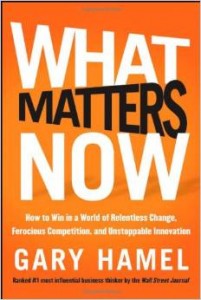
What Matters Now

by Ron Potter December 9, 2012

What Matters NowRon’s Short Review: Great follow-up book to Daniel Pink’s “Whole New Mind”.  Now that the world is in a state of perpetual change, how do you lead?
Amazon-Buy-Buttonkindle-buy button

0 comments
0 FacebookTwitterEmail
Short Book Reviews

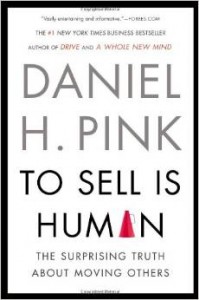
To Sell Is Human

by Ron Potter November 9, 2012

To Sell Is HumanRon’s Short Review: Pink’s third book that really helps us understand our own motives and approaches.

Amazon-Buy-Buttonkindle-buy button

0 comments
0 FacebookTwitterEmail
BlogTeam

Have We Decided Yet? Probably Not!

by Ron Potter May 1, 2012
Image Source: Garrett Coakley, Creative Commons

Image Source: Garrett Coakley, Creative Commons

One of my clients (thanks Mindy) recently introduced me to a book called The Primes: How Any Group Can Solve Any Problem by Chris McGoff. While I’ve found several useful concepts in the book one of the most powerful is the definition of the word “decide.” Notice the make-up of the word: De-Cide.

What do the words pesticide, homicide, fungicide have in common? They (and many others) all end in “cide.” The – cide ending originates from the Latin word caedere meaning to kill. It concerns death, destruction, extermination and deliberate killing. There is even a public execution connotation to the word meaning “to put to death.”

In our corporate world we’ve mistakenly come to believe that when we decide, we’re making a decision about what “to do.” But when we decide what to do, we never decide what to stop. It’s a little bit like the overwhelming morass that our governments have gotten into; every year our legislatures add more and more laws to the books, they just never kill any and so our laws and regulations have become so voluminous we can hardly act freely any more. In our corporate life when we continually decide what to do and seldom decide what to stop doing we spread our precious resources thinner and thinner.

See if you can make this shift with your team. When faced with a decision, spend more time figuring out which alternative you are going to kill. Figure out the consequences of killing that particular option. You’ll notice some deep seated attachment and engagement that you never uncovered when you were decide which alternative to “do.” There will be many people in your organization that may have spent many years honing their skills performing the alternative that you’re about to kill. How do you think they’ll react? They’ll do everything they can to preserve their job and skill set. They’ll do it overtly. They’ll do it covertly. But this is exactly what happens when you decide what to “do” versus what to kill. While the priorities have shifted to the more important task that you decided to “do”, nobody told the people doing the other alternative to stop or shift their resources to the higher priority item or to cut their project to the bare essentials. Thus, we are constantly looking for resources to accomplish all of the high priority items and we create work forces that feel overwhelmed and over extended.

Instead, try deciding. Try deciding what to kill. Try dealing with the fall out and consequences of telling people that we’re no longer doing that activity or project. Help them get reassigned, retrained, more engaged in the activities that you’re not killing.

Maybe you’re very good at prioritizing your work. However, when you prioritize your list of 30 activities rather than deciding which ones to kill, you will still have a huge amount of resources working on priorities 16-30. If you will decide, you’ll notice that you have more than enough resources to accomplish the top 15 priorities.

Start de-ciding! You’ll find yourself and your company suddenly much more productive.

1 comment
0 FacebookTwitterEmail
BlogLeadership

Kicked in the Head: Overcoming Fear

by Ron Potter April 1, 2012
Image Source: Azhar Khan, Creative Commons

Image Source: Azhar Khan, Creative Commons

My recent blog on Getting Past Failure reminded of me an experience I had with a client years ago.

I was working with a new president of a major company. He had taken over an organization that had just seemed to be stagnant for many years. His first instinct was to spend time out in the field riding with his sales representatives to find out what their daily experiences were like. He was looking at the organization from the ground up. His early impressions were that the organization was simply hesitant to make any decisive moves. He thought there were sales to be made and market share gains to be had but the entire organization was simply too cautious, afraid to make any major mistakes and not even willing to ask customers for a commitment.

At the same time, I had seen a National Geographic special that had followed a pride of lions. The lead female is the hunter for the pride. She will decide which prey to attack and direct the hunting party how to help her gain an advantage over the targeted animal. But she is the one who makes the kill. As she was in hot pursuit of her targeted zebra she rapidly moved in to make the kill and leaped for the attack just as the zebra came to a fallen log. The zebra jumped over the log and at the same time kicked hard at the attacking lion and caught her right in the side of the head. This kick sent the lion tumbling through the brush and the kill was lost. For the next several weeks the routine seemed to be exactly the same as it had always been but just as the lioness came to the moment of kill, she shied away. She was obviously afraid of being kicked in the head. Over the coming weeks as the pride became more and more hungry, younger females and even a few of the younger males began to challenge her dominance and position as the lead hunter. Rebellion was increasing when she finally regained her confidence or more likely overcame her own fear and finally made another kill. She and the pride quickly returned to their normal and successful routine.

The company above had experienced some of their own “kicks in the head.” They had received a regulatory citation about some of their sales practices. They had experienced some product failures as well as some competitor products gaining great advantage over their own. And they had experienced their own leadership failing to help them out of this funk. They were acting like the lioness who had been kicked in the head.

As the new president began to instill a level of confidence in their sales ability, in the quality of their products and in their strategic plan for being successful in the market place (through a combination of face-to-face meetings as well as large scale meetings) you could see the “pride” begin to return. Sales began to climb (even with no change to the product mix or market conditions) and by the time they launched a new product the following year (that product became the largest selling product in its category) the team was pumped up and ready to go. He had helped them recover from their kick in the head. In overcoming fear, the new president was able to lead his team to success.

Where have you and your team been kicked in the head? Things happen beyond our control. I’ve mentioned before a great book titled The Road Less Traveled, Timeless Edition: A New Psychology of Love, Traditional Values and Spiritual Growth by Scott Peck M.D. The opening sentence of that book is “Life is difficult.” Life (and business) is difficult. We get kicked in the head occasionally. But, we don’t need to let the pride starve because of it. We can overcome our fears and regain our “pride.” Be aware of kicks in the head. Identify them. Talk about them. Figure out ways to deal with and overcome the natural fears that are a result. Life will still be difficult but it can also be encouraging and productive at the same time.
0 comments
0 FacebookTwitterEmail
Short Book Reviews

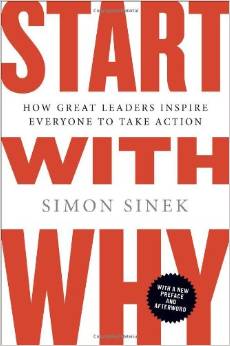
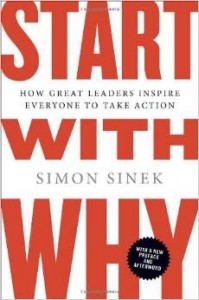
Start with Why

by Ron Potter November 9, 2011

Stary with WhyRon’s Short Review: This one is simple and powerful.  It will also explain why we can’t get out point across when we talk about what we do.

Amazon-Buy-Buttonkindle-buy button

0 comments
0 FacebookTwitterEmail
BlogCulture

Re-Invention: Another Word for Change

by Ron Potter August 14, 2011
Image Source: Werner Bartmann, Creative Commons

Image Source: Werner Bartmann, Creative Commons

There is constant talk of reinvention. Companies need to reinvent themselves. People need to reinvent themselves. I live in a state (Michigan) that needs to reinvent itself.

How does a state reinvent itself? The state of Michigan has been associated with the auto industry for over 100 years. During the peak of the auto industry, Michigan was one of the wealthiest states in the nation. Today it is one of the poorest and the only state that has lost population between the last two census reports. I’ve often tried to think of what Michigan would look like if Henry Ford, R.E. Olds, and many of the other pioneers of the auto industry had started in Ohio (or some other state) rather than Michigan. I have to assume that we would have an economy and state government geared to a level of a different and maybe less robust industry. We also have the cereal industry started by W.K. Kellogg and C.W. Post. Our tourist industry is outstanding and we even have a thriving oil and gas industry. But… the state would look much different today had we not had the auto industry. How do we rethink who we are?

I can only draw on my personal experiences when I think about reinventing ourselves individually. My career seems to have progressed in decades. For the first ten years of my working career I worked in the engineering/construction business, building large power plants around the country and learning the project management business. Then one day I saw my first microcomputer and decided that this little box (actually a 35 pound “luggable” machine in the early days) was going to change our lives. Six months later I was developing software for the new and growing microcomputer industry. After ten years of working with computers and software I had to ask myself the age old question “what do I really want to do when I grow up” and came to the conclusion that I had felt fulfilled working in two very different industries because my goal everyday was to create (and be) the best leaders and develop the best functioning teams. I believed that if I could grow myself, help grow the people and develop good team dynamics, the business would take care of itself. My developing vision was helping leaders and teams continually improve their performance. I thought that would be fun if I could get up and do that every day. Thus began twenty years (and counting) of consulting and coaching in the leadership development and team building arena.

What fulfills you? Have you stopped to ask yourself that question? It may be scary and risky but it will also help you to continually reinvent yourself. A necessity in today’s rapidly changing world.

0 comments
0 FacebookTwitterEmail
BlogLeadership

Afraid of Failure

by Ron Potter July 3, 2011
Afraid of Failure

Image Source: True New Zealand Advent, Creative Commons

I am not a trekker. Although I do own a trekking stick (very high tech with a camera mount on the top) and for a while I did subscribe to a trekking magazine with wonderful, high gloss photos of small groups of people in their hiking boots, cargo pants and trekking sticks walking across pristine landscapes in Scotland and Ireland with periodic stops for wine and cheese and their porters ferrying their luggage to be waiting for them at the next B&B. While adventuresome is portrayed a very serine and safe journey.

But recently, I read an article about Carmichael. His day time job is the CEO of a high-end coffee supply company. His avocation is Trekking. Real Trekking! Having accomplished treks across some of the most remote and inhospitable places in the world, his latest challenge is Death Valley. Hard-core trekkers regard Death Valley as undoable and there is no known record of any human being accomplishing the task. He had just failed at his second attempt to trek across the valley. Listen to some of his words:

“Everyone focuses on risk and failure. What happens if you fail? How do you mitigate the risk? I look around and see people who live in the safest places in the world, and they are preoccupied with anxieties and fears because they don’t know what risk is anymore.”

Once he said it I realized that I observe this exact behavior in all of the people I meet and even in the corporate cultures that I work with. Some people take on entirely new careers in their lives while others make one shift to a different team in a company they’ve worked at for twenty and think “phew, I made that leap without failing”. Some corporate cultures are moving into emerging parts of the world with processes and technology totally different from what they’ve used for fifty years while others will make a merger offer and then back away from it as too risky when a slightly increased counter offer is presented. We seem to use the same scale for measuring risk as if we are a kid contemplating jumping across a puddle or if we’re walking steel 200 feet in the air (a personal experience of mine ;-).

After his second failed attempt to trek across Death Valley, Carmichael said “That’s it. It’s over dude.” At that moment of failure he didn’t see any way that he would ever attempt this one again. But later he had begun to absorb his experience.

“The word that goes through your mind is fail, fail, fail. But once you get some perspective you realize that you learned something important. In the end, it’s not about how many tries you needed to get something done. It’s about not quitting and keeping at it until you achieve the goal. So, no, I didn’t fail. Failure is if it broke me. I just didn’t make it – this time.”

How do we break out of our own ring of risk? That bubble that we live in where the most risky thing inside our bubble looks like the riskiest thing anywhere? We get outside of our bubble! We get to know people who live in other bubbles. We learn of their efforts, failures, successes, heart aches, joys and start seeing the world through a different set of eyes. Suddenly when we look back into our own bubble, we realize that that daunting risk that we’ve been facing is nothing more than a little puddle. If you only see the world through your own perspective, it can become a very risky place and you will become very risk averse.

0 comments
0 FacebookTwitterEmail
BlogTeam

People on the Bus – Part I

by Ron Potter April 30, 2011
Image Source: MD111, Creative Commons

Image Source: MD111, Creative Commons

I was reminded the other day that when I was in kindergarten, I invited a friend to come home with me on the bus. Now, we didn’t make official arrangements like checking with parents or getting permission, I just asked this friend to get on my bus as we were headed home after school. As an adult I can now imagine the turmoil that must have ensued when this five year old girl ended up on the wrong bus.

Jim Collins in his book Good to Great: Why Some Companies Make the Leap…And Others Don’t talks about the importance of getting the right people on the bus, and while I certainly understand the concept of having the right people on your team, the full magnitude of that concept never really hit me until I began thinking about how much angst and commotion must have occurred because I had the wrong person on the bus.

Jim Collins focuses on getting the right people on the bus but I think the harder part of leadership is getting the wrong people off the bus. My young friend and I were unaware of the great disturbance we had caused by enjoying our ride home and looking forward to playing together. It was the adults, the supervisors, the leaders that could easily see the chaos caused by our decision and their efforts were focused on getting the wrong person off this bus and back on the right bus.

Today when I was with a client, I was notified that a person in the company had decided to resign. While no one was really rejoicing, it was very obvious that there was a relief in the room and a sense of “finally, we can move on” because this had been one of those people who were on the wrong bus. Now, before you jump to conclusions I want you to know that he was a fine human being, with a long track record of great success in a highly visible (and paid) leadership position. This was not some sloth who everyone knew should depart. It’s just that the school bus was on a new route and he hadn’t adapted to the new route and scenery. He remained stuck in doing things the way they had always been done. He had not re-invented himself (new word for change) along with the company and the team as they were re-inventing themselves to cope with the new realities.

In my next post, I’ll talk about three patterns that I see of the wrong person on the bus.

1 comment
0 FacebookTwitterEmail
Short Book Reviews

Made to Stick

by Ron Potter August 9, 2010

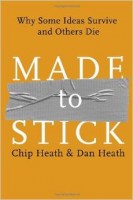
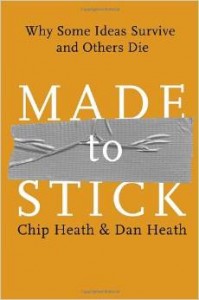
Made to StickRon’s Short Review: Very powerful book on telling stories that people remember.  Don’t let the word “stories” fool you.  We’re selling our ideas and positions all the time and we want them to “stick” with others.

Amazon-Buy-Buttonkindle-buy button

0 comments
0 FacebookTwitterEmail
Newer Posts
Older Posts
  • Facebook
  • Twitter
  • Linkedin
  • Rss
  • About This Site
  • About
    • Clients
  • Services
  • Resources
    • Trust Me
    • Short Book Reviews
  • Contact

About this Site | © 2024 Team Leadership Culture | platform by Apricot Services


Back To Top
Team Leadership Culture
  • Team
  • Leadership
  • Culture
  • Myers-Briggs
  • Trust Me
  • Short Book Reviews
 

Loading Comments...