
Team Leadership Culture
  • Team
  • Leadership
  • Culture
  • Myers-Briggs
  • Trust Me
  • Short Book Reviews
Top Posts
Obituary
REPOST: Four Functions, Three Rules
ROUNDUP: The Rise of AI
REPOST: Facing Adversity Series
ROUNDUP: Curiousity
ROUNDUP: Deep Work
REPOST: Character vs. Competence
REPOST: Opposite of Victim
REPOST: Listening With the Intent to Understand
REPOST: Performance vs Trust
  • About
  • Services
  • Resources
    • Trust Me
    • Short Book Reviews
  • Contact

Team Leadership Culture

  • Team
  • Leadership
  • Culture
  • Myers-Briggs
  • Trust Me
  • Short Book Reviews
Tag:

Leadership

BlogCulture

Social Proof or Social Poof?

by Ron Potter April 12, 2018

In one of my recent posts about Balance, I spoke to the human need of balancing certainty and uncertainty.

A really good quote from Warren Buffett is “The five most dangerous words in business are: ‘Everybody else is doing it.”

He’s speaking of the need for Social Proof. When we are uncertain, we observe those around us to figure out how we should behave or how we should think. This need for certainty plus the need for belonging (also addressed in the Balance Blog) can combine for a deadly combination. That’s why Buffett describes them as dangerous.

This combines with another experience I (and likely you) have had when one of my parents discovered that I had done something stupid and asked “Would you jump off a building just because all your friends were doing it? Unfortunately, there are a few examples in history of people doing exactly that.

So how do we turn a moment of Social Proof into a moment of Social Poof? Magicians make things go “poof.” They disappear in a poof of smoke or a flurry of bright handkerchiefs. Why did they go, poof? Because they were illusions. They weren’t real. They were figments of our imaginations. The magician wanted us to “see” them so he could make them disappear.

Our marketing world is full of these Social Proof poofs.

You’re really somebody when you drive one of our cars.

Everybody who’s anybody drinks our beverage.

“Hi, I’m a professional actor and I endorse this product. You should want to buy it.” (Check out the Ted Danson Smirnoff commercials. They’re a great spoof of this concept.)

But, back to the purpose of this post. “The five most dangerous words in business.” Social Proof is a dangerous practice for leadership teams. I’ve seen these environments emerge when

  • A leader is so competitive that it turns into a win-lose atmosphere. The leader expects total loyalty. If you’re not a “team player” you must be the enemy.
  • The smartest person in the room syndrome. This may be a leader or simply a subject matter expert. But when the smartest person in the room exists, everyone else should get in line.
  • I worked with a CEO once who told me (and I think actually believed) that he always listened to everyone on his team. When there was a position to be taken he would ask each person on the team what they thought and where they stood on the issue. But subtly, he would quietly listen to the person who had an opposite view without comment. While he would reinforce each person who agreed with his position. You knew immediately which side you were on.

Great teams break down these barriers and attempts at Social Proof by trusting and respecting diverse points of view and honestly dialoguing through them.

Make your Social Proofs go Poof! You and the team will be better off and better balanced.
0 comments
0 FacebookTwitterEmail
Short Book Reviews

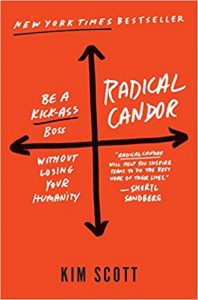
Radical Candor

by Ron Potter April 1, 2018

Ron’s Short Review: Anything less than Radical Candor leaves issues unsaid and unexamined. This builds on the concept of Psychological Saftey which is a key to team success.

0 comments
0 FacebookTwitterEmail
5 Steps to Standing for Something GreaterBlogLeadership

5 Steps to Standing for Something Greater – Part V: Recognize the Cost

by Ron Potter March 19, 2018

People do not like to be put in boxes, and just as important, people do not like to be in the dark, outside the door where company values and vision are shaped. People are less energized and tend to drift when they are unsure of how they should be operating within an organization. People need to see their leaders’ commitment to values, and they want a part in helping to shape their organization’s core values and vision.

So how do you show this? There are five steps to helping your company and your team stand for something greater and this week, we’re digging into step 5.

Recognize the cost

Standing for something greater often exacts a significant price. Senator John McCain, speaking at the 1988 Republican National Convention, told the story about a special soldier whom he met while a prisoner of war in Vietnam.

McCain spent over five years imprisoned by the North Vietnamese in what was called the “Hanoi Hilton.” In the first few years of his imprisonment, McCain and the other soldiers were kept in isolation. Then in 1971 the North Vietnamese put the prisoners in more open quarters with up to forty men in a room.

One of the men in Senator McCain’s cell was Mike Christian. Mike was from the rural south and had joined the navy when he was seventeen. Eventually he had become a pilot and, after being shot down in 1967, was captured and imprisoned.

As the prison rules eased, the men were allowed to receive packages from home. McCain stated, “In some of these packages were handkerchiefs, scarves and other items of clothing.” The prisoners’ uniforms were basic blue, and Mike Christian took some white and red cloth from the gifts and fashioned an American flag inside his shirt.

Mike’s shirt became a symbol for the imprisoned Americans. Every day, after lunch, they would put Mike’s shirt on the wall and recite the Pledge of Allegiance. You can imagine that, for these men, this was an emotional and significant daily event.

One day the Vietnamese found Mike Christian’s homemade flag. They destroyed it and later that evening, as an example to the other prisoners, beat Mike for over two hours.

McCain remembers, “I went to lie down to go to sleep. As I did, I happened to look in the corner of the room. Sitting there beneath that dim light bulb, with a piece of white cloth a piece of red cloth, and another shirt and bamboo needle was my friend, Mike Christian. Sitting there with his eyes almost shut from beating, making another American flag.”10

Lt. Commander Mike Christian is a real-life example of how leaders can shift their focus away from themselves, their power, and their potential to something (or someone) outside themselves, seeking the greater good for others as well as for the organization and the community at large.

Standing for something greater moves leaders past their own interests to something that benefits everyone. It takes controlled strength not to fall back to the shortsightedness of doing things only for selfish gain or selfish reasons.

In a POW camp Mike Christian was willing to stand for a symbol of the country he loved. His actions inspired others to stand strong as well and not to surrender hope. That’s the power of commitment to something greater.

0 comments
0 FacebookTwitterEmail
Balance on the High WireBlogCulture

Balance on the High Wire – Part IV: Human Needs

by Ron Potter March 15, 2018

The world is becoming a very fast paced environment. With each step of increased travel velocity, the world has become more interconnected than ever. With the advent of the internet and pipeline speed that velocity has become almost infinite in nature. It seems like a Niagara amount of information, data and connectivity are swirling around us every moment of every day. With each passing day, it becomes more difficult for us to maintain our balance. Without balance, bad things happen.

Over the last few of blog posts, I’ve introduced that Balance is the key ingredient of great decision-making, health, and happiness (human needs). Today let’s explore Human Needs.

A couple of years ago I wrote a short post on human needs described by Tony Robbins. I’m sure Tony didn’t invent these needs, they have been known and observed through human history as being part of who we are as humans. But, Tony has done a nice job of observing and describing the drives behind each.

The six (in my words) are:

  • Certainty—Uncertainty
  • Belonging—Standing out
  • Learning—Teaching

Certainty-Uncertainty

  • I’ve watched corporate leaders attempt to boil down the big-data they need so that it fits on their laptop or tablet. They are searching for certainty and assume that if they have all the data at their fingertips they’ll always make the right decision. If that’s true, why do we need the human element at all? Just let the big-data make the decision. Leadership is dealing with the ambiguity of the situation and making the decision despite the fact you don’t have all the data. Decisions are about the future. The future is difficult (impossible) to know. Life is full of ambiguity and people in general and good leaders are better at dealing with ambiguity than computers.
  • Leadership is about not being certain about the future but also not being afraid. Balance.

Belonging-Standing Out

  • This one is difficult to balance. I believe it takes a trusting team to accomplish. A great team encourages unique abilities, encourages them and helps develop But the goal is to serve the team, not the individual.
  • Individuals have a difficult time accomplishing just the right balance without trusting feedback. One of our great American philosophers, George Carlin once said: Everyone driving faster than you are idiots. Everyone driving slower than you are Morons. Which means you are one or the other to all others on the road. Balance.

Learning – Teaching

  • When both learning and teaching are taking place, both experiences are better. One of my clients explained to me that I provided the greatest value to them when I was teaching them about what I was learning. My energy and enthusiasm came through when I shared with them the insights of what I was learning through my reading and experiences. Balance

I started my career walking steel up to 200 feet in the air. No safety equipment. Just you, the breeze and balance. Up there, balance was life and death. Balance, Balance, Balance!

0 comments
0 FacebookTwitterEmail
5 Steps to Standing for Something GreaterBlogLeadership

5 Steps to Standing for Something Greater – Part IV: Seize the Higher Ground

by Ron Potter March 12, 2018

People do not like to be put in boxes, and just as important, people do not like to be in the dark, outside the door where company values and vision are shaped. People are less energized and tend to drift when they are unsure of how they should be operating within an organization. People need to see their leaders’ commitment to values, and they want a part in helping to shape their organization’s core values and vision.

So how do you show this? There are five steps to helping your company and your team stand for something greater and this week, we’re digging into step 4.

Seize the higher ground

“John Gardner, Stanford professor, former secretary of Health, Education, and Welfare and founding chairperson of Common Cause, has written that there are four moral goals of leadership:

  • Releasing human potential
  • Balancing the needs of the individual and the community
  • Defending the fundamental values of the community
  • Instilling in individuals a sense of initiative and responsibility.”

Gardner notes that concentrating on these aspects will direct you to higher purposes. They take the focus off of you and place it on the people around you. They enable you to let go of the things in life that do not matter and instead make time and create energy for the things that do matter: the welfare of others, the organization, and the larger community.

When working to plant a vision and sense of a greater cause in a team, you must first ensure that values are understood and owned. This is accomplished initially by cataloging the personal values of individual team members. When the personal values of individuals are understood, team values begin to emerge.

0 comments
0 FacebookTwitterEmail
5 Steps to Standing for Something GreaterBlogLeadership

5 Steps to Standing for Something Greater – Part III: Elevate People to a Higher Purpose

by Ron Potter March 5, 2018

People do not like to be put in boxes, and just as important, people do not like to be in the dark, outside the door where company values and vision are shaped. People are less energized and tend to drift when they are unsure of how they should be operating within an organization. People need to see their leaders’ commitment to values, and they want a part in helping to shape their organization’s core values and vision.

So how do you show this? There are five steps to helping your company and your team stand for something greater and this week, we’re digging into step 3.

Elevate people to a higher purpose

Lincoln motivated people by leaving his office and spending time with everyone in the government and military hierarchy. One hundred and twenty years later, Tom Peters dubbed this kind of management style as “management by walking around.” When a leader gets out and interacts with all the people, the vision is communicated, the values are acted upon, the leader is observed, and the people are inspired.

Whether or not leaders literally walk around, the important factor is elevating and transforming people to serve a higher purpose. People respond by seeking higher moral standards for themselves and the organization. A higher purpose serves to develop common ground, and the common ground leads to energy in attaining goals. It creates a center of importance around which the team can rally and be unified.

How are you seeking to develop common ground for your team or organization? Have you seen any benefits to “management by walking around” in your own management style?

0 comments
0 FacebookTwitterEmail
5 Steps to Standing for Something GreaterBlogLeadership

5 Steps to Standing for Something Greater – Part I: Clean Up Your Act

by Ron Potter February 5, 2018

People do not like to be put in boxes, and just as important, people do not like to be in the dark, outside the door where company values and vision are shaped. People are less energized and tend to drift when they are unsure of how they should be operating within an organization. People need to see their leaders’ commitment to values, and they want a part in helping to shape their organization’s core values and vision.

So how do you show this? There are five steps to helping your company and your team stand for something greater.

Clean up your act

It is difficult to convince others to stand for something greater if your own life and values are mediocre. Make no mistake: Regardless of what you hear from assorted voices, your personal moral standards are inseparably linked to long-term leadership success.

I once worked with a vice president of a large company who appeared very successful but did not adhere to high personal standards. He was very good at what he did and had a magnificent reputation. He had also successfully navigated through some tough spots for the company.

This V.P. liked to call himself “a player.” Essentially, being a player meant that he messed around outside of marriage. He did not see this as wrong (pride talking) and told us it would not affect his people or the quality of the job they were doing (pride again). In his arrogance he thought he could keep his two worlds—work and extramarital cheating—separate.

Twenty-four months later, the vice president’s inability to control his pride and lust cost him everything, including his job. His clever scheme fell apart. His self-focus swallowed him up.

It’s fun to be a leader, flattering to have influence, and invigorating to have a room full of people cheering your every word. It is a powerful boost to set a direction for the troops and then draw them out to march toward the goal. However, nothing will spoil this pretty picture more quickly than a willful, proud attitude.

Author and speaker Joyce Meyer writes,

How can you tell you have a problem with pride? Examine yourself. If you have an opinion about everything, you have a problem with pride. If you are judgmental, you have a problem with pride. If you can’t stand to be corrected, you have a problem with pride. If you rebel against authority, if you want to take all the credit and glory to yourself, if you say “I” too often, then you have a problem with pride.

Pride can cause an uncontrolled will, which is fatal in a leader’s life.

0 comments
0 FacebookTwitterEmail
BlogTrust Me

Leading by Values

by Ron Potter January 22, 2018

People are searching for a deeper meaning in their lives.”
—M. Scott Peck

The leader who understands this and who responsibly presents a great cause to followers will turn a key in many hearts and unlock vast reservoirs of creativity and productivity.

But just having personal commitment to a great cause is not enough for a leader. The vision for “something beyond” must be successfully transferred to the entire group, whether it be a small staff, a department, an entire organization, a state, or a nation.People are less energized and tend to drift when they are unsure of how they should be operating within an organization. People need to see their leaders’ commitment to values, and they want a part in helping to shape their organization’s core values and vision.

Leaders who form corporate values, vision, and strategy in a vacuum or just in the executive suite lack the humility and commitment to move beyond themselves and include others who have solid ideas and opinions on what should define the company’s values. When leaders don’t talk about the company’s values and vision, people feel alienated and less energized.

When working to plant a vision and sense of a greater cause in a team, you must first ensure that values are understood and owned. This is accomplished initially by cataloging the personal values of individual team members. When the personal values of individuals are understood, team values begin to emerge.

The following story illustrates the steps that one dynamic business leader took to win support for a great cause in his organization.

After agreeing with his executive team on a set of core values, the CEO of this large firm got so interested in employee input on team values that he asked a consulting team to go to six different locations and determine the values of the two hundred to three hundred employees at each site. In team settings, it is often easy to agree on the first five to seven values; however, discussions get very interesting as teams round out the full list of values that will govern their individual behavior and business practices. Using an audience response system, the consultants asked each table-grouping of employees to discuss and develop team values. Next, they worked on “room” values.

Upon completion of the six-city tour, the employee list of values was compared to the executive list. The two lists were surprisingly similar. After some final discussions and some tweaking of the list by the company’s leaders, a final list of values was issued.

Although the operative values came down from on high, every employee who had participated had a personal stake in and loyalty to the list. The company-wide discussion had galvanized the organization not just to a set of core values but to a gigantic something-greater goal pursued by the company’s CEO. This company desperately needed to reverse a quarter-century of declining market share for its products. The CEO used this exercise in determining values as well as a great amount of day-to-day, hands-on involvement with key personnel to successfully “sell” his organization on the dream of a huge reversal of the company’s fortunes. The entire company bought into the dream and now shared his passion for something greater.

0 comments
0 FacebookTwitterEmail
BlogCulture

The Number One Habit You Should Drop to be Successful

by Ron Potter January 18, 2018

Success.com recently published a list entitled “10 ‘Harmless’ Habits to Drop If You Want to Be Successful.”

Based on the experience I’ve had with successful teams the last several years, I would say just being successful at dropping the first habit will get you a long way toward success.

Number One: Saying Yes When You Want to Say No!

I’ve taught many teams recently the true meaning of the word decide. Top corporate teams are filled with high achievers. They have all been getting things done since an early age. They’ve been rewarded in academics, sports, arts, and business for getting things done. Getting them done faster and in more volume than anyone else. They’re “doers”!

So, it’s very natural to believe that when corporate leadership teams get together they should decide what to do!

But that’s not what the word means. The “cide” part of the word means to cut off, put to death, publicly execute. Think for a minute about the words pesticide or homicide. The one habit that is keeping most teams and leaders from success is concluding that they should be doing more and more. Corporations and individuals don’t have the resources, energy, time or fortitude to keep doing more and more. Successful teams and leaders decide what to kill, what to stop doing.

There are so many variables related to success and failure in the auto industry that I honestly don’t know if this one issue will spell success or failure for General Motors (GM). But, I need to applaud their courage in shifting their measure of success from being the number one car maker in the world by volume. That seemed to be the driving force in GM for decades. But today, they’ve decided to stop producing vehicles in many parts of the world. That takes courage. Will it be successful? I don’t know. As I said, there are many factors to success and failure. But I do believe that deciding where to stop putting your resources is a big factor.

Saying No is Difficult

I really don’t know many leaders who reward and praise their people for not doing something. But they should. Research and my direct experience with many great leaders validate that focusing on the top three issues you face is the best route to success. Rewarding your people for not doing the 10th item on their priority list (and 9, 8, 7, …) will lead to more success than you can imagine. Leaders and organizations never have enough resources to do everything. The assumption is they just need more resources or more productivity out of the resources they have. That’s the wrong assumption. The real answer is assuming you’re trying to do too many things. Deciding not to do the low priority items will help you realize that you have all the resources you need to accomplish your top priorities. And it will lead to greater success as well.

Figure out how to say No!

The Power of a Positive No by William Ury is a great resource. Deciding to say no will be one of the most productive practices you ever learn.

0 comments
0 FacebookTwitterEmail
Blog

Top 10 Posts of 2017 – Part II

by Ron Potter December 28, 2017

We’re recapping some of the most popular posts of 2017. Today we dig into posts 5 through 1.

5. Myers-Briggs In-Depth: Attending and Perceiving: Sensing vs iNtuition – Part II

Most successful business people have figured out that they need to balance this function. This balancing act most often takes the form of a trusted partner, colleague or consultant.

Continue Reading…

4. Being Humble is Being Down to Earth

It doesn’t seem to make much sense, but truly great leaders are humble.

The problem comes with how the word is normally used: Humble is thought to mean shy, retiring, unobtrusive, quiet, unassuming. Being humble can seem weak or, horrors, even borrrrrrrriiiiiiinnnnngggggg.

What does it really mean to embrace humility?

Humility is derived from the Latin word humus, meaning “ground.” One way to describe truly humble leaders is that they have their feet on the ground.

Continue Reading…

3. Myers-Briggs In-Depth: Judging vs Perceiving

I have set up the following two signs in a team meeting:

  • I have to get my work done before I can play.
  • I can play anytime
  • I then ask the team to position themselves along the spectrum between those two signs. Once positioned it almost always correlates between their Judging vs Perceiving preference on this scale.

    Continue Reading…

    2. Absurd!: The More We Communicate, The Less We Communicate

    People don’t want more information; they want more meaning. What does this mean? How should we interpret these numbers? Give us meaning. Tell us stories. Help us understand.

    Continue Reading…

    1. Character vs. Competence

    Bob Quinn in his book Deep Change introduced us to the concept of the “Tyranny of Competence.” This is a person that is so good at the skills of their job, leaders will tend to overlook their other flaws in character. They assume the character flaws would never cause enough negative issues to overcome the positive impact of being really good at their job.

    Don’t ever think that. The destruction caused by lack of character is always greater than the competency provided.

    Continue Reading…

0 comments
0 FacebookTwitterEmail
Blog

Top 10 Posts of 2017 – Part I

by Ron Potter December 26, 2017

For the rest of the year, we’ll be looking at the top posts of 2017. Today we dig into posts 10 through 6.

10. Balancing Innovation and Execution

At some point, every leader seems to grapple with the balance between innovation and execution. Many leaders struggle with the notion that one great idea will save the day for the organization. Others spend an inordinate amount of time focusing on “getting out the laundry” and not on new ideas.

Continue Reading…

9. Opposite of Victim

Someone asked me the other day what was the opposite of the victim mentality. That ignited a lively dialogue which came to the conclusion that Creativity is the opposite of victim mentality. Isn’t that a great picture? If we eliminate policies, procedures, governance, or leadership styles that create or assume a victim mentality, we unleash creativity. Although my work is focused on leadership within corporations, the first thing that came to mind was our law makers.

Continue Reading…

8. You can’t fix culture

I named my company Team Leadership Culture because those were the three elements that made a company great. You can think of those three elements as a triangle: Team and leadership at the base of the triangle, culture at the top. If you have not taken the time to build great teams and great leaders, a great culture is not going to develop.

Team is the most important. With a great team, lots of wonderful things can happen, sometimes even with mediocre leadership. However, great leadership without a good team almost always fails.

Continue Reading…

7. Myers-Briggs In-Depth: Deciding: Thinking vs Feeling – Part I

Most (business) people react negatively to this “Feeling” function and will associate with the Thinking side rather than the “touchy feely” side. While this is a complete misconception, it drives a very strong bias to the Thinking side. In my data base of corporate leaders that I’ve gathered over the last 25 years, roughly 85% identify themselves with a Thinking Preference and about 15% with a Feeling Preference. This is far outside the parameters of the other functions.


6. Qualities of a Caring Leader: Confrontation

Part of leading is confronting people and urging them toward better performance.
Confrontation does not involve giving a report on another person’s behavior. It means offering feedback on the other’s role or response. Its goal, in the business environment, is to bring the employee, boss, or peer face to face with issues (behavior, emotions, achievement) that are being avoided.

Continue Reading…

0 comments
0 FacebookTwitterEmail
BlogTrust Me

How’s your vision?

by Ron Potter November 20, 2017

It is important for a leader to be committed to a vision. When professors Warren Bennis and Burt Nanus studied the lives of ninety leaders, they found that “attention through vision” was one of their key leadership strategies. Vision is the ability to look beyond today, beyond the obstacles, beyond the majority opinion and gaze across the horizon of time and imagine greater things ahead. It is the ability to see what is not yet reality.

Vision includes foresight as well as insight. It requires a future orientation. Vision is a mental picture of what could be. It also suggests uniqueness, an implication that something special is going to happen.

How do you develop a vision? Writers James Kouzes and Barry Posner suggest the following:

You feel a strong inner sense of dissatisfaction with the way things are in your community, congregation or company and have an equally strong belief that things don’t have to be this way. Envisioning the future begins with a vague desire to do something that would challenge yourself and others. As the desire grows in intensity, so does your determination. The strength of this internal energy forces you to clarify what it is that you really want to do. You begin to get a sense of what you want the organization to look like, feel like, and be like when you and others have completed the journey.

When you have vision, it affects your attitude. You are more optimistic. You envision possibilities rather than probabilities.

Vision requires belief. It requires that you refuse to give in to temptation, doubt, or fear. It is a belief that sustains you through the difficult times. Vision requires commitment and endurance. It takes a willingness to be stretched.

Leaders with vision assume anything is possible. Without vision, we can see a difficulty in every opportunity. As we develop vision, we see an opportunity in every difficulty.

2 comments
0 FacebookTwitterEmail
Newer Posts
Older Posts
  • Facebook
  • Twitter
  • Linkedin
  • Rss
  • About This Site
  • About
    • Clients
  • Services
  • Resources
    • Trust Me
    • Short Book Reviews
  • Contact

About this Site | © 2024 Team Leadership Culture | platform by Apricot Services


Back To Top
Team Leadership Culture
  • Team
  • Leadership
  • Culture
  • Myers-Briggs
  • Trust Me
  • Short Book Reviews