
Team Leadership Culture
  • Team
  • Leadership
  • Culture
  • Myers-Briggs
  • Trust Me
  • Short Book Reviews
Top Posts
Obituary
REPOST: Four Functions, Three Rules
ROUNDUP: The Rise of AI
REPOST: Facing Adversity Series
ROUNDUP: Curiousity
ROUNDUP: Deep Work
REPOST: Character vs. Competence
REPOST: Opposite of Victim
REPOST: Listening With the Intent to Understand
REPOST: Performance vs Trust
  • About
  • Services
  • Resources
    • Trust Me
    • Short Book Reviews
  • Contact

Team Leadership Culture

  • Team
  • Leadership
  • Culture
  • Myers-Briggs
  • Trust Me
  • Short Book Reviews
Tag:

Leadership

BlogTeam

Patience – A Balancing Act

by Ron Potter November 12, 2015
Source: WorldIslandInfo.com, Creative Commons

Source: WorldIslandInfo.com, Creative Commons

I think building great teams is tough. If you’re in a sports related environment, it’s more obvious that you need to build teams of your five, nine, or eleven players (or some other number). And even in these environments where the value of building a team is so crucial, it’s still difficult. In a corporate environment where it’s not quite as obvious that building a great team is necessary, it’s even more difficult to put in the effort to create a great team.

But for anyone who has been part of a great corporate team, the value of making the effort is undeniable. Patience is a key element to team building. However patience is hard to define or understand and difficult to balance.

Patience: “The capacity to accept or tolerate delay, trouble, or suffering without getting angry or upset.”

One of the images that I really enjoy is the two magnificent lions protecting the entrance to the New York Public Library. Their names are Patience and Fortitude.

Patience and fortitude. The capacity to accept or tolerate delay, trouble, or suffering without getting angry or upset and at the same time fortitude: courage, bravery, endurance, resilience.

Patience with self vs. Patience with others.

I’ve seen one Vice President get very upset with a 2nd Vice President when he did not think his colleague was dealing with what he considered to be an incompetent employee. What was interesting to me is that I was working with both VPs and I knew that each of them was dealing with a direct report that needed to be moved to a new position where they had a greater chance of success. Both VPs did successfully deal with the situation and both worked hard at accomplishing it in the most successful way possible. But while VP#1 seemed to exhibit great patience in dealing with his direct report (because he respected him and believed he deserved patience) he didn’t exhibit the same patience for the other employee or the VP who was proceeding down a similar path. How much control you have over the situation affects your level of patience.

Gumption and Patience

“Successful investing requires this crazy combination of gumption and patience, and then being ready to pounce when the opportunity presents itself, because in this world, opportunities just don’t last very long,” says Charlie Munger of Berkshire Hathaway. “It’s waiting that helps you as an investor and a lot of people just can’t stand to wait. If you didn’t get the deferred gratification gene, you’ve got to work very hard to overcome that.”

Investors in People

Charlie Munger is an investor in companies.  But, as you watch and read more and more about how he and his partner, Warren Buffet, decide on what companies to invest in, they’re really looking at the leaders of those companies who have built great teams.

Leaders are Investors in People.
0 comments
0 FacebookTwitterEmail
BlogTeam

Nothing better than fall in Ann Arbor

by Ron Potter October 29, 2015
Source: Jeremy Bronson, Creative Commons

Source: Jeremy Bronson, Creative Commons

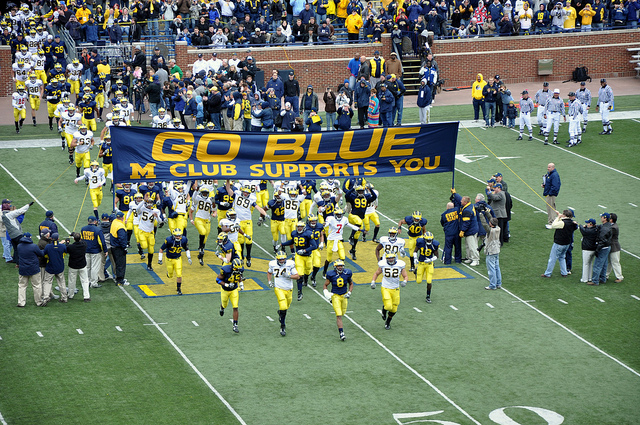
It’s fall in Ann Arbor.  Fall in Ann Arbor means great color, great cool weather with long afternoon shadows and great football.  At least it should mean that.  Fall football in Ann Arbor has not been fun for the last couple of years but with our new coach, Jim Harbaugh, fall football is fun again.  And with this level of excitement, the sports press is getting quotes and interviews everywhere and anywhere they can.  One quote the other day really caught my eye.

Tim Drevno is the new offensive coordinator and offensive line coach at the University of Michigan.  In discussing his offensive line, the guys who do the heavy work in the “trenches” of blocking and in many ways are truly responsible for the success of the offense, Coach Drevno gave the following quote:

As you go through game to game, you get used to everybody and how you communicate and how they handle adversity and get to know one another. That’s part of the process of trusting one another. The quicker you can trust, the quicker you can have success. That’s been a real big part of where we are today. It’s gradual. They get used to your coaching techniques and how you prepare, what you demand from them.

Let’s go to the chalk board and break down that statement:

The quicker you can trust – trusting one another – quicker to success

Yes, you have to know your blocking assignments, the plays you’ll run, you have to be big and strong and quick on your feet…  but to succeed quickly you must build TRUST!

As you go through game to game – it’s gradual.

It happens over time, game to game, day in, day out.  Building trust takes experience.  You have to work on it every day through every assignment.  I have experienced in the corporate world that if trust is lost, it takes at least six months of flawless, trust-worthy behavior before people will even give you the benefit of the doubt, let alone fully trust.

Handle adversity and get to know one another

Trust builds during times of adversity.  Building trust means working through failure together.  It also takes knowing one another.  Not knowing what you do but knowing who you are.  What are your values?  How much heart and stamina do you have?  How will you handle adversity?

Without trust there can be no leadership

Build the trust, prepare the individuals and the team, then and only then can you make great demands of their performance and only then will they respond!

Have you taken the time to build trust, grant trust and earn trust?  If your goal is to be a great leader then you will need to expect and demand great results.  But that only happens when there is great trust!

Take a look at our book “Trust Me” to learn more about becoming a trusted leader.

0 comments
0 FacebookTwitterEmail
Short Book Reviews

Patients Come Second

by Ron Potter October 28, 2015

pat com secRon’s Short Review: This book is very medical community centric but the point they make reinforces what we know from many other studies.  Focusing on your employees first, your customers (patients) second and your finances third is the best way to engage your employees to positively impact your customers and finances.

Amazon-Buy-Buttonkindle-buy button

0 comments
0 FacebookTwitterEmail
Short Book Reviews

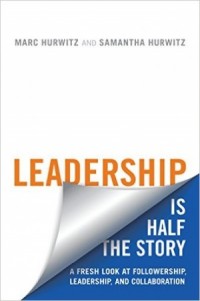
Leadership is Half the Story

by Ron Potter October 28, 2015

leaderships is halfRon’s Short Review: This is a hidden gem.  We all want to be good leaders but have you thought about the other “half” of being a good follower or partner?


Amazon-Buy-Buttonkindle-buy button

0 comments
0 FacebookTwitterEmail
BlogCulture

Integrity Continuum?

by Ron Potter October 22, 2015
Source: Pedro Ribeiro Simões, Creative Commons

Source: Pedro Ribeiro Simões, Creative Commons

In an article for LinkedIn, Dr. Travis Bradberry, Coauthor of Emotional Intelligence 2.0 & President at TalentSmart says:

It’s easy for leaders to get caught up in their own worlds as there are many systems in place that make it all about them. These leaders identify so strongly with their leadership roles that instead of remembering that the only reason they’re there is to serve others, they start thinking, ‘It’s my world, and we’ll do things my way.’ Being a good leader requires remembering that you’re there for a reason, and the reason certainly isn’t to have your way. High-integrity leaders not only welcome questioning and criticism, they insist on it.

I don’t think Integrity lands on a continuum.  You don’t hear people saying “Ruth scores higher on the integrity scale that Ralph does.”  What you do hear is “Ruth has integrity.  Ralph doesn’t.”

It’s amazing to me how visible this becomes.  I have the opportunity to spend time with leaders of different businesses in different industries all the time.  When there is lack of integrity in a company you can sense it from the time you walk in the door.  It’s in the air.  You can see it in the way people greet each other in the hall way or conference rooms.  You can hear it during the conversations on the phone or more importantly in the conversations after the phone call ends.  You can taste it in that sour feeling after difficult conversations.  You get the point.  Your senses know.

But, note Dr. Bradberry’s last sentence, high-integrity leaders welcome and insist on questioning and criticism.

One view of questioning and criticism is encapsulated in the term feedback.  I’ve told the story in some of my previous blog’s that the term feedback was coined during the early days of rocketry when the scientists figured out they needed to develop good “feedback” systems in order to hit a target.  Great thrust without great feedback is just an out-of-control rocket.  High-integrity leaders accept feedback and develop great feedback systems for everyone.

Another view of the questioning and criticism quote is to view it during team discussions or problem solving sessions.  Are the contrary views heard and even encouraged?  Do the teams have a mechanism, dialogue being one of the best, for sorting through the contrary views?  Is everyone heard, listened to and understood?  You can feel the integrity when it exists during the team sessions.

Integrity is not something you either have or not.  It’s something you build over time and for leaders who are getting higher and higher on the leadership ladder, it’s something you maintain and develop as it becomes easier for people to tell you what they think you want to hear rather than the contrary view.

Check out the Integrity chapter in our book, Trust Me.  It’s one of the eight essential principles of great leadership.

0 comments
0 FacebookTwitterEmail
BlogLeadership

How to Raise An Adult

by Ron Potter October 15, 2015
Source: Norbert Reimer, Creative Commons

Source: Norbert Reimer, Creative Commons

Danial Pink conducts a fun interview on his “irregular and irreverent newsletter”. A recent one was with Julie Lythcott-Haims, former Stanford University Dean of Freshmen. She has a new book coming out titled: How to Raise An Adult: Break Free of the Overparenting Trap and Prepare Your Kid for Success.

As I looked at her list of things to do as a parent, I thought it made a great list of things to do as a leader. In a sense, that’s what leaders are doing as well, raising adults. Let me share with you her list of what to do as a good parent and alongside that list, what we should be doing as good leaders:

Teach kids/leaders to fend for themselves:

Advice to Kids Advice to Employees
wake themselves up Be a self-starter
make a meal Feed your own growth
keep track of their stuff Be organized
do their own work Don’t take credit for others work
meet deadlines Meet deadlines
get places Get around the organization
talk to others Talk/listen to others
advocate for their needs Advocate for their needs
bounce back from adversity Bounce back from adversity

Julie goes on to say “Here’s an easy four step method for teaching kids any skill:

  1. do it for them
  2. do it with them
  3. watch them do it
  4. then they do it completely independently.

Great advice for kids and future leaders.

Pick up the book, Trust Me and learn all the great steps for being great leaders and creating great leaders.

0 comments
0 FacebookTwitterEmail
BlogTrust Me

The Achieving Team

by Ron Potter October 5, 2015
Source: joiseyshowaa, Creative Commons

Source: joiseyshowaa, Creative Commons

“I would perform better if…” This is a good opening statement to ask members of your team to complete in order to find out how well everyone is focusing.

Thomas Gilbert, author of Human Competence: Engineering Worthy Performance, found that

  • Thirty-five percent of people would answer, “[I would perform better if] I knew what the exact expectations of the job were and had more specific job feedback and better access to information.”
  • Twenty-six percent of workers would respond, “[I would perform better if] I had better tools and resources to work with.”
  • Fourteen percent said, “[I would perform better if] I had better financial and non-financial incentives for doing my work.”

What it Takes

Expectations, feedback, and incentives are key requirements for building an achievement-oriented team. Organizations expend a great amount of time and money on training people to help them become better achievers. They should also channel resources into teaching leaders how to form realistic expectations, provide proper support, and set achievable goals with appropriate incentives. Organizations and their leaders continually try to fix the individual, but if they would just change the environment (information, resources, and incentives), they would see drastic changes and results.

The good news is that these factors are easily developed and integrated into the life of a team. Let’s take a look at how to get this done.

Energizing the Team with Vision

As we have indicated earlier, people are hungry to be led and will gravitate toward leaders who have a clear vision. Knowing “why we do these things around here” helps put management’s expectations for individuals and teams into a meaningful context.

Authors James Kouzes and Barry Posner (The Leadership Challenge: How to Make Extraordinary Things Happen in Organizations) found that “when leaders effectively communicate a vision—whether it’s to one person, a small group, or a large organization—that vision has very potent effects. We’ve found that when leaders clearly articulate their vision for the organization, constituents report significantly higher levels of the following:


  • Job satisfaction
  • Motivation
  • Commitment
  • Loyalty
  • Esprit de corps
  • Clarity about the organization’s values
  • Pride in the organization
  • Organizational productivity

Clearly, teaching others about the vision produces powerful results.”

People want the best in themselves called out. They will rally around a communicated vision and work hard to support it. The vision also establishes a foundation of shared commitment and focus if and when times get rough.

0 comments
0 FacebookTwitterEmail
Short Book Reviews

Endzone

by Ron Potter September 26, 2015

endzoneRon’s Short Review: Yes, you probably need to be a Michigan football fan to fully appreciate the entire story.  However, this may be one of the best stories I’ve seen about the need for a new leader to walk that tightrope that balances traditions and culture with the need for change.

Amazon-Buy-Buttonkindle-buy button

0 comments
0 FacebookTwitterEmail
BlogLeadership

Are you Curious?

by Ron Potter September 24, 2015

Be careful how you answer, it may define your chances of success!

Source: Beverly & Pack, Creative Commons

Source: Beverly & Pack, Creative Commons

I’ve been reading A Curious Mind: The Secret to a Bigger Life by Brian Grazer.  Most of us know Brian because of his movie making partnership with Ron Howard.  Look at their film biography sometime.  All great films.

But the reason I started reading the book was not because of who Brain was but because of the title, A Curious Mind.  For much of my consulting career, the word curious has been an important concept in my work.  One issue that I seem to be working on with many leaders and in fact the one that seems to gain them the most traction in becoming better leaders is listening.  I try to help them grasp the concept and practice of listening with an intention to understand rather than listening with the intention to respond.  It really makes a difference in people’s lives and in our learning ability if we can make this shift to listening to the other person to completely understand what they’re saying and what’s behind or driving what they’re saying.  Stop trying to figure out how you’re going to respond to the person and just listen to understand them.

When my clients ask for help at getting better at listening to understand I talk to them about curiosity.  Everyone seems to be curious about something.  Everyone seems to have at least one topic that they enjoy, are passionate about, never tire of learning about, and are tremendously curious about.

What happens to your mind when you’re pursuing that curiosity?

  • How are you thinking about the topic?
  • Why do you want to learn more about the topic?
  • What happens when you learn a whole new aspect of the topic?
  • What happens when you learn something that seems to be counter to what you’ve learned in the past or thought you already knew or understood?

What’s happening is that you’re unleashing your curiosity.

Humble leaders listen to others with curiosity.  They want to learn.  They want their beliefs challenged and upset.  They’re gaining new perspectives.  Warren Berger really fleshes this out in his book A More Beautiful Question.

A few of the quotes that caught my eye from Brian included:

  • “Life isn’t about finding the answers, it’s about asking the questions.”
  • “I’ve discovered that even when you’re in charge, you are often much more effective asking questions than giving orders.”
  • “I’m a boss—Ron Howard and I run Imagine together—but I’m not much of an order giver. My management style is to ask questions. If someone’s doing something I don’t understand, or don’t like, if someone who works for me is doing something unexpected, I start out asking questions. Being curious.”

Are you curious?  Are you a leader?  You won’t be good at leading if you’re not good with curiosity!

1 comment
0 FacebookTwitterEmail
BlogTrust Me

Focus Is as Difficult as Hitting a Baseball

by Ron Potter September 14, 2015

The importance of focus cannot be overestimated. And channeling your passion into meaningful achievement is one of the toughest things you can do.

Pete Rose, the baseball player with the most hits of anyone who ever played the game, once said, “See the ball, hit the ball.” Sure, Pete!

Source: Rafael Amado Deras, Creative Commons

Source: Rafael Amado Deras, Creative Commons

Think of the challenge: A pitcher stands sixty feet, six inches away from you with the goal of throwing a round object, three inches (seven centimeters) in diameter, past you. In your hands is a round, tapered pole, thirty-two to thirty-six inches in length, otherwise known as a bat. Your goal is to swing the pole and hit the ball only when it enters a small predefined area called the strike zone. (Note: You are referred to as a batter until you actually hit the ball!) In the hand of a professional pitcher, the round object will arrive to meet your bat traveling ninety-plus miles per hour. No wonder even the best batters generally only become hitters in about one-third of their attempts. That’s not a success ratio for which we would compliment a brain surgeon or a litigation attorney.

My colleague and Trust Me co-writer Wayne once attended a reception at the Louisville Slugger Museum where the world-famous bats are crafted. Amid the memorabilia of the museum is a caged area where you can select a pitcher (folks like Roger Clemens or Randy Johnson) who then appears on video on the big-screen monitor and throws a pitch to a stuffed catcher. The radar gun shows the ball (coming from a hole in the video monitor) approaching at ninety miles per hour.

While he was watching this impressive display, former major league pitcher Orel Hershiser came up and overheard him say—as the ball whizzed by—“I could hit that.” To which Mr. Hershiser instantly chuckled and commented, “No, you couldn’t!”

He was right, of course. To hit a baseball requires great skill, a lot of practice, and our favorite word of the moment: focus. Pete Rose remains the all-time master of focus in baseball. It is reported that he could actually pick up the spin of the ball as it left the pitcher’s hand. Therefore he could “read” how the baseball seams were tumbling or curving and detect the kind of pitch that was coming at his bat. Good eyesight? Perhaps. Great focus? Absolutely. Rose was so intent on getting a hit that nothing robbed him of focus.

Achieving such consistent focus is a quality of every effective leader. In his book In Search of Excellence, Tom Peters called focus “sticking to the knitting,” which means that successful companies do not stray far from their central skill. Leaders of excellent organizations keep everyone’s eyes focused on “the ball” by not allowing distractions to drift them away from the core of what they do best.

That’s what we like to call “doing the right things right.”

0 comments
0 FacebookTwitterEmail
BlogLeadership

Character vs. Competence

by Ron Potter September 10, 2015
Source: contemplativechristian, Creative Commons

Source: contemplativechristian, Creative Commons

Tyranny of Competence

Bob Quinn in his book Deep Change introduced us to the concept of the “Tyranny of Competence.” This is a person that is so good at the skills of their job, leaders will tend to overlook their other flaws in character.  They assume the character flaws would never cause enough negative issues to overcome the positive impact of being really good at their job.

Don’t ever think that.  The destruction caused by lack of character is always greater than the competency provided.

Steven Covey gave us the image of leadership, being equal parts character and competency. You can be the most competent person ever, but without good character, you’ll never become a great leader.  Conversely, you can be a person of utmost integrity and character, but without being competent at what you do, you’re no longer trustworthy and therefore will never make a trusted leader.

I’ve always been a little surprised at the lack of visibility around this issue. I’ve often thought that maybe I’m more tuned into the destructive aftermath of this character issue than the executives I work with.  And quite honestly, the measurement systems of our corporate environments tend to be more competency based than character based.

Rock Stars of Competency

Then one morning I experienced a little incident that added some clarity.  Because of a heart operation and subsequent complicating factors, I had been living in a hospital environment. Beyond dealing with my own personal health issues, the thing that occupied me the most was observing the culture of an operating hospital from a patient’s (customer’s) point of view.

Now, a hospital is certainly competency-based. Without a doubt, I want the most competent surgeon handling my heart so I can get healthy. But it’s amazing that even at this “rock star” level of medicine, how much of a difference character makes. From the patient’s point of view, the doctors I consider the best are the ones that treat me as a human being. I have been very blessed with great doctors but what’s even more interesting is how the hospital staff reacts to these surgeons.

The high character surgeon treats the staff with respect and relates to them as human beings, even as simple as using their name. The entire staff is very eager to provide to the patient whatever the doctor thinks necessary for the health and well-being of the patient. However, when the doctor forgets to exhibit that good character to the staff, the patient actually suffers. The staff goes back to a checklist approach.  It’s clear that the overall care of the patient diminishes when the providing doctor doesn’t demonstrate good character, but assumes it is only great competency that gets the job done.

Character Based Environments

Below the doctors are the nurses and the rest of the caring staff. Down here, it’s character that makes the difference. Without exception, these nurses and “techs” (one nurse and one tech assigned to each patient) are there to help you get well. There are still competence issues of taking “values”—pressure, temperature, weight, etc. and administering meds—but for the most part they mainly want to know how you’re doing and what they can do to make your stay more comfortable. The most precious commodity is sleep. And while the timing of the system conspires against you, many of the nurses and techs will delay almost anything if they think it will allow you to sleep just a little bit longer. Except Alex!

Don’t Be Like Alex

Alex is a young, energetic tech who was new to me until one morning. At 5:00 a.m. (one of the few times during the day that I could actually fall into a deep sleep) Alex bounded into my room, turned on the lights, and asked if he could check my weight. My answer was, “No!” Undaunted, Alex wheels in the scale (light still on) and offers to help me out of bed. It’s obvious he’s not going to leave so I slowly bring myself to consciousness, drag myself out of bed, stand on the scale, and satisfy Alex that he’s done his job. He even encourages me to get some sleep as he departs with his poundage figures in hand.

My reaction to Alex’s overall performance?

Competent? Yes.

Showed character? No.

Overall, rude, obtrusive, failure as a tech.

In competency based environments, lack of character is always destructive but may be under the radar.  In character based environments, lack of character is seen as complete failure.

The message in all of this is balance, balance, balance.

Regardless of which aspect is more valued in each environment the best leaders, the most cherished and valued people are the ones with both great competencies and the same time exhibit the greatest of character. They are respectful and treat others with great dignity.

If you yearn for success, be the best you can be and at the same time, care and respect those around you for who they are.

1 comment
0 FacebookTwitterEmail
BlogTrust Me

2 Qualities of Highly Developed Focus

by Ron Potter September 7, 2015

I have found that two personal qualities combine optimally to create a leader of highly developed focus: passion and achievement. These form the boundaries of focus.4546017269_ddac803025_z

Passionately-Focused Leaders

Staying focused is virtually impossible without passion. So how do you identify and capitalize on your passion in the leadership setting?

Passion is a craving deep within us, that yearning for something we feel we just must have. It surfaces in a multitude of ways.

Finding our passion includes dreaming big. Ask yourself some questions:

  • What is my burning passion?
  • What work do I find absorbing, involving, engrossing?
  • What mission in life absolutely absorbs me?
  • What is my distinctive skill?

Answers to questions like these will point you to your passion.

A friend of ours, the late Leonard Shatzkin, had a passion for mathematics that helped him become a pioneer in understanding the technicalities of inventory management. He developed a model of inventory control using linear regression that proved to be revolutionary for two companies he headed. But his passion didn’t just stop with benefits for his own organizations. Leonard then devoted the rest of his professional career to telling anyone who would listen about maximizing return on investment and minimizing overstocks.

That’s what passion is like; one way or another it demands expression. Even after his death, the effects of Leonard’s passion live on. His ideas and systems serve many individuals and organizations well.

Too often we allow old habits, the rigors of everyday life, and our ongoing fears or frustrations to impede our passion. We are cautioned by friends: “Don’t be so idealistic.” “Don’t be so daring.” “What if you fail?” These kinds of comments can shrink our passion so that we settle for working in fields away from our passion. We abandon it, we make do, and we play it safe.

Just as a mighty river needs a channel, passion needs a channel and a goal. Without such restraint, the result is a flood, a natural disaster. You need to make certain that you control your passion, not the other way around.

Properly focused passion changes us for the better and often helps shape organizations, even nations. So dream big. Identify what motivates you to get up in the morning. Discover where you can make a difference, based on what “floats your boat.” Some people spend their lives looking at the flyspecks on the windshield of life. Dreaming big and fulfilling your passion help you look past the flyspecks to the beautiful world on your horizon.

Achievement-Motivated Leaders

Along with passion, a desire to achieve motivates a leader to a higher level of focus.

I have concluded that leaders with an achievement-motivated style (balanced by humility) have the most constructive approach to work. Typically, they do not waste time on projects or matters outside their vision. They determine what is important, that “something great,” and they seek to achieve it.

Ralph Waldo Emerson said, “The reward of a thing well done is to have done it.” Every January millions of people watch the Super Bowl. During the awards ceremony after the game, we see players with big smiles. What are they shouting about? Not about money or fame, but about the ring. Each player on the winning team gets a championship ring—a symbol of reaching the pinnacle of the sport. Nothing else compares to having that ring. It is proof of the ultimate achievement in football. That’s what motivates an achievement-oriented person.

Achievement-motivated people need feedback. They seek situations in which they get concrete feedback that they define as job-relevant. In other words, they want to know the score.

People with a high need for achievement get ahead because, as individuals, they are producers. They get things done.

0 comments
0 FacebookTwitterEmail
Newer Posts
Older Posts
  • Facebook
  • Twitter
  • Linkedin
  • Rss
  • About This Site
  • About
    • Clients
  • Services
  • Resources
    • Trust Me
    • Short Book Reviews
  • Contact

About this Site | © 2024 Team Leadership Culture | platform by Apricot Services


Back To Top
Team Leadership Culture
  • Team
  • Leadership
  • Culture
  • Myers-Briggs
  • Trust Me
  • Short Book Reviews
 

Loading Comments...