
Team Leadership Culture
  • Team
  • Leadership
  • Culture
  • Myers-Briggs
  • Trust Me
  • Short Book Reviews
Top Posts
Obituary
REPOST: Four Functions, Three Rules
ROUNDUP: The Rise of AI
REPOST: Facing Adversity Series
ROUNDUP: Curiousity
ROUNDUP: Deep Work
REPOST: Character vs. Competence
REPOST: Opposite of Victim
REPOST: Listening With the Intent to Understand
REPOST: Performance vs Trust
  • About
  • Services
  • Resources
    • Trust Me
    • Short Book Reviews
  • Contact

Team Leadership Culture

  • Team
  • Leadership
  • Culture
  • Myers-Briggs
  • Trust Me
  • Short Book Reviews
Tag:

Leadership

BlogTrust Me

Teams Under Pressure

by Ron Potter July 11, 2016

photo-1432131578171-252835d174b4

The Discovery Channel recently featured a program about a pride of fearsome lions. The documentary illustrated what happens when the leader is no longer able to preserve order and calm.

In one scene the lioness-leader of the pride is leading the hunt of a zebra. As she chases her prey, the frightened zebra jumps over a log at the very same time the lioness is trying to bring it down from behind. As they both leap, the zebra winds up violently kicking the lioness-leader in the head, inflicting a severe wound.

Over the next few weeks, the culture of the pride changes significantly. The lioness-leader becomes fearful and, because of the event with the zebra, shies away just at the moment of the kill. The pride gets visibly angry with her; they are hungry, and the lioness’s traumatic experience has demolished the familiar, effective structure of the pride. She is no longer securing food. Her fear and tentative behavior have created chaos and caused a dysfunctional team that is confused and threatened by starvation.

During times of chaos and confusion, leaders can either be peacemakers, which will bring a calm that pulls the team together, or they can let a “kick to the head” at a decisive moment cause them to pull back, which will cause disruption, loss of morale, and uncertainty.

In my work with clients, most of the questions I receive concern how to find the key that opens the door to a successful team. Often the organization is in turmoil. It needs peace. It wants teamwork to lead the way out and beyond the current situation.

Peacemakers encourage teamwork. They seek group dynamics that unleash the right kind of power and the right attitude to achieve the best results.

So many books, articles, and seminars are developed to help leaders understand how to build teams. It’s ironic that on a moment’s notice during a terrible crisis several people facing impossible odds came together and built a successful team.

In what the news headlines called “The Miracle at Quecreek,” nine miners, trapped for three days 240 feet underground in a water-filled mine shaft, “decided early on they were either going to live or die as a group.”

The fifty-five-degree water threatened to kill them slowly by hypothermia, so according to one news report, “When one would get cold, the other eight would huddle around the person and warm that person, and when another person got cold, the favor was returned.”

“Everybody had strong moments,” miner Harry B. Mayhugh told reporters after being released from Somerset Hospital in Somerset, Pennsylvania. “But any certain time maybe one guy got down, and then the rest pulled together. And then that guy would get back up, and maybe someone else would feel a little weaker, but it was a team effort. That’s the only way it could have been.”

They faced incredibly hostile conditions together, and they all came out alive together.

The Quecreek story pretty well illustrates ideal team dynamics. Being a contributor on an effective team and working together to accomplish a meaningful mission is a deep desire of many. It’s up to the peacemaking leader to coach that team…of so many dreams.

0 comments
0 FacebookTwitterEmail
BlogLeadership

Putting ICE on it: Are Leaders Made or Born?

by Ron Potter July 1, 2016

photo-1433878665141-d6ceaf394ae2

I have worked with many leaders and many future leaders who believe that people are born with leadership skills.  Some just “have it” and others don’t seem to have “it” or at least enough of it.  For those who don’t have a belief one way or the other, they are often asking the question “Are leaders made or born?”  The question often seems to be a self-reflective one, wondering if they have it or not.

Just having the open question often leaves leaders and teams hobbling around like they had a sprained ankle.  So, what do we do to help sooth a sprained ankle?  Put ICE on it!

I = Intelligence Quotient

From the time we started in school we have known about or had questions about IQ.  How smart are you?  Do you have a high IQ?  Are you going to come up short in life if you don’t have that high IQ?  IQ has been with us for a long time and here’s a few things we know about it:

  • IQ is often static throughout your lifetime and doesn’t seem to change much with learning.
  • It also seems to have many correlative factors such as: income, demographics, environmental factors, and can be influenced by hereditary or genetic factors.
  • But most importantly we have never found any correlation between IQ and success.

C = Cognitive Function

Cognitive Functions are not static.  They will grow and develop over time and with age. However, don’t assume that aging alone will increase your Cognitive Function.  Gray hair also comes with aging but that doesn’t make you any wiser.  You need to intentionally practice and get better at your Cognitive Functions that include:

  • Focus: the ability to keep your attention focused on an issue in order to properly grabble with it. Lack of focus and interrupted attention are two prevalent problems I see in corporate leadership today.
  • Perception: That ability to understand that your perception of a problem or issue is just that, a perception. Individuals high in Cognitive Function seem to have the capacity to deal with many perceptions to an issue and hold them in high regard as they sort through difficult issues.
  • Executive Skills: This interestingly named function has to do with the brain’s frontal lobe and deals with decision making skills among others.

E = Emotional Intelligence

This function was put forth by Daniel Goleman in the early 2000’s and has proved to be highly correlated to good leadership.  Elements that Goleman identified included the 5 S’s of:

  • Self-Awareness
  • Self-Regulation
  • Self-Motivation
  • Social Awareness
  • Social Skills

These skills are also skills that can be grown and developed over time.  With practice you can increase and improve each one of these.

ICE = IQ + CQ + EQ

These are the elements of great leadership.  And IQ is the only one we’re born with and also seems to be the least impactful on our success as a leader.  Average IQ is all you need.  Developing high CQ and EQ will turn you into a great leader.

Leaders are self-made!

0 comments
0 FacebookTwitterEmail
BlogTrust Me

Calming Chaos

by Ron Potter June 20, 2016

photo-1456207242739-ff52c0c7413c

The world we live in is chaotic. A great leader learns how to leverage chaos into creativity, to bring a sense of tranquility to a crazy world.

Dealing with new technology, profit expectations, continual new-product development, the fickle shopper, and global competitors and global teams requires perpetual change and lightning-fast reactions. Markets change, old competitors consolidate, new competitors emerge, and attempts at re-engineering threaten our daily bread. Both leaders and employees can soon feel under siege and at the mercy of chaos.

A creative, energy-filled calm is what we need. A word picture may aid our understanding of this. Imagine you are a surfer. There you are with your board, waiting for the “big one.” If you are in Hawaii, the waves you are playing in might rise to twenty feet. All around you is surging, frothy chaos. Currents, tides, and the weather have combined to create a uniquely unstable environment. Conditions are always changing; every moment the ocean is different. If you try to catch a wave exactly the way you did yesterday, you will take a hard fall. You must stay alert and react quickly to every nuance of water, tide, and wind.

Gutsy leaders confront chaos. No one who is content to just paddle a surfboard beyond where the waves break has ever caught a “big one.” Neither has such a person ever wiped out. If you want to ride a wave, you have to enter into the chaos. If you panic while riding a big wave, you are sure to wipe out. If you stay calm, you can have a wonderful ride while tons of water crash down around you.

Creating calm in the office requires a similar ability to assess the environment, to act quickly, and to stay calm. The economy, products, competitors, consumers, and employees all constantly change. Someone has to have answers; someone must be an independent thinker, able to calmly think things through.

I’m familiar with a banker who had a client ready to sell a branch location of his business. The main location seemed to be prospering, but this particular branch appeared to be a drain on energy, time, and resources. The business owner was upset, but the banker remained calm. He took the time to analyze the underlying causes of the owner’s problems. He visited the location, recast the numbers, and advised the owner not to sell the branch but to move and resurrect it. In reality, the branch location was producing extra cash, and the owner, following the banker’s advice, turned his entire business around.

People will follow leaders who stay steady in the turbulence and work with them to create new answers, new plans, and a new future.

Whatever you do, don’t slip into what we call the “arsonist’s response to chaos.”

The Fort Worth Star-Telegram reported that firefighters in Genoa, Texas, were accused of deliberately setting more than forty destructive fires. When caught, they stated, “We had nothing to do. We just wanted to get the red lights flashing and the bells clanging.”

Do you know any leaders who intentionally start “fires” so they can get the “red lights flashing and hear the sirens”?

Leaders in a client’s organization proudly described themselves as “firefighters.” They were proud of the fact that they were good at hosing down crises. But when they were asked, “Is it possible you might also be arsonists?” it caused a great deal of reflection within the company.

The goal is a creative, steady productivity—not an out-of-control environment that squanders energy and resources on crisis management.

0 comments
0 FacebookTwitterEmail
BlogFavoredTrust Me

Favored Are Those Who Calm the Waters

by Ron Potter June 13, 2016

A passionate man turns even good into evil and easily believes evil; a good, peaceable man converts all things into good.
—Thomas à Kempis, The Imitation of Christ
photo-1427606694672-8f86d75947ce
Does it seem puzzling to find the term peacemaker included in a list of qualities necessary for a trusted leader? Does peace sound a bit too passive in today’s business environment?
We are desperately in need of some peace and quiet. Work—all of life—is more stressful than ever before. James Citrin writes:

Late nights in the office. Early mornings to clear overnight e-mails. Weekends to catch up on all the things you didn’t have time to do during the week. Most people in business simply cannot work harder or faster than they are at present—we’re all sprinting just to keep up. As the old saw says, the race goes to the swift. And in the now-distant boom times, being first to market and hurrying obsessively to get out ahead made working in overdrive the norm.
But in our collective rush to get ahead, maybe we have lost something…certain actions, decisions, and initiatives do have their own rhythms, and we should be sensitive to them. Don’t you agree that on some days, things just flow, while on other days, no matter how hard you push, things just don’t move forward?

A peacemaker is a leader who seeks to create calm within the storms of office politics, decision making, shareholder demands, cash-flow crunches, and the endless change of things the organization cannot control such as the economy, the weather, the fleeting loyalty of today’s consumer, and a host of other constantly evolving issues.

One of the jobs of a leader is to prepare the organization for times of great demand. There have been many studies on the effects of overtime work. When additional hours of work are initially introduced, productivity climbs. However, research also shows that if the overtime continues for more than about two months, productivity falls back to its original level in spite of the additional hours worked. Leaders who neglect to give the organization rest will not be prepared when the real push comes. And, in fact, they are not getting a good return on their investment by keeping everyone working long hours over extended periods of time.

Leaders need to know when to let the organization (people) slow down and rest a bit so that they are ready to go when those two or three tough times during the year require that extra effort.

Take a look at your world. Some people on your team are fed up with the daily push and shove. They are overworked and worn out. They feel vulnerable and fearful, and they are seeking personal peace to do a job they feel they can do but for whatever reason cannot.
A good leader knows the value of bringing some calm to stressful situations. As Jesus once said to those under his leadership, “Peace I leave with you.… Do not let your hearts be troubled and do not be afraid.”

Peace means equilibrium, understanding, justice, mercy, caring, and harmony. To be a peacemaker means to quench the desire for revenge and replace it with the desire to put others first for their well-being.

However, peacemaking does not mean seeking peace at any cost, for the peacemaker realizes that peace at any price will usually result in events that are anything but peaceful. A peacemaker is not an appeaser. He or she is not a person who is easy to shove around and who refuses to take a position. We are not talking about wimpy leaders who avoid confrontation. Quite the contrary. A peacemaker understands the positive role of conflict in building a solid team. A peacemaker is one who through strength and knowledge establishes good relationships between estranged parties—relationships based on truth and fairness.

Peacemaking leaders encourage open discussion and honest debate, which actually improves relationships. Harmony comes from the trust that is developed, not from the suppression of discussion and debate. In fact, great peacemaking leaders create more energized debate than normal.

0 comments
0 FacebookTwitterEmail
BlogTeam

What Would Jack Welch Do?

by Ron Potter June 9, 2016

photo-1444201716572-c60ec66d0494
Rich Hill is a friend, colleague and mentor of mine.  Along with being a great consultant and coach to many recognizable companies, Rich was also the Executive Director of the Dow Leadership Center at Hillsdale College and the Director of Human Resources for General Electric Plastics when Jack Welch took over the division.  In essence, he was one of Jack’s first HR directors.

Rich dropped me this note the other day:

I really like the post on Mentally Ill Teams.  How many times have I seen these dynamics exist in my many years of work with organizations? The point of “The attempt to avoid the suffering simply causes more and deeper suffering” is so true.

Rich goes on to talk about a process he titled “Contracting for Change”.  Notice a couple of elements of the process as he explains it:

One of the key elements in the process was putting charts up on the wall for each team player with three columns:

  • Things I should do more of/or better
  • Things I should do less of
  • Things I do well and should not change.

Each chart had additional columns to assess the Priority of each response relative to Top Priority or secondary Priority.  Each of the other team players were given tags to write on for each of the three elements.  Feedback!

Once all the feedback tags were up on each person’s chart the entire team moves to a given chart and the owner of that chart first suggests what the comment means to him or her and then asks for individual clarification of the statements – such as

  • Can you give me a specific example?
  • Where have you seen this characteristic in play?

We used these clarification statements especially if the owner’s interpretation didn’t quite square with the person who put the tag point up. This approach assures better mutual understanding by all members of the team.

Rich goes on to explain the next step of prioritization on the Do More Of and Do Less Of columns only done by all other team members, not the person’s own chart.

But I think the next step was the most powerful:

The next step deals with negotiating the key items on given charts to enhance both individual and team effectiveness (emphasis mine).  If successful, the final understanding is put into a written contract between the parties.  90 days out we reconvene the teams and go over contracts to see how much progress was made.  I used it with several organizations and always got good results.
As you can imagine there was some suffering as a result of the clarity of issues between people, but it often led to good results.

I don’t really know what Jack Welch would do in this case, but I do know what one of his first HR directors would do.  Working with executives at the level where Rich worked probably made the statement “some suffering” a bit of an understatement.  But the power of feedback and dealing with the direct pain and suffering cannot be denied or overlooked as a powerful tool for leadership and team improvement.

Thanks Rich, I really appreciate the time you took to send some feedback.

1 comment
0 FacebookTwitterEmail
BlogTrust Me

The Integrity of Quality

by Ron Potter May 30, 2016

0Ad9yHP8QdCYBUqKxoiw_Stockholmsnow

Many believe that quality and productivity will define the economics of the twenty-first century. One of the principal events of the last century was Japan’s postwar emergence as an economic superpower. This came about primarily because of the quality revolution among Japanese manufacturers of automobiles and electronics, who zoomed past their American counterparts as consumers demonstrated with their wallets a preference for imports and the quality (perceived or real) of the products brought to the marketplace. In the process, American companies exported millions of jobs and, at the same time, were jolted into the reality that American consumers wanted, and even demanded, the highest quality.


To stop the outflow of consumer dollars, American manufacturers instituted many programs to improve quality. Total Quality Management (TQM) became more than just a popular catch phrase. It became a process driver for hundreds of companies and the focus of many leaders.


Authors Tom Peters and Nancy Austin wrote: “Any device to maintain quality can be of value. But all devices are valuable only if managers—at all levels—are living the quality message, paying attention to quality, spending time on it as evidenced by their calendars.”


The spotlight on quality remains. Today, consumers expect every product and service to be of the highest quality. Joseph Juran, publisher of the classic Quality Control Handbook, states, “We’ve made dependence on the quality of our technology a part of life.”


Clearly, American leaders need to emphasize quality in every aspect of their organizations. Whether they are service-driven or product-driven, company leaders must completely understand the need for quality and communicate that message down the line so that everyone in the organization fully understands the importance of maintaining and improving quality.


This addresses organizational quality, but what about personal TQM?


In the wake of the Volkswagen scandal as well as other corporate meltdowns, investors have lost hundreds of billions of dollars and tens of thousands of people are out of work. Cooked books, deceitful executives, and lackadaisical board members have caused a collapse of inconceivable proportions. The disintegration of these companies represents an unimaginable failure of leadership and governance. What has happened to personal quality?


As you learn and apply the principles of trustworthy leadership presented in my book, Trust Me, you will become a leader known for personal “total quality.” Specifically, no leader can have a life of quality without integrity. And the same is true for the entire organization. Without integrity, it will be impossible for the organization to have a truly high-quality reputation with customers, employees, peers, and shareholders.

Integrity is absolutely necessary for the success of a leader and an organization. A total quality life insists on integrity.

0 comments
0 FacebookTwitterEmail
Short Book Reviews

Helping

by Ron Potter May 3, 2016


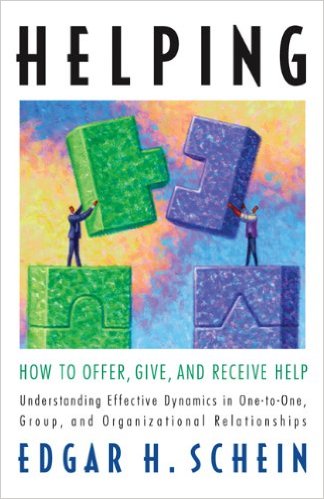
Helping- How to Offer, Give, and Receive HelpRon’s Short Review:

I consider Edgar Schein one of the fathers of Organizational Culture thinking.  Read anything by Edgar and you’ll be learning something worthwhile.  In this simple book however, he gives some astounding advice on helping people in the most impactful way from your employee to your spouse to your child.  His framework of the roles of client and helper will quickly explain so much about why attempting to help sometimes works and sometimes doesn’t.
Amazon-Buy-Buttonkindle-buy button

0 comments
0 FacebookTwitterEmail
BlogCulture

High Achievers

by Ron Potter April 15, 2016

photo-1447185891480-252d7554aa8bDo you know those individuals or see those teams that you would label “high achievers?”  My guess is that at least a few people and teams come to mind when I ask that question and I also believe that it’s likely that you fall into that category as well.  But do you know why you and they get labeled as high achievers.

One of the most interesting research studies that I came across several years ago indicated that it was about setting proper goals.  As it turns out, those individuals and teams that gain that desirable label set “publicly stated goals” they believe are about 75% achievable.  Now that may initially sound like a slam dunk but if you think that there is a 25% chance of failure, it seems like a reasonably high goal.

Publicly stated is a concept that must be explored for a minute.  And individual may say to their boss or team, I will accomplish this much in this amount of time.  That’s a publicly stated goal.  A boss may say to a direct report or the team, you will accomplish this much in this amount of time.  That’s also a publicly stated goal.  It makes no difference who the source of the goal setting is, once it has been made public, that’s the goal.

Back to our high achievers, once their publicly stated goal has been set, they then set out towards a level of achievement that feels like they have about a 50-50 chance of accomplishing.  This effort is taken on privately and they believe it will be accomplished by hard work, thinking smart, collaborating with their team mates.  In the end, results usually fall between that 75% chance and the private 50% target and once they do this on a consistent basis, other people begin to seen them and label them as high achievers.

But here’s the interesting part to me.  When a publicly stated goal gets set that the participants believe they have less than a 50-50 chance of accomplishing, that’s demotivating.  They give up.  They’ve lost hope.  Leaders need to be very careful in setting targets and goals for their team.  But, I’ve also seen teams set their own goals that fall into this category.  A team may have many initiatives and projects slated for the coming year.  If I ask the team to evaluate each of the initiatives, they’ll often fall in that 75-50% range.  But when I ask them to take all of the initiatives as a whole, what do they believe their chances to be?  They often fall below the 50-50 threshold.  Beware, even self-inflicted goals can fall outside the high achieving margins.

Hope

Hope is the real subject of this blog.  Research indicates that people who have a higher level of hope; sleep and exercise more, eat healthier foods, have fewer colds, less hypertension and diabetes, are more likely to survive cancer and have less depression.  Wow, if a pharmaceutical company could bottle that they’d have the biggest blockbuster drug of all time.

According to Anthony Scioli, a professor of psychology at Keene State College in Keene, N.H., hope is made up of four components:

Attachment is a sense of continued trust and connection to another person. This is why it takes a team.

Mastery, or empowerment, is a feeling of being strong and capable—and of having people you admire and people who validate your strengths. Development and Encouragement.

Survival has two features

A belief that you aren’t trapped in a bad situation and have a way out

An ability to hold on to positive thoughts and feelings even while processing something negative. Spirituality is a belief in something larger than yourself.

Be very careful about goal setting, both set by yourself and those set for you.  Your hope (and health) depend upon it.

0 comments
0 FacebookTwitterEmail
Short Book Reviews

The Coaching Habit

by Ron Potter March 31, 2016

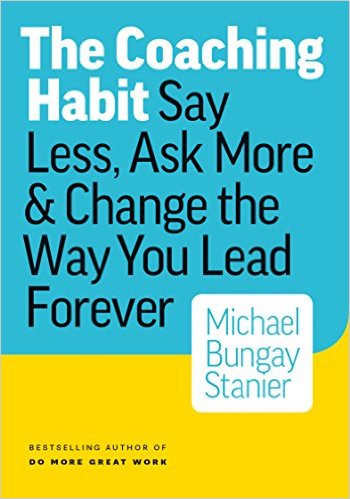
The Coaching HabitRon’s Short Review:

The subtitle says it all: Change the way you lead forever!  This quick, small book with seven great questions will change the way you lead.  Worth reading.

Amazon-Buy-Buttonkindle-buy button

0 comments
0 FacebookTwitterEmail
Short Book Reviews

How Adam Smith Can Change your Life

by Ron Potter March 31, 2016

How Adam Smith Can Change your LifeRon’s Short Review:

In this book Roberts demonstrates how Adam Smith (our first real economist) believed there were two main issues that drive a capitalistic system, to love and to be lovable. Amazing fit with the principles of leadership. Highly recommended.

Amazon-Buy-Buttonkindle-buy button

0 comments
0 FacebookTwitterEmail
BlogTeam

Aristotle Strikes Again

by Ron Potter March 24, 2016

photo-1431540015161-0bf868a2d407

As reported in the New York Times recently, Google embarked on an effort to build the perfect team. And as Google would be prone to do, they began to collect data in search of a pattern. As one participant stated, if anyone is good at recognizing patterns it’s Google. I don’t think there’s any argument about that.

However, after collecting data on hundreds of teams the first problem they ran into is that they couldn’t find a pattern. Or more accurately they found too many patterns which is just as much of a problem as finding none at all. So the search continued.

In the end they did find two very interesting correlations that seemed to be present on every good team. Not surprisingly those two elements were trust and respect. The two of them together formed an environment that has been labeled ‘psychological safety.’ If the team members feel psychologically safe because trust and respect has been built, the team will become a high performing team. (Tweet this)

Another pattern that began to emerge however was the productivity of these teams over multiple problems and projects. Teams that fell short on psychological safety didn’t seem to perform well at any kind of problem. Conversely, teams that exhibited psychological safety seemed to perform well no matter the nature of the problem. So the one element that people most often assume to be a needed ingredient, subject matter experts, didn’t seem to make any difference if there was no trust or respect.

Now, here’s the part I enjoyed. The internal name for the effort was called the Aristotle Project. One of the foundational structures that I always introduce to the teams I work with is Aristotle’s Levels of Happiness. The fourth and highest level describes the five things needed for great team work. In Aristotle’s word they include: Truth, Love, Purpose, Beauty and Unity. Every team needs a purpose but to accomplish that purpose they must be able to share and speak the truth, do it in a loving respectful way, in the most beautiful and elegant form possible and finally reaching a commitment of unity. Without those elements a psychologically safe environment doesn’t exist.

Although I’m glad they actually made the effort, had they simply started with what Aristotle knew they could have saved a lot of effort in figuring out what makes great teams.

0 comments
0 FacebookTwitterEmail
BlogTrust Me

The Rewards of You-First Leadership

by Ron Potter March 21, 2016

photo-1458242462449-7b6697b7caefAre you the kind of person who believes in the “fixed pie” view of the world? “There is only so much pie to go around, so if I don’t get mine first, there won’t be any left after everyone takes theirs.” Or do you believe in an expanding pie? “If we all do a great job, there will be more than enough to go around for all of us.” “You first.”

A “you-first” leadership style goes beyond humility. Humility says, “I’m no better than you; we are equally important.” A “you-first” attitude puts the other person out front.

Becoming a “you-first” leader may sound a bit like career suicide. Isn’t this just another way to get trampled while climbing the corporate ladder? While this can happen, there are actually great personal and professional rewards awaiting the person intent on taking care of the needs of others first. In the long run compassion, like humility, will be an asset that will propel you into being an admired leader, one whom others will follow. It will also provide you with a great deal of personal satisfaction and delight.

Having a “you-first” attitude will result in a new and better personal leadership paradigm. Instead of viewing employees and others as those in need of control and reshaping, you will move toward becoming a coach who provides people with honest feedback. You will create a safe environment in which people are free to share honestly about your programs, ideas, vision, and initiatives.

Another way to look at yourself and develop good habits is to examine whether you act as an old-style boss, or whether your actions (not intentions, but real actions) are directed toward empowering others.

Though simple in concept, being a leader who puts his or her people first is difficult to put into practice. It takes time, energy, commitment, patience, and a host of other self-sacrificing qualities. That’s the price. However, putting others first does work. This way of showing compassion will create an environment where top performance is possible. And you will experience great personal satisfaction as you watch people grow, learn, stretch, and become “you-first” leaders themselves.

My hope is that you will embark on this journey of putting others first. It may take a lifetime to get this “right,” but you will never regret it.

0 comments
0 FacebookTwitterEmail
Newer Posts
Older Posts
  • Facebook
  • Twitter
  • Linkedin
  • Rss
  • About This Site
  • About
    • Clients
  • Services
  • Resources
    • Trust Me
    • Short Book Reviews
  • Contact

About this Site | © 2024 Team Leadership Culture | platform by Apricot Services


Back To Top
Team Leadership Culture
  • Team
  • Leadership
  • Culture
  • Myers-Briggs
  • Trust Me
  • Short Book Reviews
 

Loading Comments...