
Team Leadership Culture
  • Team
  • Leadership
  • Culture
  • Myers-Briggs
  • Trust Me
  • Short Book Reviews
Top Posts
Obituary
REPOST: Four Functions, Three Rules
ROUNDUP: The Rise of AI
REPOST: Facing Adversity Series
ROUNDUP: Curiousity
ROUNDUP: Deep Work
REPOST: Character vs. Competence
REPOST: Opposite of Victim
REPOST: Listening With the Intent to Understand
REPOST: Performance vs Trust
  • About
  • Services
  • Resources
    • Trust Me
    • Short Book Reviews
  • Contact

Team Leadership Culture

  • Team
  • Leadership
  • Culture
  • Myers-Briggs
  • Trust Me
  • Short Book Reviews
Category:

Blog

BlogTrust Me

Leading a Team to a Great Cause

by Ron Potter August 10, 2015

Just having personal commitment to a great cause is not enough for a leader. The vision for “something beyond” must be successfully transferred to the entire group, whether it be a small staff, a department, an entire organization, a state, or a nation.
Image source: Erich Ferdinand, Creative Commons

Image source: Erich Ferdinand, Creative Commons

No Dark Boxes Please

People do not like to be put in boxes, and just as important, people do not like to be in the dark, outside the door where company values and vision are shaped. People are less energized and tend to drift when they are unsure of how they should be operating within an organization. People need to see their leaders’ commitment to values, and they want a part in helping to shape their organization’s core values and vision.

Many companies start with the right motivation. They talk about their values and they create high aspirations, but these same companies don’t really live by them.

The Australian Institute of Management and Hong Kong Management Association found that when leaders worked hard to develop consensus around shared values people were more positive. They also discovered that leaders who engage in dialogue around common values develop a stronger sense of personal effectiveness in their people than leaders who do not.

A Vacuum Will Suck the Air Out of You

Leaders who form corporate values, vision, and strategy in a vacuum or just in the executive suite lack the humility and commitment to move beyond themselves and include others who have solid ideas and opinions on what should define the company’s values. When leaders don’t talk about the company’s values and vision, people feel alienated and less energized.

John Kotter and James Heskett found that firms with a strong corporate culture and a foundation of shared values (values developed together with employees) significantly outperformed other firms in revenue, stock value, and profits. Who wouldn’t want those results?

When working to plant a vision and sense of a greater cause in a team, you must first ensure that values are understood and owned. This is accomplished initially by cataloging the personal values of individual team members. When the personal values of individuals are understood, team values begin to emerge.

Participation Leads to Loyalty

The following story illustrates the steps that one dynamic business leader took to win support for a great cause in his organization.

After agreeing with his executive team on a set of core values, the CEO of this large firm got so interested in employee input on team values that he asked a consulting team to go to six different locations and determine the values of the two hundred to three hundred employees at each site. In team settings, it is often easy to agree on the first five to seven values; however, discussions get very interesting as teams round out the full list of values that will govern their individual behavior and business practices. Using an audience response system, the consultants asked each table-grouping of employees to discuss and develop team values. Next, they worked on “room” values.

Upon completion of the six-city tour, the employee list of values was compared to the executive list. The two lists were surprisingly similar. After some final discussions and some tweaking of the list by the company’s leaders, a final list of values was issued.

Although the operative values came down from on high, every employee who had participated had a personal stake in and loyalty to the list. The company-wide discussion had galvanized the organization not just to a set of core values but to a gigantic something-greater goal pursued by the company’s CEO. This company desperately needed to reverse a quarter-century of declining market share for its products. The CEO used this exercise in determining values as well as a great amount of day-to-day, hands-on involvement with key personnel to successfully “sell” his organization on the dream of a huge reversal of the company’s fortunes. The entire company bought into the dream and now shared his passion for something greater.

As we’ve discussed in previous blogs, when everyone understands and shares a company’s values and vision, that team’s success follows.


1 comment
0 FacebookTwitterEmail
BlogTeam

More Answers on Questions

by Ron Potter August 6, 2015
Image source: Creativity103, Creative Commons

Image source: Creativity103, Creative Commons

In a blog post a few weeks ago, I mentioned I’ve been reading Warren Berger’s book A More Beautiful Question. Warren’s subtitle is “The power of inquiry to spark breakthrough ideas.” I cannot agree with him more. In fact, beyond innovative ideas, I believe this is a good approach to leadership in general.

In an HBR article written by Warren, he talks about how Tim Brown of IDEO uses the phrase “How might we.” Tim goes on to further the phrase like this:

  • How: assumes there are solutions
  • Might: Allows to think about what might and what might not work
  • We: Do it together. Build on each others ideas.

“We” is hard.

I really like this train of thought and the power of those words. But based on my experience through the years, of the three words, (How, Might, We) “We” may be the most difficult to pull off.

In fact, if I think of the teams that I’m currently working with, one in particular strikes me as having the ability to really put this phrase to work effectively. But, this team has been together for several years and has dedicated a great deal of their time into becoming an effective team. I believe they leverage the “We” part of this phrase into something powerful.

Trust is the Key

However, other teams that haven’t spent the time and energy to build a trusting foundation would have no opportunity to take advantage of the “We” in this statement. In fact those teams will have difficulty with the “Might” word. To take full advantage of the “Might,” you have to be open and willing to give credibility to the “might not” opportunities. Teams that have not build the required foundation of trust have no ability to legitimately explore both the “might” and the “might not.” They will tend to put down or write off the foolish, ridiculous, ill thought out “might nots” offered by other team members when the trust and respect has not been previously established.

Isn’t that interesting? This simple phrase “how might we” could lead to some of the most innovative breakthroughs in the industry. But if we haven’t taken the time, effort, or willingness to build a powerful team first, we can barely get past “how.”

Have you built a trusting team that can effortlessly get through “might” and powerfully move into “we?” If not, don’t try this at home. It won’t produce much in way of results.

Build strong teams; they’re the key to innovation.

0 comments
0 FacebookTwitterEmail
BlogTrust Me

Standing for Something Greater

by Ron Potter August 3, 2015

Commitment involves rising above our own needs and perspectives to grab hold of a greater good. As psychiatrist and author M. Scott Peck reminds us:

“People are searching for a deeper meaning in their lives.”

The leader who understands this and who responsibly presents a great cause to followers will turn a key in many hearts and unlock vast reservoirs of creativity and productivity.

Image source: orionpozo, Creative Commons

Image source: orionpozo, Creative Commons

Standing for something greater relates directly to the values and vision of an organization. A leader’s stance for something greater not only meets his or her personal desires, but it strongly resonates with peers, direct-reports, and others who have a stake in the organization.

History presents many examples of great men and women who understood the need to lift up allegiance to something great. These people stood their ground and had the controlled strength to remain focused on the ultimate objective.

Susan B. Anthony was such a person.

She found her “something-greater” cause, a passionate pursuit that would claim most of her attention and energy for the rest of her life. She worked tirelessly to keep the issue of suffrage before the public by speaking, petitioning Congress and state legislatures, and publishing newspapers.

In 1872 she put feet to her convictions by defying the existing laws and casting a vote in the presidential election. What a scene at shortly after 7 A.M. on Election Day when Susan and several other women marched to their polling place.

The three young men supervising registration initially refused to let Susan and the others register, and a heated argument ensued. After an hour of debate, a frustrated Susan finally got the inspectors to relent when she told them, “If you refuse us our rights as citizens, I will bring charges against you in Criminal Court and I will sue each of you personally for large, exemplary damages!” This threat turned the tide, and the women were grudgingly allowed to register.

On election day Susan was allowed to fill out the paper ballot and cast her vote for presidential candidate U.S. Grant. But that was not the end of the matter. Later Susan was arrested and charged for casting an illegal vote. Hoping to gain more public attention for the suffrage cause, she refused to post bail (her lawyer paid it out of his own pocket).

At her trial the arguments were long and passionate on both sides. After the prosecution and defense were heard, in a surprising turn of events, the judge told the jury it must return a guilty verdict.

Susan and her supporters were outraged and claimed the trial was a farce.

Later, after reviewing the case, the U.S. Supreme Court decided women still could not vote. Unwilling to abandon her great cause, Susan fought on faithfully until her death in 1906. It wasn’t until 1920, with the ratification of the nineteenth amendment to the U.S. Constitution, that women were finally given the right to vote in the United States.

The self-sacrifice of women like Susan B. Anthony and their vision for something greater than themselves led to significant cultural changes in the United States. Today, many take it for granted that women can attend college, work in any chosen profession, and have access to every right available to men. This was not the case in 1872.

People in organizations can be caught in a similar trap. They don’t see anything past Friday’s paycheck. The organization offers them little vision, few or inconsistent values, and little or no opportunity to achieve. Granted, not every situation embodies a culture-altering, transcendent cause like woman’s suffrage. But trusted leaders know how important a higher goal is for individual and organizational well-being.

They always point the way to something greater.

0 comments
0 FacebookTwitterEmail
BlogTeam

Don’t Listen to Anyone

by Ron Potter July 30, 2015
Image source: hobvias sudoneighm, Creative Commons

Image source: hobvias sudoneighm, Creative Commons

Someone the other day said the best advice he ever received was from his uncle who said, “Don’t listen to anyone!” Everyone chuckled and nodded in seeming agreement.

But if we don’t listen to anyone, then the only person we have left to listen to is ourselves…and we can’t be trusted!

Some revealing current brain research is helping us understand that our memories are

  • Not only wrong (often) but
  • They’re very powerful at convincing us that we think we’re more right than not.

One great survey has a college professor requiring his students to write down precisely everything they remember about the space shuttle explosion that had occurred the day before. Details such as

  • Where they were
  • Who they were with
  • What they felt
  • How people were reacting
  • Plus many other aspects and details of the previous twenty-four hours.

Ten years later, that professor tracked down many of those students and asked them to recall their memory of that day. Almost all of the memories were different from what the students had themselves written down.

But what was more amazing was that when the professor produced their written reports that disagreed with their memory, the students chose to reject the written reports and stick with their memory of “the truth.” And the farther the memory was from the written report, the stronger the rejection.

This is just one more reason why building a trusting team is so important. We can’t trust our own memory. All we can do is share our memory with the team and learn from their memories as well.

Build a trusting team. It’s our only hope to save us from ourselves.


0 comments
0 FacebookTwitterEmail
BlogLeadership

6 Steps to Establish a Vision

by Ron Potter July 27, 2015
Image source: Gage Skidmore, Creative Commons

Image source: Gage Skidmore, Creative Commons

Producing the Vision

In previous posts, we’ve been looking at how vision and values intersect to produce trusting and successful teams.
Abraham Lincoln united his followers with the vision of preserving the Union and abolishing slavery. Lincoln successfully gathered people to his vision, based on a strong set of personal values, and he accomplished an incredible feat. How was Lincoln able to do this? How is any leader able to set vision into reality? Consider the following suggestions:

1. Establish a clear direction.

Have you ever taught someone to drive a car? Both of us have been the “driver’s ed” teachers in our respective families. We have seen that as teens learn to drive, their first instinct is to watch the road directly in front of the car. This results in constant course correction—the front wheels turn sharply as the car swerves from roadside shoulder to the center divider, back and forth. When you approach a curve, the swerving worsens! But when young motorists learn to look as far down the road as possible while they drive, the car’s path straightens out. They are then able to negotiate corners, obstacles, and other dangers much more smoothly. A distant reference point makes the path straighter.

2. Focus your attention.

We often focus on too many methods and alternatives. Building vision means focusing our attention on that vision. Focus is necessary so that lower priorities do not steal time from the central vision. If the vision is deeply planted in your heart and mind, you can proactively, rather than reactively, respond to outside forces and issues.

3. Articulate values.

Leaders need to clearly express their inner values. On what values is a vision based? Team members need to know—and leaders need to share—this basic insight. People knew that Abraham Lincoln was a man of integrity, honesty, hard work, and fairness. These basic values supported his vision of a unified country.

4. Enlist others to help with implementation.

In his book Leading Change, John Kotter writes:

No one individual, even a monarch-like CEO, is ever able to develop the right vision, communicate it to large numbers of people, eliminate all the key obstacles, generate short-term wins, lead and manage dozens of change projects, and anchor new approaches deep in the organization’s culture. Weak committees are even worse. A strong guiding coalition is always needed—one with the right composition, level of trust, and shared objective. Building such a team is always an essential part of the early stages of any effort to restructure, reengineer, or retool a set of strategies [or, we may add, move a vision to reality].

5. Communicate, communicate, communicate.

Leaders who want to create and implement a vision need to start a fire in the belly of the people they lead. They need to use all available forms of communication to get the word out. It is akin to brand management. A company that wants to launch a new brand will use every form of communication available to get people to try the new products. The same is true with implementing a vision. Leaders cannot over-communicate what they see in the future.

6. Empower followers.

In order to implement a vision, leaders need to encourage clear buy-in from the people. This requires moving beyond communication to collaboration. The goal is to develop a supportive environment and bring along other people with differing talents and abilities. It also means that when the followers truly understand the vision, the leader needs to step aside and let them do the work to “produce” the vision. The leader needs to give them the authority and responsibility to do the work necessary in order to bring his or her vision to fruition.

I witnessed a meeting recently in which the leader brought together a cross-functional group to brainstorm some marketing campaign ideas for the company. People from different departments assembled and were led through a planned exercise on corporate marketing focus for the following year. The best idea came from a person far removed from the marketing department. She quite innocently blurted out just the right direction and even suggested a great theme for the entire campaign.

If the leaders of this organization had simply called together the “marketing types,” they would have missed a tremendous idea. Or if the leader had done the work alone and not opened it up to input from others, he might not have secured the necessary buy-in from the staff to implement the project. Studies show that when people understand the values and are part of the vision and decision-making process, they can better handle conflicting demands of work and higher levels of stress.

The leadership would also have missed the energy these employees gained from simply being included in a “vision” meeting. After the session several employees came to the leadership and thanked them for the opportunity to help. Those leaders have obviously climbed above the fog and know what they are committed to.

Your values are your platform. They continually communicate who you are and how you work and lead. Your vision sets the agenda. Whether you are part of a small department, a large organization, or a global giant, your vision will set the direction and purpose of the enterprise. You will need a strong sense of commitment and trust to set your vision in motion and deliver it.

0 comments
0 FacebookTwitterEmail
BlogTeam

The Subversive-ness of Trust

by Ron Potter July 23, 2015
Image source: Lauren Manning, Creative Commons

Image source: Lauren Manning, Creative Commons

Subversion: An attempt to transform the established social order and its structures of power, authority, and hierarchy.

Need for Trust

Every team I work with talks about the need for trust. Every leader I work with thinks about, understands and works at building trust. The foundation of every great corporate culture is founded on trust. The title of my book on a great leadership style is titled Trust Me. Not much good happens in teams, leadership, or cultures without trust. So why is it so difficult to build trust?

Trust is Subversive

Because trust is subversive! It wants to overthrow power, authority, and hierarchy. Our heart and mind want to say “No, I’ve spent years climbing that hierarchy by being right, knowing the truth, understanding the market, and getting things done just to reach this position of power and authority.” But trust wants to overthrow that. Trust wants you to admit:

  • I may not be right
  • My version of the truth may be flawed
  • That person may have a better idea
  • They may see a broader scope than me
  • We may need to give up many of our beliefs in order to make this work
  • Someone else may be a better lead for this project

Trust is subversive!

  • It breaks down barriers;
  • it levels the playing field;
  • it makes us open to naïve, inexperienced ideas;
  • it builds total respect for other people and forces us to be completely open to their ideas, experiences, and belief systems.

Trust is subversive! And it’s hard!

But it the Only Thing!

But it’s the only thing that really works if you want to build a great team or company in a fast-changing, innovative world. It’s the only think that will work in the future.

Try it. But plan on working hard if you want to get good at it.

1 comment
0 FacebookTwitterEmail
BlogLeadership

How’s Your Vision?

by Ron Potter July 20, 2015
Image source: noir imp, Creative Commons

Image source: noir imp, Creative Commons

In a previous blog post, I discussed the importance of values. Developing and committing to values is only part of the equation. Leaders also need to form a vision. These two ideas—values and vision—are inseparable. Vision flows from our values, and the values we live by form the platform for our vision. A leader’s strength of commitment determines how well he or she will stick to either one.

Developing Vision

It is important for a leader to be committed to a vision. When professors Warren Bennis and Burt Nanus studied the lives of ninety leaders, they found that “attention through vision” was one of their key leadership strategies. Vision is the ability to look beyond today, beyond the obstacles, beyond the majority opinion and gaze across the horizon of time and imagine greater things ahead. It is the ability to see what is not yet reality.

Vision includes foresight as well as insight. It requires a future orientation. Vision is a mental picture of what could be. It also suggests uniqueness, an implication that something special is going to happen.

How do you develop a vision? Writers James Kouzes and Barry Posner suggest the following:

You feel a strong inner sense of dissatisfaction with the way things are in your community, congregation or company and have an equally strong belief that things don’t have to be this way. Envisioning the future begins with a vague desire to do something that would challenge yourself and others. As the desire grows in intensity, so does your determination. The strength of this internal energy forces you to clarify what it is that you really want to do. You begin to get a sense of what you want the organization to look like, feel like, and be like when you and others have completed the journey.

When you have vision, it affects your attitude. You are more optimistic. You envision possibilities rather than probabilities.

Vision requires belief. It requires that you refuse to give in to temptation, doubt, or fear. It is a belief that sustains you through the difficult times. Vision requires commitment and endurance. It takes a willingness to be stretched.

Leaders with vision assume anything is possible. Without vision, we can see a difficulty in every opportunity. As we develop vision, we see an opportunity in every difficulty.

Vision asks leaders to hang tough. There is no magic formula that says, “Everything I see in the future will be fine and will fall into place.” Vision differentiates us from others; it sets us apart. It helps leaders attract and retain employees who share a common vision.

Vision is a statement of destination. Leaders need to occupy their time with thinking about how things could be and project themselves into that future. Vision is thinking ahead.

1 comment
0 FacebookTwitterEmail
BlogLeadership

Evolving Wisdom Institute

by Ron Potter July 16, 2015

4404847454_0c83c68cac_zAn article in the paper today mentioned a person and her credentials as a faculty member of the Evolving Wisdom Institute. Now, I know nothing about the person or the institute so this is not a comment on what they do or who they are. But the two words, “evolving institute” seem to be an oxymoron to me. Wisdom is considered one of the four cardinal virtues. Plato identified the four cardinal virtues in The Republic. Aristotle’s Rhetoric lists the virtues including wisdom. Thomas Aquinas is associated with wisdom and of course there is the entire book of Proverbs (from Latin: proverbium: a simple and concrete saying that expresses a truth based on common sense or the practical experience of humanity).

Wisdom doesn’t seem to evolve. Wisdom is solid and stable and is continually being re-discovered with every new study on human nature. It seems to me that every time a new business book or research study comes out (Starting with the granddaddy of them all: In Search of Excellence) they end up discovering the:

  • best leadership or
  • best business practices or
  • amazing brain research or
  • studies on human nature,

they always point back to what these ancient philosophers and writers have been telling us for thousands of years. Wisdom has been the same throughout the history of man. Don’t assume it is evolving and you need to figure out where it’s going next. Assume your evolving with new ideas and assumptions (many of them good.) But periodically you need re-ground yourself in and re-discover the ancient wisdom and four cardinal virtues. They will always make you a better leader.

0 comments
0 FacebookTwitterEmail
BlogFavoredTrust Me

Favored Are the Steadfast

by Ron Potter July 13, 2015

Commitment without reflection is fanaticism in action.
But reflection without commitment is the paralysis of all action.
—COACH JOHN MCKAY

Image Source: Ed Schipul, Creative Commons

Image Source: Ed Schipul, Creative Commons

William Wallace personified commitment.

The movie Braveheart tells the story of this hero-leader. He is the warrior-poet who became the liberator of Scotland in the early 1300s. As the film begins we see that Scotland has been under the iron fist of English monarchs for centuries. Wallace is the first to defy the English oppressors and emerges as the leader of an upstart rebellion. Eventually he and his followers stand up to their tyrants in a pivotal battle.

Wallace inspires his “army” as he shouts, “Sons of Scotland, you have come here to fight as free men, and free men you are!”
That battle is won. Later, though, Wallace is captured by the English and, after refusing to support the king, dies a terrible, torturous death. His last word? “FREEDOM!”

As a leader, Wallace understood the need to commit to personal core values, and he was able to inspire others to join him to the death for a noble, transcending vision: the cause of freedom.

This kind of response from others is what’s possible for leaders who understand the clarifying and galvanizing strength of commitment.

Commitment to Values

Knowing what you want is very important.

It’s surprising how many people, even those in leadership roles in large organizations, do not really know what they want. They are good people with good motives and good ideas. They work hard and get a lot done. But their values are inconsistent; their vision is not clear. They are wandering in fog.

To ultimately realize the power of commitment, you must be sure of where you are going and what attitudes and behavior will ensure that you arrive at your destination with your head held high.

Origins of Commitment

Commitment has its origins in clearly perceived values and vision.

Long ago, when I was growing up and forming my first understanding of life, I was mentored by a father who knew what kind of boy he wanted around the family house. Both men were committed to a simple core value: honesty.

Telling a lie was the worst thing one could do. Such an act brought great disappointment to my father and resulted in immediate sentencing and punishment. I quickly gained a deep appreciation for the wisdom of telling the truth. Looking back, I recognize that learning the value of honesty so young has served me well ever since. Being truthful has made me a better man and better leader. Such deep commitment to integrity began when my father focused my attention on honesty.

What my dad did also reveals how values and vision interrelate. My father had a vision for the kind of offspring he wanted to produce: a man of integrity. He knew that honesty would be a key foundation stone in building an individual with that type of character.

Commitment is not worth much if you have a distorted vision and rotten values. It is crucial, then, for leaders to develop the right core values. Right actions flow out of right values such as integrity, honesty, human dignity, service, excellence, growth, and evenhandedness. This set of values will determine much about the vision that leaders create and how they work with and through people—essentially how they lead and to what they are committed.

2 comments
0 FacebookTwitterEmail
BlogCulture

Balance, Balance, Balance

by Ron Potter July 9, 2015
Image source: Bob Miller, Creative Commons

Image source: Bob Miller, Creative Commons

I’ve never had much interest in Anthony Mahavorik, aka Tony Robbins. I don’t really have anything against the guy, it’s just that he never seemed real or genuine to me, but I do believe that he has been a keen observer of human nature to promote himself and his products so successfully. And one of his observations in particular intrigues me. His frame work of what he calls the six human needs. What’s interesting to me is that they are observed as pairs and when they get out of balance, they cause difficulties in people’s lives.

The six (in my words) are:

  • Certainly—uncertainty
  • Belonging—standing out
  • Learning—teaching

Tony’s headings are slightly different and may have more meaning to you if you were to look them up. But let’s take a look at the balancing act.

Certainty—Uncertainty

I’ve watched people who have a great need for certainty in their lives. They’ve protected that need by always making the safe choice, never venturing out, even trying to control every aspect of their lives. The final results aren’t pretty. But those who tip the scales too far the other way to the uncertainty side seem to make more foolish decisions that threaten theirs and their family’s security. They always seem to be looking for the next big thing and are certain it’s right around the corner and nobody else can see it.

Belong—Stand Out

The need to belong and stand out is an interesting one to me because it’s a key balancing act in team building. One of the books on my shelf is titled, The I In Team. The point of the book is that we need to help each person on the team contribute in their own way. To stand out for a moment and really be appreciated by the other team members and yet, in the long-run it needs to be all about the team. The individual’s outstanding contribution must be seen as helping the team achieve its overall goal and be appreciated as such.

Learning—Teaching

Learning and teaching seems to be a deep and important one to me but maybe there’s a particular set for each of us that carries more weight than the others.  But when people stop learning it seems to manifest itself in several ways. One seems to be the case of arrested development.

  • No more changing.
  • No more growing.
  • No willingness to try new things, develop new talents, or tackle new challenges.

The ultimate result of this arrested development is death: physical, spiritual, or mental.

Teaching is sometimes a little more subtle and you do meet those people who declare they are not good teachers and you often have to agree. But they’re usually thinking about the classroom type teaching we experienced in high school or college which is just about the worst form of teaching there is (see A Thomas Jefferson Education). Observe those same people as they sit with a grandchild or someone that’s eager to know about their life experience. They turn into wonderful teachers and the sense of accomplishment and contribution is overwhelming. We all need to teach to experience fulfillment.

Balance, balance, balance. If things seem to be out of whack in your life, try examining it through Anthony Mahavorick’s framework and see if you can restore the balance.

0 comments
0 FacebookTwitterEmail
BlogLeadership

How to Mentor

by Ron Potter July 6, 2015
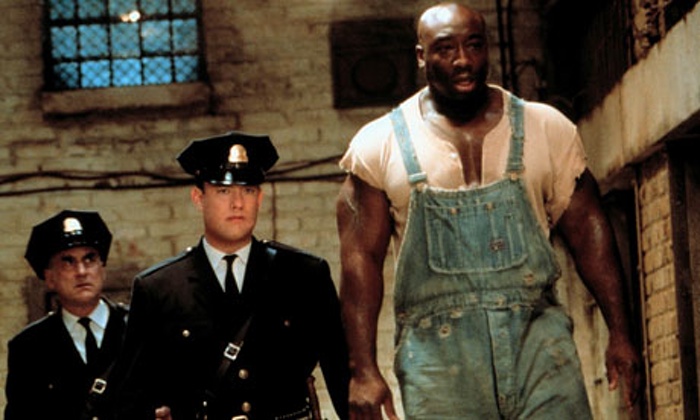
Image Source: Allstar/Cinetext/WARNER BROS Allstar/Cinetext/WARNER BROS/Allstar/Cinetext/WARNER BRO

Image Source: Allstar/Cinetext/WARNER BROS Allstar/Cinetext/WARNER BROS/Allstar/Cinetext/WARNER BRO

The opportunity to mentor exists in every setting where people need to draw on one another’s talents to accomplish a goal.

Frank Darabont, director of The Green Mile, reflected on Tom Hanks’s selfless commitment to helping rising actor Michael Duncan achieve his best:

Fifteen, twenty years from now, what will I remember [about filming The Green Mile]? There was one thing—and I’ll never forget this: When [Tom] Hanks was playing a scene with Michael Duncan…

As we’re shooting, [the camera] is on Michael first, and I’m realizing that I’m getting distracted by Hanks. Hanks is delivering an Academy Award–winning performance, off-camera, for Michael Duncan—to give him every possible thing he needs or can use to deliver the best possible performance.

He wanted Michael to do so well. He wanted him to look so good. I’ll never forget that.

In 1999, Michael Clarke Duncan was nominated for an Academy Award in the Best Actor in a Supporting Role category. Tom Hanks, however, was not nominated.

Starting the Process

Here, then, are some thoughts on how to begin mentoring others:

First, the best mentoring plans focus primarily on character development and then on skills. As Jim Collins reports, “The good-to-great companies placed greater weight on character attributes than on specific educational background, practical skills, specialized knowledge, or work experience.”

Second, we see many mentoring attempts fail because the participants do not sit down together to discuss and set boundaries and expectations. The process flows much better if the participants take time to understand each other’s goals, needs, and approaches than if they take a laid-back, let’s-get-together approach.

Any mentoring relationship should start with a firm foundation of mutual understanding about goals and expectations. A mentoring plan should be constructed by both individuals, even if it calls for spontaneity in the approach. Nothing is more powerful than motive and heart. Both of the people involved need to fully understand what is driving each of them to want this deeper experience of growth and commitment.

Need a Mentor Yourself?

Research has shown that leaders at all levels need mentoring. Even though you may be mentoring others successfully, you need a mentor too.

There are two issues that we want you to be especially cognizant of:

  • Vulnerability. You must open yourself up to your mentor by being “woundable,” teachable, and receptive to criticism. The essence of vulnerability is a lack of pride. You cannot be proud and vulnerable at the same time. It takes a focus on humility to be vulnerable.
  • Accountability. Commit yourself wholeheartedly to your mentor (or protégé) and put some teeth in the relationship by establishing goals and expected behavior. Accountability should include:
  • Being willing to explain one’s actions.
  • Being open, unguarded, and nondefensive about one’s motives.
  • Answering for one’s life.
  • Supplying the reasons why.

Like vulnerability, accountability cannot exist alongside pride. Pride must take a backseat to a person’s need to know how she or he is doing and to be held accountable by someone who is trusted. People who are accountable are humble enough to allow people to come close and support them, and, when they drift off course, they welcome the act of restoration without the pride that says, “I don’t need anyone.”

0 comments
0 FacebookTwitterEmail
BlogLeadership

Change and Innovation are Difficult

by Ron Potter July 2, 2015
Image source: Creative Commons HQ, Creative Commons

Image source: Creative Commons HQ, Creative Commons

Almost all of my clients (all successful business leaders) are in their mid-forties to mid-sixties. That means they were born between 1950 and 1970 and developed their approach to leadership at their first jobs in the 1970’s and 1980’s.

Think about what was making our businesses strong and prosperous during that era and later:

  • Constantly increasing productivity
  • Getting as lean as possible
  • Creating ever-increasing efficiencies
  • Precision in operational systems
  • World Changing logistics

Change and innovation in this environment is risky. Corporate boards and investors don’t have much stomach for anything beyond the list above. And, by the way, get better at each of them every quarter! This doesn’t leave much room for trying something new, bringing forth a new idea or innovative approach or certainly launching a disruptive product that is going to be self-disruptive.

In a meeting the other day, one VP said, “I think we can reduce the number of jobs in one area and then use the saved headcount to put toward some change initiatives.” The second VP immediately responded with “I’m pretty sure if we found out how to reduce headcount, we would simply make the reduction  in order to get the cost savings. We don’t have any other choice.”

He’s probably right. Reducing the headcount this quarter and for the next three quarters will be highly rewarding but I’ll guarantee you that someone, somewhere is launching a disruptive idea today that has you in the crosshairs four quarters from now.

Change and innovation is hard, really. Lack of change and innovation is deadly, really.

What restraints have you seen that makes it difficult to change and innovate?

0 comments
0 FacebookTwitterEmail
Newer Posts
Older Posts
  • Facebook
  • Twitter
  • Linkedin
  • Rss
  • About This Site
  • About
    • Clients
  • Services
  • Resources
    • Trust Me
    • Short Book Reviews
  • Contact

About this Site | © 2024 Team Leadership Culture | platform by Apricot Services


Back To Top
Team Leadership Culture
  • Team
  • Leadership
  • Culture
  • Myers-Briggs
  • Trust Me
  • Short Book Reviews