 Ron’s Short Review: How our brain actually works and how that impacts our image of management and leadership.




Ron’s Short Review: How our brain actually works and how that impacts our image of management and leadership.

Image Source: David Goehring, Creative Commons
The Sporting News recently honored UCLA Legend, John Wooden as the greatest coach of all time. Coach Wooden ended his acceptance speech with these words:
“Love is the most important thing in the world.”
While Coach Wooden did indeed love his players, he is known best for building some of the greatest sports team in history. So, what’s love got to do with it? Love is, in fact, the foundation and essential element for building great teams.
Unfortunately, our English language shortchanges the word love. In Greek, there are at least three words that get translated into our word love. Two of these Greek words signify the emotional feelings and affection we might feel for a lover or a brother. However, the third word is an action verb. It’s not about what we feel, it’s about what we do. This is the type of love that coach Wooden was talking about.
Wayne Hastings and I identify seven main elements of this action-oriented love in our new book, Team Trust. They include:
Patience
Kindness
Lack of envy
Humility
Is not rude
Does not anger easily
Keeps no records of wrong
At the heart of the list is humility. This is the same element that begins the list of Trust Me, Developing a Leadership Style That People Will Follow. You can hear it in the words Coach Wooden spoke during his acceptance speech, when he said:
“No one can really honestly be the very best, no one.”
Coach went on to give the glory to his players, saying:
“[The players] are the ones that make the coaches.”
Humble to the very end. Coach Wooden is a very wise 98 years old.
Without humility, none of the other elements of Trust Me or Team Trust have a chance of blossoming. Pride tends to undermine all of the seven attributes listed above.
How can we develop patience when we’re always right?
Kindness, when mixed with pride, comes across as demeaning or patronizing.
Pride is the root of envy and rudeness.
Proud people feel anger when things don’t go their way.
Proud people tend to nurse grudges and keep a record of perceived wrongs.
If you seek greatness, start by taking a humble attitude. You’ll be amazed at how much people will honor you.

Image Source: Christian Bucad, Creative Commons
Continuing the discussion – click here for Knowing the Answer Can Be Very Costly Part 1.
If it’s costly for a manger to stop listening because he “knows” the answer, imagine the risk involved when this same attitude pervades a company’s culture. I can give you two examples of this problem – one taken from my own experience and one you’re all familiar with.
A few years ago, I worked closely with a high-technology company with clients around the world. The leadership team understood it was vital to serve their customers and they devised their own customer service rating system.
Every month, the CEO and the leadership team received a report that showed the customer service scores for each of their clients. They were proud of the fact that their biggest client consistently received the highest scores in their system.
But one day, I was called into an emergency meeting and told that this No. 1 customer had terminated its contract. The leadership team and the CEO were stunned. They were sitting around the table saying, “How could they have fired us? We always made sure they received the highest customer service rating of any client!”
The answer back from the customer was, “You didn’t listen to what we were asking of you.” The customer service ratings measured those factors my client deemed important, but it overlooked other factors the customer valued. The team that collected the ratings was so enamored with their “answer” that when the customer was asking for something different, they didn’t hear it.
“The outcomes are never in doubt”
In the aftermath of General Motors’ bankruptcy, a lot of the blame rests with GM’s failure to listen to its customers or employees. Rob Kleinbaum, who spent 24 years with the company as an employee and a consultant, described meetings at GM as “exercises in procrastination, rubber stamping, or idea killing, without anything that would pass for genuine debate or dialogue.” Those are classic symptoms of a leadership culture that “knows” the answer.
The same problem had been going on for a long time. Twenty-one years ago, one of GM’s top executives, Elmer Johnson, wrote a cautionary memo to the executive committee. Johnson said that the company’s “most serious problems pertain to organization and culture.” Old assumptions about the stability of the auto market and the advantage of massive scale were no longer valid, but the entrenched culture could not be challenged.
Johnson complained that “the meetings of our many committees and policy groups have become little more than time-consuming formalities. The outcomes are almost never in doubt. The important decisions have almost always been reached behind the scenes before the time of the meeting. Accordingly, there is a dearth of discussion and almost never anything amounting to lively discussion. … Our culture discourages open, frank debate among GM executives in the pursuit of problem resolution. …. As one case in point, our poor quality and reliability in recent years was surely attributable in large part to GM’s historic resistance to creating an environment in which problem identification and correction is consistently applauded and encouraged by management.”
Companies and leaders who know the answer don’t tend to listen well, so they turn a deaf ear to problems that may eventually overwhelm them. Not listening to others is a form of pride and arrogance. The antidote is humility.
Being a humble leader doesn’t mean you have to be weak or self-effacing. It means you have to be grounded in the truth, and smart enough to realize that the truth needs to be discovered, not decreed.


Image Source: Michael Caven, Creative Commons
Sometime, in my consulting practice, a company will ask me to fix a flaw that’s preventing a leader from succeeding. One example was a young manager, who was very smart but lacking in humility. His company liked him a lot and saw his potential to do very well, if it weren’t for his arrogance. He stumbled over it constantly in team meetings.
I talked with him about how to listen better and deliberate more effectively. In response he asked a very revealing question: “What am I supposed to do when I already know the answer?”
This particular manager worked in a technical unit, and highly technical people can often feel this way – that they already know the answer although I see it happen in every function and in particular with those who consider themselves the topical “expert.” Consequently, they don’t listen with the intent to understand; they listen with the intent to respond and rebut. Even if the answer they “know” is correct, which happens occasionally, their lack of humility and listening abilities alienates the rest of the team.
More often, poor listeners don’t have the answer. If you don’t listen well, you can’t understand the culture of the organization you’re serving or the needs of your customers. That’s why we often see technical people offering technical solutions that those of us who aren’t technical can’t figure out – and then they get frustrated with us because we’re “idiots” (think Microsoft Vista).
One of the formulas I use when consulting is:
Effectiveness of decision = Quality of decision X Acceptance of decision
It doesn’t matter if your answer is technically correct or even elegant. If nobody understands, accepts and gets behind it, it’s not a good answer.
My reply to the manager’s question was that the answer lies in the truth, and you need to discover the truth through the team process. You need to accept the fact that there might be a different answer that’s just as viable. It may not be the most technically precise answer, but it’s still a much better answer because other people will understand it and accept it.
You can come in with a strong opinion – in fact, we want you to do that – but you also need a collaborative attitude. You need to be thinking, “With my strong opinion and other strong opinions, we’ll discover the answer through good deliberation.” That’s the humble and prudent approach, and it’s much more effective than thinking you already have the answer.
In Part 2, I’ll discuss what happens when the entire company already “knows” the answer.

 Ron’s Short Review: Encouraging the Introverted leader.

Image Source: Carol Schaffer, Creative Commons
Are you bored? I know that if I were to ask any of my clients (or even myself) that question the answer would certainly be, “Are you kidding? I’ve never been busier in my life!”
But, the opposite of bored is not busy, the opposite of bored is purposeful and focused. We can be very busy but without purpose and focus. That’s boring.
We mentioned the seven deadly sins a few blogs ago. Isn’t it interesting that one of the seven deadly sins is sloth. What’s sloth? Most of us think of it as lazy. It’s actually a close match to the definition of bored. Being bored (busy or otherwise) is being slothful. It’s a sin. It does you and no one else any good.
Years ago when I was in the engineering/construction business, there was a person on one of our job sites who would head for the equipment shed every morning, pick up a bucket and a mop and head off in a particular direction with a very purposeful stride. And then an hour or so later, we would see him heading in another direction, bucket in hand, mop over his shoulder with that same purposeful stride. However, after a few days of observation we began to understand that he wasn’t heading any place in particular. He had just figured out a cleaver way of avoiding any work other than walking around. We fired him. He was being slothful.
Most bored activity is not that visible. People start early with a steady pace and go home at night having been active all day. Unfortunately, they are also going home bored. It’s the job of leadership to help people connect their daily activity with the overall purpose and focus of the company (division or function). One of the signs of a great corporate culture is that people understand the connection between their personal goals and objectives with the vision, mission and strategic direction of their work group.
Have you provided purpose and focus for each individual on the team you’re leading?
Have you figured out your own purpose and focus?
Or are you just busily bored?
Thanks to Pastor Bob Lynn for his thoughts and teachings on the concept of Boredom.

Image Source: Dennis Jarvis, Creative Commons
When I met with Wayne Hastings for the first time to discuss the writing of our book, Trust Me: developing a leadership style people will follow
Jim is now publishing a new book titled How The Mighty Fall: And Why Some Companies Never Give In
What’s the number one sign? Hubris!
Hubris (/hju:bris/)
Excessive pride or self-confidence; arrogance
Overbearing pride or presumption; arrogance
Wikipedia says:
“It was also considered the greatest sin of the ancient Greek world because it was not only proof of excessive pride, but also resulted in violent acts by or to those involved.”
Humility: the first principle in great leadership
Hubris: the first step of the fall from glory
Are you a great listener?
Do you accept the brutal reality of your situation?
Do you have great faith in people?
Do you see it as your job to help everybody perform at their best or be in a place where they can be successful?
Or, do you believe you’re successful because you (and your team) have figured out the right way to do things. You’re smart. You know what you’re doing. Hubris?
The links in the post above are “affiliate links.” This means if you click on the link and purchase the item, I will receive an affiliate commission. Regardless, I only recommend products or services I use personally and believe will add value to my readers. I am disclosing this in accordance with the FTC’s 16 CFR, Part 255: “Guides Concerning the Use of Endorsements and Testimonials in Advertising.”

 Most of us know about the seven deadly sins:
Lust
Gluttony
Greed
Sloth
Wrath
Envy
Pride
And I must admit that while I’m not guilty of all of the sins all of the time, I have been guilty of all of the sins some of the time. But, are you familiar with the four Cardinal Virtues?
Prudence
Justice
Restraint
Courage
I’ve been spending some time looking at the four and in particular the first of the virtues, Prudence. One of the intriguing definitions of Prudence is:
“The perfected ability to make right decisions.”
What better descriptor of corporate leadership could be found? The perfected ability to make right decisions!
As I began to explore the concept for prudence further, it presented itself as a process. Prudence breaks down into the functions of:
Deliberate
Decide
Do
These are my words, not the words of the great scholars that describe the process, but what a great process to reach right decisions.
Give it good deliberation
Use a great and well defined decision making process
Go out and execute
Since 2000, one of the “deadly sins” that I’ve seen become more and more prevalent in corporate cultures is the attitude of quick deciding instead of quick learning leading to good decisions. With a quick deciding attitude, teams will ignore, steam roll, belittle or dismiss any behavior that appears to be or feels like it is slowing down the deciding process. In other words, a quick deciding mentality approach is anti-deliberation. It just doesn’t lead to prudent or wise decisions.
What we don’t have time for in our corporations today is non-prudent decisions. We must regain the technique of good deliberation to make great decisions quickly.
Let me know what you think. What is preventing our corporate leadership teams from spending the right amount of time deliberating so that we can then make good decisions? What are the roadblocks?

A back issue of BusinessWeek (May 11, 2009) reviews a book by soon-to-be Regulatory czar Cass Sunstein titled, Going to Extremes: How Like Minds Unite and Divide
“What jumps out from the book is Sunstein’s mistrust of human judgment in everything from politics to business, especially when people band together.”
They go on to say:
“There’s a whiff of elitism in Sunstein’s apparent call for enlightened experts (like himself) to gently correct the cockeyed masses.”
However, they say:
“Sunstein also believes wrongheaded views can be kept in check. Part of the answer is putting people with humility, curiosity, and openness in power.”
I don’t have any faith in the elitism view that a few very smart people with what Sunstein calls “Liberal paternalism” are the answer to anything. I meet too many smart, hardworking, dedicated people every day who go to work with great values and the intent to make things better. But, isn’t it interesting that even the “Liberal Parent” says I wouldn’t have to step in and “fix” things if people would simply put leaders in place who have humility as their number one trait.
Jim Collins in his book Good to Great: Why Some Companies Make the Leap…And Others Don’t
In my book, Trust Me: Developing a Leadership Style People Will Follow
Check your ego at the door every morning. It will make you a better leader.
The links in the post above are “affiliate links.” This means if you click on the link and purchase the item, I will receive an affiliate commission. Regardless, I only recommend products or services I use personally and believe will add value to my readers. I am disclosing this in accordance with the FTC’s 16 CFR, Part 255: “Guides Concerning the Use of Endorsements and Testimonials in Advertising.”
 Ron’s Short Review: The ideas of competing values helps clarify many corporate issues.

 Ron’s Short Review: Speaking to your audience.

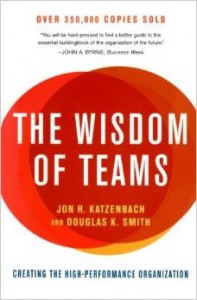 Ron’s Short Review: Teams greatly increase our ability to solve problems.