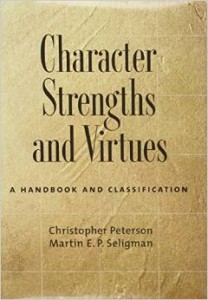
 Ron’s Short Review: Classic book on Character and Virtue, the real issues behind great leadership.




Ron’s Short Review: Classic book on Character and Virtue, the real issues behind great leadership.

 Ron’s Short Review: I’m not sure we’ll see another Lincoln but building a team out of rivals is very powerful and we’re all trying to build teams out of people with very diverse points of view. Or at least we should be.
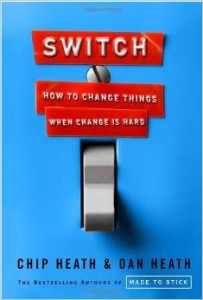 Ron’s Short Review: The Heath brothers write great books on story telling and how it can move us and our colleagues, clients, or customers.
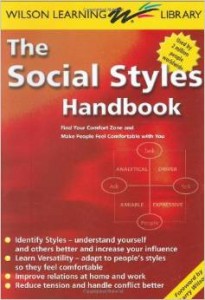 Ron’s Short Review: Wilson Learning has a great framework for understanding people and how to apply it to the work place. Like our Myers-Briggs types, we all have social styles as well.
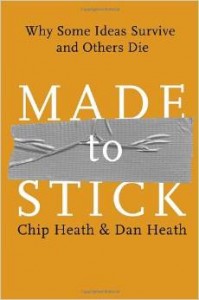 Ron’s Short Review: Very powerful book on telling stories that people remember. Don’t let the word “stories” fool you. We’re selling our ideas and positions all the time and we want them to “stick” with others.

Image Source: Victor Nuno, Creative Commons
How important are mentors?
I’ve experienced a few true mentors through my life, the first being my dad and mom. Dad seems to still influence me today, over 35 years after his death.
Then there was my high school physics teacher. He always seemed to demand more from me and I didn’t fully understand until years later what a great gift that had been. I returned to see him after I had graduated from college and he had retired just to thank him for mentoring me. We had a great conversation.
My list would also have to include Bill Bottum. The opening chapter of my book Trust Me, tells the story of Bill and how he set the foundation for my belief system about work and how that has become the basis for my consulting career.
But, there has been one other couple who have truly been life-long mentors to me and also my wife. Keith and Gladys (affectionately known as Rusty) Hunt. From them has come discipleship, training, encouragement, correction, love, care, hospitality, rescue and the list goes on and on.
From this list you might assume that Keith and Rusty have been in our lives nearly every day along the way. They moved into a home down the road from me when I was a teenager. Even though they had careers that included a great deal of travel they always seemed to have the time to invite the local teenagers into their home for stimulating conversations and thought provoking Bible study. Later, after they had moved I ended up at university in the same town their relocation had taken them. Once again they were influencing my life in many positive ways. Later in life when my family needed to move across country, they were there with an extra room for me to bunk in and the advice and encouragement for a new stage of my life. Through their moves and ours, there were always changes. Sometimes there were great geographical distances between us, sometimes we lived in the same town. But they were always close and there was always the discipleship, training, encouraging…. well, you get the picture.
Just the other day one of those high school teenage friends tracked us down to ask if we had Keith and Rusty’s number. He was just thinking about them and wanted to call or visit. Their mentor-ship touched many.
We lost Rusty recently. After a long battle with her heart she went to be with the Lord. The loss is deep. And even though I know her influence will continue through her memories and her books this world won’t quite be the same without Rusty.
Who are you mentoring? When I’ve thought about those who have mentored me, I often feel selfish that I fully accept, appreciate and enjoy the fact that they have cared enough for me to provide the role of a mentor and yet wonder if I have given anything near that effort to others.
Who are you mentoring? Beyond that child and grandchild or even that employee where we are placed in natural mentoring roles, who are you mentoring? Keith and Rusty have never been our parents or our boss (well, I did mow their lawn during those teenage years) but they have definitely been our mentors.
Maybe it’s that teenager down the street. Maybe it’s that mail room clerk. Maybe it’s the young couple at church. Maybe…. Don’t let the list always be a list of “maybes”. Think about whom you could be mentoring and come along side that person.
And yet that leaves us with the bigger question of “Do I feel worthy to mentor another?” Good question and one that we should ponder and work through. However, I’ll suggest that if you’re just willing to truly listen to another person, you’re on your way to being a good mentor.
Mentors are important. Be one.

 Ron’s Short Review: Collaboration is the gold of the future.

Image Source: Rae Allen, Creative Commons
Over the last twenty years of business consulting I’ve collected a nice little Myers-Briggs Type Indicator (MBTI) data base of a couple of thousand business leaders. I’ve also been fortunate to compare my data base with a huge data base of business leaders collected by the Center for Creative Leadership and our percentages were nearly an identical match. Although there are a couple of outstanding features in the data, one feature in particular stands out above all others.
The 3rd of the four functions is called your “deciding” function. People fall into two categories: Thinking and Feeling. Thinking types tend to make decisions logically and feeling types tend to use values and knowing how people will react to make their decisions. In our data bases of business leaders, 84% rate themselves as T’s and 16% are identified as F’s. This means that the vast majority of business leaders believe they make decisions on a logical basis.
But, let’s examine the science. One new book about recent brain mapping and neuroscience, Management Rewired: Why Feedback Doesn’t Work and Other Surprising Lessons from the Latest Brain Science
“But perhaps the most surprising discovery has come from mapping the path information travels from our sense organs to our awareness of the world we live in. Not only are the perceptual areas of the brain involved, so are the areas responsible for our memories, our feelings, our beliefs, and our aspirations. Our minds aren’t objectively recording our experience of the world; they’re creating it, and that creation is influenced by everything else going on in the brain. Each of us lives in a mental world of our own making. The world we know is only what we think it to be, and we can’t assume other people will think the same way we do. Reasoning has nothing to do with the way we solve problems, make decisions, and plan for the future. At best, logic is just a way to justify conclusions we have already reached unconsciously.”
Wow! None of us actually has a grasp on reality. We’re each making up our own picture and story as we go along. We may be making logical decisions but they’re based on our personally developed and perceived logic. We know from our marketing guru’s that people make purchases based on emotions and then justify the purchase with logic (Once, while admiring a Chevy Corvette my wife said “I see no logical reason to buy a Corvette.” So, what does logic have to do with it ;-).
I’m afraid we make decisions the same way. We make them based on emotions (memories, feelings, beliefs, aspirations, etc) and then seem to justify the decision based on some sort of logic. This finding has a great deal of impact on teamwork, leadership and corporate cultures (TLC) that we’ll explore in the future.

A few weeks ago IBM’s Institute for Business Value released the results of a survey they had conducted with 1,500 CEO’s across 60 nations and 30 industries. They asked these CEO’s from both the corporate and public sector to identify the one leadership competency they valued above all others. Here is the rank order of the results:
•  Creativity
• Integrity
• Global Thinking
• Influence
• Openness
• Dedication
• Focus on sustainability
• Humility
• Fairness
Within days a colleague (thanks Chris) sent me an email asking what I thought about the ranking (knowing my belief that humility should carry a very high ranking). My reaction was that you can’t enjoy the top seven without first having humility.
It’s likely that their understanding of humility is probably skewed. From our book “Trust Me”, Wayne and I make these points about humility:
• Being humble and teachable means learning to trust others and their opinions and instincts.
• It means listening with the intent of learning instead of simply responding.
• It means seeking personal development from every situation, experience (both good and bad), and transaction.
I don’t think it takes a lot of imagination to see how humility is the basic foundation for achieving nearly every one of the competencies listed higher on the list.
Humility still rules.
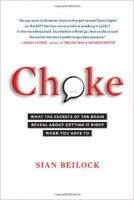
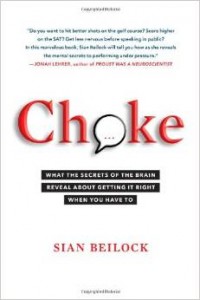 Ron’s Short Review: Avoiding the pitfall of choking. It happens and it’s real.
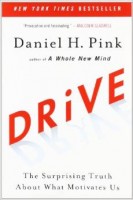
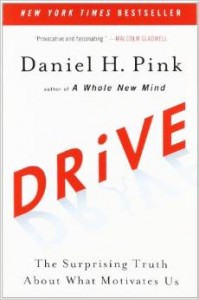 Ron’s Short Review: I’ve been a big fan of Daniel Pink’s work. This one is about true motivation but I recommend all of his books.

Image Source: Biking Nikon SFO, Creative Commons
It takes as much work to build great teams as it does to build or become a great leader.
I believe that if you were to ask my family (wife and two daughters) they would tell you that I’m the most patient man in the world…. until I’m not! I seem to have a great deal of patience for most situations but when I run out of patience I don’t come down gradually. Nor do I stair step down one level at a time. My patience ends like a rock being kicked off a 1,000 foot cliff that plummets with the acceleration of gravity until it smashes on the floor of the canyon. My girls actually developed into an early warning system for me. When I would see them quickly jump up and bolt from the room in unison, I began to understand that my patience was approaching the cliff and they had picked up the warning signs.
One of my clients currently has a similar trait. He has a great deal of desire and compassion to grow and develop his team and constantly pushes them to become better then they were the year before. He will start a project that is going to challenge and grow them over time and then gives them enough time to accomplish the task. But, if he is not seeing sufficient progress as critical deadlines approach, his rock will eventually get kicked over the cliff and then he jumps in with great fury and gets the task completed.
Why do we reach this cliff where things go bad in a hurry? A couple of reasons are very obvious to me.
1. Leaders mistakenly assume that members of their team will “see it” (understand all that needs to be figured out in order for the growth spurt to take place) or will figure it out along the way in their effort to complete the task or project
2. A basic misunderstanding of good project management
By definition, a growth experience can’t necessarily be figured out ahead of time. It’s a new experience. You’re figuring out something that you’ve never seen or experienced before. You’ll either not see it at all or if you do you may not execute in a very efficient or effective manner. Leaders often forget their own learning curve experiences. They made these same mistakes years ago or even if it was only recently that they figured it out, they now only remember the end state of the new knowledge, not what they went through to learn the new behavior or understanding.
Leaders must work harder then they expect to help people understand the new expectations, learn the processes it will take to get there, and have a vision of the new normal. Develop patience for the sake of your teams.