
Team Leadership Culture
  • Team
  • Leadership
  • Culture
  • Myers-Briggs
  • Trust Me
  • Short Book Reviews
Top Posts
Obituary
REPOST: Four Functions, Three Rules
ROUNDUP: The Rise of AI
REPOST: Facing Adversity Series
ROUNDUP: Curiousity
ROUNDUP: Deep Work
REPOST: Character vs. Competence
REPOST: Opposite of Victim
REPOST: Listening With the Intent to Understand
REPOST: Performance vs Trust
  • About
  • Services
  • Resources
    • Trust Me
    • Short Book Reviews
  • Contact

Team Leadership Culture

  • Team
  • Leadership
  • Culture
  • Myers-Briggs
  • Trust Me
  • Short Book Reviews
Author

Ron Potter

Ron Potter

BlogLeadership

Letting Go of Bad Attitudes – Part I

by Ron Potter May 4, 2015
Photo credit: Graham Evans, Creative Commons

Photo credit: Graham Evans, Creative Commons

Many leaders would rather get and keep a grip than lose their grip. But if you want to build trust with others, you need to have the ability to let go. The discussion here is not about delegation. It concerns letting go of personal qualities that build walls not only between you and your team but also within yourself.

Letting Go of Bad Attitudes

If you want to grab hold of the eight energizing, productive principles we advocate in our book Trust Me, you must first let go of some bad attitudes.

Pride

Pride is pure selfishness. A proud leader’s mind is closed to new truths; he or she is unteachable. It causes inflexibility and resists change.
Pride is a focus on us rather than on the development of other people. Pride causes a destructive competition between our team members and us, and between their ideas and ours. It forces us to fight for our ideas and our ways just for the sake of winning the argument, not for the development of the organization or other people.
The opposite of pride is humility. Humility is self-effacement rather than self-advertisement. It focuses our attention away from ourselves and onto other people and their development. It involves being flexible enough to listen and be taught by others. It means allowing other people to generate new ideas and supporting those ideas even if they fail. It is realizing that the whole team, organization, or business unit is not dependent solely on you.
Pride is a wall; humility is a gate.

A Judgmental Attitude

Another bad attitude leaders must rid themselves of is a judgmental attitude toward others—
Judgmental leaders are negative and critical. Inside they may be angry or suffering from insecurity and low self-esteem. The result of this kind of attitude is a group of employees and team members who are afraid to act.
The judgmental leader needs to learn to become a developer, a builder. To fulfill this role, the leader needs to behave nonjudgmentally. In order to do that, he or she must respect, understand, accept, believe, and hope in subordinates and all team members.

Uncontrolled Will

An uncontrolled will is a negative force that is rooted in a deep stubbornness and an attachment to personal (and immediate) gratification, mostly at the cost of the development of others. Leaders with uncontrolled wills avoid committing to common values or ideals beyond their own. Rather than a stubborn will, we need a focused will that centers on development, goals, and productivity.
Keeping our egos in check and our wills under control enables us to function much better as teammates and leaders.

Allowing Ourselves to Stagnate

Frustration, burnout, and self-will can often cause stagnation. Likewise, when we feel overlooked or feel that our work doesn’t quite measure up, we have a tendency to sit back and let someone else take over. Stagnation also develops from not being asked to contribute. When leaders take control of innovation, followers can simply give up because their input is not wanted or appreciated.
Common traits that lead to stagnation are perfectionism or mistaking activity for achievement. Leaders who are perfectionistic or are more focused on activity than achievement create a stagnant work force. People give up trying to achieve anything meaningful because the perfectionistic leader never appreciates their achievements but rather picks apart everything they do.
Rather than allowing themselves to stagnate, leaders need to serve and teach boldly and provide vision, goals, and assistance to subordinates and team members.
4 comments
0 FacebookTwitterEmail
Short Book Reviews

Pursuing God’s Will Together

by Ron Potter May 2, 2015

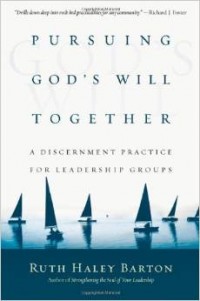
Pursuing God's Will TogetherRon’s Short Review: While this book was written for the Chrisian audience, the principles apply directly to any Leadership Team.  You’ll have no trouble translating them directly to the corporate environment.

Amazon-Buy-Buttonkindle-buy button

0 comments
0 FacebookTwitterEmail
Short Book Reviews

The World is Flat

by Ron Potter May 1, 2015

The World is Flat1Ron’s Short Review: This was a re-read for me.  First published around 2007.  Like many of these “observation of change” books, the author seemed to see it coming but the points of the book are really hitting us now, a few years after the original publication.  Worth rethinking as the future unfolds.

Amazon-Buy-Buttonkindle-buy button

0 comments
0 FacebookTwitterEmail
BlogCulture

I Need a New Attitude

by Ron Potter April 30, 2015
Image Source: Steve Snodgrass, Creative Commons

Image Source: Steve Snodgrass, Creative Commons

Control Attitude

I don’t know if this is blogworthy or not but last summer I found myself in desperate need of a new attitude. I’d been in the hospital for over a week and was facing probably another week. My patience had worn thin, I didn’t tolerate the foibles of people like I had earlier this week and I could hardly tolerate the thought of the upcoming recovery time from the next surgery. In short, I was finding it hard to find much hope in my future.
One cause for this despair was my total loss of control. There was hardly a thing in my environment that I had any control over at the moment. Not much motivation exists when there is no control.
We’ve talked about the issues for years with my leadership team. I’m usually working with the executives and leaders of the organization.

Muddle in the Middle

These leaders often have more control of their working lives than the rest of the organization. It almost always shows up in culture surveys with what has been labeled “The muddle in the middle.” Culture survey results almost always look better at the top and bottom of the organization with the worst results in the middle (management) level of the company. We usually attribute that to control. The top is more in control of their daily lives and environments and the bottom don’t expect much control. (However, as you’ll see later they’ll perform substantially better when granted even a small bit of control) It’s the middle that feels less in control and therefore provides lower scores about the culture.
In my book Trust Me I write about an experiment conducted decades ago that speaks very directly to this issue.

Individuals were given a very difficult assignment to accomplish. It was going to take a lot of concentration, mental gymnastics, and problem solving skills over several hours of effort.
Each person was placed in a sound proof both with all the tools they needed and asked to solve the problem the best they could. But as soon as they settled into the booth, the controllers began to pump in as much disrupting sound and calamity as they could. The participant’s goal was to do the best they could.
However, while the second control group was given identical conditions, they were also given a button on their desks that would shut off all the distracting sounds for several minutes and they could push the button a certain number of times during the exam.
Once all of the exams were scored, it was obvious that the group with the shut off button had substantially outscored the group without the button. But… no one had pushed the button. Just having a sense of control over their environment allowed them to perform at a much higher level than the group with no control.

Control = Productivity

Try giving your people as much control over their environment as you can afford (and that’s likely a lot more than you’re willing). The more people can control how, where, and when they work the more productive they’ll be.

0 comments
0 FacebookTwitterEmail
BlogMyers-BriggsMyers-Briggs In-Depth

Myers-Briggs In-Depth: Deciding: Thinking vs Feeling – Part II

by Ron Potter April 27, 2015

MeyersBriggsIn-DepthDeep Misconceptions

I mentioned in my last blog on this preference of Thinking and Feeling (our Deciding function) that most (business) people react negatively to this “Feeling” function and will associate with the Thinking side rather than the “touchy feely” side.  This causes an imbalance in Corporate Leadership teams of roughly 85% identify themselves with a Thinking Preference and about 15% with a Feeling Preference.

T and F Buddies

Years ago we had a pair of hunting and fishing buddies on the team, Ted (with a Thinking Preference) and Fred (with a Feeling Preference).  As we introduced this preference and Fred came out on the Feeling end of the spectrum Ted had an incredibly animated reaction.  “What do you mean Fred is on the Feeling side of this scale?  No way!  We’ve been hunting and fishing buddies for years.  We think the same about almost any topic.  We almost finish each other’s sentences.  No way is Fred on the Feeling side of this scale!”  Interestingly, Fred seemed to just remain quiet through the episode with a slight smile on his face.

How do you Buy a Car?

At one point, as Ted continued to grumble at the inaccuracy of the instrument, the question was asked, how do you go about purchasing a car?  Ted launched into a detailed explanation of how he does all of his internet research; knowing every detail about the car he wants, how consumers rate the car, what’s the residual value after a few years of ownership, what price people have been paying in his region and a whole host of other logical data sets for purchasing the car.  He only then approaches the dealer to make the best possible purchase.  When the same question was asked of Fred he said something like “I have a dealer that I have worked with for 15 years and trust him to call me when he thinks I should replace my car and tell me which car would be best for me, offers me a deal and I take it.”  The sound of Ted’s jaw hitting the floor made everyone jump.

Which Deciding Function is Better?

Even as you’re reading this I’m probably getting different answers.  In the personal case of Ted and Fred, the answer is both.  For Ted, his research and logical decision helps him make the “best” decision for him.  For Fred, he was totally comfortable that a valuable relationship had been developed and could be trusted resulting in the best decision for him.

Favorite Equation

In a team situation, as always, the best answer is Balance, Balance, Balance.  One of my favorite equations is:

Effective Decisions = Quality of Decision X Acceptance of Decision (E.D. = QXA)

We can have the highest quality and accurate decision made but if people don’t accept the decision, no positive outcomes are achieved.  We can have the most highly accepted decision that everyone is cheering over and if it’s not accurate or the best decision for the circumstances, it also becomes a failure.  Good or effective decisions require both quality and acceptance.  Thinking types focus on quality while Feeling types focus on acceptance.  We need both.  Balance, Balance, Balance!

Have you learned to balance your own preference type?  Do you have someone around you that helps you with this balancing act?  How about your teams?  Have you learned to balance, balance, balance?  Share some stories with us.

Myers-Briggs In-Depth is a blog series in which I dive into each MBTI function with more detail, providing some practical applications for creating better dynamics and better decision making. Click here to read the entire series.
Interested in an overview of each of the four Myers-Briggs functions? Click here to read the Using MBTI to Great Advantage series.

3 comments
0 FacebookTwitterEmail
BlogLeadership

Answers or Questions

by Ron Potter April 23, 2015
Photo credit: Karen Eliot, Creative Commons

Photo credit: Karen Eliot, Creative Commons


Do you provide answers or ask questions? Think about it a minute. When someone walks into your office, when you take that phone call, how about when you open the email or text, or even when you join the meeting, do you find yourself providing more answers or asking more questions?

Transition from Manager to Leader

All of my corporate work is conducted with leaders: CEO’s, presidents, vice presidents, and directors. Seldom am I working at the management or lower levels. And to me this question of providing answers, not asking questions is a clear indication of whether someone has successfully made that transition from manager to leader. Throughout your early career, you are rewarded and promoted for providing answers. But as your success carries you into the leadership rank of director and above, you should be shifting to a more questioning style that gets others to think, explore, and maybe even learn from your experience. Managers provide answers. Leaders use powerful questioning.

“Judge a man by his questions. Not by his answers” – Voltaire

Avoid losing your job to a computer

A couple of good books lately have made a very strong point of this. One is The Second Machine Age by Erik Bryn Jolfsson and Andrew McAfee and the second one is A More Beautiful Questions by Warren Berger. Erik and Andrew in their book note that this ability to think of good questions, not just come up with the right answer, is what distinguishes us from the most powerful computers. This is still the unique human element. Even with as many jobs as the computer has already taken over, their use in the workplace is about to accelerate even more. Your ability to avoid losing your job to a computer that is good at coming up with answers will only be avoided by honing your creativity and coming up with great questions.

And even if you’re in that stage of your career when you’re being paid to provide answers and complete tasks, hone your skills of asking “why.” You’ll begin to stand out from the crowd and may reach the leadership ranks sooner than you think.

Cut your email by 40%

Here’s a simple but powerful example of questions vs. answers. Almost every leader will complain to me that they are overwhelmed with email. I’ll ask them if they would like to instantly cut their email volume by 40%. Although they’re always skeptical, they agree they would like to experience that kind of reduction.

I tell them to stop providing answers. Leaders tend to be good at problem solving. That’s what got them here. So the natural instinct when an email comes in is to give the answer or solve the problem. Stop doing that! Leaders are supposed to encourage and grow others to solve the problem. I guarantee that you will substantially reduce your email volume if you respond to the email with one simple question: “Why are you sending me this email?”

That simple question will lead to some great discussions about accountability and problem solving, as well as with teamwork and collaboration.

Managers provide answers. Leaders use powerful questioning.

1 comment
0 FacebookTwitterEmail
BlogCulture

Genuine Integrity

by Ron Potter April 23, 2015
Jon Falk and Brady Hoke in 2013 Photo credit: Brad Muckenthaler, Creative Commons

Jon Falk and Brady Hoke in 2013
Photo credit: Brad Muckenthaler, Creative Commons

A friend of mine loaned me a book that thoroughly entertained me. The title is If These Walls Could Talk by Jon Falk.

I’m a University of Michigan alum and had the privilege of being a student at Michigan during a very special time. I was in the stadium to witness Bo Schembechler’s first season when he knocked off the reigning national champion Ohio State Buckeyes that started what came to be known as the ten-year war. This “war” between Bo and Woody Hayes, is still thought of as one of the more storied rivalries in college football.

But If These Walls Could Talk is not about Bo, it’s about Jon Falk, the young equipment manager that Bo hired. Bo has since departed football, the university, and life. Jon has remained the equipment manager—and, according to the players, more the heart and soul—through coaches Gary Moeller, Lloyd Carr, Rich Rodriquez, and Brady Hoke, a feat likely unheard of at any other university. Jon retired at the end of last season. How does a man sustain that kind of longevity in the very volatile world of today’s college football? It would not have been possible without Jon’s personal Integrity!

Erik Campbell was a key player on the 1985 team as well as a summer student worker and, later, an assistant coach. Erik says:

“From each of those perspectives, I can emphatically say that there is never a change in Jon Falk. He treated me the same as a player as he did when I was a coach. He’s the same today as the day I met him.”

Brad Bates, walk-on player for Michigan to graduate assistant under Bo to his current position of athletic director at Ohio University says:

“He treated everyone the same. Jon never treated any player based solely on talent. He read your heart.”

Tom Brady, former Michigan player, quarterback for the New England Patriots says:

“Big Jon has a keen mind for history, he knows more about Michigan football than all the books written since the days of Fielding Yost (1920’s). He’s a cheerleader, historian, mentor, counselor, and friend. All players eventually have to leave the University of Michigan, but no one ever leaves Big Jon.”

And these are just a few of the quotes you’ll find in this book about Jon’s leadership and integrity. Every person regardless of position, stature, standing, or skill was a human being of equal value to be respected. That’s the image of Jon Falk that comes through the stories.

Now if you were to look at the organization chart for the University of Michigan football program, the equipment manager box wouldn’t look like a very prominent leadership position. But Jon has been one of the most influential leaders of the program for forty years.

It doesn’t make any difference which box you occupy on the organization chart.

With genuine integrity you can be an influential and remembered leader. And maybe more importantly, if you do happen to occupy one of the key leaderships boxes, right up to the top, and you attempt to complete your job without that genuine integrity or without treating every single person of your organization with equal value and respect, you will quickly be forgotten in history as if you had no impact, regardless of your accomplishments!

0 comments
0 FacebookTwitterEmail
BlogFavoredTrust Me

Favored Are the Realists

by Ron Potter April 20, 2015

Management’s imperative is to cultivate its human resources. —Zig Ziglar, Top Performance

Photo credit: U.S. Department of Education, Creative Commons

Photo credit: U.S. Department of Education, Creative Commons

Leaders are defined by the leaders they develop. If they cannot or choose not to develop others, chances are good they will not be leaders for long.

Personal humility establishes a healthy foundation in a leader’s outlook. Leaders also need to develop the right qualities in ourselves and others.

C. William Pollard, chairman of the board at ServiceMaster, relates how he and his team finally grasped this principle:

Several years ago the ServiceMaster board of directors had a two-day session with Peter Drucker. The purpose of our time was to review how we could be more effective in our planning and governance. Peter started off the seminar with one of his famous questions: “What is your business?” The responses were varied and included the identification of markets we serve, such as our health care, education, and residential; and the services we deliver, such as food service, housekeeping, and maid service.

After about five minutes of listening to the responses regarding our markets and services, Peter told our board something that I have never been able to tell them. He said, “You are all wrong. Your business is simply the training and development of people. You package it all different ways to meet the needs and demands of the customer, but your basic business is people training and motivation. You are delivering services. You can’t deliver services without people. You can’t deliver quality service to the customer without motivated and trained people.”

Development requires a humble attitude and a long-term commitment to growth and improvement. Benjamin Franklin once said, “You can’t expect an empty bag to stand up straight.” Neither can leaders expect people to grow, achieve goals, and improve the organization without investing the time necessary to develop them into top performers and men and women of character.

Growth must first take place in leaders’ lives. There are some attitudes and habits close to home that must be cleaned up. Some strenuous self-examination is always a good first step.

After we let go of a few personal “planks” and seek to understand the reality of the environment where we lead, we will then be ready to powerfully develop others.

0 comments
0 FacebookTwitterEmail
BlogCulture

Time

by Ron Potter April 16, 2015
Photo credit: Nic McPhee, Creative Commons

Photo credit: Nic McPhee, Creative Commons

My dad was friends with the local watch shop owner in our small town. When I graduated from high school, he bought me one of the early electric quartz watches. That may have started my early relationship with time.

Later, my engineering degree was in project management with a strong emphasis on schedule control. And through the years I worked with and mentored many corporate executives on their time management skills.

Time. It doesn’t change in quantity or pace. And yet different people seem to have very different relationships and reactions to time.

In the end, how we relate to time somehow becomes related to an expression of respect from those around us.

We’ve all known and worked with that person who is perpetually late or tardy for every meeting. At first it becomes a running joke, but in the end, a great deal of resentment grows and people begin to feel used and disrespected. Now, consider when late Larry is not just someone we work with, but someone we work for. Oh, there’s always a legitimate excuse or a logical reason with they’re late, or worse they assume it doesn’t make that much difference, you will still be in the room waiting for him and you’ll get down to business as soon as he arrives. But the reactions of feeling used and disrespected don’t go away just because late Larry is the boss. In fact, it’s actually worse. What kind of leader can late Larry be when the people he’s trying to lead feel disrespected and begin to disrespect Larry as well? Not much. The proper use of time is important. Pay attention.

There’s also a caution for efficient Edith as well. Efficient Edith is always on time, often in place even before the team arrives. Efficient Edith always seems to be on top of things and most of the time seems to be out in front of the general thinking of the company. While these qualities are greatly appreciated in the corporations, Edith needs to proceed with caution as well. Because of Edith’s nature if she makes a request of her staff without specifying an expected response time, the staff always assumes she needs it ASAP. Well, just like the old kids game, crack-the-whip, by the time the request moves down through the organization to where the data and answers can be found, it comes across as “All hands on deck, drop everything you’re doing and get this answer back up to efficient Edith!” Interesting that it ends with almost the same results of people feeling used and disrespected.

Whether you’re a late Larry, efficient Edith or somewhere in between, always respect time, yours and others and set clear expectations for responses.

2 comments
0 FacebookTwitterEmail
BlogMyers-BriggsMyers-Briggs In-Depth

Myers-Briggs In-Depth: Deciding: Thinking vs Feeling – Part I

by Ron Potter April 13, 2015

MeyersBriggsIn-DepthDeep Misconceptions

We learned in the Energizing Function that preconceived ideas of what constitutes an Extravert and an Introvert often lead to misunderstandings.  It gets even worse in this function because of the title “Feeling.”

Most (business) people react negatively to this “Feeling” function and will associate with the Thinking side rather than the “touchy feely” side.  While this is a complete misconception, it drives a very strong bias to the Thinking side.  In my data base of corporate leaders that I’ve gathered over the last 25 years, roughly 85% identify themselves with a Thinking Preference and about 15% with a Feeling Preference.  This is far outside the parameters of the other functions.

Why the bias?

The main reason is that the people leading corporations pride themselves with making purely logical decisions.  Or more accurately, leaders fool themselves into believing they make purely logical decisions.  We know through observation and are increasingly aware through brain science that we actually make more of our decisions on the feeling side and then justify them by logic.  I think that’s the point here.

It Felt Like the Right Thing to Do at the Time

Justified.  Besides being the title of one of my favorite TV programs over the last several years, we are often faced with this issue in the corporate world.  As we review results we are often asked how and why a certain decision was made.  If we can recall the “logical” steps that we went through to make the long ago decision, we have a chance of justifying the decision.  If our only response is “It felt like the right decision at the time” it becomes difficult to defend our choices.  More corporate leaders identify themselves with a Thinking Preference (85%) because of the assumed superiority of Thinking, logical based decisions.

How Do You Feel about that?

I’ve used one technique through the years that dispels this imbalance very quickly.  While grappling with a topic during a team discussion I’ll ask “What do you think about this solution?”  This question will generate many logical based answers.  A little while later I’ll ask “How do you feel about this solution?”  For the truly Thinking preferenced people, it seldom generates any new response beyond their initial logic based response.  But for those members who actually reside closer to the middle or even on the Feeling side of this preference, it generates a much more robust, deeply felt answer.  And what’s amazing to me is that these responses almost always initiate a deeper discussion that many times leads to a different answer than was first proposed.  Also, the Thinking crowd actually begins to engage in their Feeling side which begins to create balance.  Remember, Balance, Balance, Balance is the key to great decision making with Myers-Briggs.

Myers-Briggs In-Depth is a blog series in which I dive into each MBTI function with more detail, providing some practical applications for creating better dynamics and better decision making. Click here to read the entire series.
Interested in an overview of each of the four Myers-Briggs functions? Click here to read the Using MBTI to Great Advantage series.

1 comment
0 FacebookTwitterEmail
BlogTeam

Surviving the Darkest Days

by Ron Potter April 9, 2015

In my previous blog on the book “American Icon” by Bryce Hoffman, I commented on the leadership style exhibited by Alan Mulally as he led the Ford Motor Company through some of their darkest days.  He exhibited two key characteristics, Humility and Endurance that are hallmarks of great leadership and may have helped him save Ford.

Photo credit: John Spooner, Creative Commons

Photo credit: John Spooner, Creative Commons

Dedication to Teamwork

But it may have been his dedication to teamwork that was equally important to the survival of Ford.  The auto industry and Ford in particular were not pillars of teamwork at the top.  While I’ve worked with many great teams within the auto companies, the warring chiefdoms of the larger corporation often seemed to be the culture de jour.

Self-Selection

When Mulally first arrived in Detroit, both the existing leadership team and the outside community (mainly the press) assumed there would be a clean sweep as Alan brought in his trusted team members from his years at Boeing.  But, Mulally surprised them all when he answered one of the first reporters that his team was already in place, meaning the previous team members of Bill Ford’s team.  He commented with a very particular statement that I have shared with many of the leaders that I’ve worked with through the years.  Build the right vision and culture and the people who don’t belong there and won’t work out in the end will self-select out.  Once they realize that you, as a new leader, are truly taking the team or company in a new direction and you endure through all of the setbacks, they’ll either get on board (as Mark Fields did in the book and is now the current CEO of Ford) or they’ll realize they don’t belong and figure out how to save face and move on.

The Tyranny of Competence

This may be the more difficult issue to deal with when creating great teams.  The Tyranny of Competence is a title Chapter in Robert Quinn’s book Deep Change.  Quinn states that “It is fairly easy to find an extraordinarily competent person who plays a particularly powerful role in the organization.”  “The person often argues, ‘The only thing that should matter is how well someone does the job.’”  In Mulally’s case, it happened to be the Chief Financial Officer (CFO).  This was not only a powerful role but a critical role. Hoffman writes of the CFO “[He] had devoted his life to Ford and worked as hard or harder than anyone else in the building to save it.  But he was dividing the company at a time when it needed to be united like never before.  He had to go.”

The Darkest Moment

In this darkest moment, when you would think that you need all of the hard working competency you can find, Mulally decided that teamwork was more important than experience and hardworking competency.  And he acted.  Mulally, was not looking for blind loyalty, he had demonstrated time and time again that he preferred to hear contrary opinions and radical ideas.  But the CFO was making decisions on his own that were contrary to the team decisions and enforcing them in spite of where the team and Mulally thought they should be going.  This was not going to work.  Teamwork was more crucial in the darkest of days.

What have you seen or how hard have you worked at really building team?  A lot gets written about teamwork in companies. What are you actually experiencing?  Share some stories with us.

1 comment
0 FacebookTwitterEmail
BlogTrust Me

Unexpected Gems

by Ron Potter April 6, 2015
Photo credit: Marcelo César Augusto Romeo, Creative Commons

Photo credit: Marcelo César Augusto Romeo, Creative Commons

A humble leader, who is not too full of self, has the capacity and good sense to allow others to sparkle and make a difference.

While consulting with a large department store chain, we encountered such a situation with a particular store employee. The management team just did not respect this guy because he did not fit the mold of the “perfect” floor salesperson. He dressed way too shabby. He wore his hair very long. His humor was caustic. He talked too loudly and joked too much. The only thing standing between him and a pink slip was the small matter of performance. He was positively brilliant at what he did!

His specialty was the children’s clothing department where the kids (and moms) loved him. To them, he was a funny, warm, and highly entertaining friend, a trusted adviser in selecting the best things to wear. Because the customers understood this man’s intentions—he loved meeting kids on their level and serving them—his counter-cultural appearance and behavior didn’t matter much. As long as his creative approach and personality accomplished the mission, he deserved to be a hero of management, not a personnel headache.

This man definitely was a diamond in the rough.

Sure, this example may be a bit extreme, but it illustrates the principle beautifully: A humble leader, who is not too full of self, has the capacity and good sense to allow others to sparkle and make a difference.

Many times a humble leader discovers strengths in his or her coworkers that even they have failed to detect. Sometimes you just don’t know what precious unexpected gems are buried beneath the surface of another human being.

A humble leader—one not caught up constantly in personal needs—is able to explore, develop, and encourage the strengths in others.

A humble leader wants to create a company of giants, to help people become “bigger” than they ever dreamed possible.

Humility absolutely fuels high staff morale and achievement in an organization. This is possible because the leader’s ego isn’t sucking all the air out of the creative environment. There is plenty of oxygen left over for others to breathe and make significant contributions.

And it’s fun. Yes, it can be positively exhilarating to learn what qualities have been “hard-wired” into others.

If our hippie friend’s potential had not been recognized by a humble leader, how would the children’s clothing department in that store suffered?

Humility is costly, but there are incredible and often surprising rewards for leaders who recognize their own personal strengths and limitations while seeing and encouraging the greatness in others.

Are people surprised when you select that person that has complimentary skills to your own? Or do they expect you to appreciate and promote similar skills?

0 comments
0 FacebookTwitterEmail
Newer Posts
Older Posts
  • Facebook
  • Twitter
  • Linkedin
  • Rss
  • About This Site
  • About
    • Clients
  • Services
  • Resources
    • Trust Me
    • Short Book Reviews
  • Contact

About this Site | © 2024 Team Leadership Culture | platform by Apricot Services


Back To Top
Team Leadership Culture
  • Team
  • Leadership
  • Culture
  • Myers-Briggs
  • Trust Me
  • Short Book Reviews