

Team Leadership Culture
  • Team
  • Leadership
  • Culture
  • Myers-Briggs
  • Trust Me
  • Short Book Reviews
Top Posts
Obituary
REPOST: Four Functions, Three Rules
ROUNDUP: The Rise of AI
REPOST: Facing Adversity Series
ROUNDUP: Curiousity
ROUNDUP: Deep Work
REPOST: Character vs. Competence
REPOST: Opposite of Victim
REPOST: Listening With the Intent to Understand
REPOST: Performance vs Trust
  • About
  • Services
  • Resources
    • Trust Me
    • Short Book Reviews
  • Contact

Team Leadership Culture

  • Team
  • Leadership
  • Culture
  • Myers-Briggs
  • Trust Me
  • Short Book Reviews
Author

Ron Potter

Ron Potter

Short Book Reviews

Endzone

by Ron Potter September 26, 2015

endzoneRon’s Short Review: Yes, you probably need to be a Michigan football fan to fully appreciate the entire story.  However, this may be one of the best stories I’ve seen about the need for a new leader to walk that tightrope that balances traditions and culture with the need for change.


Amazon-Buy-Buttonkindle-buy button

0 comments
0 FacebookTwitterEmail
BlogLeadership

Are you Curious?

by Ron Potter September 24, 2015

Be careful how you answer, it may define your chances of success!

Source: Beverly & Pack, Creative Commons

Source: Beverly & Pack, Creative Commons

I’ve been reading A Curious Mind: The Secret to a Bigger Life by Brian Grazer.  Most of us know Brian because of his movie making partnership with Ron Howard.  Look at their film biography sometime.  All great films.

But the reason I started reading the book was not because of who Brain was but because of the title, A Curious Mind.  For much of my consulting career, the word curious has been an important concept in my work.  One issue that I seem to be working on with many leaders and in fact the one that seems to gain them the most traction in becoming better leaders is listening.  I try to help them grasp the concept and practice of listening with an intention to understand rather than listening with the intention to respond.  It really makes a difference in people’s lives and in our learning ability if we can make this shift to listening to the other person to completely understand what they’re saying and what’s behind or driving what they’re saying.  Stop trying to figure out how you’re going to respond to the person and just listen to understand them.

When my clients ask for help at getting better at listening to understand I talk to them about curiosity.  Everyone seems to be curious about something.  Everyone seems to have at least one topic that they enjoy, are passionate about, never tire of learning about, and are tremendously curious about.

What happens to your mind when you’re pursuing that curiosity?

  • How are you thinking about the topic?
  • Why do you want to learn more about the topic?
  • What happens when you learn a whole new aspect of the topic?
  • What happens when you learn something that seems to be counter to what you’ve learned in the past or thought you already knew or understood?

What’s happening is that you’re unleashing your curiosity.

Humble leaders listen to others with curiosity.  They want to learn.  They want their beliefs challenged and upset.  They’re gaining new perspectives.  Warren Berger really fleshes this out in his book A More Beautiful Question.

A few of the quotes that caught my eye from Brian included:

  • “Life isn’t about finding the answers, it’s about asking the questions.”
  • “I’ve discovered that even when you’re in charge, you are often much more effective asking questions than giving orders.”
  • “I’m a boss—Ron Howard and I run Imagine together—but I’m not much of an order giver. My management style is to ask questions. If someone’s doing something I don’t understand, or don’t like, if someone who works for me is doing something unexpected, I start out asking questions. Being curious.”

Are you curious?  Are you a leader?  You won’t be good at leading if you’re not good with curiosity!

1 comment
0 FacebookTwitterEmail
BlogTrust Me

Keeping the Band in Tune

by Ron Potter September 21, 2015
Image Source: Kevin Dooley, Creative Commons

Image Source: Kevin Dooley, Creative Commons

It’s all well and good to be a focused leader. That’s essential for helping an entire organization lock in and stay on target. But the supreme returns are reserved for focused teams. Just as every leader needs to clarify issues concerning personal passion and achievement, the team must undergo a similar process. A focused leader needs to lead a focused team.

Ron Rex, field vice president of Allstate Insurance, says:

On any given Monday, American businesses opens up their doors with no clue as to what or when to focus. A leader creates extreme focus!… In order to create extreme focus a leader must develop a constant flow of information that describes the progress toward a goal. On any given day, the culture of an organization will create distractions to goals. These distractions can be the normal business flow of others to out and out combat against current achievement. A leader that intends to create extreme focus on a goal or set of goals must be prepared to fend off organizational disruption from those led. This is achieved by creating an atmosphere of work and information that at times may seem attacking to the status quo but must always lure the team to focus harder on fewer things. In American business today, focus is the one weapon that is not subject to the decisions of others.

While consulting with one client organization on leadership matters, my colleague Wayne and I kept hearing from the high-level executive team that they were all averaging more than eighty hours a week. During the training we did with this group, the topic of the heavy work schedule kept surfacing.

We decided to put what we were doing on pause and take a closer look. Some questions needed answering: First, how could these executives keep up this schedule without destroying themselves, their families, and their teams? Second, with such demands on their time, how would they be able to change ingrained habits and actually start doing this “leadership thing” that they knew was important, but they never seemed able to focus on long enough to accomplish? Would our recommendations, if followed, now cause them to have to work ninety hours per week?

To get hard data on how these executives were allocating their time resources, we decided to use the Stephen Covey view of time management found in his book The 7 Habits of Highly Effective People: Powerful Lessons in Personal Change. Covey’s Time Management Matrix shows four categories of activities:

We asked the team to spend two weeks tracking their time and scrupulously recording what they were doing during these 80-hour marathons. We tallied the results and created a page on a flip chart for each person, cataloging that 8 of their 80 hours went to task A, 6 hours went to task B, and so on. All 160 hours were accounted for in this way.

The group assembled to hear the results. We wish we had a videotape of the assorted jaw-dropping responses we observed as we first revealed individual patterns and then moved on through a discussion process for the entire group. It was interesting and a bit entertaining when one person would identify an item as Quadrant III (urgent, but not important) and someone else would say, “Time out! If you don’t do that task for me, I can’t get my work done (Quadrant I)!” It took a great deal of negotiation to reach a team consensus on which activities belonged in which quadrants. However, through those negotiations, we discovered just exactly what each person needed.

In many cases one person or team was generating an entire report that took a great deal of time, while the person who needed the data might use only a single crucial piece of data from the entire report. Once we determined that the one piece of data could be generated easily and, in many cases, could be retrieved on demand by the recipient from a database, a gigantic amount of busywork was eliminated.

After completing the negotiations over quadrant assignments, we added up all the hours and determined that about 20 percent of the hours fell in Quadrants I and II (the categories that really matter if you want to focus the team), while 80 percent fell in the less important Quadrant III.

You can imagine the stunned silence that settled like a black cloud in the room. Finally one executive said, “You mean we accomplished all of our important work in sixteen hours and the other sixty-four hours each week were spent on busywork?” The answer was yes. More silence followed.

How had this bright, talented, and obviously hard working “band” gotten so out of tune, so unbalanced? For one thing, they had never sat down together for this kind of discussion and negotiation. The positive result was that they eliminated a tremendous amount of busywork right on the spot. As a team, they came to grips with the focus-destroying enemy called “the tyranny of the urgent.”

If we stopped by your place of business and did the same exercise, what might the results be? Have you and your team identified the important versus the urgent? Do you spend your time and energy on the important?

Don’t let that happen in your organization. Work hard at focusing the team.

0 comments
0 FacebookTwitterEmail
BlogTeam

How to Form a Gang with Convicts

by Ron Potter September 17, 2015
Source: Feans, Creative Commons

Source: Feans, Creative Commons

An article on a UK engineer using his skills to prove he should not have received a camera generated speeding ticket (love this guy) contained the lines:

Knowing you’re right doesn’t always help. Convincing others of your rightness can, at times, be impossible. All you’re left with is your conviction. (From Chris Matyszezyk)

Now some of us (maybe most of us) are happy to be simply left with our convictions. A team full of people holding on to their own convictions is not a team, but a group of convicts. (In this case, convicts are people holding on to their convictions.)

Notice that the two definitions for the word conviction are:

  • A firmly held belief or opinion
  • A formal declaration of guilt

Are you guilty of holding on to your beliefs or opinions? This is a tough one.

On the one hand, we do want to hold on to our beliefs and values. They’re what guide us through tough and ambiguous times and what helps us discern right and wrong. But I think we need to be careful (and clear) about what are our true beliefs values and what are simply opinions—when opinions turn to hardened beliefs, we’re in danger of becoming “convicts.”

Convicts don’t make great teams, they form gangs.

Chris McGoff in his book Primes has a great line on this concept:

Do you use facts like a drunk uses a lamppost, as support rather than illumination?”

Have you figured out how to distinguish between your beliefs and opinions and how you can let other people in on that understanding?  As Chris encourages, check your facts!  Not just what the facts are and if you have understood them accurately but how are you using them: simply to support your belief or opinion or to illuminate the situation and help discover how other people view the same facts and reach different conclusions?

Convictions are good.  Just make sure you’re using them to build great teams and not just form gangs.

0 comments
0 FacebookTwitterEmail
BlogTrust Me

Focus Is as Difficult as Hitting a Baseball

by Ron Potter September 14, 2015

The importance of focus cannot be overestimated. And channeling your passion into meaningful achievement is one of the toughest things you can do.

Pete Rose, the baseball player with the most hits of anyone who ever played the game, once said, “See the ball, hit the ball.” Sure, Pete!

Source: Rafael Amado Deras, Creative Commons

Source: Rafael Amado Deras, Creative Commons

Think of the challenge: A pitcher stands sixty feet, six inches away from you with the goal of throwing a round object, three inches (seven centimeters) in diameter, past you. In your hands is a round, tapered pole, thirty-two to thirty-six inches in length, otherwise known as a bat. Your goal is to swing the pole and hit the ball only when it enters a small predefined area called the strike zone. (Note: You are referred to as a batter until you actually hit the ball!) In the hand of a professional pitcher, the round object will arrive to meet your bat traveling ninety-plus miles per hour. No wonder even the best batters generally only become hitters in about one-third of their attempts. That’s not a success ratio for which we would compliment a brain surgeon or a litigation attorney.

My colleague and Trust Me co-writer Wayne once attended a reception at the Louisville Slugger Museum where the world-famous bats are crafted. Amid the memorabilia of the museum is a caged area where you can select a pitcher (folks like Roger Clemens or Randy Johnson) who then appears on video on the big-screen monitor and throws a pitch to a stuffed catcher. The radar gun shows the ball (coming from a hole in the video monitor) approaching at ninety miles per hour.

While he was watching this impressive display, former major league pitcher Orel Hershiser came up and overheard him say—as the ball whizzed by—“I could hit that.” To which Mr. Hershiser instantly chuckled and commented, “No, you couldn’t!”

He was right, of course. To hit a baseball requires great skill, a lot of practice, and our favorite word of the moment: focus. Pete Rose remains the all-time master of focus in baseball. It is reported that he could actually pick up the spin of the ball as it left the pitcher’s hand. Therefore he could “read” how the baseball seams were tumbling or curving and detect the kind of pitch that was coming at his bat. Good eyesight? Perhaps. Great focus? Absolutely. Rose was so intent on getting a hit that nothing robbed him of focus.

Achieving such consistent focus is a quality of every effective leader. In his book In Search of Excellence, Tom Peters called focus “sticking to the knitting,” which means that successful companies do not stray far from their central skill. Leaders of excellent organizations keep everyone’s eyes focused on “the ball” by not allowing distractions to drift them away from the core of what they do best.

That’s what we like to call “doing the right things right.”

0 comments
0 FacebookTwitterEmail
BlogLeadership

Character vs. Competence

by Ron Potter September 10, 2015
Source: contemplativechristian, Creative Commons

Source: contemplativechristian, Creative Commons

Tyranny of Competence

Bob Quinn in his book Deep Change introduced us to the concept of the “Tyranny of Competence.” This is a person that is so good at the skills of their job, leaders will tend to overlook their other flaws in character.  They assume the character flaws would never cause enough negative issues to overcome the positive impact of being really good at their job.

Don’t ever think that.  The destruction caused by lack of character is always greater than the competency provided.

Steven Covey gave us the image of leadership, being equal parts character and competency. You can be the most competent person ever, but without good character, you’ll never become a great leader.  Conversely, you can be a person of utmost integrity and character, but without being competent at what you do, you’re no longer trustworthy and therefore will never make a trusted leader.

I’ve always been a little surprised at the lack of visibility around this issue. I’ve often thought that maybe I’m more tuned into the destructive aftermath of this character issue than the executives I work with.  And quite honestly, the measurement systems of our corporate environments tend to be more competency based than character based.

Rock Stars of Competency

Then one morning I experienced a little incident that added some clarity.  Because of a heart operation and subsequent complicating factors, I had been living in a hospital environment. Beyond dealing with my own personal health issues, the thing that occupied me the most was observing the culture of an operating hospital from a patient’s (customer’s) point of view.

Now, a hospital is certainly competency-based. Without a doubt, I want the most competent surgeon handling my heart so I can get healthy. But it’s amazing that even at this “rock star” level of medicine, how much of a difference character makes. From the patient’s point of view, the doctors I consider the best are the ones that treat me as a human being. I have been very blessed with great doctors but what’s even more interesting is how the hospital staff reacts to these surgeons.

The high character surgeon treats the staff with respect and relates to them as human beings, even as simple as using their name. The entire staff is very eager to provide to the patient whatever the doctor thinks necessary for the health and well-being of the patient. However, when the doctor forgets to exhibit that good character to the staff, the patient actually suffers. The staff goes back to a checklist approach.  It’s clear that the overall care of the patient diminishes when the providing doctor doesn’t demonstrate good character, but assumes it is only great competency that gets the job done.

Character Based Environments

Below the doctors are the nurses and the rest of the caring staff. Down here, it’s character that makes the difference. Without exception, these nurses and “techs” (one nurse and one tech assigned to each patient) are there to help you get well. There are still competence issues of taking “values”—pressure, temperature, weight, etc. and administering meds—but for the most part they mainly want to know how you’re doing and what they can do to make your stay more comfortable. The most precious commodity is sleep. And while the timing of the system conspires against you, many of the nurses and techs will delay almost anything if they think it will allow you to sleep just a little bit longer. Except Alex!

Don’t Be Like Alex

Alex is a young, energetic tech who was new to me until one morning. At 5:00 a.m. (one of the few times during the day that I could actually fall into a deep sleep) Alex bounded into my room, turned on the lights, and asked if he could check my weight. My answer was, “No!” Undaunted, Alex wheels in the scale (light still on) and offers to help me out of bed. It’s obvious he’s not going to leave so I slowly bring myself to consciousness, drag myself out of bed, stand on the scale, and satisfy Alex that he’s done his job. He even encourages me to get some sleep as he departs with his poundage figures in hand.

My reaction to Alex’s overall performance?

Competent? Yes.

Showed character? No.

Overall, rude, obtrusive, failure as a tech.

In competency based environments, lack of character is always destructive but may be under the radar.  In character based environments, lack of character is seen as complete failure.

The message in all of this is balance, balance, balance.

Regardless of which aspect is more valued in each environment the best leaders, the most cherished and valued people are the ones with both great competencies and the same time exhibit the greatest of character. They are respectful and treat others with great dignity.

If you yearn for success, be the best you can be and at the same time, care and respect those around you for who they are.

1 comment
0 FacebookTwitterEmail
BlogTrust Me

2 Qualities of Highly Developed Focus

by Ron Potter September 7, 2015

I have found that two personal qualities combine optimally to create a leader of highly developed focus: passion and achievement. These form the boundaries of focus.4546017269_ddac803025_z

Passionately-Focused Leaders

Staying focused is virtually impossible without passion. So how do you identify and capitalize on your passion in the leadership setting?

Passion is a craving deep within us, that yearning for something we feel we just must have. It surfaces in a multitude of ways.

Finding our passion includes dreaming big. Ask yourself some questions:

  • What is my burning passion?
  • What work do I find absorbing, involving, engrossing?
  • What mission in life absolutely absorbs me?
  • What is my distinctive skill?

Answers to questions like these will point you to your passion.

A friend of ours, the late Leonard Shatzkin, had a passion for mathematics that helped him become a pioneer in understanding the technicalities of inventory management. He developed a model of inventory control using linear regression that proved to be revolutionary for two companies he headed. But his passion didn’t just stop with benefits for his own organizations. Leonard then devoted the rest of his professional career to telling anyone who would listen about maximizing return on investment and minimizing overstocks.

That’s what passion is like; one way or another it demands expression. Even after his death, the effects of Leonard’s passion live on. His ideas and systems serve many individuals and organizations well.

Too often we allow old habits, the rigors of everyday life, and our ongoing fears or frustrations to impede our passion. We are cautioned by friends: “Don’t be so idealistic.” “Don’t be so daring.” “What if you fail?” These kinds of comments can shrink our passion so that we settle for working in fields away from our passion. We abandon it, we make do, and we play it safe.

Just as a mighty river needs a channel, passion needs a channel and a goal. Without such restraint, the result is a flood, a natural disaster. You need to make certain that you control your passion, not the other way around.

Properly focused passion changes us for the better and often helps shape organizations, even nations. So dream big. Identify what motivates you to get up in the morning. Discover where you can make a difference, based on what “floats your boat.” Some people spend their lives looking at the flyspecks on the windshield of life. Dreaming big and fulfilling your passion help you look past the flyspecks to the beautiful world on your horizon.

Achievement-Motivated Leaders

Along with passion, a desire to achieve motivates a leader to a higher level of focus.

I have concluded that leaders with an achievement-motivated style (balanced by humility) have the most constructive approach to work. Typically, they do not waste time on projects or matters outside their vision. They determine what is important, that “something great,” and they seek to achieve it.

Ralph Waldo Emerson said, “The reward of a thing well done is to have done it.” Every January millions of people watch the Super Bowl. During the awards ceremony after the game, we see players with big smiles. What are they shouting about? Not about money or fame, but about the ring. Each player on the winning team gets a championship ring—a symbol of reaching the pinnacle of the sport. Nothing else compares to having that ring. It is proof of the ultimate achievement in football. That’s what motivates an achievement-oriented person.

Achievement-motivated people need feedback. They seek situations in which they get concrete feedback that they define as job-relevant. In other words, they want to know the score.

People with a high need for achievement get ahead because, as individuals, they are producers. They get things done.

0 comments
0 FacebookTwitterEmail
BlogTeam

3 Keys to a Great Team

by Ron Potter September 3, 2015
Source: Petras Gagilas, Creative Commons

Source: Petras Gagilas, Creative Commons

We celebrated the life of a great team builder recently. Dr. Carl was 83 years old when he passed away. Carl, as we comfortably called him, was our family doctor for many years who cared for us through minor illnesses and major auto accidents.

The overflowing crowd at the church came from the many circles of Carl’s life. His family including his wife and sister, three kids with their spouses and many grand children laughed and cried at the memories of their husband, brother, dad and grandfather.

And yet the room was filled with friends, colleagues from the medical community, patients like ourselves, members of the police department and members of his local church.
And while we might not consider the hundreds of people at that church today a traditional team, we feel like a team. Carl’s team. What was it about Carl that made us all feel close to each other today, even if we had never met before?

As the pastor began to share, often through tears of his own, he began to emphasize three major traits of Carl that seemed to come through loud and clear over a lifetime:

  1. Humility
  2. Kindness
  3. Patience

Humility

Humility is the foundation and bedrock of any great leader. We called him Carl. He was comfortable with that. He didn’t insist that it be “Dr. Such-and-such”. It was Carl. He was there to help.

Kindness

Exhibiting kindness. Carl did not merely deal kindly with you as a patient, but with you as a human being. We don’t give kindness enough credit in building great teams. If you desire a great team, care for them greatly.

Patience

“Well, he was working on patience,” as the pastor said, but as you listened to the stories, the impatience was with himself or things or circumstances, not people. He was always patient with people.

We were part of a great team today and it felt good!

Have you thought about humility, kindness and patience being tools of a great team building effect? If you haven’t, you’ll never be a part of that great team.
Tell us your stories about how one or more of these tools have been used (or abused) on your teams.

0 comments
0 FacebookTwitterEmail
BlogTrust Me

Doing the Right Things Right: Focus

by Ron Potter August 31, 2015
Image source: Hernán Piñera, Creative Commons

Image source: Hernán Piñera, Creative Commons

The sun is a powerful source of light as well as energy. Every hour of every day the sun showers the earth with millions, if not billions, of kilowatts of energy. We can, however, actually tame the sun’s power. With sunglasses and sunscreen, the sun’s power is diffused, and we can be out in it with little or no negative effects.
A laser, by contrast, is a weak source of light and energy. A laser takes a few watts of energy and focuses them into a stream of light. This light, however, can cut through steel or perform microsurgery on our eyes. A laser light is a powerful tool when it is correctly focused.
Leaders cease to be powerful tools when they are out of focus and their energy is dispersed rather than targeted. The following is a not-uncommon scenario:

You know the drill. It’s Monday morning. You arrive at work exhausted from a weekend spent entertaining the kids, paying bills, and running errands. You flick on your PC—and 70 new emails greet you. Your phone’s voice-mail light is already blinking, and before you can make it stop, another call comes in. With each ring, with each colleague who drops by your office uninvited, comes a new demand—for attention, for a reaction, for a decision, for your time. By noon, when you take 10 minutes to gulp down a sandwich at your desk, you already feel overworked, overcommitted—overwhelmed.

Rather than resembling a laser, too often we seem like the sun, just going up and down, splashing our energy anywhere and everywhere.

Focus management

David Allen, one of the world’s most influential thinkers on personal productivity, argues that the challenge is not managing our time, but managing our focus. He believes that with all that is being thrown at leaders, they lose their ability to respond. However, he is quick to add that most leaders create the speed of it all because we allow all that stuff to enter into our lives.
What happens to our energy? Allen says,

If you allow too much dross to accumulate in your “10 acres”—in other words, if you allow too many things that represent undecided, untracked, unmanaged agreements with yourself and with others to gather in your personal space—that will start to weigh on you. It will dull your effectiveness.

Not only will your effectiveness be dulled but so will your power. Instead of being like a steel-cutting laser, you will be like the sun, putting out energy with no focus. There needs to be focus because life is not just about running faster or putting out more energy.

The energy of stress

Another problem with unfocused energy is stress. When leaders are so wrapped up in all that is going on around them, they lose their ability to respond effectively. The stress comes from not performing at the level of expectation, which causes more stress. Leaders need to find ways to pull away or systematize the “stuff” so they can focus on leveraging their passion and realizing their goals.
Daniel Phillips, chairman and chief executive officer of SilverBack Technologies, says,

I’ve been innovating, building and growing start-ups for more than 15 years. I am energized by working with emerging technologies and have years of experience leading companies through the important growth phases from start-up to public offering or private placement, and beyond. Having led several ventures through these challenging phases,
I have learned that the most important leadership quality is “focus.”

With so much going on around leaders, focus may seem impossible or improbable to achieve. Employees, phones, pagers, e-mail, cell phones, problems, crises, home, family, boards of directors, and other people or things demand so much. We tend to spend our time managing the tyranny of the urgent rather than concentrating our efforts on the relevant and important things that make or break an organization.
So what should we do? Is it possible to better focus your focus?
The next few Monday blogs will focus on just this. Stay tuned as we zero in on what it means to focus.

0 comments
0 FacebookTwitterEmail
Short Book Reviews

The Road to Character

by Ron Potter August 29, 2015

The Road to CharacterRon’s Short Review: Even though David Brooks is an award winning NYT columnist, I wasn’t expecting as much out of this book as some of the other books I was reading at the time. My apologies David. When he writes, “I wrote it, to be honest, to save my own soul,” you know you’re in for a ride. Well done.
Amazon-Buy-Buttonkindle-buy button

1 comment
0 FacebookTwitterEmail
Short Book Reviews

Return on Character

by Ron Potter August 29, 2015

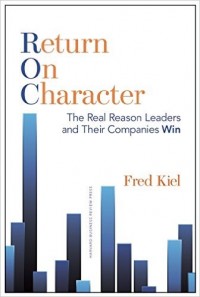
Return on CharacterRon’s Short Review: Kiel does a really good job of answering the age old question, “Is there any Return on Investment (“ROI”) from Character?  He makes a strong case that “ROC” may provide the greatest ROI of any factor.
Amazon-Buy-Buttonkindle-buy button

1 comment
0 FacebookTwitterEmail
Short Book Reviews

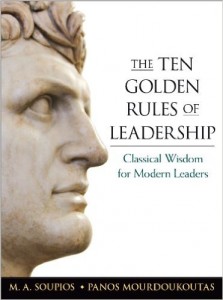
The Ten Golden Rules of Leadership

by Ron Potter August 29, 2015

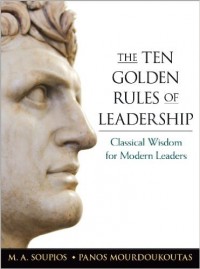
goldenRon’s Short Review: “Classical wisdom for modern leaders.” The authors do a great job of bringing in the essence and philosophy of Plato, Aristotle, Thales, and even the Skeptics. Great short read with a lot of punch.

Amazon-Buy-Buttonkindle-buy button

0 comments
0 FacebookTwitterEmail
Newer Posts
Older Posts
  • Facebook
  • Twitter
  • Linkedin
  • Rss
  • About This Site
  • About
    • Clients
  • Services
  • Resources
    • Trust Me
    • Short Book Reviews
  • Contact

About this Site | © 2024 Team Leadership Culture | platform by Apricot Services


Back To Top
Team Leadership Culture
  • Team
  • Leadership
  • Culture
  • Myers-Briggs
  • Trust Me
  • Short Book Reviews