Team Leadership Culture
  • Team
  • Leadership
  • Culture
  • Myers-Briggs
  • Trust Me
  • Short Book Reviews
Top Posts
Obituary
REPOST: Four Functions, Three Rules
ROUNDUP: The Rise of AI
REPOST: Facing Adversity Series
ROUNDUP: Curiousity
ROUNDUP: Deep Work
REPOST: Character vs. Competence
REPOST: Opposite of Victim
REPOST: Listening With the Intent to Understand
REPOST: Performance vs Trust
  • About
  • Services
  • Resources
    • Trust Me
    • Short Book Reviews
  • Contact

Team Leadership Culture

  • Team
  • Leadership
  • Culture
  • Myers-Briggs
  • Trust Me
  • Short Book Reviews
Author

Ron Potter

Ron Potter

BlogTeam

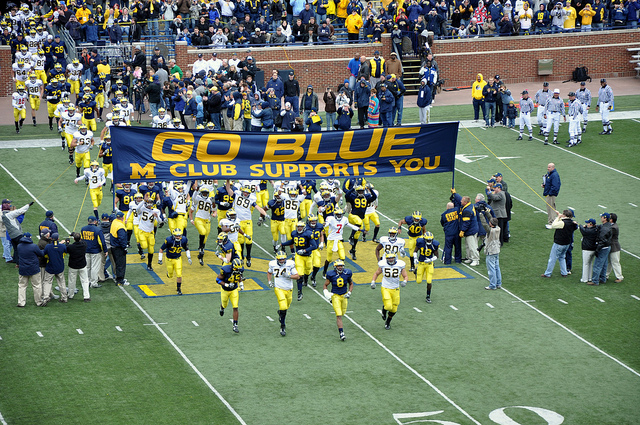
Nothing better than fall in Ann Arbor

by Ron Potter October 29, 2015
Source: Jeremy Bronson, Creative Commons

Source: Jeremy Bronson, Creative Commons

It’s fall in Ann Arbor.  Fall in Ann Arbor means great color, great cool weather with long afternoon shadows and great football.  At least it should mean that.  Fall football in Ann Arbor has not been fun for the last couple of years but with our new coach, Jim Harbaugh, fall football is fun again.  And with this level of excitement, the sports press is getting quotes and interviews everywhere and anywhere they can.  One quote the other day really caught my eye.

Tim Drevno is the new offensive coordinator and offensive line coach at the University of Michigan.  In discussing his offensive line, the guys who do the heavy work in the “trenches” of blocking and in many ways are truly responsible for the success of the offense, Coach Drevno gave the following quote:

As you go through game to game, you get used to everybody and how you communicate and how they handle adversity and get to know one another. That’s part of the process of trusting one another. The quicker you can trust, the quicker you can have success. That’s been a real big part of where we are today. It’s gradual. They get used to your coaching techniques and how you prepare, what you demand from them.

Let’s go to the chalk board and break down that statement:

The quicker you can trust – trusting one another – quicker to success

Yes, you have to know your blocking assignments, the plays you’ll run, you have to be big and strong and quick on your feet…  but to succeed quickly you must build TRUST!

As you go through game to game – it’s gradual.

It happens over time, game to game, day in, day out.  Building trust takes experience.  You have to work on it every day through every assignment.  I have experienced in the corporate world that if trust is lost, it takes at least six months of flawless, trust-worthy behavior before people will even give you the benefit of the doubt, let alone fully trust.

Handle adversity and get to know one another

Trust builds during times of adversity.  Building trust means working through failure together.  It also takes knowing one another.  Not knowing what you do but knowing who you are.  What are your values?  How much heart and stamina do you have?  How will you handle adversity?

Without trust there can be no leadership

Build the trust, prepare the individuals and the team, then and only then can you make great demands of their performance and only then will they respond!

Have you taken the time to build trust, grant trust and earn trust?  If your goal is to be a great leader then you will need to expect and demand great results.  But that only happens when there is great trust!

Take a look at our book “Trust Me” to learn more about becoming a trusted leader.
0 comments
0 FacebookTwitterEmail
Short Book Reviews

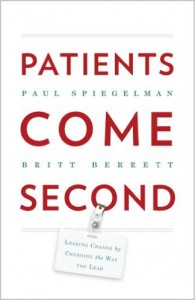
Patients Come Second

by Ron Potter October 28, 2015

pat com secRon’s Short Review: This book is very medical community centric but the point they make reinforces what we know from many other studies.  Focusing on your employees first, your customers (patients) second and your finances third is the best way to engage your employees to positively impact your customers and finances.

Amazon-Buy-Buttonkindle-buy button

0 comments
0 FacebookTwitterEmail
Short Book Reviews

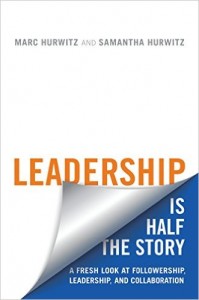
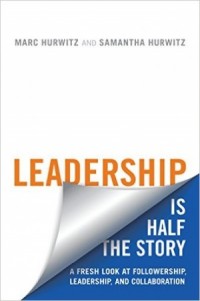
Leadership is Half the Story

by Ron Potter October 28, 2015

leaderships is halfRon’s Short Review: This is a hidden gem.  We all want to be good leaders but have you thought about the other “half” of being a good follower or partner?


Amazon-Buy-Buttonkindle-buy button

0 comments
0 FacebookTwitterEmail
BlogFavoredTrust Me

Favored Are the Caring

by Ron Potter October 26, 2015
Source: Paulo Philippidis, Creative Commons

Source: Paulo Philippidis, Creative Commons

Compassion brings us to a stop, and for a moment we rise above ourselves.
—Mason Cooley, City Aphorisms, Twelfth Selection

Dr. Albert Schweitzer was already an old man when Andrew C. Davison paid a visit to Schweitzer’s jungle hospital in Lambaréné, on the banks of the Ogowe River in Gabon, Africa. The three-day visit had a deep and profound effect on Davison, who later wrote of one event during the trip that impressed him in a special way:

It was about eleven in the morning. The equatorial sun was beating down mercilessly, and we were walking up a hill with Dr. Schweitzer. Suddenly he left us and strode across the slope of the hill to a place where an African woman was struggling upward with a huge armload of wood for the cookfires. I watched with both admiration and concern as the eighty-five-year-old man took the entire load of wood and carried it on up the hill for the relieved woman. When we all reached the top of the hill, one of the members of our group asked Dr. Schweitzer why he did things like that, implying that in that heat and at his age he should not.
Albert Schweitzer, looking right at all of us and pointing to the woman, said simply, “No one should ever have to carry a burden like that alone.”

Schweitzer obviously understood compassion. As a leader he decided to care for someone else, to fully understand the woman’s burden and seek to relieve it. In doing this he was supporting ideas taught by a compassionate Jesus who urged his followers to care for those who were hungry, sick, unclothed, in prison, and burdened with other problems—“Whatever you did for one of the least of these…you did for me.”
Compassion, as we define it here, involves two primary ideas: First is the ability to see people from their perspective, their level of interest, and their need. Coupled with that other-focused vision, though, is the deep internal craving to help them gain their full potential.
J. Oswald Sanders wrote,

The true leader regards the welfare of others rather than his own comfort and prestige as of primary concern. He manifests sympathy and concern for those under him in their problems, difficulties, and cares, but it is a sympathy that fortifies and stimulates, not that softens and weakens.

Compassion is a strong character quality that seeks to both understand people and motivate them to great personal and professional achievement. Compassion should not be confused with weak sentimentality. Instead, compassion involves caring strength, a selfless desire, and energy that elevates others to first place in all human affairs.

0 comments
0 FacebookTwitterEmail
BlogCulture

Integrity Continuum?

by Ron Potter October 22, 2015
Source: Pedro Ribeiro Simões, Creative Commons

Source: Pedro Ribeiro Simões, Creative Commons

In an article for LinkedIn, Dr. Travis Bradberry, Coauthor of Emotional Intelligence 2.0 & President at TalentSmart says:

It’s easy for leaders to get caught up in their own worlds as there are many systems in place that make it all about them. These leaders identify so strongly with their leadership roles that instead of remembering that the only reason they’re there is to serve others, they start thinking, ‘It’s my world, and we’ll do things my way.’ Being a good leader requires remembering that you’re there for a reason, and the reason certainly isn’t to have your way. High-integrity leaders not only welcome questioning and criticism, they insist on it.

I don’t think Integrity lands on a continuum.  You don’t hear people saying “Ruth scores higher on the integrity scale that Ralph does.”  What you do hear is “Ruth has integrity.  Ralph doesn’t.”

It’s amazing to me how visible this becomes.  I have the opportunity to spend time with leaders of different businesses in different industries all the time.  When there is lack of integrity in a company you can sense it from the time you walk in the door.  It’s in the air.  You can see it in the way people greet each other in the hall way or conference rooms.  You can hear it during the conversations on the phone or more importantly in the conversations after the phone call ends.  You can taste it in that sour feeling after difficult conversations.  You get the point.  Your senses know.

But, note Dr. Bradberry’s last sentence, high-integrity leaders welcome and insist on questioning and criticism.

One view of questioning and criticism is encapsulated in the term feedback.  I’ve told the story in some of my previous blog’s that the term feedback was coined during the early days of rocketry when the scientists figured out they needed to develop good “feedback” systems in order to hit a target.  Great thrust without great feedback is just an out-of-control rocket.  High-integrity leaders accept feedback and develop great feedback systems for everyone.

Another view of the questioning and criticism quote is to view it during team discussions or problem solving sessions.  Are the contrary views heard and even encouraged?  Do the teams have a mechanism, dialogue being one of the best, for sorting through the contrary views?  Is everyone heard, listened to and understood?  You can feel the integrity when it exists during the team sessions.

Integrity is not something you either have or not.  It’s something you build over time and for leaders who are getting higher and higher on the leadership ladder, it’s something you maintain and develop as it becomes easier for people to tell you what they think you want to hear rather than the contrary view.

Check out the Integrity chapter in our book, Trust Me.  It’s one of the eight essential principles of great leadership.

0 comments
0 FacebookTwitterEmail
BlogMyers-BriggsYou Might Be a Jerk If

You Might Be a Jerk If…

by Ron Potter October 19, 2015

You Might be a Jerk IfIntroduction

I really enjoyed the movie National Treasure with Nicolas Cage.  In that movie they discover a pair of glasses with some very special lenses that allowed them to read the treasure map on the back of the Declaration of Independence.

We all develop our lenses through years of experiences, learning and observing.  The lenses that I’ve developed through the years tend to be focused on leadership style, team building, decision making and other dynamics of leadership teams.  When I see what appears to be strange, unexplainable or dysfunctional behavior I’ll often flip the “blue” lens in place or maybe I need to add the “red” lens to the mix so that I can see a deeper image.  The point is that with the right lens we can see and understand behavior and dynamics in most situations.

You might be a jerk…

But what happens when you don’t have the right lens or haven’t developed the lens you need to understand a particular situation?

There are too many times during a team meeting, especially a team under the stress of making a right decision during difficult conditions. when in a whisper or a side conversation I’ll hear someone say “What a jerk.”  Nobody intends to be a Jerk.  No one is sitting there trying to think about how royally could they screw up this decision making process.  They’re not being a jerk, they’re just looking like a jerk through your lens.  Try flipping down your “blue” lens to see how a particular temperament might react or behave in this situation.  Maybe it begins to look more normal and understandable and not look like being a jerk.  Still doesn’t explain all the behavior?  Try flipping down your “red” lens to see how that temperament might behave under extreme pressure or maybe add the “green” lens to see what happens when that particular temperament finally hits the breaking point.  Now that may not excuse the behavior but it sure explains it and helps us figure out how to support our colleague through these pressure moments.

Myers-Briggs Series

I’m going to start a series titled “You might be a jerk if.. to talk about those moments when it seems like someone is being a jerk but in reality they’re simply performing in a manner that any person of their temperament type might behave under similar circumstances.

My goals are to:

  1. Help you develop new lenses to see behavior in a new way and not write it off simply as someone being a jerk.
  2. Give you new tools to help team dynamics improve overall.
  3. Help you and others perform better under pressure
  4. Prevent the breaking points when someone reacts in a way that makes it difficult to recover even with the best of efforts.

You might be normal if…

Hopefully we’ll change those opportunities from “you might be a jerk” to “you might be normal” and here’s a healthier way to work that adds value to both the individuals and the whole team.

Stay tuned to “You might be a jerk if …”

4 comments
0 FacebookTwitterEmail
BlogLeadership

How to Raise An Adult

by Ron Potter October 15, 2015
Source: Norbert Reimer, Creative Commons

Source: Norbert Reimer, Creative Commons

Danial Pink conducts a fun interview on his “irregular and irreverent newsletter”. A recent one was with Julie Lythcott-Haims, former Stanford University Dean of Freshmen. She has a new book coming out titled: How to Raise An Adult: Break Free of the Overparenting Trap and Prepare Your Kid for Success.

As I looked at her list of things to do as a parent, I thought it made a great list of things to do as a leader. In a sense, that’s what leaders are doing as well, raising adults. Let me share with you her list of what to do as a good parent and alongside that list, what we should be doing as good leaders:

Teach kids/leaders to fend for themselves:

Advice to Kids Advice to Employees
wake themselves up Be a self-starter
make a meal Feed your own growth
keep track of their stuff Be organized
do their own work Don’t take credit for others work
meet deadlines Meet deadlines
get places Get around the organization
talk to others Talk/listen to others
advocate for their needs Advocate for their needs
bounce back from adversity Bounce back from adversity

Julie goes on to say “Here’s an easy four step method for teaching kids any skill:

  1. do it for them
  2. do it with them
  3. watch them do it
  4. then they do it completely independently.

Great advice for kids and future leaders.

Pick up the book, Trust Me and learn all the great steps for being great leaders and creating great leaders.

0 comments
0 FacebookTwitterEmail
BlogTrust Me

Effective Team Goal Setting

by Ron Potter October 12, 2015
Image source: Steven Depolo, Creative Commons

Image source: Steven Depolo, Creative Commons

What is a high-achievement goal? Studies show that high achievers set goals that they feel they have a 70 to 80 percent chance of accomplishing.

Some leaders feel you have to set goals that are almost unachievable just to keep people motivated and pushing harder. They would scoff at the idea of a goal that you had a 75 percent chance of accomplishing. However, research and my observation show that people will perform consistently the best and at a high level of accomplishment when the chances of success fall in that narrow window of 50 to 75 percent probability. If the goal has a greater than 75 percent chance of completion, high achievers (and most people) feel the goal is too easy. But high achievers want the publicly stated goal to be around that 75 percent range. Then, in their own minds, they will shoot for a much higher goal—one that they feel they may have only a fifty-fifty chance of accomplishing. They like this more-challenging goal because they feel it is their personal effort that will make the difference between the stated goal and this internal higher target.

But all studies show that once the stated goal has less than a fifty-fifty chance of success, it is no longer a motivating target. The chances of success are too slim.

I observed a fascinating example of this phenomenon when the leadership team for a client discussed the goal that had been publicly set by the CEO for them to accomplish over the next five years. We could tell by the team’s discussion that they felt this goal was at or near the fifty-fifty odds range.

While the goal seemed very challenging, there was a sense in the group that it might be attainable and the results would be exciting. But when one of the team members present indicated that the goal had recently been increased to accomplish about 30 percent more over the same five years, everyone in the room rolled their eyes, threw down their pens or pencils, and hung or shook their heads. The spirit went out of them. They obviously felt the new goal had less than a fifty-fifty chance of being achieved, and hope plummeted.

The moral of the story for leaders: Goal setting is very critical to future success, and a great deal of thought and feedback should be collected before announcing high-level goals.

These goals may be broad goals stated to the public or to Wall Street. Or they may simply be individual goals that are set during annual review periods.

0 comments
0 FacebookTwitterEmail
BlogTrust Me

The Achieving Team

by Ron Potter October 5, 2015
Source: joiseyshowaa, Creative Commons

Source: joiseyshowaa, Creative Commons

“I would perform better if…” This is a good opening statement to ask members of your team to complete in order to find out how well everyone is focusing.

Thomas Gilbert, author of Human Competence: Engineering Worthy Performance, found that

  • Thirty-five percent of people would answer, “[I would perform better if] I knew what the exact expectations of the job were and had more specific job feedback and better access to information.”
  • Twenty-six percent of workers would respond, “[I would perform better if] I had better tools and resources to work with.”
  • Fourteen percent said, “[I would perform better if] I had better financial and non-financial incentives for doing my work.”

What it Takes

Expectations, feedback, and incentives are key requirements for building an achievement-oriented team. Organizations expend a great amount of time and money on training people to help them become better achievers. They should also channel resources into teaching leaders how to form realistic expectations, provide proper support, and set achievable goals with appropriate incentives. Organizations and their leaders continually try to fix the individual, but if they would just change the environment (information, resources, and incentives), they would see drastic changes and results.

The good news is that these factors are easily developed and integrated into the life of a team. Let’s take a look at how to get this done.

Energizing the Team with Vision

As we have indicated earlier, people are hungry to be led and will gravitate toward leaders who have a clear vision. Knowing “why we do these things around here” helps put management’s expectations for individuals and teams into a meaningful context.

Authors James Kouzes and Barry Posner (The Leadership Challenge: How to Make Extraordinary Things Happen in Organizations) found that “when leaders effectively communicate a vision—whether it’s to one person, a small group, or a large organization—that vision has very potent effects. We’ve found that when leaders clearly articulate their vision for the organization, constituents report significantly higher levels of the following:

  • Job satisfaction
  • Motivation
  • Commitment
  • Loyalty
  • Esprit de corps
  • Clarity about the organization’s values
  • Pride in the organization
  • Organizational productivity

Clearly, teaching others about the vision produces powerful results.”

People want the best in themselves called out. They will rally around a communicated vision and work hard to support it. The vision also establishes a foundation of shared commitment and focus if and when times get rough.

0 comments
0 FacebookTwitterEmail
BlogTeam

Pressure Testing Teams

by Ron Potter October 1, 2015

13026944463_e7141bd353_zAs a young engineer I learned how to test the integrity of concrete by pressure testing.  On large concrete pours (sometimes several feet thick) we needed to know if the concrete was strong, healthy and had integrity before we could erect the large heavy structures it was meant to support.

After the concrete had cured for the proper amount of time we would take a large cutting machine and extract a “core” of concrete.  This was a cylinder about 4 inches in diameter and about one foot long.  We would then take this core of concrete and place it in a large hydraulic press and slowly begin to build the pressure over time.

The pressures would build to enormous values before the concrete would “fail”.  But the way concrete failed was always fascinating to me.  It didn’t just break in half or fracture along a few fault lines, it would disintegrate.  It almost exploded into thousands of small fragments.  Each piece flying in its own direction so there was nothing left of this strong concrete core.

Teams Under Pressure

I have found teams to function in much the same way.  The pressure can come from any number of sources but as you watch the pressure build the team holds together for a while but finally fails. And when the failure happens, it looks just like that solid core of concrete, it disintegrates.  Each member seems to head for cover in their own direction.

Reinforcing Concrete

In the concrete world, to counter this tendency to disintegrate when the pressure became too great we had a simple solution: reinforcing bar (sometimes called rebar).  Those long rods of steel that we placed in a cage form within the walls of the concrete pour.  Concrete is at its best under pressure from compression.  What it lacks is tensile strength.  Take your two hands and put together in front of you and start pushing one hand against the other.  That’s compression.  Now, have one hand clasp the other hand in a “hand shake” and start pulling them apart.  That’s tensile strength.  Concrete needs both to function well.  So do teams.

Reinforcing Teams

Teams need a lot of tensile strength to withstand the pressures of today’s fast changing world and the fact that many of our teams are global and/or virtual.  We need team rebar!

Increasing the tensile strength of a team requires the “rebar” of trust!  If you’re not taking the time to build trust on your team, you’re not putting in the proper tensile strength to withstand today’s pressures.

  • Who are these other people?
  • Can I trust them when the pressure builds?
  • Have I stood next to them, looked them in the eye and exchanged a hearty and caring hand shake?
  • What are their values? Do we share values?
  • How do I know what is motivating them? How will that play out when we’re experiencing pressure?
  • And a ton of other reinforcing questions to be answered together.

Your team is faced with tasks that must be accomplished under tight deadlines and seemingly impossible pressure to perform.  If you haven’t built in the tensile strength of trust, you’ll likely fail the task in the long run.

0 comments
0 FacebookTwitterEmail
BlogTrust Me

Balancing Innovation and Execution

by Ron Potter September 28, 2015
Source: Missy Schmidt, Creative Commons

Source: Missy Schmidt, Creative Commons

At some point, every leader seems to grapple with the balance between innovation and execution. Many leaders struggle with the notion that one great idea will save the day for the organization. Others spend an inordinate amount of time focusing on “getting out the laundry” and not on new ideas.

Innovation for innovations’ sake can be detrimental. Innovation is best when it helps get things done. A clear vision and strategy are not enough. Competitors have this as well. Success comes from effectively executing strategies and objectives as well as anticipating and preparing for future contingencies. Successful organizations accomplish their objectives faster than their competitors.

Innovation results from creative ideas successfully implemented. Execution and strategy result in competitive advantage.

It seems that everyone wants to innovate, but in practical, day-to-day leadership, only what is accomplished matters. A significant part of getting things done is focus.

My partner and I used to work with the leadership of an international organization. The founder was a man of tremendous vision and creativity. It seemed he had new, out-of-the-box ideas every day. Fortunately for him and the organization, his senior leadership team consisted of people who understood focus and execution. They had the ability to take his ideas and, in most cases, make them work.

One idea, however, was a complete flop. The organization lost millions of dollars. Why? Because the idea was well out of the organization’s scope. It lacked focus, was not part of the organization’s passion, and failed to be executed. The formula for this organization’s success required team focus and execution, not just the leader’s innovative ideas.

Ram Charan, in his Fortune magazine cover story “Why CEOs Fail,” points out the primary reason CEOs do not make the grade: “It’s bad execution…not getting things done, being indecisive, not delivering on commitments.” They have plenty of good ideas and strategies, but in many cases they lack the ability to execute them.

Charan has also written,

People think of execution as the tactical side of business, something leaders delegate while they focus on the perceived “bigger” issues. This idea is completely wrong. Execution is not just tactics—it is a discipline and a system. It has to be built into a company’s strategy, its goals, and its culture. And the leader of the organization must be deeply engaged in it.

Innovation is a strong gift. It helps companies find new markets, new products, and new customers. Innovation alone, however, does not matter. Innovation requires focus, and part of that focus is execution or achievement.

3 comments
0 FacebookTwitterEmail
Short Book Reviews

A Curious Mind

by Ron Potter September 26, 2015

A Curious MindRon’s Short Review: I just love the idea of curiosity and use it often to help myself and clients learn to listen better.  Brian Grazer (Ron Howard’s movie producing partner) makes a great case for how intentional curiosity has helped him live a richer life.  I did take a few notes but I think the book could have been written with at least one third fewer pages.  I think the books “A More Beautiful Question” and “Learn or Die” have a little more meat on the topic.

Click here to read my further thoughts on curiosity and this book…

Amazon-Buy-Buttonkindle-buy button

0 comments
1 FacebookTwitterEmail
Newer Posts
Older Posts
  • Facebook
  • Twitter
  • Linkedin
  • Rss
  • About This Site
  • About
    • Clients
  • Services
  • Resources
    • Trust Me
    • Short Book Reviews
  • Contact

About this Site | © 2024 Team Leadership Culture | platform by Apricot Services


Back To Top
Team Leadership Culture
  • Team
  • Leadership
  • Culture
  • Myers-Briggs
  • Trust Me
  • Short Book Reviews