

Team Leadership Culture
  • Team
  • Leadership
  • Culture
  • Myers-Briggs
  • Trust Me
  • Short Book Reviews
Top Posts
Obituary
REPOST: Four Functions, Three Rules
ROUNDUP: The Rise of AI
REPOST: Facing Adversity Series
ROUNDUP: Curiousity
ROUNDUP: Deep Work
REPOST: Character vs. Competence
REPOST: Opposite of Victim
REPOST: Listening With the Intent to Understand
REPOST: Performance vs Trust
  • About
  • Services
  • Resources
    • Trust Me
    • Short Book Reviews
  • Contact

Team Leadership Culture

  • Team
  • Leadership
  • Culture
  • Myers-Briggs
  • Trust Me
  • Short Book Reviews
Author

Ron Potter

Ron Potter

BlogCulture

Engagement Surveys

by Ron Potter January 15, 2016

photo-1452690700222-8a2a1a109f4cHow Engaged are Your Employees?

Most of my clients are engaged in some sort of engagement survey (pun intended).  The Gallup organization (which may have started this whole movement with their surveys) keeps a running percentage of “engaged” employees on their web site, currently sitting at 34.2%.  You mean that only a third of our employees are engaged at work?  How could our companies possibly survive (at least for long) with a figure that low?

Well, part of the problem is that’s the wrong question.  AON Hewitt did a nice job of grappling with this issue.  In an article titled “What makes someone an engaging leader?” they explain that the two don’t necessarily go together.  The most sustained approach is to push for both financial performance and employee engagement.

Based on conversations I’m having with almost every client, this need for both profitability and employee engagement, mainly leading to innovative ideas to deal with major disruptions, is ongoing and impactful.

AON Hewitt continues the conversation by listing the attributes that create engaging leaders.

  • Self-Confidence
  • Humility
  • Compassion
  • Connectedness

Self-Confidence

I’m going to connect and contrast this one with Humility which is next on the list.  Most people would look at those two works and say “Aren’t we dealing with an oxymoron?  How can you be self-confident and humble at the same time?”  I don’t mean to put words in the mouths of the AON Hewitt people because I believe they could defend their choice of words very effectively.  But for clarification purposes let me use the word self-esteem.  I have found though the years that it takes a lot of self-esteem to be humble.  The idea is that you are very comfortable with who you are and why you’re there.  Maslow in his hierarchy of needs would likely refer to this as self-actualized.  It reminds me of a commercial with several recognizable athletes doing silly things and ending the commercial with the words.  I’m so-and-so and I’m very comfortable in my skin.  People who don’t seem to have a reasonable level of self-esteem have difficulty being humble because they always have a need to prove themselves (to themselves mostly).

Compassion

When we first included Compassion as one of the eight essential elements of great leadership as described in our book “Trust Me: Developing a leadership style that people will follow” I took a little grief from my hard-nosed executives.  After listening to them about how they had to be tough not compassionate I always ended the conversation with the old adage “I don’t care how much you know until I know how much you care.”  If you want people to care about what you know, let them know that you care about who they are.

Connectedness

This word seems to be synonymous with the word Team.  Building a great team connecting strong people for a single purpose.

My conclusion is that if you want engaged employees, learn to be a humble leader, create great teams, accomplish your collective purpose.  All people want to be engaged in doing something worthwhile.

0 comments
0 FacebookTwitterEmail
BlogCulture

Discovering Ancient Truths

by Ron Potter January 7, 2016
Source: Dogancan Ozturan, Creative Commons

Source: Dogancan Ozturan, Creative Commons

A recent CBS News article caught my eye.  The headline read:

Are you happy? Do you know how to be happy?

After decades of studying and working with tens of thousands of patients, researchers at the Mayo Clinic say they’ve cracked the code to being happy.

Psychiatrist John Tamerin says for many people the root of everything we’re chasing, a better job, more money or true love, is happiness.

But this endless pursuit often backfires.

Now, after decades of research and a dozen clinical trials, researchers at the world-renowned Mayo Clinic, say they’ve actually cracked the code to being happy, and published it in a handbook.

Dr. Amit Sood led the research and says the first and foremost way to be happy is to focus our attention.

“… one of the biggest hindrances to being happy is too much thinking about one’s self, research shows.

So why did the Mayo Clinic decide to study happiness? Studies show happier people are healthier people.

Wow, “after decades of research and a dozen clinical trials” the researchers cracked the code to happiness.  Even though over 2,300 years ago Aristotle wrote in his “Nicomachean Ethics” that the pursuit of happiness was the ultimate purpose of human existence.

This concept of the pursuit of happiness really forms the foundation for great leadership and great teams.  I’m currently working my second book on how to create great teams.  It’s built precisely on the concepts of Aristotle’s pursuit of happiness.

If you take a look at the four levels in the pursuit of happiness that Aristotle lays out, you’ll see that levels one and two are focused on self.  As the researchers says above, “one of the biggest hindrances to being happy is too much thinking about one’s self.”  Levels 3 and 4 are built on thinking about and blessing others.  Level 3 describes the perfect model for great leadership.  Level 4 describes the elements of great teams.

So, if you want to break your own code to happiness, become a great leader of people and a great team member.  It provides the ultimate level of happiness.

0 comments
0 FacebookTwitterEmail
BlogMyers-BriggsYou Might Be a Jerk If

You Might Be a Jerk If: Feeling

by Ron Potter January 4, 2016

You Might be a Jerk If

“Let’s change the topic, I don’t want to deal with this at the moment.”

“Look, it’s your fault that we’re in this mess anyway.  If you had made arrangements for this while you were on vacation it wouldn’t have happened in the first place.”

“I just don’t want to hear it any more, this is the way it’s going to happen!”

(If you didn’t start with the introduction to this “You might be a jerk if…” series, I suggest you make a quick review because it will help you better understand these subsequent blogs.)

Brenda is stuck!  Her dominant function is Feeling which helps her know what’s really important in most situations and appreciate input from just about anyone.  And normally, she’ll balance these great skills with either a good conceptual view of the world or a great grasp of the data, depending on her complete type.

There are four types that have this particular combination, the Introverted ISFP, INFP and the Extraverted ESFJ, ENFJ.  As noted above the dominant in all four cases is Feeling and the inferior in all four cases is Thinking.  These are what’s known as our Deciding functions, how do we decide what to do after we have taken in the data through our Perceiving functions of Sensing and iNtuition.

In a healthy state, these Deciding functions would then work in tandem with the “perceiving” functions of Sensing or iNtuition depending type.  But, under pressure or stress, Brenda begins to lose this natural balance, falling back to her dominant function which will expose her feelings, no matter how raw they may be.  Brenda will either become hypercritical or hypersensitive or both under pressure.

Balance, Balance, Balance

This is where team members and colleagues come into play.  It’s difficult for any one of us to break out of these pressure packed situations.  As colleagues, we want to help Brenda back into a balanced state by asking and sometimes even forcing her to use his auxiliary function.  Notice that Brenda’s auxiliary function could be either Sensing or iNtuition depending on type.  Let’s start with the Sensing balance.

“Brenda, we can’t ignore the topic right now, we need to make a decision this week.”

“I’m sorry I just can’t deal with it right now, there are just too many things this could impact.”

“Can we take a look at the data and see where that might be leading us and then discuss how that might impact the values of the company, if at all?”

“Yes, if you guarantee that we’ll see how these figures will impact the way we’re going to work this out with the people.”

As we begin to force Brenda to try a little balancing act, she’ll begin to regain her footing.  Note that we can’t tell Brenda that his data problem doesn’t impact our overall values.  Brenda has to come to grips with that through balancing her own natural Feeling and Sensing functions.

If we’re dealing with either the INFP or ENFJ than iNtuition is the auxiliary function, not Sensing.  The approach is similar, but focused more on the conceptual or future view (iNtuition) rather than the data (Sensing).

“Brenda, we really don’t think this new direction will impact our care and concern for the employees but let’s see if we can see a way through this.”

“I just don’t see how it’s going to happen.  I’m concerned we’ll end up in a very bad place.”

“We’ll, let’s talk through that.  Describe for me the outcome you see as most likely in this case.”

“It’s just not going to end well.”

“Well, let’s get a grip on the possible outcomes and then really talk through the good and bad of the situation and see how we could mitigate any negative outcomes.”

“OK, I guess we’re just talking anyway.  We can make the decisions as we figure out the best path.”

As we begin to force Brenda to try a little balancing act, she’ll begin to regain her footing.  Note that we can’t tell her where the scenarios will lead.  Brenda has to come to grips with that through balancing her own natural Feeling and iNtuition functions.

Stay tuned.  We’ll continue to explore other ways to conduct your own “balancing” act.  The best leaders have learned to balance their natural temperament functions with those of the people and teams around them.  It’s when the functions get out of balance or opposed to each other that we get stuck as individuals and teams.

When it comes to your temperament, balance, balance, balance is the key to success.


0 comments
0 FacebookTwitterEmail
Happy Anniversary Team Leadership Culture
BlogCulture

Happy Anniversary

by Ron Potter December 31, 2015

Happy Anniversary Team Leadership Culture2015 is an anniversary year for me.  25 years in the consulting business, 15 of those years as Team Leadership Culture (TLC).

Someone suggested that I write the “25 things I’ve learned in 25 years!”  Sounds like a great idea.

#1 thing I’ve learned in 25 years of consulting:

Hit the Sweet Spot!

If you’re a golfer (or at least someone who enjoys the game regardless of skill level like I am), you know that when you hit the sweet spot of the club face, wonderful things happen.  The ball tends to sore long and straight and you’re usually rewarded by hitting at or near your target.  The other thing that golfers experience is that when you do hit the sweet spot, there is this wonderful feeling that it was almost effortless.  There was no clank of the club hitting the ball and no vibration sent up through the shaft upon impact.  Just a nice smooth striking of the ball in a pure form that feels wonderful.

Hitting the sweet spot in business is much the same.  It feels good, things seem to be working in harmony and we create a trajectory that tends to be long and straight.  Wonderful.

But the real question is “So, what is that sweet spot?”  To me it has become abundantly clear over the last 25 years.

That’s the sweet spot.

Again with the golf analogy: as I’ve observed my game through the years I began to realize that on my poor days I only have one (and sometimes none) aspect of my game working, driver, irons or putter.  On my good days I seem to have two of the three working.  But as I look back as my most successful rounds, all three aspects were working on that given day.  Business is much the same.

At every company I work with I can see patterns related to how many “cylinders” the company is hitting on.  As I’m writing this I can see very clearly in my mind one company in particular.  The individual leadership in many instances seems to be very solid and up to the challenge.  This company has a deep culture that has been in place for many years and drives their performance.  But as I look back over the years there seemed to be a particular turning point when team work began to fade.  Individual success, loyalty to a particular leader, unit and division success rather than whole company success began to be the measured standard.  Team work simply seemed to fade away over time.

In decades past it didn’t seem to make much difference.  Success always came.  Conditions in the market place could always be overcome or exploited.  They were the king of the hill and were reward for being on top.  But, in today’s fast paced, every changing world, companies are finding that they need to be quick and nimble.  Only team oriented companies can respond quickly with nimbleness.  Great leadership and deep cultures alone will not survive.  All three, Team, Leadership and Culture, are required to survive in today’s world.

Well, number one of the 25 things I’ve learned over 25 years seemed to come easily.  I’ll have to think about the next 24.  But as I do, I’ll share them with you.

2 comments
0 FacebookTwitterEmail
BlogQualities of a Caring LeaderTrust Me

Qualities of a Caring Leader: Concern

by Ron Potter December 28, 2015

photo-1450436993444-721cd28f6187Over the next few weeks, our Trust Me posts will explore the qualities of a caring leader. We explored the first quality – Understanding here. Today we look at the second quality – Concern.

One of my favorite old adages says “I don’t care how much you know until I know how much you care.”  Remember, an old adage hangs around for hundreds of years because it is solidly true.

Many leaders believe they must completely separate their work life from their personal life. Many of them will say, “I don’t dare get too close to these people because I won’t be able to be objective if I need to give them critical feedback.”

But people follow leaders who care. People know they care, and they develop trust. If you are a caring, honestly challenging leader, people will follow you through the tough course of business ups and downs.

I have seen great leaders demonstrate care. They don’t just know the members of their team, they help them by taking action to improve their lives or set them on a fresh course.  When a leader cares about their team, the team cares for one another as well.

I often run an exercise with my clients that I call “Human Beings, not Human Doings.”  The point of the exercise is that when we relate to each other based entirely on what we “do”, things can get off base.  Maybe something wasn’t done right or on time or to the standards that were expected and we start to assign that disappointment to the person responsible for the work.  But when we begin to understand and relate to who people “are”, not just what they do, we often begin to understand people better.  We begin to care.  Under caring circumstances we begin to help each other and the team to improve our overall performance.  Caring produces results.

2 comments
0 FacebookTwitterEmail
Short Book Reviews

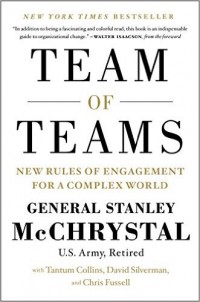
Team of Teams

by Ron Potter December 26, 2015

Team of TeamsRon’s Short Review: General McChrystal really nails this one and helps us see why the ONLY way we’ll experience success in today’s fast changing world is to build great teams.  A must read.

Amazon-Buy-Buttonkindle-buy button

0 comments
0 FacebookTwitterEmail
Short Book Reviews

Content Inc.

by Ron Potter December 26, 2015

Content IncRon’s Short Review: Written for entrepreneurs, but if any business doesn’t think they’re either in the entrepreneurial business or up against an entrepreneurial world, they haven’t been paying attention.


Amazon-Buy-Buttonkindle-buy button

0 comments
0 FacebookTwitterEmail
Short Book Reviews

Freedom’s Forge

by Ron Potter December 26, 2015

Freedom's ForgeRon’s Short Review: Fascinating story about how American industry responded to the needs of the UK, Russia and America at the beginning of WWII (and how the government nearly thwarted it).  Fascinating read.

Amazon-Buy-Buttonkindle-buy button

0 comments
0 FacebookTwitterEmail
BlogCulture

Forcing Trust too Quickly

by Ron Potter December 24, 2015

bag-and-handsI’ve seen the full spectrum through the years of those who trust until the trust is broken (the end of the spectrum that I sit on) and those who say no trust granted until it’s earned.

A recent Harvard Business Review, Management Tip of the Day listed “3 Mistakes to Avoid When Taking Over a Team.”  The third tip was “Attempting to force trust too quickly. Until team members have had time to see how you handle uncomfortable topics too much candor will do more harm than good. Let trust build over time.”  The word candor in the middle of that sentence caught my eye.

It’s not that you’re not trusting or offering trust, but don’t assume candor will be accepted with trust and appreciation until you’ve gained some trust.  While I know this is sound advice and I usually follow it myself, I do remember one major incident where I tripped over this one.

I had been working in couple of different functional areas for a Fortune 200 company.  An internal candidate had recently been promoted to VP of HR and with the recommendation of a few other corporate leaders, I was making an effort to get acquainted.  During one of my first conversations with her she asked if I had any feedback for her, knowing that I had been working in the company for a while and knew of her in her previous role.

I remembered distinctly that I had this little twinge of doubt before I answered.  Let me take the time and space right here to say “Always pay attention to that little twinge of doubt!”

When she made the initial request for feedback I came back with some general platitudes about working into the new position even though she was a known quantity in the corporation.  She pressed for more.

While my twinge was turning into more of a twitch, she pursued with what felt like genuine sincerity about wanting feedback.  So, in spite of that twitch now turning into a pit, I shared a couple of things that I had observed about her leadership skills.  In all honesty I didn’t really think they were that much of an unknown to her and I also didn’t believe they were particularly harsh and damaging.  But, you can see the rest of the story coming.  The look on her face sent a very firm message that she didn’t care for that feedback and the meeting quickly ended.

My entire worth when working with a client is being able to share feedback with clients and I’ve discussed much more damaging feedback than I actually shared at that moment.  But, I ALWAYS develop trust with my client first before sharing meaningful feedback.  Well, almost always.

Always build trust first.  No matter which end of the spectrum you’re on, always build the trust first before bringing in too much candor.

0 comments
0 FacebookTwitterEmail
BlogMyers-BriggsYou Might Be a Jerk If

You Might Be a Jerk If: Thinking

by Ron Potter December 21, 2015

You Might be a Jerk If
(If you didn’t start with the introduction to this “You might be a jerk if…” series, I suggest you make a quick review because it will help you better understand these subsequent blogs.)

“I don’t care what you think and don’t confuse me with facts! This is our only way out! Besides, that’s just about the dumbest idea I’ve heard this century. Have you burned out all of your brain cells?
And don’t you dare challenge my intelligence or authority. I’ll make this decision and it will be the right decision.”

Bill is stuck! His dominant function is Thinking which helps him analyze situations and spot the pitfalls in advance. And normally, he’ll balance these great skills with either a good conceptual view of the world or a great grasp of the data, depending on his complete type.
There are four types that have this particular combination, the Introverted ISTP, INTP and the Extraverted ESTJ, ENTJ. As noted above the dominant in all four cases is Thinking and the inferior in all four cases is Feeling. These are what’s known as our Deciding functions, how do we decide what to do after we have taken in the data through our Perceiving functions of Sensing and iNtuition.
In a healthy state, these Deciding functions would then work in tandem with the “perceiving” functions of Sensing or iNtuition depending type. But, under pressure or stress, Bill begins to lose this natural balance, falling back to his dominant function which has a need for logic at all expense. Bill will either lash out in an unexpected (even out of character) emotional outburst or even if he keeps a calm exterior, be begins to take any comments or feedback as personal slights and criticism.

Balance, Balance, Balance

This is where team members and colleagues come into play. It’s difficult for any one of us to break out of these pressure packed situations. As colleagues, we want to help Bill back into a balanced state by asking and sometimes even forcing him to use his auxiliary function. Notice that Bill’s auxiliary function could be either Sensing or iNtuition depending on type. Let’s start with the Sensing balance.

“Bill, what information are you missing to make this decision?”
“I’m not missing any information, it’s just that the information we have doesn’t make sense!”
“Which piece of information doesn’t seem to make sense to you?”
“This one data set just doesn’t align with what we thought we knew. If it’s correct it will have a three week impact on the coding section.”
“OK, let’s think through that. What are the consequences of the three week impact on that portion of the schedule when we put it in context of the overall project?”
“Well, when I think about it that way it probably doesn’t make too much difference.”

As we begin to force Bill to try a little balancing act, he’ll begin to regain his footing. Note that we can’t tell Bill that his data problem doesn’t have much impact to the overall project. Bill has to come to grips with that through balancing his own natural Thinking and Sensing functions.
If we’re dealing with either the INTP or ENTJ than iNtuition is the auxiliary function, not Sensing. The approach is similar, but focused more on the conceptual or future view (iNtuition) rather than the data (Sensing).

“Bill, we’re not questioning your ability in this matter, but what information are you missing to make this decision?”
“I’m not missing any information, it’s just that the information we have doesn’t make sense!”
“Well, where do you think this information will lead?”
“I just don’t know. That’s the problem.”
“Let’s go back to your gut instincts. What is your experience telling you?”
“I’m pretty sure it has to lead us in this direction, I just can’t see it yet.”

As we begin to force Bill to try a little balancing act, he’ll begin to regain his footing. Note that we can’t tell Bill where the data should lead him. Bill has to come to grips with that through balancing his own natural Thinking and iNtuition functions.
Stay tuned. Next in our series titled “You might be a jerk if…” we’ll shift our focus from the dominant Thinking style to the dominant Feeling style. This one may have the most difficulty working in the corporate environment.

0 comments
0 FacebookTwitterEmail
BlogLeadership

Are you egocentric?

by Ron Potter December 17, 2015
Source: Kristoffer Trolle, Creative Commons

Source: Kristoffer Trolle, Creative Commons

Here’s a clue… YES!

Elizabeth Bernstien, a columnist for the Wall Street Journal wrote a piece titled “But you never said…”  In this column she quotes Dr. Michael Ross, professor emeritus in the psychology department at the University of Waterloo in Ontario, Canada:

People also remember their own actions better. So they can recall what they did, just not what [the other person] did. Researchers call this an egocentric bias, and study it by asking people to recall their contributions to events. Whether the event is positive or negative, people tend to believe that they had more responsibility.

Your mood—both when an event happens and when you recall it later—plays a big part in memory, experts say. If you are in a positive mood or feeling positive about the other person, you will more likely recall a positive experience or give a positive interpretation to a negative experience. Similarly, negative moods tend to reap negative memories.

Negative moods may also cause stronger memories. A person who lost an argument remembers it more clearly than the person who won it, says Dr. Ross.  And how often you recall an incident may affect your memory. It is quite possible to remember your most recent version of the story, not the way it actually happened.

Yes, we are egocentric.  It’s natural and essential in many cases.  But, if we tend to remember what we said or did more than what anyone else said or did, how do we build a great team solution rather than a narrow egocentric solution?  Dialogue!

Dialogue is a practiced technique that will help you build better solutions to difficult problems.  We each have our own memory and perspective.  It’s important to remember that your view is not “right” it’s just your view.  In dialogue we start by sharing our “beliefs and assumptions” about a situation.  Once we’ve really heard each other than we can start building some common ground rather than simply fighting over who’s view is right thereby making the other views wrong.  Many, many arguments are actually right vs right, not right vs wrong.  Start with that assumption and you’ll begin to build better teams.

0 comments
0 FacebookTwitterEmail
BlogQualities of a Caring LeaderTrust Me

Qualities of a Caring Leader: Understanding

by Ron Potter December 14, 2015
Source: Robert Couse-Baker, Creative Commons

Source: Robert Couse-Baker, Creative Commons

We need to be acutely aware of other people’s needs, focus, dreams, and abilities before we can help them achieve.

For years the late cartoonist Charles Schulz delighted us as his Peanuts characters Charlie Brown, Linus, and even Snoopy provided a window into the complex (and funny) realm of human relations.

Lucy, the extroverted big sister of Linus, was no exception. Her love affair with the Beethoven-loving Schroeder is legendary. Often we see Lucy stretched out by Schroeder’s piano, watching him with longing eyes. Or she is asking a question or demanding his attention in some other way. Schroeder is oblivious to Lucy, so she tries harder and harder to win his heart. In the end, nothing works. Lucy usually loses her temper and pouts, once again the frustrated lover.

What Lucy never gets is how a change in her approach might improve her chances at winning Schroeder’s attention. Lucy’s entire focus is on her needs, not Schroeder’s. Every attempt to secure the heart of the piano genius is from her perspective, not his. Her compassion is entirely self-focused and has little or nothing to do with him and his needs. No matter how bold or romantic she is, Lucy never gets close to Schroeder because she never learns to first understand him.

Increased understanding of others usually leads to better relationships. Our frame of reference becomes their needs, not our own. It becomes a habit to seek to understand our bosses, our direct-reports, and our peers. This understanding is not developed for manipulative purposes. It is an attempt to help people grow and develop by first seeking to understand them—their motives, needs, and styles. Once we understand others and their individual preferences, we can better communicate with them, train them, and lead them.

Abraham Lincoln was a master at this. In 1864 the New York Herald explained how Lincoln was able to overcome the difficulties of guiding the nation during the Civil War—“Plain common sense, a kindly disposition, a straight forward purpose, and a shrewd perception of the ins and outs of poor, weak human nature.”

Lincoln was a master at getting out to meet and know the people—from generals to office workers: “Lincoln gained commitment and respect from his people because he was willing to take time out from his busy schedule to hear what his people had to say.” From this information, Lincoln came to understand his people. From this understanding, he motivated them, challenged them, and moved them to achieve.

It is always interesting, upon entering an airplane, to look into the cockpit and see all those dials and gauges. Each one has a purpose. Many help properly guide the aircraft to its final destination. If the pilots don’t monitor the right instruments, they won’t have a clear picture of the flight, where they are going, how fast they are traveling, how high they are flying, or even if the craft is right side up.

Similarly, if we do not read all the “gauges” of other people, we will be forced to guess what their behavior and words really mean. Learning to read gauges gives you the ability to understand and respond to others based on their needs and frames of reference.

4 comments
0 FacebookTwitterEmail
Newer Posts
Older Posts
  • Facebook
  • Twitter
  • Linkedin
  • Rss
  • About This Site
  • About
    • Clients
  • Services
  • Resources
    • Trust Me
    • Short Book Reviews
  • Contact

About this Site | © 2024 Team Leadership Culture | platform by Apricot Services


Back To Top
Team Leadership Culture
  • Team
  • Leadership
  • Culture
  • Myers-Briggs
  • Trust Me
  • Short Book Reviews