

Team Leadership Culture
  • Team
  • Leadership
  • Culture
  • Myers-Briggs
  • Trust Me
  • Short Book Reviews
Top Posts
Obituary
REPOST: Four Functions, Three Rules
ROUNDUP: The Rise of AI
REPOST: Facing Adversity Series
ROUNDUP: Curiousity
ROUNDUP: Deep Work
REPOST: Character vs. Competence
REPOST: Opposite of Victim
REPOST: Listening With the Intent to Understand
REPOST: Performance vs Trust
  • About
  • Services
  • Resources
    • Trust Me
    • Short Book Reviews
  • Contact

Team Leadership Culture

  • Team
  • Leadership
  • Culture
  • Myers-Briggs
  • Trust Me
  • Short Book Reviews
Author

Ron Potter

Ron Potter

Short Book Reviews

How Adam Smith Can Change your Life

by Ron Potter March 31, 2016

How Adam Smith Can Change your LifeRon’s Short Review:

In this book Roberts demonstrates how Adam Smith (our first real economist) believed there were two main issues that drive a capitalistic system, to love and to be lovable. Amazing fit with the principles of leadership. Highly recommended.


Amazon-Buy-Buttonkindle-buy button

0 comments
0 FacebookTwitterEmail
BlogTeam

Conflict: Having A Good Fight

by Ron Potter March 31, 2016
4503517064_4c5558538b_o

Source: MartialArtsNomad.com, Creative Commons

I recently started working with a new leadership team and I was interviewing each member to get a feel for the current conditions on the team. While they all spoke of how nice it was to work for this company and with this team, several of them said something to the effect that “we just haven’t been able to have a good fight yet.” I don’t think anyone was itching for a fight but they were longing for the tough debates about either controversial issues or issues where there seemed to be lack of alignment. Soon after that interview an interesting article popped up on LinkedIn written by Dr. Travis Bradberry, author of Emotional Intelligence 2.0. Dr. Bradberry starts his article with “When you’re a nice person, conflict can be a real challenge.” What really made me smile was his next line, “Not that mean people are any better at conflict, they just enjoy it more.” I like working with nice people but I really enjoy working with nice people who are really good at conflict.

Conflict is a needed ingredient

On high performance teams, conflict is a needed ingredient. I’m talking about conflict of ideas, experiences, assumptions, outlooks, beliefs, etc. It’s the richness of diversity of thought that is necessary for teams to become high performance teams. But diversity without well managed conflict will only lead to the splintering of teams into different camps.
Many of Dr. Bradberry’s suggestions are useful:

Consider the repercussions of silence

Often it just seems easier to be quiet and not bring up your objections or different point of view. However, not bringing them up is a decision in itself. You’ve just traded off the cost of dealing with it now vs the cost that will come with the ramifications down the road. The later costs are always higher than the present ones.

Don’t speak in absolutes

I’ve seen this one escalate arguments quickly. “You always” or “You Never” seem to trigger primal reactions in us that will lead to and grow a fight quicker than almost any other response.

Ask good questions until you get the heart of the matter

One of the books that recently went up on my reading list is “The Coaching Habit: Say Less, Ask More and Change the Way you Lead Forever”. Using good questions is the best way to lead and deal with conflict. Stay curious my friend.
Dr. Bradberry includes several other suggestions that you may want to dig into. But I’ll close this blog with a thought from Dr. Scott Peck in his book “The Road Less Traveled.” His belief is that at the root of mental illness is the avoidance of pain and suffering. You may avoid the pain and suffering in the moment but if you can’t have that good fight, it will lead to a highly dysfunctional team rather than a high performance team.

0 comments
0 FacebookTwitterEmail
BlogMyers-BriggsYou Might Be Surprised

You Might Be Surprised: Extravert or Introvert – Part IV

by Ron Potter March 28, 2016

You Might Be Suprised

Is Rob the talker an Extravert or Introvert?

Spoiler alert!!!  To fully appreciate this blog take just a minute and read our last blog that sets the stage for understanding Rob.

As we closed our last look at Rob, he was preparing to share a presentation with colleagues by

  • Pulling concepts together
  • Reordering ideas
  • Thinking through the time allocated and what concepts will provide the greatest value
  • Noting a great deal of backup and background material and research but
  • Summarizing and putting the best idea into a framework that’s quick to understand and easy to remember

But, the part that we missed were those quick conversations that Rob often had with his colleagues along the way or in specific preparation for his presentation.  After Rob would do a great deal of reading, recording, thinking and noting ideas he often felt nearly there.  He was comfortable with all of the data he had gathered but he just needed one more piece.  He needed to talk.  You see Rob was an Extraverted thinker.  And even though Extraverted thinkers may gather a great deal of their data through means that appear to be very Introverted in nature, in the end they need to talk it through with someone.  Rob would seek out several individuals and small groups of people to “bounce his ideas” off them.  As Rob would begin to explain the gest of what he wanted to present, other people would begin to chime in on their reactions, thoughts, questions and ideas about his work.  Rob would find this incredibly stimulating and right during the conversation would finally “see” the close, the hook, the hammer, the main point that needed to be clarified or driven home.

Rob was an Extraverted Thinker.  He needed that final conversation to help him conclude and solidify his final beliefs about all of that data he had gathered.  Don’t conclude that just because Rob spends a great deal of time reading or isolated thinking or seems to spend a great deal of time preparing for presentations that his is an Introvert.  He still needs that final conversation to help reach conclusions on his own thinking.

Extraversion and Introversion are functions related to energy, not behavior.  While you may see some of the classical talkative extraversion or quiet introversion don’t assume you know how they rank on their Myers-Briggs Type Indicator.  I’ve worked with quiet extraverts and talkative introverts but if you know when they reach their final conclusions, finally solve that tough problem, come up with that great new idea you’ll begin to get some insight of their Extraversion Introversion preference.

Rob was a quiet Extravert.  It might surprise you.

0 comments
0 FacebookTwitterEmail
BlogTeam

Aristotle Strikes Again

by Ron Potter March 24, 2016

photo-1431540015161-0bf868a2d407

As reported in the New York Times recently, Google embarked on an effort to build the perfect team. And as Google would be prone to do, they began to collect data in search of a pattern. As one participant stated, if anyone is good at recognizing patterns it’s Google. I don’t think there’s any argument about that.

However, after collecting data on hundreds of teams the first problem they ran into is that they couldn’t find a pattern. Or more accurately they found too many patterns which is just as much of a problem as finding none at all. So the search continued.

In the end they did find two very interesting correlations that seemed to be present on every good team. Not surprisingly those two elements were trust and respect. The two of them together formed an environment that has been labeled ‘psychological safety.’ If the team members feel psychologically safe because trust and respect has been built, the team will become a high performing team. (Tweet this)

Another pattern that began to emerge however was the productivity of these teams over multiple problems and projects. Teams that fell short on psychological safety didn’t seem to perform well at any kind of problem. Conversely, teams that exhibited psychological safety seemed to perform well no matter the nature of the problem. So the one element that people most often assume to be a needed ingredient, subject matter experts, didn’t seem to make any difference if there was no trust or respect.

Now, here’s the part I enjoyed. The internal name for the effort was called the Aristotle Project. One of the foundational structures that I always introduce to the teams I work with is Aristotle’s Levels of Happiness. The fourth and highest level describes the five things needed for great team work. In Aristotle’s word they include: Truth, Love, Purpose, Beauty and Unity. Every team needs a purpose but to accomplish that purpose they must be able to share and speak the truth, do it in a loving respectful way, in the most beautiful and elegant form possible and finally reaching a commitment of unity. Without those elements a psychologically safe environment doesn’t exist.

Although I’m glad they actually made the effort, had they simply started with what Aristotle knew they could have saved a lot of effort in figuring out what makes great teams.

0 comments
0 FacebookTwitterEmail
BlogTrust Me

The Rewards of You-First Leadership

by Ron Potter March 21, 2016

photo-1458242462449-7b6697b7caefAre you the kind of person who believes in the “fixed pie” view of the world? “There is only so much pie to go around, so if I don’t get mine first, there won’t be any left after everyone takes theirs.” Or do you believe in an expanding pie? “If we all do a great job, there will be more than enough to go around for all of us.” “You first.”

A “you-first” leadership style goes beyond humility. Humility says, “I’m no better than you; we are equally important.” A “you-first” attitude puts the other person out front.

Becoming a “you-first” leader may sound a bit like career suicide. Isn’t this just another way to get trampled while climbing the corporate ladder? While this can happen, there are actually great personal and professional rewards awaiting the person intent on taking care of the needs of others first. In the long run compassion, like humility, will be an asset that will propel you into being an admired leader, one whom others will follow. It will also provide you with a great deal of personal satisfaction and delight.

Having a “you-first” attitude will result in a new and better personal leadership paradigm. Instead of viewing employees and others as those in need of control and reshaping, you will move toward becoming a coach who provides people with honest feedback. You will create a safe environment in which people are free to share honestly about your programs, ideas, vision, and initiatives.

Another way to look at yourself and develop good habits is to examine whether you act as an old-style boss, or whether your actions (not intentions, but real actions) are directed toward empowering others.

Though simple in concept, being a leader who puts his or her people first is difficult to put into practice. It takes time, energy, commitment, patience, and a host of other self-sacrificing qualities. That’s the price. However, putting others first does work. This way of showing compassion will create an environment where top performance is possible. And you will experience great personal satisfaction as you watch people grow, learn, stretch, and become “you-first” leaders themselves.

My hope is that you will embark on this journey of putting others first. It may take a lifetime to get this “right,” but you will never regret it.

0 comments
0 FacebookTwitterEmail
Absurd!BlogIn-Depth Book Reviews

Absurd!: Effective Managers are Not in Control

by Ron Potter March 17, 2016

photo-1456824399588-844440089f4b

I’m continuing my series on an in-depth look at a wonderful little book that’s twenty years old this year. The title is Management of the Absurd by Richard Farson. You may want to consider dropping back and reading the previous blogs about ABSURD! I think it will put each new one in great context.

Chapter 5 is titled: Effective Managers are Not in Control
Just because the organizational chart puts you in a box that is labeled a manager or leader it doesn’t automatically make you effective at the job. This point that Farson makes is that organizational charts may put you in “control” but that’s not what being a good manager or leader is all about.

Learners
A few of the points that he makes in this chapter include:

“Effective leaders and managers approach situations as learners, sometimes as teachers, sometimes as both.”

Being a learner and or teacher and knowing when to be each requires a level of humility that great leaders possess. They are seldom telling people what to do but are always learning and teaching themselves so that people grow and the situation is addressed in the best form possible, not just what they think needs to be done.

Make Meaning
Good leaders:

“turn confusion into understanding. They see a bigger picture. Their strength is rooted in the qualities-passion, sensitivity, tenacity, patience, courage, firmness, enthusiasm, wonder.”

This takes a level of maturity and understanding that comes from that attitude of learning and teaching described above.

Human Beings
Farson points out that:

“People often want a moment with us (leaders) when we are genuinely ourselves without façade or pretense or defensiveness, when we are revealed as human beings, when we are vulnerable.”

One session that I’ve conducted with many of the teams I work with is titled “Human Beings vs Human Doings.” While we spend the majority of our lives at work, we are usually relating to other people based on what they do (or are not doing) rather than who they are. Once we sit down and start learning about each other as Human Beings and what makes us tick, what experiences we’ve had that shape us and who are those individuals that have influenced us, everything that we do starts to make a lot more sense.

Leaders are not in control. Leaders help others learn, develop and grow into the people they want to be and are doing the same thing themselves. (click to Tweet)

Do you know who you want to be? Do you know who you are today. Or more importantly do you know who others assume you to be? If you’re in a position of leading people, they must know who you are and you must know who they are. Once you start building that foundation of trust, you’ll be able to get a lot of things done. Even though you’re not in control.

0 comments
0 FacebookTwitterEmail
BlogTrust Me

Characteristics of a “You-First” Leader

by Ron Potter March 14, 2016

photo-1417037129170-06a2750eaa47One way to find out whether a leader has a “you-first” perspective is to ask, “Do others grow as individuals under this person’s leadership?” While benefiting from this leader’s compassion, do others become healthier, wiser, freer, more autonomous, and more likely themselves to develop a “you-first” attitude?

The following qualities define a leader who is committed to being last rather than first:

1. Commitment to the growth of people

In their book The Leadership Challenge, James Kouzes and Barry Posner write, “Any leadership practice that increases another’s sense of self-confidence, self-determination, and personal effectiveness makes that person more powerful and greatly enhances the possibility of success.”

A commitment to growing people is not a temporary fix, a quick solution to a problem, or a short-term shot in the arm that helps them only today. Commitment to growth is a long-term investment in other people. It increases their opportunities to grow, learn, and use what they have learned to its greatest benefit. When their growth multiplies, the organization’s growth and maturity multiplies.

2. Listening

Good leaders are too often viewed as being great verbal communicators and decision makers. While these attributes are important, leaders need to expand their leadership style to include a deep commitment to listening to others. How can an effective leader understand the needs of his or her employees, customers, suppliers, or market without listening intently to them? Psychologist Dr. Joyce Brothers remarked, “Listening, not imitation, may be the sincerest form of flattery.”

What made a difference for me was when I finally grasped the concept of listening with the intent to understand. I had always listened with the intent to respond. The entire time I was listening, my mind was developing responses, recording counterpoints, cataloging quick points that I was sure the other person would find helpful when I responded. Listening with the intent to respond is not compassionate. It is not humble. It’s self-focused. Listening with the intent to understand is indeed focused on the other person.

As I work with leaders and spend time listening with the intent to understand, I’m amazed at how much they are willing to share with me when they know I fully intend not to just hear them but also to understand.

3. Awareness

Both self-awareness and general awareness direct leaders to better understand situations and people. Robert Greenleaf wrote, “Awareness is not a giver of solace—it is just the opposite. It is a disturber and an awakener. Able leaders are usually sharply aware and reasonably disturbed. They are not seekers after solace. They have their own inner serenity.”

Awareness helps leaders discern how to properly put others first.

4. Empathy

This is identifying with and understanding another’s situation, feelings, and motives. People need to know they are accepted and recognized for their special gifts and talents.

5. Healing

One of the greatest assets of a “you-first” leader is the ability to approach another person as a healer in a spirit of help and compassion.

6. Persuasion over power

Many times when a job is hard to do, poor leaders rely on sheer power rather than persuasion. The compassionate leader seeks to engage others rather than force compliance. There’s a desire to build consensus rather than use authoritarian power. Compelling stories, sometimes called parables help people see not only a different perspective but often how things can be better for them. Power trips and plays deflate people and do not allow them to think for themselves.

This list of six characteristics of a “you-first” leader is by no means exhaustive, but each quality is fundamental if you want compassion to be a key component of your leadership style.

0 comments
0 FacebookTwitterEmail
BlogCulture

Secrets for Writing the Perfect Email

by Ron Potter March 10, 2016

photo-1423666639041-f56000c27a9a

It often amazes me how much people read into emails.

A number of times I’ve had clients send me an email that someone has written to them and say to me “See, this is what I’m talking about. Can you believe the attitude of this person?” Then when I read the email I may think that it’s a bit too long or I’m not quite sure what the point is or more often I’m thinking they should simply pick up the phone and talk to this person. However, I seldom see what the person is talking about.

Email has become one of the largest stumbling blocks to clear understanding among colleagues. (Click to Tweet)

I’m not suggesting that we eliminate email because it is a fabulous tool and is very useful in many, many instances but I’ve also seen it misused and abused.

Consider these two traits:

  1. Email is the universal technology tool that everyone knows how to use (even if inappropriately).
  2.  It is a tool that is available to use 24/7 from almost any location due to the proliferation of smart phones.

BUT, because of these two traits we are using it for tasks that are ill suited for email. It’s not well suited for dealing with arguments, or making difficult decisions, or carrying on a meaningful dialogue. It’s best suited for short, quick, meaningful exchanges of information.

I subscribe to a gmail service called Boomerang. I use Boomerang mostly for its delayed send feature, but occasionally they’ll send me an analysis of how I’m using the service and they also share some overall analytics from their entire data base of users. The most recent one reached some conclusions that were affirming on one hand and surprising on the other.

Here are a few of their findings:

Message Length: Emails with a message length of 75-100 words receive the highest level of response. That one was not surprising to me. Long detailed emails put me to sleep faster than a boring novel. I’m constantly thinking; get to the point, what is your point, why are you writing me this epistle?

Subject Line: Subject lines that receive the best response are both meaningful and are 3-4 words long. Now, that’s often difficult to accomplish and it actually takes some thought and work to provide meaning in 3-4 words. But that’s the point. Put some thought and effort into it and it will be more meaningful to your receiver and elicit a better response.

Reading Level: Here’s the surprising finding, a 3rd Grade Reading level of writing generates the best response level. Now, before you jump to the conclusion that it’s because of all the people you write to are just stupid, understand that reading level is calculated based on the number of syllables in your words and the number of words in your sentences. By writing shorter emails using simpler words your email will be received with greater understanding. And that’s the point. If your emails are not understood or misunderstood, why are you wasting your time writing them?

Incorporate some of these tips in your email writing today!

1 comment
0 FacebookTwitterEmail
BlogMyers-BriggsYou Might Be Surprised

You Might Be Surprised: Extravert or Introvert – Part III

by Ron Potter March 7, 2016

You Might Be SuprisedRob is a reader.  You’ll almost always catch him getting in a few more pages while waiting for an airplane or waiting for the oil change on his car.  He will often (sometimes too often) respond to an idea or a question with “I was just reading about that…”.  Reading helps him think.  Often after reading in the evening Rob goes to bed with ideas about how to apply what he has just learned to his work and personal life.  Many times it will result in him rising back out of bed after 30 minutes or an hour to write down a few of the thoughts that clarified in his head.  Usually to be followed by further thoughts as soon as he hits the shower in the morning.

Rob not only reads, he takes notes.  While reading he will often highlight key points and afterward collect all of those notes into a Word document that becomes his personal “cliff notes” on what he reads.  Many of the people he works with have discovered this little treasure of book summaries and often ask Rob for a copy.  Rob averages fifty plus books a year.  Rob is a reader.

Rob is also called upon to present ideas, concepts and mental models before his colleagues on many occasions.  Teams that are exploring how to be more innovative or become more agile or face great change in their structure or market place will often use Rob’s insights to help them navigate an uncertain future.  One such team even gave Rob the title of “Explorer/guide”.

When Rob is preparing for these opportunities to share with colleagues, he’ll spend a great deal of time

  • Pulling concepts together
  • Reordering ideas
  • Thinking through the time allocated and what concepts will provide the greatest value
  • Noting a great deal of backup and background material and research but
  • Summarizing and putting the best idea into a framework that’s quick to understand and easy to remember

What do you think?  Is Rob the reader an Extravert or Introvert?

Myers-Briggs would offer these quick sketches for each type:

  • Extravert
  • Communicate energy and enthusiasm
  • Respond quickly without long pauses to think
  • Focus of talk is on people and things in the external environment
  • Introvert
  • Keep energy and enthusiasm inside
  • Like to think before responding
  • Focus is on internal ideas and thoughts

So, what do you think?  Extravert or Introvert?

In our next Myers-Briggs based blog we’ll continue the story of Rob the reader.  Please join us.  You might be surprised.

1 comment
0 FacebookTwitterEmail
BlogLeadership

Become a Better Learner

by Ron Potter March 3, 2016

photo-1444653389962-8149286c578aThat’s the headline from a Harvard Business Review article I read today.  Being a better and continual learner is one of the strong indicators of great leaders.  All great leaders are great learners.  But the first line of the article is what captured my interest even more.  It said:

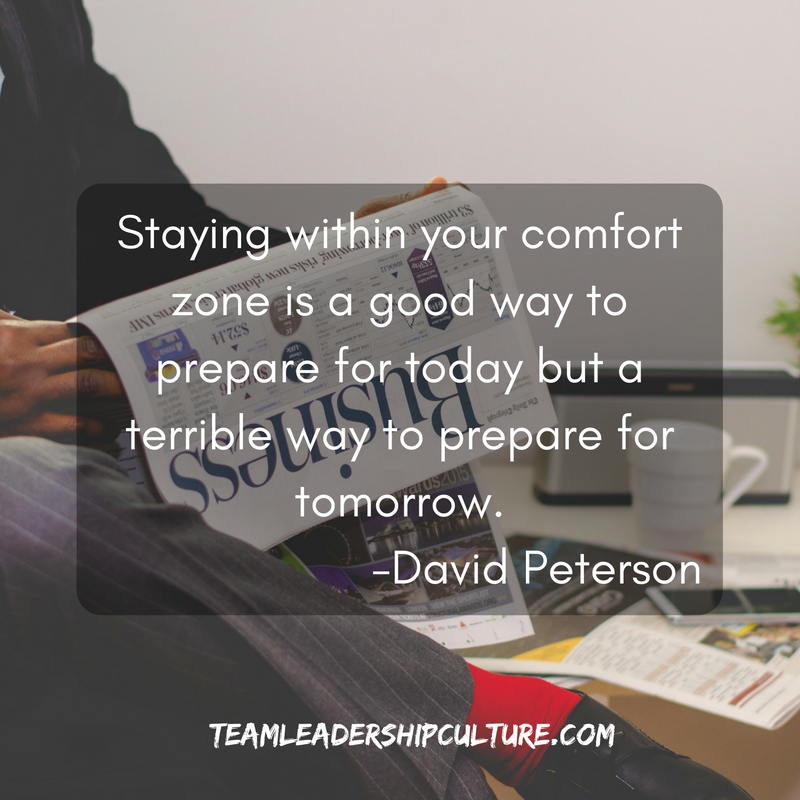
“Staying within your comfort zone is a good way to prepare for today but a terrible way to prepare for tomorrow.”

Now that is a wonderful line.

I’ve worked with Dr. Dan Denison for a number of years.  Dan created the Denison Culture Survey which in my experience is still the best culture survey on the market today.  But it was something Dan said years ago that has always captured my interest.  Dan is an amateur race car driver and he really enjoys the sport.  During one conversation he said “If you’re always in control as go around the track you’re not going fast enough to win.”  Race winners are always out of control at some point during the circuit.

None of us likes to be out of control or out of our comfort zone for long.  But personal learning and growth or even winning races require that we step out of that comfort zone or reach beyond our control at least some of the time.

One of the advancements we’ve all seen taking place the last few years is in “big data”.  By analyzing huge amounts of data new learnings are beginning to emerge that were just impossible to see in the past.  It’s amazing to me how IBM’s Watson is now being applied to medical situations and other environments to help the experts in the field see new information or see new patterns in the old information.  However, I’ve also seen a dangerous pattern in corporate leadership that assumes more data and information will help leaders make more informed and better decisions about the future.  Let me cycle back to the quote that started this post:

“Staying within your comfort zone is a good way to prepare for today but a terrible way to prepare for tomorrow.”

More data may help us prepare for and react better today, but we still need to get out of our comfort zone and let go of complete control to make good decisions about tomorrow.  Making decisions about tomorrow requires a different skill set than making decisions about today.

You may be better skilled on one side of this equation or the other.  Often I see partnerships where the Chief Operating Officer is good at making today’s decisions, the Chief Executive Officer is good at anticipating the future.  Corporate Controllers are good at making today’s decisions, Chief Financial Officers are good at preparing for the future.  I can think of this combination at almost every level of the organization.  So how do you build both skills into the organization?  TEAM.  Building great teams that are good at all aspects of today and tomorrow and learning how to balance the needs of the company are the winners in the end.  Sometimes you just need to get out of your comfort zone or let things get out of control for a moment to win!

Which side of this equation do you fall on?  Who have your partnered or teamed with that helps balance your comfort zone or need for control?

team-leadership-culture-meme-11

0 comments
0 FacebookTwitterEmail
BlogTrust Me

You First

by Ron Potter February 29, 2016

photo-1444076295597-e246c794dc5fCompassion is not easy or cheap. A leader who sincerely seeks to understand and care for others will pay a price. But the rewards are satisfying and great.

This post will examine compassion from the perspective of a “you-first” leader—the man or woman whose focus is on responding to the needs of employees, customers, and community before his or her own needs.

I urge you to be to be a person and leader known for radical acts of compassion. Here’s an incredible example:

It was 1944, and Bert Frizen was an infantryman on the front lines in Europe. American forces had advanced in the face of intermittent shelling and small-arms fire throughout the morning hours, but now all was quiet. His patrol reached the edge of a wooded area with an open field before them. Unknown to the Americans, a battery of Germans waited in a hedgerow about two hundred yards across the field.

Bert was one of two scouts who moved out into the clearing. Once he was halfway across the field, the remainder of his battalion followed. Suddenly, the Germans opened fire, and machine gun fire ripped into both of Bert’s legs. The American battalion withdrew into the woods for protection, while a rapid exchange of fire continued.

Bert lay helplessly in a small stream as shots volleyed overhead. There seemed to be no way out. To make matters worse, he now noticed that a German soldier was crawling toward him. Death appeared imminent; he closed his eyes and waited. To his surprise, a considerable period passed without the expected attack, so he ventured opening his eyes again. He was startled to see the German kneeling at his side, smiling. He then noticed that the shooting had stopped. Troops from both sides of the battlefield watched anxiously. Without any verbal exchange, this mysterious German reached down to lift Bert in his arms and proceeded to carry him to the safety of Bert’s comrades.

Having accomplished his self-appointed mission, and still without speaking a word, the German soldier turned and walked back across the field to his own troop. No one dared break the silence of this sacred moment. Moments later the cease-fire ended, but not before all those present had witnessed how one man risked everything for his enemy.


How would your business, your family, your community—our world—be better if more of these radical acts of compassion occurred on a daily basis?

An entire, well-established management perspective called the Servant-Leader has evolved from this concept of service to others. Robert K. Greenleaf of AT&T first used the term servant leadership in an early essay.

This is a very counterintuitive notion in a day when competition is fierce in nearly every area of life. You can’t “look out for number 1” and say “you first” at the same time. So then how do we learn to put others first?

Over the following weeks, we’ll be taking a deeper look at being a “You-First” leader through the Trust Me posts. Tune back in and join the discussion and share with your friends.

0 comments
0 FacebookTwitterEmail
Absurd!BlogIn-Depth Book Reviews

Absurd!: Giving Up Management Techniques

by Ron Potter February 25, 2016

photo-1454023989775-79520f04322cI’m continuing my series on an in-depth look at a wonderful little book that’s twenty years old this year.  The title is Management of the Absurd by Richard Farson.  You may want to consider dropping back and reading the previous blogs about ABSURD!  I think it will put each new one in great context.

Chapter 4 is titled: “Once You Find a Management Technique that Works, Give it Up”.

Farson states “The most obvious reason is that any management technique loses its power when it becomes evident that it is a technique.”

Technique is not a bad thing in and of itself.  One definition states “a skillful or efficient way of doing or achieving something.”  We actually spend most of our lives and certainly most of our business lives figuring out skillful and efficient ways of doing things.  And, for the most part, we get paid and promoted for getting even more skillful and efficient at doing things over time.  But note that it’s about doing things.

You might remember from our last blog that we need to relate to each other as Human Beings, not Human Doings.  Getting skillful and efficient at doing things is evaluated differently than being skillful and efficient at “doing” human beings.  Human beings require empathy, trust and patience and that will vary with each person.  Farson says “It is the ability to meet each situation armed not with a battery of techniques but with openness that permits a genuine response.”  Genuine response is the key.  People immediately notice if you’re using a technique on them vs being genuine.  People know!

Reciprocity Rule.  As stated by Farson:

One of the most useful ideas to remember is what we might call the “reciprocity rule” of human behavior: that over time, people come to share, reciprocally, similar attitudes toward each other.

That is, if I have a low opinion of you, then while you may for a time hold a high opinion of me, it is unlikely that your high opinion will persist.  Eventually you will come to feel about me the way I feel about you.

We believe we can acquire techniques that will hide our true feelings about people and enable us to convey an image of ourselves which they will respect, even though we do not respect them.  (Sounds like politicians to me)

Ultimately, people discover who we are and come to regard us as we regard them.  If we genuinely respect our colleagues and employees, those feelings will be communicated without the need for artifice or technique.  And they will be reciprocated.

Sounds a lot like something referred to as the Golden Rule.  Do onto others…..

Being a leader is being genuine.  There’s an old line that says “The key is sincerity.  Once you can fake that you’ve got it made.”  Guess what, you can’t fake it.  If you want to lead people you must be genuine.  You must look on them as human beings’ worthy of respect.  It’s the only thing that creates leaders that people want to follow.

0 comments
0 FacebookTwitterEmail
Newer Posts
Older Posts
  • Facebook
  • Twitter
  • Linkedin
  • Rss
  • About This Site
  • About
    • Clients
  • Services
  • Resources
    • Trust Me
    • Short Book Reviews
  • Contact

About this Site | © 2024 Team Leadership Culture | platform by Apricot Services


Back To Top
Team Leadership Culture
  • Team
  • Leadership
  • Culture
  • Myers-Briggs
  • Trust Me
  • Short Book Reviews