Team Leadership Culture
  • Team
  • Leadership
  • Culture
  • Myers-Briggs
  • Trust Me
  • Short Book Reviews
Top Posts
Obituary
REPOST: Four Functions, Three Rules
ROUNDUP: The Rise of AI
REPOST: Facing Adversity Series
ROUNDUP: Curiousity
ROUNDUP: Deep Work
REPOST: Character vs. Competence
REPOST: Opposite of Victim
REPOST: Listening With the Intent to Understand
REPOST: Performance vs Trust
  • About
  • Services
  • Resources
    • Trust Me
    • Short Book Reviews
  • Contact

Team Leadership Culture

  • Team
  • Leadership
  • Culture
  • Myers-Briggs
  • Trust Me
  • Short Book Reviews
Author

Ron Potter

Ron Potter

Short Book Reviews

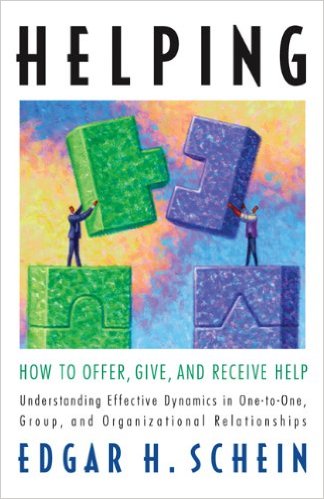
Helping

by Ron Potter May 3, 2016


Helping- How to Offer, Give, and Receive HelpRon’s Short Review:

I consider Edgar Schein one of the fathers of Organizational Culture thinking.  Read anything by Edgar and you’ll be learning something worthwhile.  In this simple book however, he gives some astounding advice on helping people in the most impactful way from your employee to your spouse to your child.  His framework of the roles of client and helper will quickly explain so much about why attempting to help sometimes works and sometimes doesn’t.
Amazon-Buy-Buttonkindle-buy button

0 comments
0 FacebookTwitterEmail
BlogMyers-BriggsYou Might Be Surprised

You Might Be Surprised: Thinking or Feeling – Part I

by Ron Potter May 2, 2016

You Might Be Surprised
Dave and Charlie had been best friends for most of their lives. They had met in college and seemed to share common interests in both the classes they were taking and in the great outdoors. Both of them loved camping, hiking and most of all fishing. As their careers began their work took them in different directions but they used their outdoor activities to stay connected and would schedule at least one fishing trip together each year. Families began to grow and the distractions increased but their annual fishing trip was never abandoned.
And then a wonderful thing happened about half way through their careers. All of a sudden they were working for the same company and ended up in the same city. As it turned out their children had all gone away to college and they had a bit more time to spend together and they took full advantage of it by adding some weekend outings and expanding their fishing adventures to all kinds of venues.
You probably couldn’t find two guys more compatible then Dave and Charlie. They knew their similarities added to their mutual bond.
Then one day Dave and Charlie ended up in one of my Myers-Briggs team building sessions. As I run the sessions I rearrange the people in the room around the conference table based on their positioning within each scale. This allows me to talk with those in the middle of the scale about their ability to adjust their behavior depending on the situation. It also allows me to talk with those who are solidly on one side or the other of the scale about how clear their preferences are and how they will default to those preferences in many situations and often without even much thought. It’s just natural.
As we progressed through the scales of Energizing (Extraversion and Introversion) and the Attending/Perceiving functions, Dave and Charlie weren’t far apart and I could often see them exchanging knowing looks. Then we came to the deciding function, the one identified by Thinking and Feeling.
Once we’ve taken in our information through either our Extraversion conversation or Introversion reflections and processed it through our Sensing attention to detail or our iNtuitive conceptual view, we then will decide. This Deciding function shows us how we approach decisions from either a very logical, practical angle or a Values based approach. While Thinking types will consider emotions and feelings as data to weigh their decisions will be made based on logic. And while the Feeling types will consider logic and objectivity as data to value, in the end they will make their decision based on values.
Well now the dynamics between Dave and Charlie had changed. Dave was solidly on the Thinking side of the table and Charlie was well into the Feeling side of the table and Dave was staring at Charlie in utter disbelief.
Finally, Charlie almost erupted. “There is no way this instrument can be valid! Charlie and I have known each other all of our lives and we are completely alike. There is no way he could be on the Feeling side of this category. That’s not who we are!!!”
Can you guess how Charlie reacted? Did he truly belong on the Feeling side of this preference? Did Dave really not know Charlie after all of these years? In our next Myers-Briggs based blog we’ll continue the story of Dave and Charlie. Please join us. You might be surprised.

0 comments
0 FacebookTwitterEmail
BlogCulture

Write the Perfect Email

by Ron Potter April 28, 2016

photo-1448932223592-d1fc686e76ea
I received an email the other day that was single spaced, over 1.5 pages long with almost no punctuation. Normally I would simply drop it in the waste basket or at the least drop it into the archives. However, in this case the email was from someone and on a topic that I thought was important for me to read, so I jumped in. I found that I had to spend time organizing the email into some sort of structure before I could gain any value from the contents.
I would only make that effort with less than one percent of the emails I receive. Which once again sends me to the topic of emails and how to use them effectively.
I use a service called Boomerang with my Gmail account that allows me to delay send emails (and I’m sure many other things that I haven’t even discovered yet). They send out periodic emails on what they are learning from how their many subscribers use the service. One analysis in particular caught my eye. The title of their year-end review is “Secrets of writing the perfect email”. They based their research on how many emails received a response. Here are a few of their secrets.

Message Length

Emails that get the greatest number of responses are 50-125 words long. KISS: Keep is simple stupid. Keep your emails to a single topic with a limited number of points. People don’t and won’t take time to sort through multiple points in a given email and even if they did how do they respond? An email with multiple responses or individual emails for each of the response. Don’t force them into that choice.

Subject Length

3 and 4 word subjects had a slight edge over 2 and 5 word subjects but a much larger edge over 2 and 6 word subjects. The more important issue to me is to make your subject specific and let your receiver know the purpose.

Reading Level

3rd Grade! Really? 3rd grade reading level gets the best response? But we’re writing to people with MBA’s and higher. Why would we need to “dumb” it down to a 3rd grade level? The article explains that,

“The main components of reading grade level are the number of syllables in your words and the number of words in your sentences. So try using shorter sentences and simpler words.”

KISS again.

Email works best when we’re using it to perform very simple and straight forward tasks and writing it such that the purpose is abundantly clear and easy to make a response.
Winston Churchill once said “Golf is a game whose aim is to hit a very small ball into an ever smaller hole, with weapons singularly ill-designed for the purpose.” Email is a weapon singularly ill-designed to do anything other than share information and request simple straight forward answers. Use it only for its intended purpose.

0 comments
0 FacebookTwitterEmail
BlogMyers-BriggsYou Might Be Surprised

You Might Be Surprised: Intuitors Acting Like Sensors – Part II

by Ron Potter April 25, 2016

You Might Be Suprised

Is Sally the data miner a Sensing type or Intuitive type?

Spoiler alert!!!  To fully appreciate this post take just a minute and read our last post that sets the stage for understanding Sally.

When we left Sally she was preparing a presentation to the leadership team.  She really wanted them to “get it” so she had asked her staff to gather every shred of data available on the issue.  After her staff had assured her that there was no more data to be had, Sally went to work pouring over the data, learning and understanding every piece of it.

At this point it might be easy to assume that Sally is a Sensing type.  Sensing types like to present the details of their work first, they usually proceed step-by-step and seldom make error of fact.  But what we haven’t yet seen is how Sally views and uses the data that she so meticulously gathered.

Sally always wants her projections to be fact-based.  She knows that several members of the leadership team will check her facts and she wants to be prepared.  But what Sally actually does with the data is to look for trend lines, inflection points and other “implied” results that the data can suggest.  She is always looking into the future.  “What does this data produce in the long run?”  “What opportunities or threats does the data lead us to think about ahead of time?”  “How does this align with our long-term goals?”  Sally isn’t worried about what needs to be done by Friday, she wants to know of we’re preparing ourselves for the future.  Sally is a very Intuitive thinker.

It’s not just the Sensing types that make sure the facts are correct or are the only ones who base their decisions on the facts.  Intuitive types are fact based as well.  But they want to both start with the long-term projections and implications and understand where the trends are going to lead us.  They also want to know about the decisions we’re making today and if they will lead us in the intended directions.

Sally is an Intuitive type on the Myers-Briggs scale.  That doesn’t mean she ignores the facts or makes her decisions on “gut instinct” only.  It simply means that her search for meaning and direction in the data will influence her decision making.

Most of the mistakes that amateurs (and even some Myers-Briggs practitioners) make is bases our assumptions on behaviors that may lead us to assume that a person is a Sensing or Intuitive type.  Be careful.  You might be surprised!

0 comments
0 FacebookTwitterEmail
Absurd!BlogIn-Depth Book Reviews

Absurd!: Technology Creates the Opposite of its Intended Purpose

by Ron Potter April 21, 2016

photo-1434494343833-76b479733705I’m continuing my series on an in-depth look at a wonderful little book that’s twenty years old this year.  The title is Management of the Absurd by Richard Farson.  You may want to consider dropping back and reading the previous blogs about ABSURD!  I think it will put each new one in great context.

Chapter 7 is titled: Technology Creates the Opposite of its Intended Purpose

Our author anchors this chapter with the statement “Technology helps us in countless ways, but it always backfires.  The term for this phenomenon in medicine is iatrogenic, meaning “physician-induced.”  There are more than a thousand different diseases that would not exist if not for the practice of medicine and the existence of hospitals.”

A couple of years ago I personally experienced one of these iatrogenic hospital infections.  The heart operation I went if for went well and I would have recovered quickly except that I contracted one of the hospital infections that made my daily life miserable and actually caused more life threatening risk than the heart operation.  Now, had my father and the kind of heart operation available to him years ago like I do today, he may have lived long enough to know his grandchildren.  So the intended consequence of better heart care was indeed met.  But the unintended consequences of difficult to contain and kill hospital infections was itself more life threatening.

Two major consequences that I see playing out in the corporate world today that fit into this category are email and forecasting.

Email and Forecasting

I’ve written about email in other posts and probably will again but let me summarize quickly here.

I couldn’t run my business today (nor could any other enterprise) without email.  And in fact as I was cleaning out some cupboards this week I came across my original Blackberry.  The Blackberry was introduced in January 1999.  I believe I purchased mine in March of 1999.  I’m not opposed to email or the devices we use to send and receive.

The problem I have is that emails are not well suited for many reasons other than exchange of information (iatrogenic).  Because of the proliferation and 24/7 availability of email we tend to use it for project management, decision making, arguments, disciplining, developing and a whole bunch of other reasons where it just doesn’t work very well.  Use it for information sharing but put it down and call or meet with the person or team to solve, improve or advance all of the other issues.

Forecasting is another place where I see the siren song of technology creating unintended consequences.  The belief seems to be that if we just have more information (often striving for “all” the information) it will help us become better forecasters.  Brain science debunks that theory right off the bat.  The human mind is just terrible at forecasting.  If you want to debate me on that statement, I’ll start with political polls and forecasts.  End of argument!  And other research done by the people who actually study forecasting for a living tells us that the companies who seem to be best at forecasting do it with a minimum amount of data.  More data doesn’t make better forecasting.

And of course to end on a personal note that all of us have either experienced or participated in, just watch the family out for dinner sitting at the same table together, each on their device “communicating” with someone else.  It’s an astounding and sad example of technology creating the opposite of its intended purpose.

0 comments
0 FacebookTwitterEmail
BlogTrust Me

A Life of Integrity

by Ron Potter April 18, 2016

photo-1415226581130-91cb7f52f078 (1)Before Peter Parker—the superhero Spider-Man—went public with his newfound superpowers, he had a heart-to-heart conversation with his Uncle Ben. Sitting in the car, Uncle Ben admonished, “These are the years when a man becomes the man he’s going to be for the rest of his life. Just be careful who you change into. You’re feeling this great power, and with great power comes great responsibility.”

Although these are fictional characters, Uncle Ben’s advice was sound: Be careful what you become.

Stephen Covey’s insights on staying consistent to a vision are well known but deserve repetition. He writes:

[To] “begin with the end in mind” is to begin today with the image, picture, or paradigm of the end of your life as your frame of reference or the criterion by which everything else is examined.… By keeping that end clearly in mind, you can make certain that whatever you do on any particular day does not violate criteria you have defined as supremely important, and that each day of your life contributes in a meaningful way to the vision you have of your life as a whole.

Peter Drucker describes the “mirror test” in which leaders make sure that the person they see in the mirror in the morning is the kind of person they want to be, the kind of person they can respect and believe in.  If there is a lack of consistency between our public and private lives, then eventually we will be unable to manage the divide. Integrity will crumble. We read of far too many leaders who have fallen as the truth about their private lives has emerged.

Living a “whole” life means doing things in a way that is consistent with our values and vision. It means standing firm on tough issues and making difficult choices. In a word, it means integrity. Here are three ways to reach that goal.

Act boldly

Bold acts issue from a person who has unshakable confidence. That confidence comes from knowing the principles that guide your life and knowing that these principles will lead to integrity.

It is important to know the values and principles that drive your behavior. Only then will you have the confidence to act boldly in spite of peer pressure or prevailing opinions.

Leaders who want a total quality life seek to act boldly when faced with compromising decisions and actions. They have no fear because they fall back on their values and their deep need to live a life of integrity and trust.

Exhibit a great attitude

Another path to integrity as a “whole” existence is to approach all you do with a joyful, positive, uplifting mind-set. The pursuit of integrity requires what is best and noble in your character. You can’t afford the defeating, polluting influence of a negative outlook.

Performance specialist Dr. Bob Rotella writes about golf, yet his insights translate to leadership as well: “Standing on the tee and thinking about your drive going to the target doesn’t guarantee that it will go there. It only enhances the chances. [By contrast] Negative thinking is almost 100 percent effective.”

To succeed in business or any other challenge, we must maintain a great attitude. No matter what the obstacle or opposition, successful leaders believe they can overcome and win the battle. Their mind-set influences their performance, and there is no substitute for a positive outlook.

Understandably, it is hard to have a positive perspective when we are weighed down by doubts about our own character. When we’re one person in the mirror and another person to our employees, we’re divided and out of sync. When we—or others—question our integrity, it’s difficult to not allow doubt to overshadow our attitude and performance.

Develop trust

Integrity and trust are interwoven like two strands in a tightly wound cord. It’s really impossible to have one quality without the other. How do you become a person others trust?

In the organizational setting in particular, trustworthiness is based on both character—what you are—and competence—how well you do what you do. It is quite possible to have one quality and not the other. If you have confidence in my character but consider me woefully incompetent at my job, you may like me but not trust me.

Trustworthy people are dependable and consistent; their actions and lifestyles set an example of integrity and competence.

Building trust takes time. We can trust others and gain their trust when certain qualities are present, but we also need to remember that years of baggage associated with our personal lives, our leadership style, and how we do things can get in the way. Therefore, patience and understanding become necessary allies as we sort through our lives and seek to trust others.

0 comments
0 FacebookTwitterEmail
BlogCulture

High Achievers

by Ron Potter April 15, 2016

photo-1447185891480-252d7554aa8bDo you know those individuals or see those teams that you would label “high achievers?”  My guess is that at least a few people and teams come to mind when I ask that question and I also believe that it’s likely that you fall into that category as well.  But do you know why you and they get labeled as high achievers.

One of the most interesting research studies that I came across several years ago indicated that it was about setting proper goals.  As it turns out, those individuals and teams that gain that desirable label set “publicly stated goals” they believe are about 75% achievable.  Now that may initially sound like a slam dunk but if you think that there is a 25% chance of failure, it seems like a reasonably high goal.

Publicly stated is a concept that must be explored for a minute.  And individual may say to their boss or team, I will accomplish this much in this amount of time.  That’s a publicly stated goal.  A boss may say to a direct report or the team, you will accomplish this much in this amount of time.  That’s also a publicly stated goal.  It makes no difference who the source of the goal setting is, once it has been made public, that’s the goal.

Back to our high achievers, once their publicly stated goal has been set, they then set out towards a level of achievement that feels like they have about a 50-50 chance of accomplishing.  This effort is taken on privately and they believe it will be accomplished by hard work, thinking smart, collaborating with their team mates.  In the end, results usually fall between that 75% chance and the private 50% target and once they do this on a consistent basis, other people begin to seen them and label them as high achievers.

But here’s the interesting part to me.  When a publicly stated goal gets set that the participants believe they have less than a 50-50 chance of accomplishing, that’s demotivating.  They give up.  They’ve lost hope.  Leaders need to be very careful in setting targets and goals for their team.  But, I’ve also seen teams set their own goals that fall into this category.  A team may have many initiatives and projects slated for the coming year.  If I ask the team to evaluate each of the initiatives, they’ll often fall in that 75-50% range.  But when I ask them to take all of the initiatives as a whole, what do they believe their chances to be?  They often fall below the 50-50 threshold.  Beware, even self-inflicted goals can fall outside the high achieving margins.

Hope

Hope is the real subject of this blog.  Research indicates that people who have a higher level of hope; sleep and exercise more, eat healthier foods, have fewer colds, less hypertension and diabetes, are more likely to survive cancer and have less depression.  Wow, if a pharmaceutical company could bottle that they’d have the biggest blockbuster drug of all time.

According to Anthony Scioli, a professor of psychology at Keene State College in Keene, N.H., hope is made up of four components:

Attachment is a sense of continued trust and connection to another person. This is why it takes a team.

Mastery, or empowerment, is a feeling of being strong and capable—and of having people you admire and people who validate your strengths. Development and Encouragement.

Survival has two features

A belief that you aren’t trapped in a bad situation and have a way out

An ability to hold on to positive thoughts and feelings even while processing something negative. Spirituality is a belief in something larger than yourself.

Be very careful about goal setting, both set by yourself and those set for you.  Your hope (and health) depend upon it.

0 comments
0 FacebookTwitterEmail
BlogMyers-BriggsYou Might Be Surprised

You Might Be Surprised: Intuitors Acting Like Sensors – Part I

by Ron Potter April 11, 2016

You Might Be Suprised

Sally runs a division of a company in a highly technical industry.  At her disposal is a team and technology that can dig into any question and come up with reams of data to support the analysis.  Sally with collect this data, cross-reference it, put as much of it into spreadsheets and data base systems that would blow your mind.  At her fingertips she can go deeper and deeper into any question or issue until she reaches the base level of data and facts that support the whole structure.

When her people approach Sally they know where the question is going to head:

  • Where’s the data on this issue?
  • To what level of depth have you uncovered?
  • How recent is the data?
  • Have we gathered it from more sources than just our own?

And on and on.  Sally wants to be sure that we have all of the data that’s available to us as we search for answers and directions.

Once Sally feels that she has all the data to be had, she’ll spend hours poring over the spreadsheets of data looking for the insight and understand that she needs to present her finding to the leadership team.  She really wants to make sure they “get it” based on the facts.

What do you think?  Is Sally as “Sensing” or an “Intuitive” type?

Myers-Briggs gives us some quick sketches for each type:

  • Sensing
    • Like to present the details of their work first
    • Seldom make errors of fact
    • Like using experience and standard ways to solve problems
  • Intuition
    • Like to present an overview of their work first
    • May make errors of fact
    • Like solving new complex problems

So, what do you think?  Sensing or Intuition?

In our next Myers-Briggs based blog we’ll continue the story of Sally the data miner.  Please join us.  You might be surprised.

0 comments
0 FacebookTwitterEmail
Absurd!BlogIn-Depth Book Reviews

Absurd!: Most Problems are Not Problems

by Ron Potter April 7, 2016

95cdfeefI’m continuing my series on an in-depth look at a wonderful little book that’s twenty years old this year.  The title is Management of the Absurd by Richard Farson.  You may want to consider dropping back and reading the previous posts about ABSURD!  I think it will put each new one in great context.

Chapter 6 is titled: Most Problems That People Have are Not Problems

Farson calls this problems vs predicaments.  Problems can be solved; predicaments can only be coped with.  He goes on to say “Most of the affairs of life, particularly the most intimate and important ones are complicated, inescapable dilemmas – predicaments where no options look very good or better than any others.”

Horns of a dilemma

To me the key word is right in the middle of that statement: dilemmas!  You’ve heard the old adage “on the horns of a dilemma.”  It literally meant for you to think about your predicament as the horns of a bull.  The reality is that you’re going to get gored either way!  All you can do is to pick which horn will do the goring.

Right vs Right

In his book Primes Chris McGoff describes these issues as “right vs right.”  They are not right vs wrong, that’s a problem to be fixed.  They are right vs right.  Either way is equally right (or wrong) but you have no other options, you must choose one direction and commit to it.

Solving a Predicament makes it worse

Farson continues to say, “A problem is created by something going wrong, by a mistake, defect, disease, or a bad experience.  When we find the cause, we can correct it.  A predicament, however, paradoxical as it may seem, is more likely to be created by conditions that we highly value.  That is why we can only cope with it.  Thus, a predicament is often made worse when we treat it as a problem.”

Frame the Issue Properly

In the corporate world most predicaments and dilemmas are framed as right vs wrong problems.  People end up on one side or the other and will argue in favor of their point of view and the demise of the opposing point of view.  But as Farson states that makes the issue all that much worse.

Be very careful to frame your issue correctly.  Is it a problem that can actually be fixed?  Or should we understand it as a predicament or dilemma that requires choosing between two rights or two wrongs?  If we can only frame it properly we’ll be much more successful at coping with difficult situations.

0 comments
0 FacebookTwitterEmail
BlogTrust Me

The Real Deal: The Barriers to Integrity

by Ron Potter April 4, 2016

photo-1453230806017-56d81464b6c5The root word for integrity is integer—a whole or complete number. Leaders who focus on integrity chose to live a “whole” life.

Of course, they won’t do it perfectly, but in spite of normal and expected human frailties, a principled leader strives to be whole, undivided. He or she is “the real deal.”

William Pollard wrote in The Soul of the Firm,

As we seek to understand and apply a cause for our work, our desire is not to be known for what we know but for what we do and who we are. We must be people of integrity seeking to do that which is right even when no one is looking and staying committed whether the test is adversity or prosperity.

Yes, that’s exactly it. Integrity.

Fear

Anyone called into the principal’s office in elementary school understands the fear associated with integrity. Do I tell the truth? Do I keep my friends out of trouble? What will happen to us if I tell the principal exactly what we did?

If we do not combat fear, a downward spiral begins. Fearful thoughts lead to paralysis. President Harry S. Truman once said,

The worst danger we face is the danger of being paralyzed by doubts and fears. This danger is brought on by those who abandon faith and sneer at hope. It is brought on by those who spread cynicism and distrust and try to blind us to the great chance to do good for all mankind.

When we are paralyzed by fear, we tend to lose perspective and often make decisions or act in ways that do not support our integrity. Fear-caused paralysis then leads to procrastination.

Fear does tend to immobilize. Our people, the project, and the organization wait for us to act, and we cannot. When they observe our inaction, people begin to wonder what is so important about the assignment or initiative. Our lack of action sends a powerful—if unintended—message: Our actions (or resulting inactions) do not match our intentions.

Finally, as we hit bottom in this fear spiral, procrastination leads to purposelessness. We find ourselves losing our vision and hope. We vacillate and lose heart. We are paralyzed, we procrastinate, and then we simply give up. Integrity and living a life of quality sink below our radar. We expect—or others expect us—to deliver results, but we are bound by such fear that we lose our sense of direction and, along the way, our core strength.

Compromise

Compromising values happens gradually over time—one little lie or indiscretion adds to another until, almost imperceptibly, integrity and character erode. Finally, at some point our integrity is overwhelmed.

Most people don’t just plunge into compromising situations. It happens one step at a time.

Many of the business tragedies we are living through today started as minor omissions or small wrong decisions. Over time they grew, and suddenly the CEOs found themselves telling lies to their stockholders, employees, and the media. Records were fudged; fortunes have been lost. And it all started with one small compromise.

Hypocrisy

Sir Francis Bacon once wrote, “A bad man is worse when he pretends to be a saint.” Hypocrisy, like fear and compromise, can destroy integrity and render leaders trustless.

In leadership, integrity is about actions matching beliefs. Do leaders “act” the part or are they genuine? Does their walk match their talk?

I once worked with a company where the CEO played many “parts.” In fact, he played so many parts that on many days the employees could not uncover who he really was. He was one person to the stockholders, another to his direct-reports, and a third person to employees (when he chose to speak to them). He would talk eloquently at company meetings about teamwork but work hard behind the scenes to create fear and tension between the divisions. He would promise profits to the shareholders but make wasteful decisions that eroded profits and cash flow. Eventually he left the company, but the wake of his hypocrisy nearly bankrupted the organization.

Fear, compromise, and hypocrisy are daunting barriers to a life of integrity. But living the alternative—a whole life of integrity—is definitely possible and well worth the effort.

One last thought:

If I don’t believe you have integrity, I’m not interested in being influenced by you.  If we think about it we would probably all agree with that.  Leadership is only influence!  If you lose your integrity, you lose your ability to influence, you lose your ability to lead!

1 comment
0 FacebookTwitterEmail
Short Book Reviews

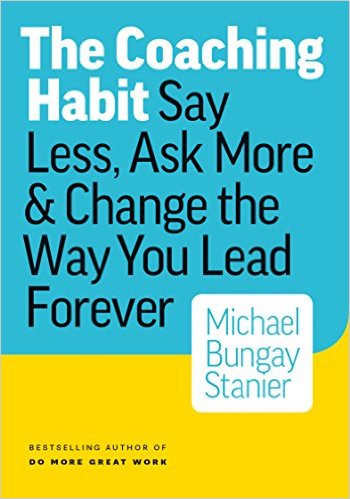
The Coaching Habit

by Ron Potter March 31, 2016

The Coaching HabitRon’s Short Review:

The subtitle says it all: Change the way you lead forever!  This quick, small book with seven great questions will change the way you lead.  Worth reading.

Amazon-Buy-Buttonkindle-buy button

0 comments
0 FacebookTwitterEmail
Short Book Reviews

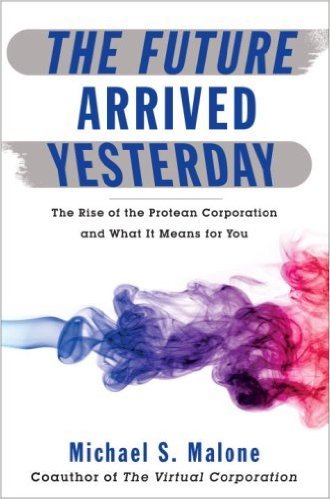
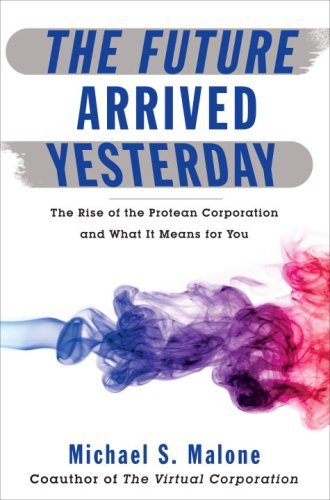
The Future Arrived Yesterday

by Ron Potter March 31, 2016

Ron’s Short Review:

Great view of how our rapidly changing technology and expectations of the next generation of young people are going to change the structures of our corporations.  Written way back in 2009, you can see much of this playing out already.

Amazon-Buy-Buttonkindle-buy button

0 comments
0 FacebookTwitterEmail
Newer Posts
Older Posts
  • Facebook
  • Twitter
  • Linkedin
  • Rss
  • About This Site
  • About
    • Clients
  • Services
  • Resources
    • Trust Me
    • Short Book Reviews
  • Contact

About this Site | © 2024 Team Leadership Culture | platform by Apricot Services


Back To Top
Team Leadership Culture
  • Team
  • Leadership
  • Culture
  • Myers-Briggs
  • Trust Me
  • Short Book Reviews