
Team Leadership Culture
  • Team
  • Leadership
  • Culture
  • Myers-Briggs
  • Trust Me
  • Short Book Reviews
Top Posts
Obituary
REPOST: Four Functions, Three Rules
ROUNDUP: The Rise of AI
REPOST: Facing Adversity Series
ROUNDUP: Curiousity
ROUNDUP: Deep Work
REPOST: Character vs. Competence
REPOST: Opposite of Victim
REPOST: Listening With the Intent to Understand
REPOST: Performance vs Trust
  • About
  • Services
  • Resources
    • Trust Me
    • Short Book Reviews
  • Contact

Team Leadership Culture

  • Team
  • Leadership
  • Culture
  • Myers-Briggs
  • Trust Me
  • Short Book Reviews
Author

Ron Potter

Ron Potter

BlogTrust Me

Building Team Dynamics – Part I

by Ron Potter August 1, 2016

photo-1454006639960-af9b6a303eae

Often, the basic question from leaders is reduced to “How do I build teams without blowing the place up?” Following are some suggestions.

Start with the “Two Pillars”

This book is centered on eight principles of successful leadership. What we call the “two pillars”—the key principles that support and are intertwined with the others—are humility and endurance. A leader who desires to build a great team must first become a leader of humility and endurance. Pride and despair always force leaders to choose incorrect methods and solutions.

It is difficult to build a team when you need to be the center of attention, the only voice, the only one with an idea, and the only one who can make a decision. It is also difficult to build a team when, at every sour turn, the team stumbles and fails or doesn’t learn from failure. Endurance means pushing through struggles together until the results are positive. Leaders, by the way they respond to crisis and chaos, often cause teams to quit sooner than necessary.

Michael Gershman, in his book Getting It Right the Second Time, squeezes forty-seven case studies into 256 pages. All teach one lesson: humility. And one credo: Try anything. Keep trying. Maybe you’ll get it right someday. Endurance.

The two pillars, humility and endurance, produce leaders who are ready to excite, energize, and develop teams.

Understand, Accept, and Communicate Change

The business world has begun to see the need for entirely new models of management in order to succeed in regaining and defending competitiveness in today’s world economy. The old paradigm of management that had guided the U.S. economy since the rise of the railroads and the large corporations of the Industrial Revolution no longer seems to work. Firms struggled to remake themselves in order to be competitive.

Today we live in a rapidly changing postindustrial society that is becoming increasingly complex and fluid. It is an environment that requires decision making and sometimes rapid change within organizations. Surviving and thriving in this rapidly changing landscape becomes a function of an organization’s ability to learn, grow, and break down institutional structures within the organization that impede growth. Organizations that are ideologically committed to growth and change will be at an advantage in the postindustrial era.

In his book Leading Change, John Kotter explains how leaders can effectively communicate change in their organizations. All of us at one time or another fully understand the confusion caused by change. Kotter writes,

Because the communication of vision [change] is often such a difficult activity, it can easily turn into a screeching, one-way broadcast in which useful feedback is ignored and employees are inadvertently made to feel unimportant. In highly successful change efforts, this rarely happens, because communication always becomes a two-way endeavor.

Even more important than two-way discussion are methods used to help people answer all the questions that occur during times of change and chaos. Clear, simple, often-repeated communication that comes from multiple sources and is inclusive of people’s opinions and fears is extremely helpful and productive.
0 comments
0 FacebookTwitterEmail
Short Book Reviews

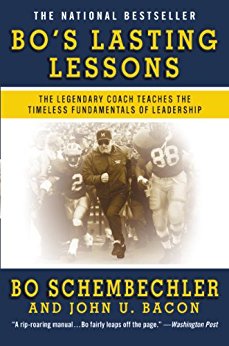
Bo’s Lasting Lessons

by Ron Potter August 1, 2016

Ron’s Short Review: Yes, you will enjoy this more if you’re a Michigan fan but Bo Schembechler was a great coach and leader and his leadership lessons are timeless. Even if you’re green or scarlet I still think you’ll enjoy this one.

0 comments
0 FacebookTwitterEmail
BlogCulture

Can Stupidity be Cured?

by Ron Potter July 28, 2016

photo-1428591850870-56971c19c3d9

Well, it’s not actually a disease so there is no cure.  However, there is an antidote.

I was with my oldest friend the other day.  We’ve known each other since we were born so there are some very old memories hanging around.

One of those memories involves an ancient dam that held back the river in the small town where we grew up.  One summer day as we were roaming through town looking for something interesting to do when we decided to work our way across this ancient dam.  There was a catwalk from one side of the river to the other but it was not reliable and certainly wasn’t fully in place across the entire river.  But we headed across anyway and either through bravery or stupidity (most like the later) we worked our way across some very precarious sections as we watched the water rapidly cross the top of the dam and cascade down to the river below.

When we returned home that evening the natural question first asked by our parents was “What have you been doing?” Probably because we were still a bit excited about accomplishing the goal, we freely told tales of conquering our fear and achieving the goal of crossing the river.  With open jaws and terrified looks on their faces one of the parents finally said “Did you ever stop to think?  Do you know how stupid that was?”  Well, there it was; both the disease of stupidity and the antidote of stopping to think.

But I was a young teenager at that point, certainly I’ve become wiser through the years.  But, it’s amazing to me how many corporate teams I work with seem to exhibit that same level of teenage stupidity, not stopping to think.

Because of the pace and globalization of today’s businesses, there it a belief that we must decide quickly in order to survive.  But quick deciding is a relic of the industrial age.  The banner of the industrial age is quicker, better, cheaper.  But that only works when your future is clearly defined and the path is known.  Then you can work harder and be smart enough to beat the competition by being quicker, better, cheaper.  But through the information age and in particular as we move into the conceptual age, we’re often trying to see around corners and over horizons.  This takes learning and working with perspectives.  Today we need to stop and think.  We need an attitude of quick learning leading to good decisions.

Quick learning environments require us to be open to perspectives and opposing thoughts and beliefs.  It takes a great team environment in order to work through opposing views and build to commitment of a unified direction.  It requires that we stop and think.

Move out of the quick deciding world and into the quick learning world.  You’ll make better decisions if you stop to think.

0 comments
0 FacebookTwitterEmail
BlogMyers-Briggs

Ancient Tales of Modern Day Woes

by Ron Potter July 25, 2016

photo-1456051580611-e193e8fb2cc9Long, long ago in a land far, far away I was summoned to the Court of the Farthing Orderer, better known as the office of the CFO.

Upon responding to the summons, the CFO looked at me long and hard for several minutes.  Finally speaking he said, “You dress funny.  All of us wear court garments of green and white but you are dressed in a strange combination of maize and blue.”  But that’s another story to be revisited after the fall jousting season.

Now this CFO was a bit portly and slightly balding, not a particularly striking figure.  However, he seemed to be very wise, was very good at ciphering and the other people of his court enjoyed working under his guidance.

“For what need have you summoned me?” I asked.

“One of my Knights,” the CFO responded. “I’m having a great difficulty understanding his speech.”

“Is he from a foreign land?” I asked.

“No,” responded the CFO. “He grew up in a court much like ours but in a smaller kingdom.”

“Is he performing poorly or not exhibiting the integrity of a Knight?”  I probed.

“Quite the opposite,” said the CFO. “He has performed extremely well over the few years he’s been here and the King is very pleased with his work.”

Humbly bowing to the CFO I said, “I’m sorry for my ignorance, sir, but I really don’t understand the problem.”

“The problem is,” responded the CFO. “I never know where he is or what dragon he is slaying or how that slaying is going to further protect the Kingdom.  I need better information to tell the King when he asks about the Knights exploits.”

“Alright, I need to talk with this Knight, where shall I find him?”

The CFO looked at me blankly and said, “Have you been listening to anything I’ve said?”

“Never mind,” I said. “I’ll find him.”

When I found our knight, I decided to take the direct route and said, “The CFO never knows where you are or what you’re doing, you need to communicate more.”

The Knight looked at me dumbfounded and said, “You’ve got to be jesting me!  I talk to the CFO all the time.”

  • In the morning before the court is even open I tell him about my long-range plans while we’re practicing our sword play.
  • When I pass him in the great corridor of the King, I give him a quick update on all fronts.
  • I’ll often whisper in his ear during the Great noon-time Feast.
  • Even while having an evening ale I’ll give him a quick update.

I talk with him all the time.  How could he need any more communication?”

And in that moment I saw the problem.  Long ago I learned from a certain seer from the land of MBTI that two particular types of people often have a difficult time communicating.  It seems that the CFO was an IS and the Knight was an EN.  Hmmm…. I thought, how can I get this IS and EN to better understand each other?

I suggested to our EN (Extraverted iNtuitive) Knight that he nail a one-page outline of his weeks slayings to the CFO’s door every Monday morning.

“But that’s so restrictive,” said the knight.  “How could I possibly convey all that’s going on in a one-page outline?”

“Humor me,” I said.

Three weeks later I asked the IS (Introverted Sensing) CFO, how are things going?

“Splendid!” were his words.  “I know exactly where our Knight is and what dragon he’s slaying.  The King and I are both very pleased.”

The moral of the story?  Even if you grew up and work in the same court together, don’t assume your communication is being understood.  Know enough about all of the “languages” being spoken and heard to assure good understanding and communication.

0 comments
0 FacebookTwitterEmail
BlogTrust Me

How Can We Work Together?

by Ron Potter July 18, 2016

photo-1465516001080-8d478e10a809
Leaders at all levels grapple with the challenge of getting people to pool their talents and work with, not against, one another.
Often frustrating to leaders is a team that consists entirely of “stars” who can’t or won’t play together as a team to “win the championship.” In an era of knowledge workers, leaders find themselves with nonfunctioning teams of all-stars who can easily undermine them. (Peter Drucker defines knowledge workers as those who “know more about their job than their boss does and in fact know more about their job than anybody else in the organization.”)
Chuck Daly, the first coach of America’s Dream Team, found himself needing to take basketball players like Michael Jordan, Magic Johnson, and Larry Bird and build a team of champions, not just a group of incredible superstars. Coach Daly used all his coaching experience, leadership ability, and basketball knowledge to mold this group of all-stars into a team.

You will see a team of professionals in the Olympics again,” said Daly. “But I don’t think you’ll see another team quite like this. This was a majestic team.

Coach Daly could not mold these incredibly talented basketball stars into the successful team they became by keeping the focus on himself. On the other hand, he could not surrender the basic basketball concepts he knew would help the team win a gold medal. He was a builder and a success at developing teams.
Teamwork doesn’t just happen. A winning team is not formed by a miracle of nature. You cannot just throw people together (even knowledge workers or pro basketball stars) and expect them to function as a high-performance team. It takes work. And at the core of team building is the desire to develop people and create a calm environment in which productive growth and seasoning can occur.
When leaders tolerate poor teams or even promote them through their own leadership style, organizations find themselves misaligned. Employees use this out-of-plumb structure just like children who play off each quibbling parent to get their own way. Leaders need to stop this behavior and get teams realigned. Leaders sometimes empower direct-reports to perform tasks or projects that are actually opposed to each other.
When team members come to me, they also have questions. Typically, the questions team members ask are about themselves: “How do I deal with difficult team members?” or “How do I get heard?” These are self-directed questions. The team members are concerned about themselves—getting heard, getting ahead, getting along, and getting their jobs done.
In most cases the leader has not developed the team to the point of understanding the full value of synergy. The team members do not understand that the sum of their collective output will be greater than the work they could do individually.
Worse, many executive teams are not convinced that synergy can happen at the leadership level.
It falls on leaders to get teams excited about working together—about creating synergy. Many of the team members’ questions and wants can be overcome when they feel the power of working together and achieving the goals of the team.

0 comments
0 FacebookTwitterEmail
Absurd!BlogIn-Depth Book Reviews

Absurd!: Active Listening Doesn’t Work

by Ron Potter July 15, 2016

photo-1454625191319-786c05137ef5Here’s what does work

I’m continuing my series on an in-depth look at a wonderful little book that’s twenty years old this year. The title is Management of the Absurd by Richard Farson. You may want to consider dropping back and reading the previous blogs about ABSURD! I think it will put each new one in great context.

Listening is More Difficult than Talking

I’ve never liked the concept of “Active Listening.” It seemed to me that people who were taught the technique simply repeated what they heard so that the speaker knew they had been understood. However, when you repeat back what you heard you sound like a parrot and aren’t really explaining how or what you heard based on what the speaker was trying to express.

One of Farson’s statements in this chapter really hit a cord with me: “Carl Rogers and I introduced the phrase “active listening” in 1955. I would not write such a piece today. The main reason is that I no longer believe that genuine listening should be reduced to a technique.” (Emphasis is mine)

I’ve always asked my clients (and myself): Are you listening with the intent to respond or are you listening with the intent to understand? If we’ll admit it, most of us listen with the intent to respond. I know I’m doing this most of the time. While the other person is speaking I’m creating my checklist:

  • I agree with that, I’ll reinforce it.
  • I don’t agree with that and here’s how I’ll counter it.
  • I can think of at least three points they haven’t even considered yet that I’ll point out as soon as they take a breath.
  • etc.

Rather than truly listening in an attempt to understand what the other person is trying to deeply express, we’re getting ready to either reinforce or counter in our own words, knowing that as soon as the other person hears our point of view, they’ll understand and agree with us.

Author Farson quickly counters that belief with “Research tells us that people are more likely to change when we reverse the flow of communication, that is, when people are not talked at but when they themselves have a chance to talk.” People are more likely to change when they have a chance to talk! Wow, there’s a paradigm shift for most of us. We don’t really convince other people, they convince themselves when we help them talk through the issue by listening and asking questions that demonstrate that we’re trying to understand!

Farson also points out that “Good listening is inordinately difficult, even for experienced listeners.” Listening takes a lot of energy. I don’t have the energy to stay in that mode all of the time, but when I do shift into my “listening to understand” mode it’s amazing how much people respond to that experience. I often spend several hours talking/listening one-on-one with my clients. If I’ve been in the right listening mode, many of them have said to me “You now know more about me than anyone.” That statement in itself is absurd but it’s amazing how different people feel when you actually listen to them.

While Farson makes many great points in this chapter, I want to close this blog on one particular thought that he put forth, “Listening to others means having to be alert to one’s own defensiveness, to one’s impulse to want to change others. That requires a level of self-awareness, even self-criticism that is often not easy to endure.” Listening requires humility. When we really listen we have to question our own understand and perspective on an issue. We may even begin to change our own mind. So while research says that people change when you give them a chance to talk, be aware that you yourself may change by being a better listener. Win-win.

1 comment
1 FacebookTwitterEmail
BlogTrust Me

Teams Under Pressure

by Ron Potter July 11, 2016

photo-1432131578171-252835d174b4

The Discovery Channel recently featured a program about a pride of fearsome lions. The documentary illustrated what happens when the leader is no longer able to preserve order and calm.

In one scene the lioness-leader of the pride is leading the hunt of a zebra. As she chases her prey, the frightened zebra jumps over a log at the very same time the lioness is trying to bring it down from behind. As they both leap, the zebra winds up violently kicking the lioness-leader in the head, inflicting a severe wound.

Over the next few weeks, the culture of the pride changes significantly. The lioness-leader becomes fearful and, because of the event with the zebra, shies away just at the moment of the kill. The pride gets visibly angry with her; they are hungry, and the lioness’s traumatic experience has demolished the familiar, effective structure of the pride. She is no longer securing food. Her fear and tentative behavior have created chaos and caused a dysfunctional team that is confused and threatened by starvation.

During times of chaos and confusion, leaders can either be peacemakers, which will bring a calm that pulls the team together, or they can let a “kick to the head” at a decisive moment cause them to pull back, which will cause disruption, loss of morale, and uncertainty.

In my work with clients, most of the questions I receive concern how to find the key that opens the door to a successful team. Often the organization is in turmoil. It needs peace. It wants teamwork to lead the way out and beyond the current situation.

Peacemakers encourage teamwork. They seek group dynamics that unleash the right kind of power and the right attitude to achieve the best results.

So many books, articles, and seminars are developed to help leaders understand how to build teams. It’s ironic that on a moment’s notice during a terrible crisis several people facing impossible odds came together and built a successful team.

In what the news headlines called “The Miracle at Quecreek,” nine miners, trapped for three days 240 feet underground in a water-filled mine shaft, “decided early on they were either going to live or die as a group.”

The fifty-five-degree water threatened to kill them slowly by hypothermia, so according to one news report, “When one would get cold, the other eight would huddle around the person and warm that person, and when another person got cold, the favor was returned.”

“Everybody had strong moments,” miner Harry B. Mayhugh told reporters after being released from Somerset Hospital in Somerset, Pennsylvania. “But any certain time maybe one guy got down, and then the rest pulled together. And then that guy would get back up, and maybe someone else would feel a little weaker, but it was a team effort. That’s the only way it could have been.”

They faced incredibly hostile conditions together, and they all came out alive together.

The Quecreek story pretty well illustrates ideal team dynamics. Being a contributor on an effective team and working together to accomplish a meaningful mission is a deep desire of many. It’s up to the peacemaking leader to coach that team…of so many dreams.

0 comments
0 FacebookTwitterEmail
Short Book Reviews

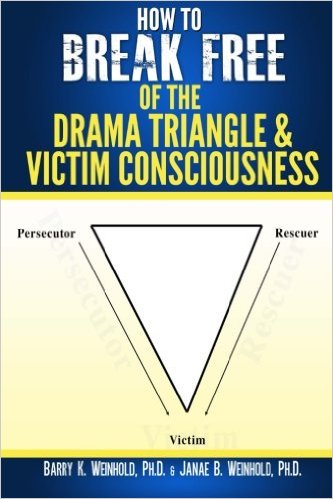
Break Free of the Drama Triangle

by Ron Potter July 2, 2016

Ron’s Short Review: This was the second book I read this month on the topic of the Drama Triangle. This one gives a little more understand of how we get into and out of the triangle where the other book gives a deeper description of each role. Except for their misunderstanding of Religion (man trying to reach God) vs Christianity (God reaching out to man), a common mistake, they give a pretty good path to help avoid the consequences.

0 comments
0 FacebookTwitterEmail
BlogLeadership

Putting ICE on it: Are Leaders Made or Born?

by Ron Potter July 1, 2016

photo-1433878665141-d6ceaf394ae2

I have worked with many leaders and many future leaders who believe that people are born with leadership skills.  Some just “have it” and others don’t seem to have “it” or at least enough of it.  For those who don’t have a belief one way or the other, they are often asking the question “Are leaders made or born?”  The question often seems to be a self-reflective one, wondering if they have it or not.

Just having the open question often leaves leaders and teams hobbling around like they had a sprained ankle.  So, what do we do to help sooth a sprained ankle?  Put ICE on it!

I = Intelligence Quotient

From the time we started in school we have known about or had questions about IQ.  How smart are you?  Do you have a high IQ?  Are you going to come up short in life if you don’t have that high IQ?  IQ has been with us for a long time and here’s a few things we know about it:

  • IQ is often static throughout your lifetime and doesn’t seem to change much with learning.
  • It also seems to have many correlative factors such as: income, demographics, environmental factors, and can be influenced by hereditary or genetic factors.
  • But most importantly we have never found any correlation between IQ and success.

C = Cognitive Function

Cognitive Functions are not static.  They will grow and develop over time and with age. However, don’t assume that aging alone will increase your Cognitive Function.  Gray hair also comes with aging but that doesn’t make you any wiser.  You need to intentionally practice and get better at your Cognitive Functions that include:

  • Focus: the ability to keep your attention focused on an issue in order to properly grabble with it. Lack of focus and interrupted attention are two prevalent problems I see in corporate leadership today.
  • Perception: That ability to understand that your perception of a problem or issue is just that, a perception. Individuals high in Cognitive Function seem to have the capacity to deal with many perceptions to an issue and hold them in high regard as they sort through difficult issues.
  • Executive Skills: This interestingly named function has to do with the brain’s frontal lobe and deals with decision making skills among others.

E = Emotional Intelligence

This function was put forth by Daniel Goleman in the early 2000’s and has proved to be highly correlated to good leadership.  Elements that Goleman identified included the 5 S’s of:

  • Self-Awareness
  • Self-Regulation
  • Self-Motivation
  • Social Awareness
  • Social Skills

These skills are also skills that can be grown and developed over time.  With practice you can increase and improve each one of these.

ICE = IQ + CQ + EQ

These are the elements of great leadership.  And IQ is the only one we’re born with and also seems to be the least impactful on our success as a leader.  Average IQ is all you need.  Developing high CQ and EQ will turn you into a great leader.

Leaders are self-made!

0 comments
0 FacebookTwitterEmail
Short Book Reviews

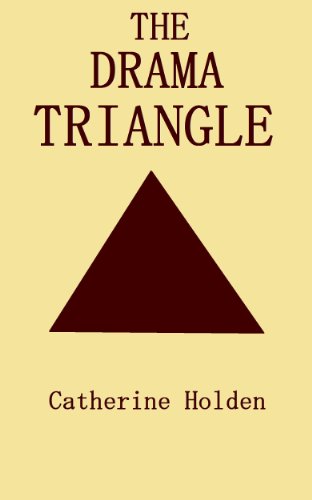
The Drama Triangle

by Ron Potter July 1, 2016

Ron‘s Short Review: Old concept and old book but a great reminder of how people fall into the Drama Triangle (Persecutor, Rescuer, Victim). She gives good descriptions of each type which helps develop a framework to see the triangle as it plays out.

0 comments
0 FacebookTwitterEmail
BlogTrust Me

Creativity out of Chaos

by Ron Potter June 27, 2016

photo-1461344577544-4e5dc9487184

A certain amount of chaos is necessary because “quality” chaos stimulates creativity. Organizations that do not create some space for creative chaos run the risk of experiencing staleness, loss, and even death.

“Life exists at the edge of chaos,” writes Stuart Kauffman, author of At Home in the Universe: The Search for the Laws of Self-Organization and Complexity. “I suspect that the fate of all complex adapting systems in the biosphere—from single cells to economies—is to evolve to a natural state between order and chaos, a grand compromise between structure and surprise.”
If a leader fears the creative tension caused by chaos, trouble is often not far away. Leaders need to understand that creativity comes out of chaos, and even what has been created needs to be exposed to chaos just to make sure it is still viable and working. Even the new creation may need the chaos of re-creation to survive in a highly competitive world.
Meg Wheatley writes in her book Leadership and the New Science,

“The things we fear most in organizations—fluctuations, disturbances, imbalances—are also the primary sources of creativity.”

The question is, how do leaders get people from the scary, agonizing, and anxiety-filled feelings of chaos to the liberating place of creativity, change, and steadiness?
Before we answer that question, we do need to look at creativity and chaos. The reality of today’s world is that millions of ideas for innovation, change, and improvement lie within any factory, distribution center, high-tech office, retail storefront, or operations center. You can also multiply that number by millions (or so it seems) when you bring people together in a team setting and allow them the freedom to create, innovate, and change. In many organizations this causes chaos and uncertainty.
Leaders, then, who understand the positive side of chaos can begin leading people through the confusing maze that creativity causes. They can help people understand that disruptions are opportunities. They can focus their attention on a building a culture that understands change and brings teams together, creating synergy among the members. These leaders explain how necessary it is for a company to respond to change in order to remain competitive.
Leaders help their employees understand the chaos going on around them by making meaning out of it. It is not easy, but it is so very necessary. “Leaders must have the ability to make something happen under circumstances of extreme uncertainty and urgency. In fact leadership is needed more during times of uncertainty than in times of stability: when confusion over ends and means abounds, leadership is essential.”

0 comments
0 FacebookTwitterEmail
Absurd!BlogIn-Depth Book Reviews

Absurd!: The One thing you can do that helps solve most difficult issues!

by Ron Potter June 24, 2016

photo-1461280360983-bd93eaa5051b

I’m continuing my series on an in-depth look at a wonderful little book that’s twenty years old this year.  The title is Management of the Absurd by Richard Farson.  You may want to consider dropping back and reading the previous posts about ABSURD!  I think it will put each new one in great context.

In Communication, Form is More Important Then Content

I often find myself working with teams on difficult issues.

  • There may be conflict or unresolved issues.
  • Someone is not performing and it’s impacting the performance of the entire team.
  • The leader just isn’t listening to the concern or even opportunity that the team is seeing.
  • The leader isn’t dealing with a person who’s in over their head.
  • The list goes on…..

Our author of Management of the Absurd makes a couple of key observations:

When we witness a red-faced executive shouting, “Who’s excited? I’m not excited!” we realize that the feeling is much more important than the words.  That’s why in all communication it’s crucial to listen to the music as well as the lyrics, the feeling behind the words as well as the words themselves.

And

In all of life, the metamessage tends to be more powerful than the message itself.

I think we all know that on an intellectual basis.  But what do we do about it?  I’ve found one simple adjustment that makes a profound difference….   remove the table!

Yup, that’s the one thing that I have experienced that helps me deal with difficult issues, remove the table.  As soon as I set a team down in a circle with nothing but chairs, the mood immediately changes.  I often get those nervous comments like “Boy, are we in trouble now.”  Or “This certainly makes me feel a little vulnerable (or naked).”  People seem to immediately know that this is different.  The table offers us a shield.  Position at the table has connotations.  I can slip my phone over the edge of the table and no one will know I’m checking email (Ha!).  Sitting in open chairs levels the playing field.  It exposes all of our body language.  We can’t hide.  We need to be REAL with each other.

I’ve experienced some of the deepest sharing and resolution of many deep issues when we work without the net of a table between us.  All of a sudden people are listening more with an intent to understand rather than respond.  I will often hear comments like “Now I understand”, “I never knew that” or “I can see why you would believe that.”

Our author closes this section with the statement “All of this teaches us that we may be so concerned about the content of what we say or write that we often forget the form.  When they are taken into account, it is possible to send metamessages that are consonant with the intended message and reinforce rather than undermine it.”

The metamessage counts more than the content.  Take the table away.  Even in a figuratively sense.  When you’re dealing with difficult issues and send that email or leave that voicemail, leave the metamessage, not just the content.

So, how do you remove the table when the team meeting is being conducted via a phone or video conference?  Sorry, that one will have to wait for a future blog.

0 comments
0 FacebookTwitterEmail
Newer Posts
Older Posts
  • Facebook
  • Twitter
  • Linkedin
  • Rss
  • About This Site
  • About
    • Clients
  • Services
  • Resources
    • Trust Me
    • Short Book Reviews
  • Contact

About this Site | © 2024 Team Leadership Culture | platform by Apricot Services


Back To Top
Team Leadership Culture
  • Team
  • Leadership
  • Culture
  • Myers-Briggs
  • Trust Me
  • Short Book Reviews