

Team Leadership Culture
  • Team
  • Leadership
  • Culture
  • Myers-Briggs
  • Trust Me
  • Short Book Reviews
Top Posts
Obituary
REPOST: Four Functions, Three Rules
ROUNDUP: The Rise of AI
REPOST: Facing Adversity Series
ROUNDUP: Curiousity
ROUNDUP: Deep Work
REPOST: Character vs. Competence
REPOST: Opposite of Victim
REPOST: Listening With the Intent to Understand
REPOST: Performance vs Trust
  • About
  • Services
  • Resources
    • Trust Me
    • Short Book Reviews
  • Contact

Team Leadership Culture

  • Team
  • Leadership
  • Culture
  • Myers-Briggs
  • Trust Me
  • Short Book Reviews
Author

Ron Potter

Ron Potter

BlogTrust Me

Leadership and Golf

by Ron Potter November 21, 2016

photo-1465195079111-667efe5ba139

Let’s talk about golf!

Golf is an enigma. (Now there’s a classic understatement!) Former PGA tour member Gardner Dickinson once said, “They say golf is like life, but don’t believe them. It’s more complicated than that.”

The sport abounds with perplexity and paradox: fairway and rough, dry land and water, green and sand trap. And then there are all the complexities involving mind and body.

Most of us are born with an arm/hand preference. Some of us are right-handed; others are left-handed. Golf says, “Don’t use what comes naturally! Let your other hand (your out-of-preference side) pull the swing through the ball.” For example, for many players their right hand is dominant in all other aspects of their lives. But in golf, if they allow the right hand to control their golf swing, the ball hooks—hello rough. However, if they learn to use their left hand effectively—a new swing style—they will hit the ball straighter and have lower scores (which, of course, in golf is better).

Isn’t that just like leadership? If we allow our dominant preferences to always be in control, we will often not have complete success. However, we can learn to adjust our style away from a dominant (and in some cases damaging) preference and become better leaders if we are willing to make some changes.

When I work with preferences in teams, we do a little demonstration about natural preferences.  I ask each team member to sign their name to a paper in front of them.  Then I ask them to change hands and sign that paper again.  The nervous laughter abounds.  I then ask them to describe that first (dominant) signature.  Words like quick, natural, easy, without thought are what I hear most often.  When asked to describe the second experience I hear words like difficult, took more time, awkward, had to think through each letter.  We then talk about how working from our dominant preference often means that we do it “without much thought” whereas using our non-dominant preference causes a great deal of thought. Wouldn’t it be better if we faced difficult decisions from a balanced approach (dominant and non-dominant) rather than reaching conclusions “without much thought”?

To be successful in golf, players need to learn how to overcome or “position” their natural tendencies (or preferences) in order to hit just the right shot.

This is also true with leadership. We look for and focus on our strengths, but we are better leaders when we also allow other qualities to develop and come to the forefront. For example, it is not natural for many of us to be humble team builders. It is much easier to strive for the attention of others and build a personal résumé, ignoring the team’s input and value. But by intentional effort we can learn to be humble and at the same time increase our success as a leader.


0 comments
0 FacebookTwitterEmail
BlogCulture

The Three Most Misunderstood Words in Business

by Ron Potter November 17, 2016

photo-1464958674501-4dc3d73d8f46

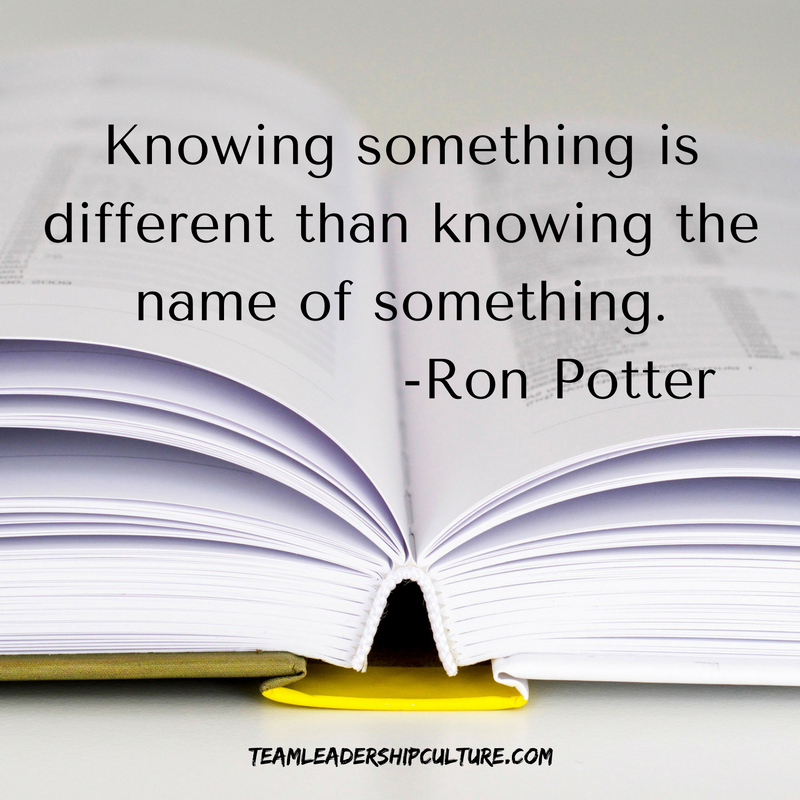
Knowing something is different than knowing the name of something.

Shane Parrish of Farnam Street Blog spoke of this concept from Richard Feynman, the Nobel winning Physicist.

The Feynman Technique formula for learning is based on knowing the difference.  I want to talk about the three words that seem to suffer from this concept.

Humble, Love and Tolerant

Humble

Most people seem to think that being humble is a weakness.  They relate it to being a push over or a doormat.  They think that humble people don’t stand up to the pressure of their own convictions.  Quite the contrary.

The original word for humility is tightly coupled with the word meek (also completely misunderstood).  But the word meek meant tremendous power under complete control.  A humble or meek person has all the power they need to wield; they simply keep it under control so that they can relate to and understand others.

Humility is derived from the Latin word humus meaning grounded.  A humble leader is well grounded, standing firm.

Humility requires leaders to shed all their prejudices and biases and examine who they are and what they have become.  Humility leads to openness, teachability and flexibility.

Love

I know of at least two situations where I have either been asked to use a different word or was asked not to work in a company because “Business is a rough and tumble world with no room for foolish things like love.”  Aristotle speaks of love as being one of the key elements to the highest level of happiness and the framework for great team work.  The Greeks had at least 3 words that translate into our one English world love.  Agape, the word that Aristotle used refers to how we treat other people, not about being emotionally or physically “in love” with them.  How we respect and treat others (boss, peers, direct reports, customers, investors, etc.) has everything to do with business.  Love may be the leading indicator of success in business.

Tolerate

This word is widely used in many situations today and I will assume that people mean well by it.  But in some cases, behavior reflects the true meaning of the word rather than the implied meaning.

The medical definition of tolerate is: “be capable of continued subjection to (a drug, toxin, or environmental condition) without adverse reaction.”  The non-medical definition sends the same signal: “accept or endure (someone or something unpleasant or disliked) with forbearance”

Neither of those definitions is very pleasant and shouldn’t be tolerated.

What we mean to say is have patience.

Once again people assume the word patience means to not hold people accountable.  But the true concept of the word infers calmness, stability and persistent courage in trying circumstances.  It speaks of respect for others when there is disagreement.

Be humble, love one another and have some patience.  Everyone is unique.  Out of that uniqueness can be built great teams.

tlc-meme-11%2f17

0 comments
0 FacebookTwitterEmail
BlogTrust Me

Everlasting and Sanctified Bull-Doggedness

by Ron Potter November 14, 2016

photo-1442605527737-ed62b867591f

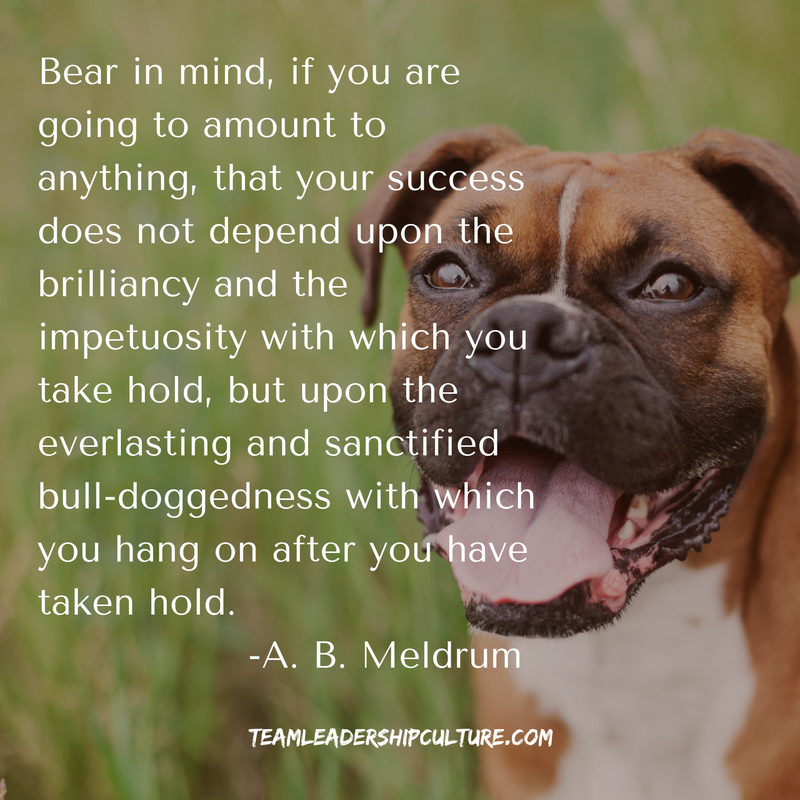
A. B. Meldrum once said, “Bear in mind, if you are going to amount to anything, that your success does not depend upon the brilliancy and the impetuosity with which you take hold, but upon the everlasting and sanctified bull-doggedness with which you hang on after you have taken hold.”

Most of my clients would probably never hire me if I told them it was going to take five years to complete the major changes we talk about at the beginning of many of my consulting assignments. At one high-tech company, after three years of intensive effort to develop a new leadership style and corporate culture, the leadership team asked me to evaluate how they were doing. I asked them to rank their “completeness” in each of several major change categories. Overall, they ranked themselves at about 60 percent. I admitted that if they had asked me at the beginning of the process how long it was going to take, I would have estimated five years—so 60 percent after three years was just about right.

One strong leader whom I’m working with now took over an assignment three years ago in one of America’s largest corporations. When he was hired he was actually identified as the “change agent” that the company needed. Needed, maybe, but certainly not wanted. After three years of struggling with the internal practices of the company, he has finally assembled a leadership team that should be able to carry out the many changes that are needed to meet the firm’s looming challenges. I can recall many one-on-one conversations with him over the last three years when he wondered if he had the energy to keep going and whether it would be worth it in the end. But he has endured. I believe he will pick the fruit of an enduring company.

Throughout the history of man, the greatest achievements have been accomplished by leaders having an against-all-odds tenacity. The unshakable, enduring convictions of the rightness of their causes have kept adventurers, explorers, entrepreneurs, and visionaries going despite overwhelming difficulty and fierce competition. They were and continue to be persistent, holding fast to their beliefs and moving the idea or the organization forward.

That’s the path to building an enduring organization.

tlc-meme-11%2f14

0 comments
0 FacebookTwitterEmail
BlogTrust Me

The Maturity to Persevere

by Ron Potter November 7, 2016

photo-1453799527828-cf1bd7b2f682

A quote from the Bible says, “Whenever trouble comes your way, let it be an opportunity for joy. For when your faith is tested, your endurance has a chance to grow. So let it grow, for when your endurance is fully developed, you will be strong in character and ready for anything.”
When leaders develop endurance or perseverance, they also develop maturity—not only within themselves but also within their organizations and teams. Perseverance breeds character as we stick to the task, bring others along with us, and develop an enduring organization. According to Julien Phillips and Allan Kennedy,

Success in instilling values appears to have had little to do with charismatic personality. Rather it derives from obvious, sincere, sustained personal commitment to the values the leaders sought to implant, coupled with extraordinary persistence in reinforcing those values.

Persevering leaders understand the importance of bringing every part of the organization along with them. It is a time-consuming and focused activity that will eventually yield tremendous results in overall morale, productivity, and team/employee support.
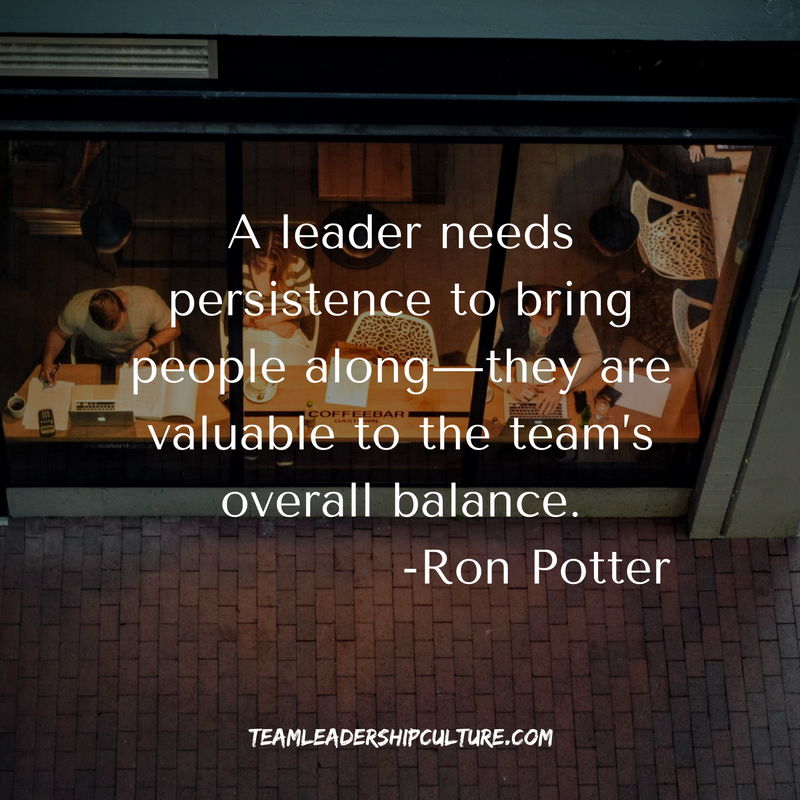
A leader needs to understand that he or she may quite naturally have an easy time focusing on the future or on how the future will look when certain projects, tasks, or goals are completed. Others within their teams may not be able to clearly or easily see the future, or they may be naturally pessimistic about anything involving the future. A leader needs the persistence to bring these people along—they are valuable to the team’s overall balance. They may simply need the leader to either ask them questions to propel them into the future or help them visualize steps to the future outcome.
Bringing an organization along also involves being particularly effective during times of change. Many on the team will naturally resist change, so leaders need to humbly and calmly coax people along to the new direction or vision.

tlc-meme-11%2f7

0 comments
0 FacebookTwitterEmail
Absurd!BlogIn-Depth Book Reviews

Absurd!: Individuals are Almost Indestructible, but Organizations are Very Fragile

by Ron Potter November 3, 2016

photo-1474377207190-a7d8b3334068

I’m continuing my series on an in-depth look at a wonderful little book that’s twenty years old this year.  The title is Management of the Absurd by Richard Farson.  You may want to consider dropping back and reading the previous blogs about ABSURD!  I think it will put each new one in great context.

The paragraph in this chapter that rang true for me says, “Individuals are very strong, but organizations are not.  Part of the reason why we don’t recognize the vulnerability of organization is that we have a hard time believing that the relationships which make them work are real.  Even psychologists sometimes think of organizations as simply collections of individuals.  But relationships – the bonds between people – are very real, and they have a life of their own. To a great extent they determine the behavior of an organization and the people within it.”

In my leadership book, Trust Me I talk about a couple of leaders:

These two leaders developed a very tight and trusting relationship with each member of their teams. Everyone talked of them as “great” leaders and the kind of bosses for whom employees would do anything. However, these two leaders would send one or more of their direct-reports off on a mission that was bound to conflict with a similar mission of another direct-report. The leaders, however, would never make any effort to help the direct-reports reconcile the conflicts. They would just let them bang against one another until one was victorious—Newton’s Cradle.

These leaders assumed the people who worked for them were strong and resilient, which indeed they were, but they had no sense that the relationship between the people was what actually created the company and culture.  Their effort often destroyed relationships.

This issue also speaks to the concept of developing and growing teams.  There is a model of team development that says teams move from Centralized to Transitional to Partnering and finally Highly Empowered: Self-Directed teams.  The very first step from Centralized to Transitional speaks of this issue.  Centralized teams can be viewed in the traditional hub and spoke model.  The leader is the hub in the middle with a spoke extending out to each of the direct reports.  However, there is no connection between the direct reports.  As teams get better and better the connection between the team members becomes stronger, more reliable and more trusted until finally the team is functioning well as a single unit.

Trusting relationships are the key.  If you’re not building TEAM, you’re not being a great leader.

0 comments
0 FacebookTwitterEmail
Short Book Reviews

The Management Myth

by Ron Potter November 2, 2016

the-management-mythRon’s Short Review: Matthew clearly helps us see how all of the number based management principles are clearly rooted in the 20th-century industrial world and measuring what has already happened while the real principles that make a difference today include putting people first and thinking ahead, not looking back.


Amazon-Buy-Buttonkindle-buy button

0 comments
0 FacebookTwitterEmail
BlogLeadership

Remember the Alamo: Thoughts on Leadership

by Ron Potter October 31, 2016
Creative Commons: Stuart Seeger

Creative Commons: Stuart Seeger

A phrase that to this day reminds Americans of selfless courage and heroic sacrifice is “Remember the Alamo.”
The early history of the Alamo did not signal that someday it would become a shrine of freedom. Originally named Misión San Antonio de Valero, the Alamo was used by missionaries for decades before the Spanish seized the site for nonreligious purposes in 1793.

The Alamo thereafter housed a changing guard of military units representing Spanish, Mexican, and rebel forces until December 1835 when Ben Milam led a group of Texan and Tejano volunteers in a siege against Mexican-occupied San Antonio. After several days of intense street fighting, Milam’s warriors drove the Mexicans from the city, and the Texans staked claim to and fortified the Alamo.

The Mexican General Santa Anna decided to teach the upstart rebels—and all Texans—a lesson. On about February 23, 1836, a contingent of thousands from Santa Anna’s army invaded San Antonio, and the battle was on. When the first shots were fired, only about 150 Texans were at the Alamo to mount a defense under the joint command of William B. Travis and Jim Bowie. The day after the battle began, Colonel Travis said: “I am determined to sustain myself as long as possible and die like a soldier who never forgets what is due to his own honor and that of his country—victory or death.”1

Santa Anna’s troops battered the Alamo mercilessly. Travis and Bowie slipped couriers through enemy lines to go plead with residents of nearby communities to send reinforcements to defend San Antonio. On the eighth day of the siege, a small group of thirty-two volunteers from Gonzales finally arrived, bringing the number of defenders to about two hundred.2 The battle raged for another five days. As the likelihood of defeat increased, Travis gathered the men and drew a line in the dirt, asking the men willing to stay and fight to the death to step over. All but one did. Among those who stayed was the famous frontiersman David Crockett.

“The final assault came before daybreak on the morning of March 6, as columns of Mexican soldiers emerged from the predawn darkness and headed for the Alamo’s walls. Cannon and small arms fire from inside the Alamo beat back several attacks. Regrouping, the Mexicans scaled the walls and rushed into the compound. Once inside, they turned captured cannon on the Long Barrack and church, blasting open the barricaded doors. The desperate struggle continued until the defenders were overwhelmed.”3

None of the 189 soldiers defending the Alamo lived. The Mexican attackers lost an estimated sixteen hundred men.4 The Texans may have lost the battle at the Alamo, but their sacrifice so enraged and energized others in the territory that just six weeks later the Mexicans were defeated for good at San Jacinto. The rallying cry in that great victory was “Remember the Alamo.”

Colonel Travis was a leader who understood that perseverance for “the cause” is essential. Personal values translate into organizational values, and it takes persistence to communicate those values to everyone in the organization. Every day there are reasons to stray from deep personal values, but great leaders do not easily give them up or modify them in the face of pressure.

This kind of perseverance comes from a deep sense of purpose for life and from trusting in something outside ourselves. Personally, we believe it involves looking beyond ourselves and seeking to trust God for the answers, the vision, and the hope to persevere.

1. ‑The Daughters of the Republic of Texas, “The Alamo’s Historic Past.” Found at http://www.thealamo.org/history/historicpast.html.
2. ‑From “Alamo,” The New Columbia Encyclopedia (New York: Columbia University Press, 1975), 46.
3. ‑The Daughters of the Republic of Texas, “The Alamo’s Historic Past.” Found at http://www.thealamo.org/history/historicpast.html.

0 comments
0 FacebookTwitterEmail
BlogTrust Me

Adversity and Discouragement

by Ron Potter October 24, 2016

photo-1431887915357-68b819fae322

“A man stopped to watch a Little League baseball game. He asked one of the youngsters what the score was. ‘We’re losing 18-0’ was the answer.
‘Well,’ said the man. ‘I must say you don’t look discouraged.’
‘Discouraged?’ the boy said, puzzled. ‘Why should we be discouraged? We haven’t come to bat yet.’ ”

Discouraged? Hardly. The boy was holding strong to the hope that his team could overcome any deficit. He was holding strong to his convictions.
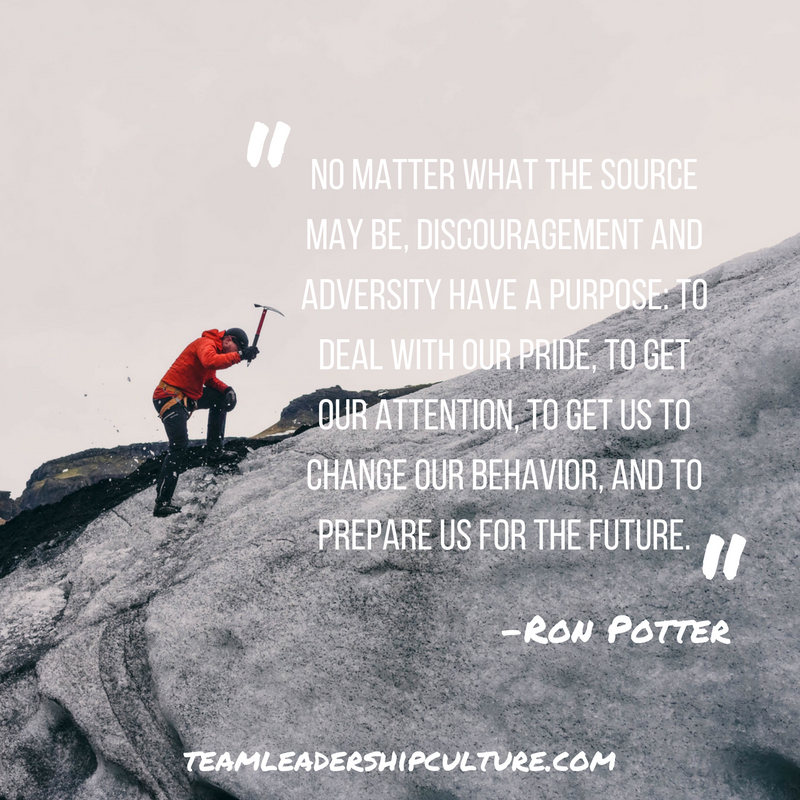
No matter what the source may be, discouragement and adversity have a purpose:

  • to deal with our pride
  • to get our attention
  • to get us to change our behavior
  • to prepare us for future service

There are some wrong responses to adversity and discouragement, and they cause bitterness, doubt, depression, and hopelessness. But holding strong produces some right responses:

  • We gain our team’s trust because our actions match our intentions.
  • We focus on seeing things through rather than abandoning our values or vision.
  • We rely on God for the ability to endure.

We want you to build courage and persevere, to realize the sweet taste of standing strong for the long haul. Endurance.

No matter what the source may be, discouragement and adversity have a purpose: to deal with our pride, to get our attention, to get us to change our behavior, and to prepare us for the future.

Dogged endurance is an important quality, but if it is directed down the wrong path, it can damage people, teams, and organizations. To endure, a leader must build on a foundation of humility, trust, compassion, commitment, focus, and integrity. Without holding firm to the other seven attributes on your way to endurance, you can never be assured that you are staying on the true and right path.
Have you developed a leadership style (one that includes humility, trust, compassion, and integrity of a Trust-Me leader) that has equipped you to endure? If not, where has the process broken down for you? What steps do you need to take to change your style?

tlc-meme-15

0 comments
0 FacebookTwitterEmail
BlogCulture

One size does not fit all (except maybe in socks)

by Ron Potter October 20, 2016

photo-1472591651607-70e2d88ae3c4

Is your fingerprint unique or is it just like everyone else’s?  Without even know you I know what your answer will be.  Why would the FBI keep a database of fingerprints if they were not unique enough to identify every person on the planet?

One of the books I’ve read recently is Idiot Brain by Dean Burnett and one statement in there struck this chord with me.  If we assume and accept the concept that we each have a unique fingerprint that’s simply made up of a few swirls, curves and lines, why would we think that two brains that are infinitely more complex than a fingerprint reach the same conclusion or see things in exactly the same way or start with a common set of beliefs and assumptions.  That’s ridiculous.

We are complex, messy human beings.  Our backgrounds and experiences are all different.  And if we are complex, messy human beings, how much more so is a team of people.

I remember working with one team when the first day of a three-day team building session was a disaster.  I couldn’t sleep at all that night.  All night I kept running through the issues and looking for the cause of their inability to come together as a team.  I would think to myself, they’re smart, they’re experienced, they’re well intentioned, what’s the problem.  Smart, experienced, well intentioned… Smart, experienced, well intentioned…  Finally, about 4am it hit me.  They’re smart!  That was the issue.  For every problem that hit the table, they could almost instantly come up with a list of variables that was overwhelming.  And then, because they were smart, they would be totally convinced that they’re personal view of the issue was the only correct view.  After all, they were smart.

We are complex, messy people who make up even more complex and messy teams.  So how do we cope?

Aristotle in his four levels of happiness describes level 4 (the highest level of happiness) happens when there is Truth, Love, Beauty and Unity.

Truth

In a team we must have great respect for each person’s perspective.  We’re complex, messy people.  Each of us has a perspective that is true as far as we can see.  Honoring the fact that each person has a perspective that should be understood and valued is the first step.

Love

The concept being used today that would most closely parallels what Aristotle was implying is Psychological Safety.  When the team environment is psychologically safe, there is great respect for each other, confrontation of ideas is often and easy, everyone takes responsibility for group decisions, the team talks openly about mistakes and problems, not just successes and above all, there is a lot of humor and laughter.

Beauty

The word used here refers to elegance and simplicity.  Smart people tend to make things more complex.  Wise people tend to simplify.

Unity

After hearing everyone’s perspective on an issue, demonstrating the patience and kindness it takes to fully understand and integrate those perspectives and then simplifying the issue down to the basic core, unity has a much better chance of being accomplished.  Teams that build great unity are the happiest (and most productive).

We’re complex, messy people.  It takes a great process to get at the “truth”, great love to appreciate and understand each person’s perspective, a great effort to simplify things to their most elegant form (a lot more energy and brain power than it does to make things complex) and a great desire to move forward in unity.  But it also provides great happiness.

0 comments
0 FacebookTwitterEmail
Short Book Reviews

Life in Half a Second

by Ron Potter October 17, 2016

life-in-half-a-secondRon’s Short Review: While Matthew’s definition of success is clearly stuck in the materialistic world, his “five door” process can really help you focus and be successful at many levels.


Amazon-Buy-Buttonkindle-buy button

0 comments
0 FacebookTwitterEmail
Absurd!BlogIn-Depth Book Reviews

Absurd!: Organizations That Need Help Most Will Benefit from it Least

by Ron Potter October 17, 2016

photo-1459499362902-55a20553e082

I’m continuing my series on an in-depth look at a wonderful little book that’s twenty years old this year.  Management of the Absurd by Richard Farson.  You may want to consider dropping back and reading the previous blogs about ABSURD!  I think it will put each new one in great context.

One tag line that I’ve always lived by since I started my consulting business is “I only work with companies that want to be helped.”  I guess I learned early that I can’t teach anyone anything, I can only help them learn.  If they’re not interested in learning, I will never be effective at teaching them anything.  In fact, it’s always amazed me that the companies and individual leaders that look like they need very little help are always the ones that will dig the deepest into the learning in order to improve in any way they can.

Our author really clarifies this with a couple of statements.  “Deeply troubled companies don’t usually seek help.  And when they do, they have a hard time benefiting from it. The situation parallels one in psychotherapy.  Psychotherapy is usually ineffective for severely mentally ill people; it works better for well people.  The healthier you are psychologically, or the less you may seem to need to change, the more you can change.”

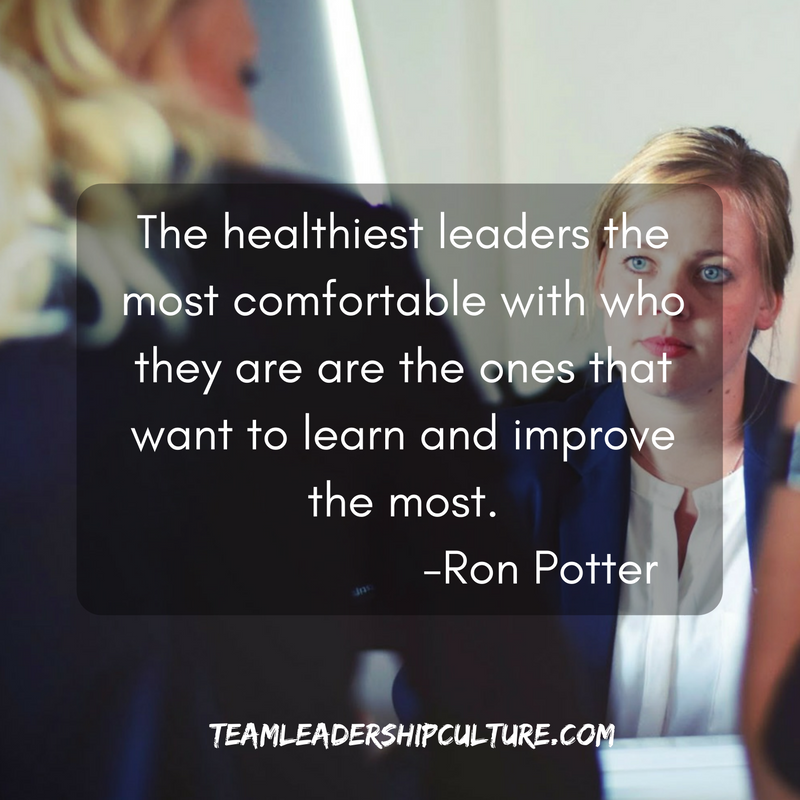
This statement reflects exactly what I’ve seen consistently over decades of consulting work.  The healthiest leaders with the greatest self-esteem (comfortable with who they are) are the ones that want to learn and improve the most.

Farson goes on to state “The consultant’s essential role is to hold up a mirror to the organization, reflecting the processes that may be limiting its growth.  As might be expected, the most critical issues center around leadership, not performance down the line.  Small wonder, then, that leaders of troubled companies tend to shy away from calling in consultants. They know that they will have to do some serious self-examination.”

Daniel Goleman wrote his Emotional Intelligence many years ago.  While there’s never been any correlation found between IQ and success, there is almost complete correlation between EQ (Emotional Quotient) and success.  At the base of your Emotional Intelligence or Emotional Quotient is self-awareness.  And more interesting is that self-awareness can’t be fully understand simply from within yourself.  Self-awareness requires feedback.  Are you open to feedback?  Without it you’re not even going to be self-aware enough to even know you need help or to seek out the help you need.

team-leadership-culture-meme-12

0 comments
0 FacebookTwitterEmail
Absurd!BlogIn-Depth Book Reviews

Absurd!: The Person or Group that Presents the Problem

by Ron Potter October 10, 2016

A photo by Steve Halama. unsplash.com/photos/NPKk_3ZK2DY

I’m continuing my series on an in-depth look at a wonderful little book that’s twenty years old this year.  The title is Management of the Absurd by Richard Farson.  You may want to consider dropping back and reading the previous posts about ABSURD!  I think it will put each new one in great context.

I’ve had the opportunity to work with one of the better known “Turn Around” companies.  A Turn Around company is not even invited to the table until things are in dire straits.  The hiring company, in spite of their best efforts is facing bankruptcy or takeover in a relative short period of time.  The Turn Around company is paid very well to turn things around is a relative short period of time to avoid the tragedy.

I asked the consultant to explain their process to me to see what they do differently than what the management has already tried.  Here is the outline presented:

Start with the bottom of the organization, the people who are closest to the problem.

They ask the people who are closest to the problem to come up with the proposal to fix the problem and them give them the authority and accountability to fix it.

Teach the Leaders of the Organization how to say “yes”

While the people closest to the problem are preparing the proposal the consultant is teaching the leaders of the organization to nod their heads in affirmation and say yes to the proposal.  They’re teaching them to grant authority and accountability to those who will accomplish the work

All of that made sense to me but then I asked what they did with middle management.  His response was “We ignore them.”  They felt that middle managers just got in the way of a quick turn around and they didn’t have the time or energy to deal with them, overcome their loss of control or educate them in good management practices.  They simply ignored them.

Our author makes another profound observation in this section of the book when he says “Participative management depends on trusting the group.  Most managers simply don’t have that confidence and can’t take the time to develop the trust.”  To me, this was the key.  If the leaders and managers of the company had taken the time and made the effort to develop trust in their groups, they would have avoided the need for a Turn Around company to save them.

Leaders that build trust and have trust in their organizations are very different from the top-down, management and control types of leaders.  Which are you?  Will you need that Turn Around company someday?  I trust not.

0 comments
0 FacebookTwitterEmail
Newer Posts
Older Posts
  • Facebook
  • Twitter
  • Linkedin
  • Rss
  • About This Site
  • About
    • Clients
  • Services
  • Resources
    • Trust Me
    • Short Book Reviews
  • Contact

About this Site | © 2024 Team Leadership Culture | platform by Apricot Services


Back To Top
Team Leadership Culture
  • Team
  • Leadership
  • Culture
  • Myers-Briggs
  • Trust Me
  • Short Book Reviews