
Team Leadership Culture
  • Team
  • Leadership
  • Culture
  • Myers-Briggs
  • Trust Me
  • Short Book Reviews
Top Posts
Obituary
REPOST: Four Functions, Three Rules
ROUNDUP: The Rise of AI
REPOST: Facing Adversity Series
ROUNDUP: Curiousity
ROUNDUP: Deep Work
REPOST: Character vs. Competence
REPOST: Opposite of Victim
REPOST: Listening With the Intent to Understand
REPOST: Performance vs Trust
  • About
  • Services
  • Resources
    • Trust Me
    • Short Book Reviews
  • Contact

Team Leadership Culture

  • Team
  • Leadership
  • Culture
  • Myers-Briggs
  • Trust Me
  • Short Book Reviews
Author

Ron Potter

Ron Potter

BlogTrust Me

Leading by Values

by Ron Potter January 22, 2018

People are searching for a deeper meaning in their lives.”
—M. Scott Peck

The leader who understands this and who responsibly presents a great cause to followers will turn a key in many hearts and unlock vast reservoirs of creativity and productivity.

But just having personal commitment to a great cause is not enough for a leader. The vision for “something beyond” must be successfully transferred to the entire group, whether it be a small staff, a department, an entire organization, a state, or a nation.People are less energized and tend to drift when they are unsure of how they should be operating within an organization. People need to see their leaders’ commitment to values, and they want a part in helping to shape their organization’s core values and vision.

Leaders who form corporate values, vision, and strategy in a vacuum or just in the executive suite lack the humility and commitment to move beyond themselves and include others who have solid ideas and opinions on what should define the company’s values. When leaders don’t talk about the company’s values and vision, people feel alienated and less energized.

When working to plant a vision and sense of a greater cause in a team, you must first ensure that values are understood and owned. This is accomplished initially by cataloging the personal values of individual team members. When the personal values of individuals are understood, team values begin to emerge.

The following story illustrates the steps that one dynamic business leader took to win support for a great cause in his organization.

After agreeing with his executive team on a set of core values, the CEO of this large firm got so interested in employee input on team values that he asked a consulting team to go to six different locations and determine the values of the two hundred to three hundred employees at each site. In team settings, it is often easy to agree on the first five to seven values; however, discussions get very interesting as teams round out the full list of values that will govern their individual behavior and business practices. Using an audience response system, the consultants asked each table-grouping of employees to discuss and develop team values. Next, they worked on “room” values.

Upon completion of the six-city tour, the employee list of values was compared to the executive list. The two lists were surprisingly similar. After some final discussions and some tweaking of the list by the company’s leaders, a final list of values was issued.

Although the operative values came down from on high, every employee who had participated had a personal stake in and loyalty to the list. The company-wide discussion had galvanized the organization not just to a set of core values but to a gigantic something-greater goal pursued by the company’s CEO. This company desperately needed to reverse a quarter-century of declining market share for its products. The CEO used this exercise in determining values as well as a great amount of day-to-day, hands-on involvement with key personnel to successfully “sell” his organization on the dream of a huge reversal of the company’s fortunes. The entire company bought into the dream and now shared his passion for something greater.

0 comments
0 FacebookTwitterEmail
BlogCulture

The Number One Habit You Should Drop to be Successful

by Ron Potter January 18, 2018

Success.com recently published a list entitled “10 ‘Harmless’ Habits to Drop If You Want to Be Successful.”

Based on the experience I’ve had with successful teams the last several years, I would say just being successful at dropping the first habit will get you a long way toward success.

Number One: Saying Yes When You Want to Say No!

I’ve taught many teams recently the true meaning of the word decide. Top corporate teams are filled with high achievers. They have all been getting things done since an early age. They’ve been rewarded in academics, sports, arts, and business for getting things done. Getting them done faster and in more volume than anyone else. They’re “doers”!

So, it’s very natural to believe that when corporate leadership teams get together they should decide what to do!

But that’s not what the word means. The “cide” part of the word means to cut off, put to death, publicly execute. Think for a minute about the words pesticide or homicide. The one habit that is keeping most teams and leaders from success is concluding that they should be doing more and more. Corporations and individuals don’t have the resources, energy, time or fortitude to keep doing more and more. Successful teams and leaders decide what to kill, what to stop doing.

There are so many variables related to success and failure in the auto industry that I honestly don’t know if this one issue will spell success or failure for General Motors (GM). But, I need to applaud their courage in shifting their measure of success from being the number one car maker in the world by volume. That seemed to be the driving force in GM for decades. But today, they’ve decided to stop producing vehicles in many parts of the world. That takes courage. Will it be successful? I don’t know. As I said, there are many factors to success and failure. But I do believe that deciding where to stop putting your resources is a big factor.

Saying No is Difficult

I really don’t know many leaders who reward and praise their people for not doing something. But they should. Research and my direct experience with many great leaders validate that focusing on the top three issues you face is the best route to success. Rewarding your people for not doing the 10th item on their priority list (and 9, 8, 7, …) will lead to more success than you can imagine. Leaders and organizations never have enough resources to do everything. The assumption is they just need more resources or more productivity out of the resources they have. That’s the wrong assumption. The real answer is assuming you’re trying to do too many things. Deciding not to do the low priority items will help you realize that you have all the resources you need to accomplish your top priorities. And it will lead to greater success as well.

Figure out how to say No!

The Power of a Positive No by William Ury is a great resource. Deciding to say no will be one of the most productive practices you ever learn.

0 comments
0 FacebookTwitterEmail
BlogCulture

Are you fit enough to think?

by Ron Potter January 11, 2018

I have a confession to make. I’m not fit. I’ve never been very fit. It’s just never been a priority for me.

I admire people who are fit. I don’t admire the people who have turned fitness into their religion but I do indeed admire fit people.

I’ve used many excuses through the years for not putting in the effort required to be fit. Today I’m going to share one of them.

I’ve always had a desire for learning and understanding. I’m realizing that I can do a great deal of learning but that doesn’t necessarily result in understanding. That will have to be another blog topic.

For this blog post, I’m confessing that I use my quest for learning as an excuse for not being fit. In the morning, I would rather read than exercise. When I have a moment during the day I’ll spend those spare moments reading or writing or thinking.

Image courtesy of the Metropolitan Museum of Art

Then I noticed a picture of Rodin’s The Thinker. I’m familiar with the sculpture. I have the image in my mind of the man leaning forward, head resting on his hand, in deep thought. But I never looked closely. I know his position but I never noticed his back, his arms, his thighs, his abs. That sculpture may be one of the fittest men I have ever seen. The Thinker was fit! Incredibility fit.

I’m not going to make a resolution. I’m just not that sure of myself. But I have been inspired. The Thinker was fit. I enjoy being a thinker but I think I would enjoy being a fit thinker even more.

Hope is not a strategy. Inspiration is not a plan. At this point, I only have the inspiration. But inspirations are a required first step in meaningful changes.

What is inspiring you today? Nothing? That’s a problem. Something? Turn it into an action plan. Do something about it.

Let’s share some stories. I’ll keep you informed on mine.

0 comments
0 FacebookTwitterEmail
Short Book Reviews

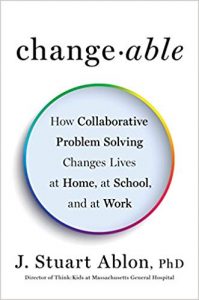
Changeable

by Ron Potter January 1, 2018

Ron’s Short Review: You have to dig through this one a bit to find examples of how this works at work. Our author focuses a lot on home and school. But the bottom line is: collaborate, collaborate, collaborate. This is the power of Teams.

0 comments
0 FacebookTwitterEmail
Short Book Reviews

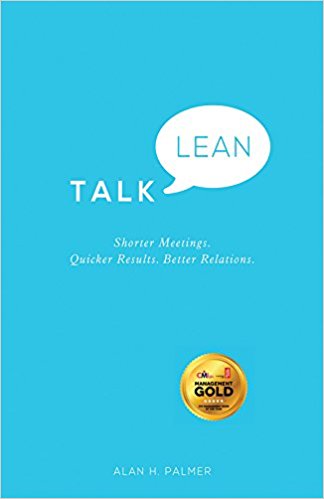
Talk Lean

by Ron Potter January 1, 2018

Ron’s Short Review: Learn some habits from this book and you’ll be amazed how much wasted time is eliminated from meetings and how much understanding between people is accomplished.

0 comments
0 FacebookTwitterEmail
Blog

Top 10 Posts of 2017 – Part II

by Ron Potter December 28, 2017

We’re recapping some of the most popular posts of 2017. Today we dig into posts 5 through 1.

5. Myers-Briggs In-Depth: Attending and Perceiving: Sensing vs iNtuition – Part II

Most successful business people have figured out that they need to balance this function. This balancing act most often takes the form of a trusted partner, colleague or consultant.

Continue Reading…

4. Being Humble is Being Down to Earth

It doesn’t seem to make much sense, but truly great leaders are humble.

The problem comes with how the word is normally used: Humble is thought to mean shy, retiring, unobtrusive, quiet, unassuming. Being humble can seem weak or, horrors, even borrrrrrrriiiiiiinnnnngggggg.

What does it really mean to embrace humility?

Humility is derived from the Latin word humus, meaning “ground.” One way to describe truly humble leaders is that they have their feet on the ground.

Continue Reading…

3. Myers-Briggs In-Depth: Judging vs Perceiving

I have set up the following two signs in a team meeting:

  • I have to get my work done before I can play.
  • I can play anytime
  • I then ask the team to position themselves along the spectrum between those two signs. Once positioned it almost always correlates between their Judging vs Perceiving preference on this scale.

    Continue Reading…

    2. Absurd!: The More We Communicate, The Less We Communicate

    People don’t want more information; they want more meaning. What does this mean? How should we interpret these numbers? Give us meaning. Tell us stories. Help us understand.

    Continue Reading…

    1. Character vs. Competence

    Bob Quinn in his book Deep Change introduced us to the concept of the “Tyranny of Competence.” This is a person that is so good at the skills of their job, leaders will tend to overlook their other flaws in character. They assume the character flaws would never cause enough negative issues to overcome the positive impact of being really good at their job.

    Don’t ever think that. The destruction caused by lack of character is always greater than the competency provided.

    Continue Reading…

0 comments
0 FacebookTwitterEmail
Blog

Top 10 Posts of 2017 – Part I

by Ron Potter December 26, 2017

For the rest of the year, we’ll be looking at the top posts of 2017. Today we dig into posts 10 through 6.

10. Balancing Innovation and Execution

At some point, every leader seems to grapple with the balance between innovation and execution. Many leaders struggle with the notion that one great idea will save the day for the organization. Others spend an inordinate amount of time focusing on “getting out the laundry” and not on new ideas.

Continue Reading…

9. Opposite of Victim

Someone asked me the other day what was the opposite of the victim mentality. That ignited a lively dialogue which came to the conclusion that Creativity is the opposite of victim mentality. Isn’t that a great picture? If we eliminate policies, procedures, governance, or leadership styles that create or assume a victim mentality, we unleash creativity. Although my work is focused on leadership within corporations, the first thing that came to mind was our law makers.

Continue Reading…

8. You can’t fix culture

I named my company Team Leadership Culture because those were the three elements that made a company great. You can think of those three elements as a triangle: Team and leadership at the base of the triangle, culture at the top. If you have not taken the time to build great teams and great leaders, a great culture is not going to develop.

Team is the most important. With a great team, lots of wonderful things can happen, sometimes even with mediocre leadership. However, great leadership without a good team almost always fails.

Continue Reading…

7. Myers-Briggs In-Depth: Deciding: Thinking vs Feeling – Part I

Most (business) people react negatively to this “Feeling” function and will associate with the Thinking side rather than the “touchy feely” side. While this is a complete misconception, it drives a very strong bias to the Thinking side. In my data base of corporate leaders that I’ve gathered over the last 25 years, roughly 85% identify themselves with a Thinking Preference and about 15% with a Feeling Preference. This is far outside the parameters of the other functions.


6. Qualities of a Caring Leader: Confrontation

Part of leading is confronting people and urging them toward better performance.
Confrontation does not involve giving a report on another person’s behavior. It means offering feedback on the other’s role or response. Its goal, in the business environment, is to bring the employee, boss, or peer face to face with issues (behavior, emotions, achievement) that are being avoided.

Continue Reading…

0 comments
0 FacebookTwitterEmail
Blog

Top 10 Books of 2017 – Part II

by Ron Potter December 21, 2017

Today we continue our books of 2017 recap. Today we recap my top 5 picks. If you missed it, you can check out books 10-6 here.

5.  Leadership Step by Step

Can you develop leadership? Josh sheds some light on the age-old question of “Are leaders made or born”. In a very practical way he identifies exercises that will work you through the process of Understanding Yourself, Leading Yourself, Understanding Others, Leading Others.

Get Your Copy

4. Power of Positive No

The word “Decide” actually means to figure out what you’re going to say “No” to. This book helps you figure out how to do a great job saying No.

Get Your Copy

3. How Good People make Tough Decisions

This is the book to help you deal with Right vs Right decisions. Most business decisions are Right vs Right but we frame them as Right vs Wrong which makes them impossible to solve. This one should stay on the bookshelf.

Get Your Copy

2. Deep Work

This book changed my habit of getting meaningful work done. I have carved out time every month to isolate myself and my thinking on particular projects. The productivity improvement has been astounding.

Get Your Copy

1. Conversational Intelligence

If you are a leader or hope to become a good leader, this is a must read. When I finished I had over 50 pages of notes!

Get Your Copy

0 comments
0 FacebookTwitterEmail
Blog

Top 10 Books of 2017 – Part I

by Ron Potter December 18, 2017

We’re reviewing our greatest hits over the next few posts. Today we’re looking at my top book of  2017, starting with picks 10-6.

10. Why Make Eagles Swim

I think Bill takes the lessons from Strength Finders and puts them into a very practical format for taking your natural strengths and getting better at them but not allowing them to get in the way.

Get Your Copy

9.  Against Empathy

Is compassion better than empathy? Bloom seems to think so and makes a really good case. Empathy will get you into trouble as much as it helps.

Get Your Copy

8.  How to Fly a Horse

Debunking the myth that creativity is somehow related to genius and comes to you in a flash. It doesn’t. Like anything else, it takes hard work, dedication and commitment. Ashton gives some great practical advice and stories.

Get Your Copy

7.  13 Things Mentally Strong People Don’t Do

Power, control, worry, change, fear, mistakes, resentment, expectations: these topics and more are covered and shown how mentally strong people deal with these issues.

Get Your Copy

6.  Happiness Advantage

Hard work, dedication, success, won’t make you happy. Being happy makes you better at hard work, dedication and leads to more success. Essential understanding.

Get Your Copy

0 comments
0 FacebookTwitterEmail
BlogCulture

Addicted to Being Right

by Ron Potter December 14, 2017

We’ve talked about Business Addictions before. In my post “Are you an addict?” from earlier this year, we talked about addiction to accountability, dedication, and productivity. Most of these addictions are “acceptable” in the workplace. People don’t usually call you out for being too dedicated or productive. But they may be aware (and even annoyed) that you can’t get through a meeting without checking your phone. Or you may be falling short of expectations on projects because you made commitments to too many projects.

But there is another business addiction I observe that immediately turns negative and is obvious in its disruption of productivity and a committed path forward. The addiction to being right!

The problem? It sends the signal that all others are wrong. “I’m right, you’re wrong.” “My perception is correct, yours is not.” Once you turn decisions into right vs wrong choices, there will never be a committed team effort to accomplish the goal. Right vs Wrong creates winners and losers. If I’m on the losing side of that equation, I may comply, but I will never commit. If the decision is a Right vs Wrong decision than you’re going to expect me to commit to a direction that I believe is wrong. Human nature keeps that from happening. It’s not realistic.

I’m not saying we shouldn’t have strong ideas and points of view. We don’t’ bring much value to the team if we simply present a cookie-cutter response to the situation. However, we must also realize that others have equally strong and “right” views. We must be dedicated to finding a joint path, shared stories, new movies. Not just proving that we’re right.

If we can frame the decisions that we face in a Right vs Right fashion, we have a better chance of moving forward as a team. Right vs Right turns our decision making away from winning and losing and toward a dilemma. When we face a dilemma, we’re saying there are two equally right answers, we just can’t do both.   We must work out as a team which direction we’re going to head and fully commit to that decision.

Dilemmas are difficult. The concept of being on the “horns of a dilemma” means that you’re going to get gored either way. You’re just choosing which horn will gore you. Dilemmas are difficult.

But, facing our decisions as dilemmas between two or more “right” answers, gives us the chance to come together as a team and accomplish a goal together.

Addiction to being right prevents us from doing things together. It only creates winners and losers.

1 comment
0 FacebookTwitterEmail
BlogTrust Me

Leading a Great Cause

by Ron Potter December 11, 2017

Commitment involves rising above our own needs and perspectives to grab hold of a greater good.

Standing for something greater relates directly to the values and vision of an organization. A leader’s stance for something greater not only meets his or her personal desires, but it strongly resonates with peers, direct-reports, and others who have a stake in the organization.

Just having personal commitment to a great cause is not enough for a leader. The vision for “something beyond” must be successfully transferred to the entire group, whether it be a small staff, a department, an entire organization, a state, or a nation.

Many companies start with the right motivation. They talk about their values and they create high aspirations, but these same companies don’t really live by them. People do not like to be put in boxes, and just as important, people do not like to be in the dark, outside the door where company values and vision are shaped. People are less energized and tend to drift when they are unsure of how they should be operating within an organization. People need to see their leaders’ commitment to values, and they want a part in helping to shape their organization’s core values and vision.

Leaders who form corporate values, vision, and strategy in a vacuum or just in the executive suite lack the humility and commitment to move beyond themselves and include others who have solid ideas and opinions on what should define the company’s values. When leaders don’t talk about the company’s values and vision, people feel alienated and less energized.

When working to plant a vision and sense of a greater cause in a team, you must first ensure that values are understood and owned. This is accomplished initially by cataloging the personal values of individual team members. When the personal values of individuals are understood, team values begin to emerge.

0 comments
0 FacebookTwitterEmail
BlogTrust Me

Team Vision

by Ron Potter December 4, 2017

Abraham Lincoln united his followers with the vision of preserving the Union and abolishing slavery. Lincoln successfully gathered people to his vision, based on a strong set of personal values, and he accomplished an incredible feat. How was Lincoln able to do this? How is any leader able to set vision into reality?

Consider the following suggestions:

Establish a clear direction

Have you ever taught someone to drive a car? As teens learn to drive, their first instinct is to watch the road directly in front of the car. This results in constant course correction—the front wheels turn sharply as the car swerves from roadside shoulder to the center divider, back and forth. When you approach a curve, the swerving worsens! But when young motorists learn to look as far down the road as possible while they drive, the car’s path straightens out. They are then able to negotiate corners, obstacles, and other dangers much more smoothly. A distant reference point makes the path straighter.

Focus your attention

We often focus on too many methods and alternatives. Building vision means focusing our attention on that vision. Focus is necessary so that lower priorities do not steal time from the central vision. If the vision is deeply planted in your heart and mind, you can proactively, rather than reactively, respond to outside forces and issues.

Articulate values

Leaders need to clearly express their inner values. On what values is a vision based? Team members need to know—and leaders need to share—this basic insight. People knew that Abraham Lincoln was a man of integrity, honesty, hard work, and fairness. These basic values supported his vision of a unified country.

Enlist others to help with implementation

In his book Leading Change John Kotter writes:

No one individual, even a monarch-like CEO, is ever able to develop the right vision, communicate it to large numbers of people, eliminate all the key obstacles, generate short-term wins, lead and manage dozens of change projects, and anchor new approaches deep in the organization’s culture. Weak committees are even worse. A strong guiding coalition is always needed—one with the right composition, level of trust, and shared objective. Building such a team is always an essential part of the early stages of any effort to restructure, reengineer, or retool a set of strategies [or, I may add, move a vision to reality].

Communicate, communicate, communicate

Leaders who want to create and implement a vision need to start a fire in the belly of the people they lead. They need to use all available forms of communication to get the word out. It is akin to brand management. A company that wants to launch a new brand will use every form of communication available to get people to try the new products. The same is true with implementing a vision. Leaders cannot overcommunicate what they see in the future.

Empower followers

In order to implement a vision, leaders need to encourage clear buy-in from the people. This requires moving beyond communication to collaboration. The goal is to develop a supportive environment and bring along other people with differing talents and abilities. It also means that when the followers truly understand the vision, the leader needs to step aside and let them do the work to “produce” the vision. The leader needs to give them the authority and responsibility to do the work necessary in order to bring his or her vision to fruition.

I witnessed a meeting recently in which the leader brought together a crossfunctional group to brainstorm some marketing campaign ideas for the company. People from different departments assembled and were led through a planned exercise on corporate marketing focus for the following year. The best idea came from a person far removed from the marketing department. She quite innocently blurted out just the right direction and even suggested a great theme for the entire campaign.

If the leaders of this organization had simply called together the “marketing types,” they would have missed a tremendous idea. Or if the leader had done the work alone and not opened it up to input from others, he might not have secured the necessary buy-in from the staff to implement the project. Studies show that when people understand the values and are part of the vision and decision-making process, they can better handle conflicting demands of work and higher levels of stress.

0 comments
0 FacebookTwitterEmail
Newer Posts
Older Posts
  • Facebook
  • Twitter
  • Linkedin
  • Rss
  • About This Site
  • About
    • Clients
  • Services
  • Resources
    • Trust Me
    • Short Book Reviews
  • Contact

About this Site | © 2024 Team Leadership Culture | platform by Apricot Services


Back To Top
Team Leadership Culture
  • Team
  • Leadership
  • Culture
  • Myers-Briggs
  • Trust Me
  • Short Book Reviews