
Team Leadership Culture
  • Team
  • Leadership
  • Culture
  • Myers-Briggs
  • Trust Me
  • Short Book Reviews
Top Posts
Obituary
REPOST: Four Functions, Three Rules
ROUNDUP: The Rise of AI
REPOST: Facing Adversity Series
ROUNDUP: Curiousity
ROUNDUP: Deep Work
REPOST: Character vs. Competence
REPOST: Opposite of Victim
REPOST: Listening With the Intent to Understand
REPOST: Performance vs Trust
  • About
  • Services
  • Resources
    • Trust Me
    • Short Book Reviews
  • Contact

Team Leadership Culture

  • Team
  • Leadership
  • Culture
  • Myers-Briggs
  • Trust Me
  • Short Book Reviews
Author

Ron Potter

Ron Potter

BlogCultureCulture Series

Culture – Mission: Goals and Objectives

by Ron Potter August 8, 2019

Looking at the Mission quadrant of great cultures in more detail brings us to the Goals and Objectives element.

Tied to the Vision

Before anything else, goals and objectives must be aligned with the vision. People must see how accomplishing these specific goals and objectives will move the company towards that long-term vision.

Ambitious but Realistic

Many studies of high achieving individuals, teams, and companies reveal some interesting facts.  High Achievers set goals that they believe they have a 75% probability of achieving.  Once these “public” goals have been stated, they will internally work hard to reach goals they think they have about a 50% probability of achieving.

This formula says there is at least a 25% chance of failure (realistic) and then when they hit a higher goal with a lower chance of probability, they achieve an ambitious goal.

But one of the more interesting parts of these studies is that if publicly stated goals have less than a 50% probability, that becomes demotivating.  Corporate leaders must be careful not to set goals that are demotivating but are ambitious.  It’s a fine line that great cultures achieve.

Widespread Agreement

Gaining agreement is often more difficult than it seems on the surface.  Different functions within an organization attract people with varying patterns of thought.  Some of the easiest ones to see are the designers vs. the manufactures.  Designers are artistic.  They use different parts of their brain and think about style and form.  Manufactures are often hands-on engineers.  Things are matter-of-fact and practical.  Making the most beautiful, cost-effective product often create opposing views.  Leaders must help the organization balance these conflicting goals to reach the ultimate vision.

Track Progress

Goals and Objectives don’t carry much value if we don’t know where we are on our journey.

This is a personal story that I’ve shared before, but I have used many times with great success to help teams move forward along their journey.

When my children were very young, we lived in Utah, but much of our family resided in Michigan.  Every summer we would make that 1,600-mile trek, often in a small car.  It seemed to me that we hadn’t even reached the border between Utah and Wyoming when I would hear the question from the back seat, “are we there yet?”  I soon banned that question from our family vocabulary. But I did give each child a detailed map and told them they could ask, “Where are we?” as many times as they wanted.  They quickly figured out that when they plotted the first point on the map that we had a long way to go, and the frequency of questions diminished rapidly.

People want to know where they are on the Trek.

Measuring progress:

  • Identifies accomplishments on a regular basis
  • Identifies goals to be accomplished next
  • Motivates them to work harder on the next goal
  • Helps accomplish the overall journey sooner.
Goals and Objectives
  • Tied to the Vision
  • Ambitious but Realistic
  • Widespread Agreement
  • Progress Tracked

These elements of Goals and Objectives are another aspect of great cultures.
0 comments
0 FacebookTwitterEmail
Short Book Reviews

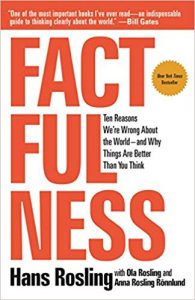
Factfulness

by Ron Potter August 1, 2019

Ron’s Short Review: One of my clients used to say “Things are never as bad as they seem and never as good as they seem.” He was right. This book says, “the world is not as dramatic as it seems. Factfulness, like a healthy diet and regular exercise, can and should become part of your daily life. Start to practice it, and you will be able to replace your overdramatic worldview with a worldview based on facts. You will be able to get the world right without learning it by heart. You will make better decisions, stay alert to real dangers and possibilities, and avoid being constantly stressed about the wrong things.”

0 comments
0 FacebookTwitterEmail
BlogCultureCulture Series

Culture – Mission

by Ron Potter July 25, 2019

Everyone has a different definition of Mission, Vision, Values, etc.  I’m not here to promote one definition or the other, I’m just going to use the definition found in the Denison Culture Survey.

Mission

Mission is the title of the first quadrant.

“Do we know where we are going?” is how Denison describes this quadrant.  Whether you call it mission, vision or whatever, that simple question gets to the heart of this quadrant.

Clarity and Alignment

Do the people, including the leaders, know where they’re going?

  • What are they trying to accomplish?
  • Do they see the big picture?
  • Are they simply trying to accomplish tasks?
  • Can they give the “elevator” speech about where the company is going in the future?

There’s an old story about the early days of the space mission.  As one of the scientists was leaving the building, he walked past a janitor sweeping up in the cavernous assembly building.  Wanting to be friendly, the scientist asked, “What are you doing there?”  The person sweeping up replies “Haven’t you heard?  We’re going to the moon!”  Regardless of the position in the company, every person knew the mission of the company.

Vision

Vision is about keeping an eye on the long-term vs the short-term.  I’ve seen many corporate leadership teams make decisions that no one thinks will be healthy for the company long-term, but it will help them meet quarterly reporting to wall street and investors.

Some of the corporate leaders I’ve talked with this about will reply that their mission and vision is to make money.  I’m sorry, but it’s not!  Simon Sinek, one of my favorite authors and bloggers, clearly states the profits are not “why” we do something, profits are a result of what we do.  It’s always a result.  It’s only a result.

Goals and Objectives

I love golf analogies.  They speak to so many aspects of life.  One of the differences between average golfers and really good golfers is their image of the target.  To the average golfer, the target is often the ball.  We end up concentrating on hitting the ball rather than producing a swing that will launch the ball toward the true target, that spot down the fairway or the green.

In average corporate cultures, the target is often getting to work, doing your job and going home at night.  All too often, there is little thought about what the real target is and everyday work is going to help achieve the desired results.

Great cultures help all employees understand how their work will advance the corporation toward the goal.

Do people really understand the connection between their daily goals and objectives and the long-term goals and objectives of the corporation or team?  Great cultures do.

Strategic Direction and Intent

The world changes rapidly around us.

  •  Competition changes.  We talk about this change with words like disruption.  A competitor invents something new or puts a new twist on things that disrupt the entire industry.  If a culture has good strategic direction and intent, they are constantly looking out for and watching competitors so they don’t become a victim of disruption.
  • The consumer changes.  The Consumer Packaged Goods industry has been dealing with this over the last few years.  If you look at the pre-packaged food industry, you’ve seen CEO changes, Board changes, buy-outs, and consolidation.  Everyone is looking for a way to combat the disruption.  Many times it happens because these companies have had tremendous success for decades and it’s hard for them to think that the strategy that got them here won’t get them through this next threat.  You can’t think that way anymore.  Consumers are changing too fast.
  • The industry changes.  I could go down many paths on this issue but I’ll choose one, government regulation!  When regulations change it can affect an entire industry almost overnight.  Great cultures are prepared.
Scenario Planning

One approach that I’ve seen work well to combat all of these shortcomings is scenario planning.  Pick a few “worst-case scenarios.”  Even if no one on the team thinks this could possibly happen, make a list of the worst possible events the team can think of.  Then do some scenario planning.  Spend some time talking about “what if” parts of or even the whole scenario were to happen, what would we do?

Teams that have gone through these scenario planning sessions are more apt to see changes sooner and less likely to make panic moves to counter the change once it’s obvious.  They feel like they’ve already faced this issue and know in general what they need to do to counter or mitigate the negative impact.  And they did it during calm times, not times of panic.

Companies that constantly keep these three things in mind create Great Cultures:

  • Vision:  Does everyone in the company know what the desired future looks like?
  • Goals and Objectives:  Does everyone know how their daily work impacts that long-term vision?
  • Strategic Direction and Intent:  Does everyone know that the future is filled with challenges but we’ve tried to think through many scenarios?  Are they able to raise the alarm if they see things happening that could trigger one of the disruption scenarios?

You’ll note that I started each one of those segments with “Does everyone….”  That’s the point of building a great culture.  It’s transparent.  It’s well known.  People can speak up from everywhere if they see disruption coming.

One of the best CEO’s I’ve seen would spend time walking and talking with people throughout the company.  He often said that he got the best early warning signals came from the truck drivers and people who worked in shipping.  They seemed to be intuned with “the street” and if he would ask, they gave him early signals of things changing.

Culture means everybody, not just the leadership team and their direct reports.  Is the whole organization aware of the Mission?

0 comments
0 FacebookTwitterEmail
BlogCultureCulture Series

Culture: Introduction

by Ron Potter July 18, 2019

What is Culture?

A dictionary definition says “the set of shared attitudes, values, goals, and practices that characterizes an organization.”

We hear a lot about a corporate culture being toxic or exciting or siloed or productive.  But in my mind, many of those conditions have more to do with Teams and Leadership than they do with Culture.

If there is a toxic environment, that’s usually caused by poor leadership that is ego driven rather than humbly driven.

Exciting environments come from leaders and teams developing people to face difficulties and obstacles in innovative thoughtful ways that utilize the skills and experiences present.

Siloed environments happen when teams are unable to work through their difference and reach a committed direction or approach.

Productive environments exist when teams learn how to elegantly use the resources they have to get the most out of an organization in a simple way.

Focusing on “culture” doesn’t cure any of the identified difficulties or enhance any of the identified strengths.  Building better teams and leadership improves those issues.

So what should be looked at when we think about and measure culture?

Culture Model

I first met Dan Denison many years ago when he was completing his research on corporate culture at the University of Michigan.  One of the things that caught my attention right from the start was Dan’s purpose in finding those items that can be measured on a survey that actually impact the bottom-line performance of an organization.  I knew that would catch the interest of every senior corporate leader I was working with.  They are very bottom-line focused.  If Dan could demonstrate that certain parts of the environment or culture actually had an effect on financial performance, I knew we had a winner.

From that initial work, Dan has gone on to be Professor of Management and Organization at IMD – International Institute of Management Development in Switzerland as well as found and become CEO of Denison Consulting in Ann Arbor, MI.  I would encourage you to visit his website at www.denisonconsulting.com.

The Denison model identifies four quadrants with three subsets each.  In this blog, I’ll introduce the four quadrants and then go on to explore each one in more detail over the next few months.

Four Quadrants of Corporate Cultures

Mission – Adaptability – Involvement – Consistency

Much of the wording you’ll see to describe each of these quadrants come directly from the Denison materials.  I trust Dan will see that as flattery and not plagiarism.

Mission

“Do we know where we are going?”

High performing organizations have a mission that tells employees why they are doing the work they do, and how the work they do each day contributes to the why.

Adaptability

“Are we listening to the marketplace?”

High performing organizations have the ability to perceive and respond to the environment, customers, and restructure and re-institutionalize behaviors and processes that allow them to adapt.

Involvement

“Are our people aligned and engaged?”

Highly involved organizations create a sense of ownership and responsibility.  Out of this sense of ownership grows a greater commitment to the organization and an increased capacity for autonomy.

Consistency

“Does our system create leverage?”

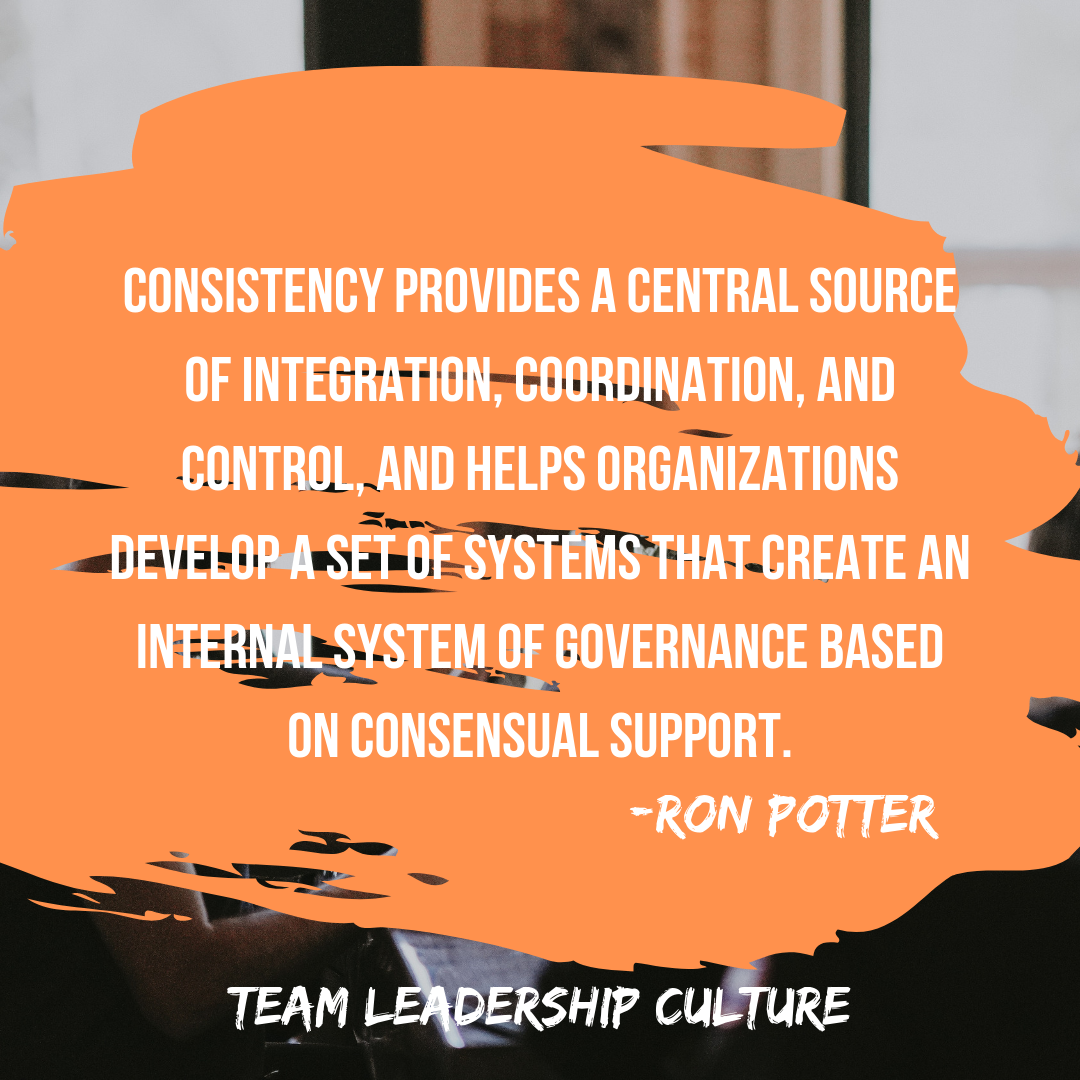
Consistency provides a central source of integration, coordination, and control, and helps organizations develop a set of systems that create an internal system of governance based on consensual support.

Schedule

Over the next several weeks I’ll break down each one of these four quadrants into their three subsets and share many experiences I’ve had through the years of companies that have improved over time.  Some of them have changed rapidly, others slowly but steadily and unfortunately some not at all.  But there always seemed to be reasons for the growth and development or lack thereof.  One thing that has been very clear, the growth and development that did or did not occur was caused by internal issues, not external environments.

Just as a reminder, these blogs will be our Thursday morning series.  Our Monday morning blogs will be less structured and disciplined and made up of issues and ideas that are striking me at the moment.

Thanks for coming along on this journey with me.  I’ve appreciated your loyalty and comments.  And don’t forget to share this connection with someone you know.  It will be more fun when we increase the size of our community.

0 comments
0 FacebookTwitterEmail
BlogLeadershipTeam

Team and Leadership: Summary

by Ron Potter July 15, 2019

Over the last several weeks we have been reviewing and expanding on the elements of a great team in our Thursday blog.  At the same time, our Monday blog has been exploring more detail on the elements of great leadership.  These are the first two legs of our Team Leadership Culture (TLC) model.

In general I believe it’s important to build a great team before working on leadership skills but in reality, it’s difficult to accomplish one without the other.  In many cases, they are tightly coupled and interdependent.

Today let’s review the elements of team and leadership and see how they fit together.

Elements of Team

Truth – Respect – Elegance – Commitment

Elements of Leadership

Humility – Development – Commitment – Focus
Compassion – Integrity – Peacemaking – Endurance

Interdependence

Let’s start with the elements of Team and look at the interdependence, overlap, and alignment with the Leadership elements.

Truth => Humility – Integrity – Peacemaking

To build a great team, members must be truthful with each other.  Truthfulness requires Humility, Integrity, and Peacemaking from the Leadership Skill List.

Humility

Humility has been misunderstood and misused in recent years.  Often people think of “turning the other cheek” or even being a “doormat” in order to be humble.  The original meaning of the word meant great power under complete control.  Humility doesn’t mean you’re powerless.  In fact quite the opposite.  It means that you have tremendous power.  Enough power to crush your opposition.  But when you’re humble, you choose not to use that power in a destructive way but to use the power for intense learning and curiosity.  Humble people may be the most powerful people in the room but are focused on individual and team learning through curiosity.  Humble people assume the other person may know something they don’t or have a very different perspective that’s worth learning.

Integrity

Integer also comes from the same root as integer.  It means whole, complete, sound and even incorruptible.  A person of high integrity is the same, complete, whole person no matter where they are or who they are with.  You can always trust they are and will be the same and say the same thing no matter what.  This is essential for the Truth required on teams as well as Commitment.  If you can’t trust that someone is genuine and has integrity, it’s difficult to get at the truth or sustain commitment.

Peacemaking

Peacemaking is also a word that we’ll see associated with Truth and Commitment.  Peacemaking is not the absence of conflict and different opinions.  Peacemaking understands that differences of opinion is natural for human-beings but has figured out a way to work through the differences and conflicts in a healthy productive way.

Respect => Humility, Development, Compassion and Integrity

Building and maintain respect with a team requires a leadership style built on humility, development, compassion, and integrity.

It’s important to note here that when I use the word leadership, I don’t mean the identified leader of the team.  I have observed people of all ranks and positions being leaders.  True leadership comes from your actions, not your position.

Humility and Integrity

We talked about humility and integrity in the Truth section above.  The same issues apply to Respect.

Development

From my book “Trust Me” development is described as “Leaders who accept the truth and train others to seize the benefits of adversity, loss, and change.  Growing people and giving them opportunities is one of the best ways to show respect.

Compassion

There have been a few clients through the years that didn’t believe compassion had anything to do with business.  In their minds, business was logical and should be dispassionate.

I’ve often used an old adage to counter that thinking:  “I don’t care how much you know until I know how much you care!”

When people feel like you care for them as a human being first, they feel trusted and respected.

Elegance => Commitment, Focus, Peacemaking

Commitment and Focus

I’ve combined these two but they do go together in many ways.  It requires a firm and aligned grip on the goal and purpose of the team to accomplish the required tasks in the simplest way with the least amount of friction.  Make the goals and purpose clear and then make sure everyone is committed.  This will eliminate much of the territorial behavior that happens with teams.

Focus is under attack more than any point in history.  All of our modern devices are determined to capture our focus thereby scattering our attention.  Our own egos also drive us to accomplish more things and be in more places than necessary or even possible.  Staying focused on the goal and purpose is the only way to keep things Elegant.

Peacemaking

Peacemaking was discussed above.  In making sure that things are accomplished in the simplest way possible, it will take a great deal of peacemaking to settle territorial disputes.

Commitment => Commitment, Peacemaking, Endurance

Commitment and Peacemaking

These two were also discussed above.  In terms of Team Commitment, it will take a strong commitment to the goal and purpose of the team.  It will also take a great Peacemaking/Decision-Making process.  Our earlier blog on Team Commitment talks about the process that provides a win-win environment which is essential to reach full commitment.

Endurance

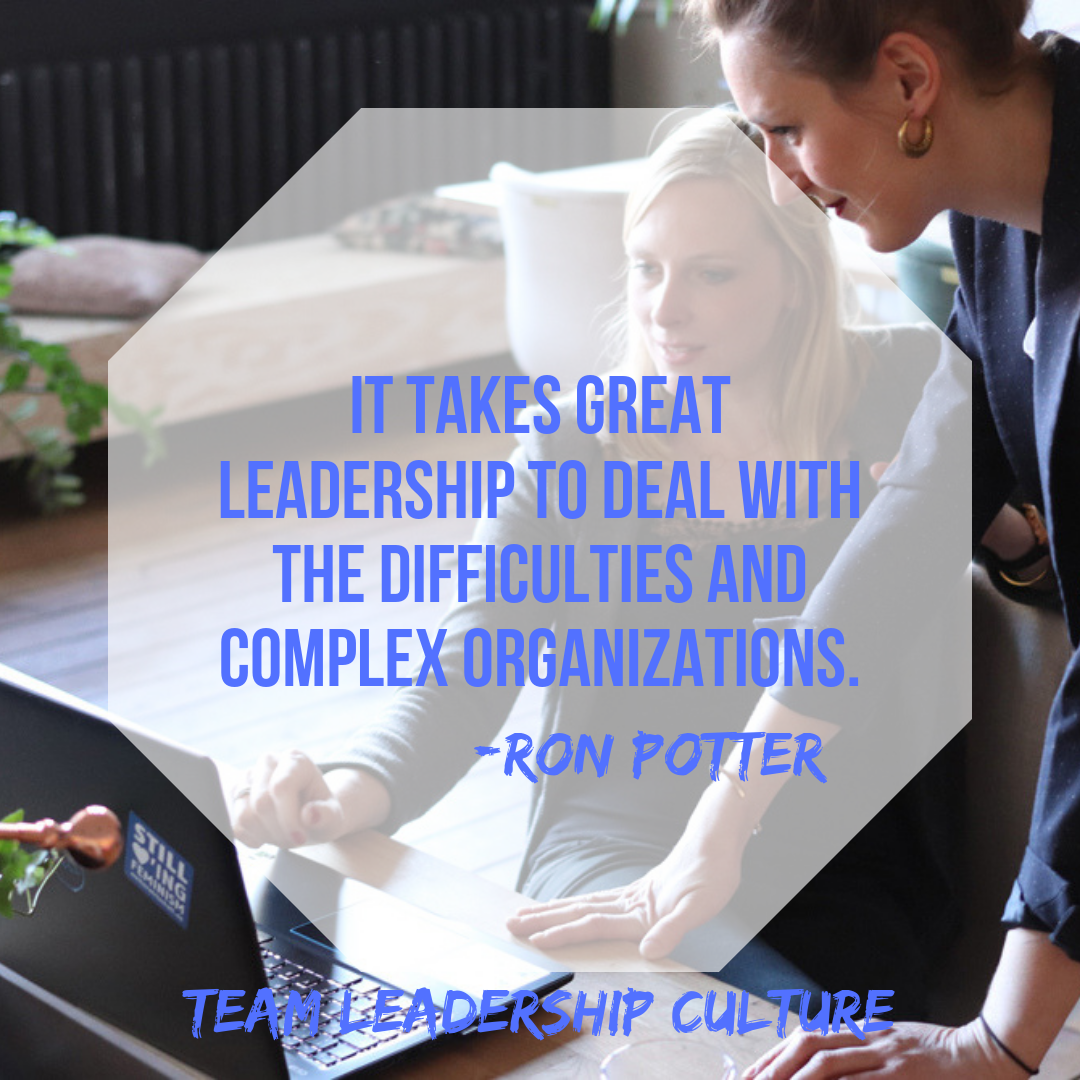
I used the TREC (Truth, Respect, Elegance, Commitment) acronym because it looks and sounds like the word TREK.  A TREK is described as a long arduous journey.  Especially one involving difficulties and complex organization.  Building a great team is a long arduous journey.  It takes great leadership to deal with the difficulties and complex organizations.

Team and Leadership

That’s the summary of the first two elements of TLC, Team Leadership Culture.

  1. Build a great team
  2. Development great leadership skills
  3. Create the culture to achieve the goals and purpose

The Rest of the Year Adventure

Over the next several months we will be talking about Culture, the third leg of TLC.  We’ll be doing this in our Thursday morning blog posts.  Our Monday blogs have been dedicated to the Leadership aspect of TLC.  For the rest of this year, we’ll be using Monday’s to blog about things that provoke some thought.  These usually come from my daily experiences in life, what I observe in the world, an article or book that makes a point that I think should be shared.  They won’t happen like clockwork every Monday morning but simply when something strikes me as worthwhile.  Stay tuned.

0 comments
0 FacebookTwitterEmail
BlogTeamTeam Series

Team Elements: Summary

by Ron Potter July 4, 2019

We’ve just finished our series on building great teams.  Years ago I named my consulting company Team Leadership Culture, TLC for short.  Over 30 years of consulting work plus another 20 years in the engineering/construction industry and software development I experienced this combination to be the winning formula for great success.

Team

Build a great team first.  While great leaders certainly increase the opportunity for success, if they don’t work together as a team, the final result is always a failure.  Build the dynamics of a great team first.

Leadership

If you’ve built a great team, increasing leadership skills will greatly enhance your opportunity for success.  If your goal is to do something really great or overcome great difficulties, add powerful leadership skills to great team dynamics.  Next week we’re going to look at these two elements in combination and you’ll also see great overlap that makes it difficult to accomplish one without the other.

Culture

There is plenty of research that companies and teams with great cultures rock!  Starting in a couple of weeks we’re going to look at the elements of great culture.  But, it’s important to note that it’s impossible to build a great culture without great teams and great leadership.

Great Teams

So let’s recap the elements of great teams.  I use Aristotle’s “Pursuit of Happiness” as the model of great teams.  Aristotle describes four levels of happiness.  Level 4 is the highest of the four pursuits and the one that Aristotle says all humanity seeks.  He describes it with five words: Truth, Love, Purpose, Beauty, and Unity.  I have not concentrated on Purpose because I believe business teams usually know their purpose.  However, if the purpose of the team is in question, that must be corrected first or all else fails.

I’ve also translated the four remaining words into terms that are better understood in a business environment and also make them easier to remember.

Truth (Trust)

Great teams know how to speak the truth with each other and also view their environment in a very truthful way.  We have numerous stories of corporate failures when the leader or the team just doesn’t believe the external environment is going to change enough to affect them.

“I think there is a world market for maybe five computers.”  Tom Watson Sr., IBM, 1943.

“Any customer can have a car painted any color that he wants so long as it is black.”  Henry Ford

On a Clear Day You Can See General Motors: John Z. DeLorean’s Look Inside the Automotive Giant

Speak the truth about your industry and customers.
Speak the truth with each other.  Great teams are built on great people who have entirely different perspectives.  Figure out how to share those different perspectives with each other and speak the truth.

Respect (Love)

This combination of Trust and Respect has been observed and chronicled throughout history.  Modern research reveals that psychological safety is essential for great team performance.  Psychological Safety is bringing Truth and Respect to the team.

Elegance (Beauty)

Elegance or beauty is all about simplicity and clarity.  Most leaders and teams think of organization structure when they think of elegance.  Do they have the best structure that invokes simplicity and clarity to get the job done?

Many of the leaders I’ve worked with through the years have asked me which organizational structure is the best.  They are never really satisfied with my answer because I tell them it doesn’t make any difference.  Organizational structures are simply lines on a chart to help direct large numbers of people to accomplish great things.  But all organizational structures are artificial.  They’re just a means to organize work and people.  Every company I’ve ever worked for is in the process of shifting from one org. structure to another.  No structure is perfect and no structure last forever.

Work on simplicity and clarity regardless of the structure.

Commitment (Unity)

Getting to unity is the ultimate goal of any team.  Commitment is the outward expression of team unity.  I’ve selected the word commitment because of this outward expression and because it brings all the elements together as TREC.  Hopefully thinking of TREC reminds you of the real word TREK which is defined as a long arduous journey.  Using TREC to build a team is a long arduous journey but it’s well worth the effort.

Always the Engineer

I graduated from the University of Michigan with an engineering degree.  I guess I still think like an engineer regardless of the task: Great structures, great software, great teams.  So here is my engineering formula for building great teams with TREC:

[ (T x R) + E ] x C = Effective Teams

Truth times Respect, plus Elegance, all times Commitment equals Effective Teams.

Let’s take a snap quiz.  Pick a team you’re a member of and score each element of TREC on a zero to five basis.   What’s the maximum score for the equation?  [ (5 x 5) + 5] x 5 = 150

Least Impactful Element

Which element has the least impact on the overall score?  Elegance!  Let’s say you score a 5 on all elements except Elegance which is a zero.  Your total score would be 130.  Increasing  Elegance from zero to five increases the overall score from 125 to 150.  And yet, when things aren’t going well, one of the first things I see leaders do is change the org. structure.

Most Impactful Element

Which element has the most impact?  Commitment!  You can score the maximum on Truth, Respect, and Elegance but if your Commitment score is zero, your overall score is ZERO!  Just increasing it from zero to three improves your effectiveness score from zero to 90!  Build Commitment!

Team Effectiveness

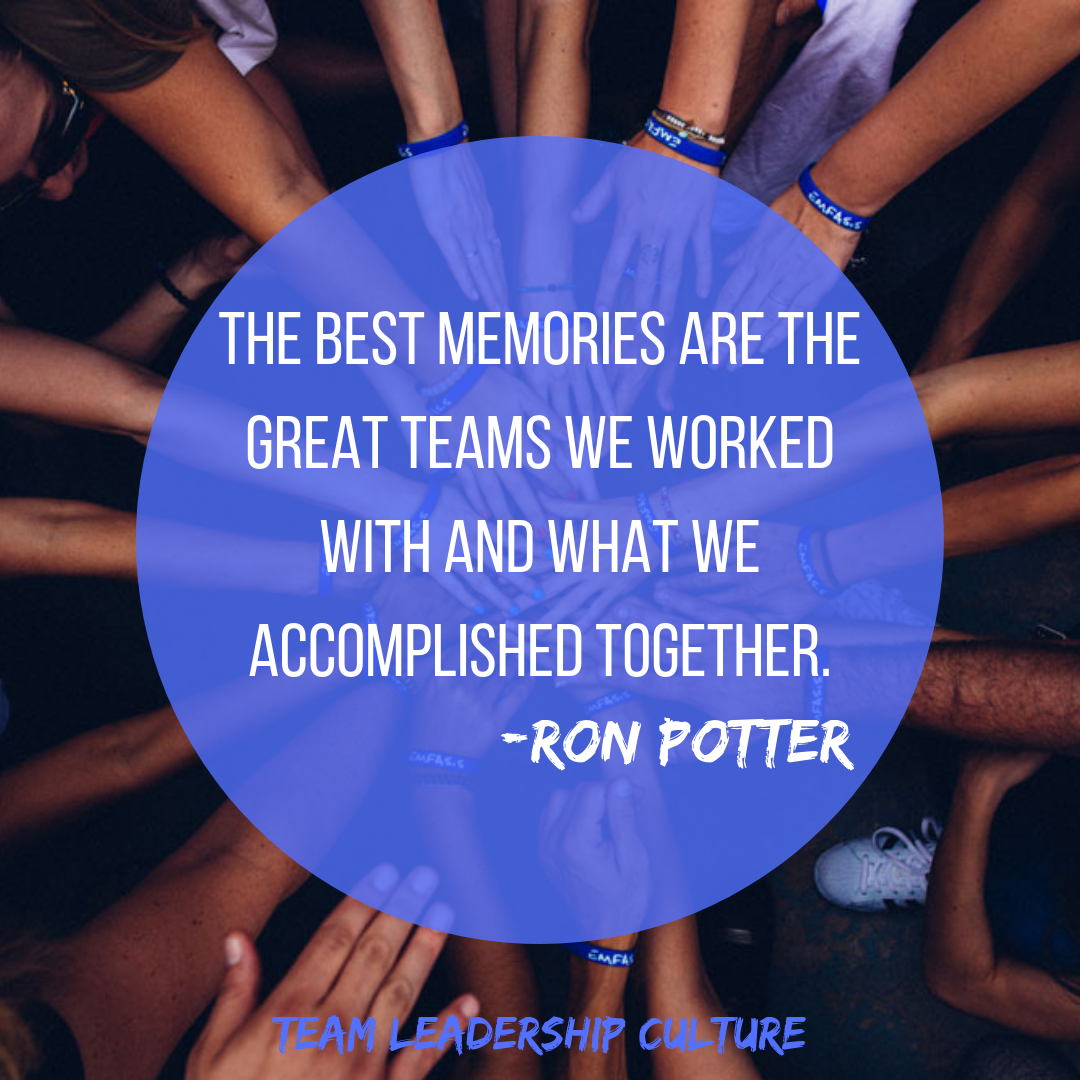
It’s hard to improve any one element at a time.  There is no way you will build commitment without truth and respect.  Respect will never be realized without speaking the truth and committing to the team.  Building teams is a TREC, a long arduous journey.  But when I talk with those of us who have grown gray over many years, our best memories are the great teams we worked with and what we accomplished together.

Take the journey.  It’s worth it!

0 comments
0 FacebookTwitterEmail
Short Book Reviews

The Order of Time

by Ron Potter July 1, 2019

Ron’s Short Review: Deep, difficult book but with great power. Here is just one quote “Why do we remember the past and not the future? Do we exist in time, or does time exist in us? What does it really mean to say that time ‘passes’? What ties time to our nature as persons, to our subjectivity? What am I listening to when I listen to the passing of time?” Ready for some deep thinking? Jump in.

0 comments
0 FacebookTwitterEmail
BlogTeamTeam Series

Team Elements – Commitment: Decision Process

by Ron Potter June 27, 2019

Understanding and using the right process is one key to decision making.  It also helps assure that you’ll reach full commitment to the decision rather than compliance.

There have been a number of decision types identified but one simple list includes:

  • Unilateral
  • Consultative
  • Consensus
  • Unanimous

Unanimous

Leave that to the courtroom.  It doesn’t really happen in a corporate environment.

Unilateral

This decision type has the advantages of speed, simplicity, and clarity.  However, it will waste a groups intelligence, invites resistance and lowers motivation.  It should be used when speed and time are paramount and there is a real danger in not making a decision immediately.  It can also be used when one person or team’s decision has little effect or impact on another person or team.

But the real cost of Unilateral decisions occurs with wasted time because of lack of clarity.  I have observed team time wasted by putting a “unilateral” decision on the agenda for a team meeting.  Unilateral decisions should be made and then the rest of the team informed.  Informing is more effective through other means (memos, emails, reports, etc) than making it a topic of a team meeting.  Once a decision hits the agenda, it is assumed or at least treated as if it is up for questioning, discussion or debate.  If a decision is unilateral, do not put it on the agenda!

Consensus

After observing and working with leadership teams for thirty years, I am convinced that business teams never make consensus decisions.  They may talk as if it was a consensus decision but most decisions are unilateral or consultative.  Don’t kid yourself.

There may be one or two decisions that must be made by consensus because they are so crucial to the future health and well being of the corporation but you cannot run a business by consensus.

Consultative

Almost all decisions are or should be consultative.  However, one major key to consultative decisions is that there is a clear decision owner.   I have seen hours wasted in team meetings trying to make a decision when the real issue that is being sorted out is who really owns the decision.  Unfortunately, that issue is either ignored or never stated out loud.  Consultative decisions must have a clear decision owner.  Sort that out first before you continue with the decision-making process.

The second most important aspect of good consultative decisions is a clear process.  The consultative decision leader or a good facilitator must help the team through a good process that includes more listening than talking.  One of the best processes to learn is the concept of Prudence.

Prudence

Prudence is one of those ancient words that doesn’t get much use today and most people would tell me that it doesn’t fit in today’s modern business world.  However, listen to the definition of Prudence:

“The perfected ability to make right decisions.”

As a leadership team, your goal is to perfect your ability to make “right” decisions!  Learn to follow the process of Prudence.

The Prudence process is described as Deliberate, Decide, Do.

  • Deliberate well.  Most teams either don’t do it well or skimp on the deliberation process in order to get to a quick decision.
  • Decide but be sure to use the proper decision type.
  • Do.  Execution of the decision will be much crisper, clearer and faster if the first two steps are properly followed.

Debate, Discuss, Dialogue

Deliberation can be in the form of debate, discussion or dialogue.  Let’s take a quick look at each:

  • Debate.  If you’ve ever been on a debate team you know that the goal is to win.  Often debaters are asked to take a position that they themselves don’t believe is true but the goal of winning remains.  Debate creates winners and losers.  Commitment will not be achieved when a portion of the team feels like they lost.
  • Discussion.  The idea of discussion may sound more civilized but the root word for discussion is the same root word for percussion.  In other words, he who can beat his drum the loudest will win the discussion.  Once again, discussion creates winners and losers.
  • Dialogue.  Dialogue is part of the Socratic method.  The Greek origins are “through discourse or talk.”  The Unabridged Dictionary says to “elicit a clear and consistent expression.”

Dialogue begins with eliciting, questioning, listening.  Everyone must be heard and understood.  (See my short book review of On Dialogue by David Bohm).

If you do a great job of deliberation, using dialogue, decisions will be made easier.  A decision will not only be made easier, but there will also be a full commitment to the decisions that are reached.  This happens even if individuals were opposed to the decision in the first place.  Dialogue works through those differences and allows teams to get beyond compliance with full commitment.

Once full commitment has been achieved, decision execution happens.  No revisiting.  No dragging of feet.  No sabotage.  Just clean, crisp execution.

Get to full commitment by identifying your decision type and using a good process to reach commitment!

0 comments
0 FacebookTwitterEmail
BlogTrust Me

Becoming a Trusted Leader

by Ron Potter June 24, 2019

Grasping leadership greatness starts by letting go:

If we do not let go, we make prisoners of ourselves.…

Let go of the strategies that have worked for us in the past…

Let go of our biases, the foundation of our illusions…

Let go of our grievances, the root source of victimhood…

Let go of our so-often-denied fear…”
—Gordon MacKenzie

Letting go is not a one-time deal. You must do it again and again and again.

Many of the most enduring ideas and values in our lives today have been shaped and molded by modern-day “blacksmiths.” Ancient or modern, the principles are the same: The blacksmith heats the iron at the forge, shapes it on his anvil, and cools it in the water.

The blacksmith heats the metal to prepare it for change. The trusted leader warms people to change through humility and compassion. The blacksmith hammers the metal to form a new shape. The trusted leader shapes an organization through commitment and focus. The blacksmith cools the metal to “settle” its strength. The trusted leader uses peacemaking to give the changed organization meaning and understanding. The forged metal, once cooled, becomes the powerful sword, the productive plow, or the beautiful wrought-iron gate.

By understanding the elements that build and destroy trust, effective leaders shape strong and productive organizations:

At the end of the same session when Jesus shared his Beatitudes with his followers—the ideas on which the eight attributes are based—he told an interesting story. Jesus said that if his team members would put what he had taught them into practice, their lives would be like a man who built his house on a solid rock foundation. No matter what kind of storm hit, Jesus promised that the house would stand. But if these men did not pay attention to the truth Jesus shared, their lives would be like the man who built his house on a foundation of shifting sand. When the storm hit that house, it would crumble and wash away.”

I believe the eight attributes of leadership will have that kind of effect on you. Allow them to permeate you from the inside out, and you will have a career—and a life—built on solid rock. You will be known as a person who can say with clear-eyed conviction, “Trust me.”

And others will follow.

0 comments
0 FacebookTwitterEmail
BlogTeamTeam Series

Team Elements – Commitment: Diversity

by Ron Potter June 20, 2019

We’re looking at the element of Commitment in our Truth, Respect, Elegance, Commitment (TREC) journey to great teams.

Last week we talked about the trust required in great teams.  Trust of purpose, leader, and team members.  In building that trust we must look at the diversity of thinking and points of view.

Word of Caution

During my career, I have been asked to either lead a “diversity” effort or coach the person who was leading the effort.   The first thing that struck me was that diversity was defined by outward appearance.  Race and gender were the two most common ones but any number of characteristics can be identified.

Inclusion, not Diversity

One of my first reactions was that it shouldn’t be called “Diversity training” it should be named “Inclusion training.”  Because the name identified it as diversity, it seemed like the curriculum was based on emphasizing the diversity rather than turning it to inclusion.

As I got to know the people who were to be part of the process, I noticed that two members thought similar to each other even though they were of a different race and gender.  While another pair almost never saw eye-to-eye even though they were the same race and gender.

Diversity of Thinking

Great teams have learned to respect different points of view and how to work with those differences as simply differences.  Not good or bad.  Not right or wrong.  Just differences.

In my car the other day, I heard an old song by Dave Mason that hits this one right on the head.  The words are:

There ain’t no good guy, there ain’t no bad guy
There’s only you and me and we just disagree

No good.  No bad.  Just disagreement.  Let’s start with the fact that we just see things differently.

Brain Science

Why is that?  Why can we observe the same thing and yet it seems like we see things differently?

One of the tools that have helped answer that question is the functional MRI (fMRI).  The MRI has been around for years but it simply took a snapshot.  The fMRI takes video!  We can actually see movement within the brain.

When our eyes observe an event, the image isn’t simply recorded on our brain and then stored on our “hard drive.”  There are two major flaws in believing that’s how we see the world around us.

Brain Processing Centers

First, are the known processing centers of our brain.

  • Values
  • Emotions
  • Goals
  • Beliefs
  • Ideas
  • Memories
  • Pain
  • Stress
  • Experiences

There are somewhere over twelve processing centers known today and many scientists believe there may be at least twice that many.

What we know from the fMRI is that when an image enters our eyeball and the optic nerve, it is split into at least 127 million bits of information and dispersed throughout the processing centers named above.  The image is then funneled through the ancient processing centers of motion detection and object recognition before being “reassembled” into coherent perception.

Think about that for a minute.  You and I can watch the same event.  But, because I have very different emotions, goals, beliefs, memories. etc. the image that is “reassembled” in my brain can and will be different from the image reassembled in your brain.  We see different things!

Courtroom judges will tell you that if two eyewitnesses tell the same story, the judge knows there has been collusion because “no two eyewitnesses ever see the same thing!”  We see things differently!  Just because someone has a whole different take on a situation don’t mean they’re not telling the “truth.”  “There ain’t no good guy, there ain’t no bad guy.  There’s only you and me and we just disagree.”

Memory is Not a Hard drive

Because we’ve been using personal computers now for several decades, we’ve come to think that our memory functions much the same as computer memory.  Nothing could be further from the truth.  When we enter data onto a computer storage device or in the cloud, we can depend on it to be exactly the same when we retrieve it in the future.  However, our human memory doesn’t work that way.  Not only is it modified by the processing centers that we just talked about, but new experiences are also constantly modifying our memory from the moment it’s stored.  Our memory is never an accurate representation of what was first stored in our brain.

Beliefs and Assumption

Because of this science-based understanding, we should start conversations about decisions and difficult topics by having everyone share their beliefs and assumptions.  They’re all valid.  It will help you understand where others are coming from.  It will help them understand your position.  It will actually give the team a great foundation to begin working toward a position of commitment.

Appreciate diverse thinking!  It’s powerful!  It gives us a broader range of perspectives and helps us move forward together.  Every point of view is an accurate one.

0 comments
0 FacebookTwitterEmail
BlogTrust Me

What Makes for a Great Leader: Two Pillars

by Ron Potter June 17, 2019

Over the last several years, investors suddenly began looking for CEOs who could shake things up and put an end to what was perceived as a business-as-usual approach. A new breed of corporate leader emerged: the charismatic CEO. A fervent and often irrational faith in the power of dynamic leaders became part of our culture.

Rakesh Khurana writes,

Faith is an invaluable, even indispensable gift in human affairs.… In the sphere of business, the faith of entrepreneurs, leaders, and ordinary employees in a company, a product, or an idea can unleash tremendous amounts of innovation and productivity. Yet today’s extraordinary trust in the power of the charismatic CEO resembles less a mature faith than it does a belief in magic. If, however, we are willing to begin rethinking our ideas about leadership, the age of faith can be followed by an era of faith and reason.

The adventure of looking for the charismatic leader sometimes asked us to turn our backs on attributes such as honesty, integrity, sensitivity, commitment, achievement, nurturing, trustworthiness, peacemaking, and courage.

But as Jim Collins explained so convincingly in his best-selling book Good to Great, it is the non-charismatic leader who seems to endure and shine in the long run. Collins writes:

Compared to high-profile leaders with big personalities who make headlines and become celebrities, the good-to-great leaders [leaders who have taken companies to unprecedented long-term growth] seem to have come from Mars. Self-effacing, quiet, reserved, even shy—these leaders are a paradoxical blend of personal humility and professional will. They are more like Lincoln and Socrates than Patton or Caesar.

In my book Trust Me, I outline eight attributes of a truly great leader. I refer to two of those attributes as the pillars: humility and endurance. Focusing on these two pillars is like so many things (golf included) that are both simple and complex. However, our experience tells us that great leaders allow these two attributes, whether natural or not, to strongly influence their leadership style. They learn how to overcome or “position” their natural tendencies. They let the two pillars “pull them through” their swing of everyday leadership and team building.

Great leaders seek to be humble people who lift up others and keep the spotlight on their companies, not themselves. They have a burning ambition to see tasks completed, and they balance that desire with a deep concern for the growth and development of people. They want to nurture relationships, help others flourish, and shove the fuss away from themselves.

Pressure and mounting fear can drive you away from the two pillars in order to succeed in the short run, but it will not last or create trust. It will only drive a wedge between you and the true success you can have as a leader who focuses on the two pillars and the other attributes.

Once again I want to remind you of the power contained in these qualities—and how the opposite qualities can destroy the great person you want to become and the great organization you want to lead.

We all have the ability to adapt these attributes to our particular leadership styles. You have the ability to start today. Why wait any longer?

0 comments
0 FacebookTwitterEmail
BlogTeamTeam Series

Team Elements – Commitment: Building Trust

by Ron Potter June 13, 2019

Building Commitment from Unity is the last element of our TREC to build a great team.  Remember that TREC is our acronym for:

  • Trust
  • Respect
  • Elegance
  • Commitment

Building Commitment requires the following three pieces:

  1. Trust in Purpose, Leader, and Team Colleagues
  2. Diverse Points of View
  3. Good Process

Purpose

Building Trust in the purpose of the team can sometimes be difficult.  Often team members don’t feel they have any power to set the purpose of the team or even tweak it slightly.  It seems to be dictated from on high.

It’s important to note that you always have a choice.

  • You can go along with the purpose even if you don’t believe it.
  • You can decide that the purpose of the team doesn’t align with your personal values or direction and make a move.
  • You can be a part of building a team that’s open to the discussion about the purpose of the team to help align it with personal and corporate goals.
Going Along

Going along, even when you don’t believe in the goal can be a dangerous route.  Going along will make it difficult getting out of bed in the morning and headed out to a job you don’t believe in.  Not speaking up when you don’t agree with the purpose and direction has been directly linked to some of the more horrific events in life.  Be very careful about making this choice, it will affect your well being and may affect the well being of others.

Make a Move

Making a move can also be a difficult decision.  The need for security plays a big part in our lives and making a move means leaving what we know, even if we’re uncomfortable and moving into the unknown.  The unknown is always scary.  However, I have seen this play out in my life and the lives of many of the people I’ve worked with through the years.  If you need to make that move, make it!  Dealing with the scariness of the unknown is much better in the end that living with the consequences of staying in a place that isn’t right for you.

Build a Great Team

Being part of a great team gives us much better options in life.  Building a great team starts with being able to speak the truth with each other.

All good teams start difficult discussions by being open to everyone’s beliefs and assumptions about the topic.  When we understand that we’re not necessarily speaking a “truth” but only our beliefs and assumptions based on our unique lifetime of experiences, it’s easier to state a position that may be very different from the expected purpose.

By starting with beliefs and assumptions, teams can often reach a unique solution that everyone sees as positive and leads to team commitment.  However, keep in mind that this process may lead you back to options one or two, going along or making a move.  I don’t believe going along is ever a good option but if it leads to the need to make a move, it will be much easier to accomplish and will happen with the support of many team members which will make the decision much easier to make and execute.

Trusted Leader

Having a trusted leader for the team is also key to developing commitment.  There are eight great attributes of trusted leaders but the first and most powerful one is Humility.  It almost seems like a paradox or dichotomy but humble leaders are very confident and have great self-esteem.  They just don’t wield either one of them like a sword.  They remain very open to listening and learning from anyone and any circumstance.  Research confirms time and time again, that the number one reason people leave a position is because of their boss.  If you’re the leader, develop into a trusted leader.  If you’re a team member, mentor your boss (mentors are not simply the older person).

Trusted Colleagues

Trusted colleagues possess two great qualities:  They are truthful and they are respectful.  This combination of truth and respect can be found throughout history and has a great biblical foundation.  This series of Team Building started with those two attributes, truth, and respect!

Committed

Teams must be committed to the purpose, the leader, and their colleagues in order to build great teams.  When you see it in action, there’s nothing quite like it.  And, there’s nothing more thrilling than being a part of it.  If you’re not experiencing that kind of joy in your life, figure out why you or others are not committed to the purpose, leader, and members of your team.  Today!

0 comments
0 FacebookTwitterEmail
Newer Posts
Older Posts
  • Facebook
  • Twitter
  • Linkedin
  • Rss
  • About This Site
  • About
    • Clients
  • Services
  • Resources
    • Trust Me
    • Short Book Reviews
  • Contact

About this Site | © 2024 Team Leadership Culture | platform by Apricot Services


Back To Top
Team Leadership Culture
  • Team
  • Leadership
  • Culture
  • Myers-Briggs
  • Trust Me
  • Short Book Reviews